

News
How Juwah Survived Power Play for NCC’s Top Job

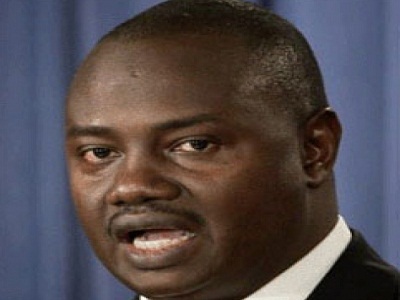
Despite the organized opposition to his appointment, Dr. Eugene Ikemefuna Juwah was last week handed a rare green chance to prove he possess the aptitude to move the telecommunications industry forward but skeptics are still watching with cautious optimism, Nigeria CommunicationsWeek can now reveal.
He was finally confirmed as executive vice chairman and chief executive officer of the Nigeria Communications Commission (NCC).
From the drama at the Senate which culminated in the sacking of the upper house’s Committee on Communications headed by Sen. Sylvester Anyanwu over allegations of bribery and failure to carry other members of the committee along during the screening of Juwah to pressure from telecom companies and some individuals, it appeared the President’s nominee was going to be rejected.
The Senate had spent better part of Tuesday and Wednesday undecided over the fate of Juwah, Peter Igoh, chairman of NCC; Mr. Okechukwu Itanyi as executive commissioner and Alhaji Mohammed Bintube as non-executive commissioner.
The Committee on Communications was said to have been presented with petition allegedly written by certain Mr. Mohammed A. Talle and Mr. H. T. Ajikobi against Juwah
Nigeria CommunicationsWeek gathered that elsewhere; some Nigerians questioned his appointment given his antecedents and association with MTS First Wireless, one of the pioneer telecom operators, now moribund.
It was also gathered that there were intense lobby to unduly prolong the confirmation of the nominees amidst impending vacation of the Senate.
Juwah believed to be connected with High Chief O.B. Lulu-Briggs, also former director of MTS First Wireless and a close associate of President Goodluck Jonathan got a reprieve with the intervention of David Mark, Senate President.
Mark who expressed displeasure at the intervening variables against the nominees ordered an open screening on the floor of the Senate and sacked the Anyanwu led Committee on Communications.
It is also believed that Lulu-Briggs who founded Moni Pulo Limited (MPL), a major indigenous player in the oil and gas industry exerted his influence in ensuring that Juwah and company were confirmed.
Juwah, former chief executive officer of Cititel Networks Communications Ltd since 2005 steps into the oversized shoes left by Dr. Ernest Ndukwe who bowed out gracefully after completing a 10-year in office of five years tenure each at the NCC.
Nigeria CommunicationsWeek gathered that Juwah cannot afford to fail given the circumstances that brought him into the exalted seat.
Early supporters including Association of Telecom Companies of Nigeria (Atcon) and African Telecommunication Development Initiative (ATDI) have applauded the appointments.
On his part, Juwah appear poised to shame critics.
Described as taciturn, urbane but boldly courageous, Juwah 58, has also worked for ICL, Mike Adenuga‘s firm that could not secure a licence for GSM operation in 2001.
Nigeria CommunicationsWeek also gathered that Juwah, from Delta state is said to be technically sound having studied computer and electronic engineering at post graduate level.
He has over 30 years experience in Information Technology and Telecommunication, with more than 20 years experience on directorial level and knowledgeable in digital exchanges, base station, data communication and subscriber access networks construction and operations having played coordinating roles in the set up of an ETACS, GSM and CDMA Mobile Networks in Nigeria.
Juwah is also an experienced Network Operations director with profound practical knowledge of pricing, billing, interconnection, licensing and regulatory affairs and network fraud control within the Nigerian Environment.


Google and UpSkill Universe, Sub-Saharan Africa’s leading AI and business skills training partner, have announced a major redesign of the Google Hustle Academy programme.

For the first time, the free training initiative is open to everyone, not just business owners. The new curriculum is focused on equipping individuals and entrepreneurs with practical AI skills.
Small businesses are the engine of Africa’s economy, creating over 80% of jobs on the continent. To help them grow, the Hustle Academy was launched in 2022, providing bootcamp-style training on business strategy, digital skills, AI, and leadership. The program has since trained over 18,000 SMEs, with many reporting increased revenue and job creation.
Now, as AI reshapes the job market, the program is evolving. The 2026 edition is built for anyone in Sub-Saharan Africa, including employees, students, and jobseekers, who wants to use AI to advance their career.
To meet the needs of a diverse audience, the new format includes short, 60-minute webinars and more immersive, high-impact bootcamps. These sessions are laser-focused on putting AI to work immediately in areas like digital commerce, marketing, and growth strategy.
Speaking about the academy, Gori Yahaya, Founder & CEO UpSkill Universe said “The 2026 Hustle Academy is designed to close the AI Skills gap with hands-on training that is short, focused, and immediately useful. AI is reshaping how businesses win and how careers are built, right across this continent.
“We’re excited to renew our partnership, now in its fifth year with Google, combining their global AI leadership with our deep regional AI expertise. The next wave of AI leaders will come from this continent. We are making sure they are ready.”
The Hustle Academy initiative has strengthened digital competitiveness across emerging African economies by enabling SMEs to move beyond AI awareness to practical implementation, positioning them for sustained growth in an increasingly AI-driven business environment.
“We believe that the future of Africa’s digital economy lies in the hands of individuals and entrepreneurs alike. Our new strategy focuses on scaling reach by training individuals in the latest AI-centered tools and techniques,” said a Google representative.

Lagos State has dragged 45 individuals and firms, including Bi-Courtney Aviation, DAAR Communications and Leaders & Company, to revenue court for tax debts running into billions of naira.

Lagos Govt
Bi-Courtney, operators of Murtala Muhammed Airport Terminal Two, faces N38.7 million claim; DAAR, behind Africa Independent Television, owes N22.4 million; ThisDay publishers Leaders & Company allegedly skip N67.1 million.
GMT Energy Resources tops corporates at N145.8 million, followed by Sheriff Deputies at N132.1 million; others like Heyden Petroleum, AA Rescue, BRT operator Primero also listed.
Individuals owe N13.5 million to N35 million each.
Attorney-General Lawal Pedro said suits followed ignored notices, aiming to enforce laws and fund infrastructure.
More defendants: IENG Nigeria, James Fisher, V Care Diagnostics, Venture Garden, Saro Africa, Barry Callebaut, Native Media, First Consulting, Eyowo Payments.
Compliant taxpayers post-notice escaped prosecution; defaulters risk penalties, interest, jail.
Pedro urged prompt filings and payments.


National Agency for Food and Drug Administration and Control (NAFDAC) has alerted Nigerians on counterfeit and unregistered Cerelac Mixed Fruits and Wheat products being sold in Lagos.

NAFDAC said Nestle Nigeria, the genuine Marketing Authorisation Holder of the product, received a complaint of suspected counterfeit purportedly manufactured by Nestlé Spain, bearing Batch Code 308002910.
It said that Nestle Nigeria reported that the complainant described that the counterfeit product emitted an odour suggestive of possible contact with fuel.
NAFDAC said that preliminary review of the product by Nestle Nigeria indicated that it had expired, in spite of the container displaying an expiry date of 10-2026, which suggested that the date coding had been tampered with (revalidated).
Nestle Cerelac Mixed Fruits and Wheat is a nutritious infant cereal, designed to be a delicious first food for infants.
NAFDAC said that its post-marketing surveillance’s directorate officers in Lagos conducted a surveillance visit to Maxland Shopping Centre, 193 Ago Palace, Okota, where the product was purchased by the complainant.
It added that the suspected counterfeit and unregistered Cerelac were found on sale at the premises and subsequently mopped up, while Nestle assisted in identifying the distinguishing features between registered and unregistered product.
According to the regulatory agency, Nestle revealed that the unregistered product used a hyphen (-) to separate the day from the year, while the registered product used a slash (/) to separate the day from the year.
“It is important to note that Nestle Nigeria is not aware of the channels through which the products are supplied into the country.
“Healthcare professionals and consumers are advised to report any suspicion of the sale of substandard and falsified regulated products to the nearest NAFDAC office, call 0800-162-3322, or send an email to [email protected],” NAFDAC said.
The agency warned that counterfeit formula often lacked essential nutrients, vitamins and minerals, leading to stunted growth or developmental issues.
It said that such formula might also contain contaminants that might lead to severe health consequences to infants or even death.
NAFDAC reiterated its commitment to safeguarding public health adding that it would continue surveillance activities to ensure the quality, safety, and efficacy of all NAFDAC-regulated products circulating in Nigeria.
It said that all zonal directors of the agency and state coordinators had been directed to carry out surveillance and mop up the revalidated product, if found within the zones and states.
The agency urged distributors, retailers, healthcare professionals, and caregivers to exercise caution and vigilance within the supply chain, to avoid the distribution, sale, and use of fake products.

Nigeria Demands Cloud Sovereignty to Anchor Africa’s Digital Independence

Digital Encode Sponsors PAFON 3.0 as CVO Prof. Adewale Set to Deliver Keynote on Cybersecurity and Trust

Polaris Bank Targets Youth with Financial Literacy Drive

As Nigerians Struggle to Save, Mutual Benefits Highlights Power of Structured Financial Planning

NITDA Boss Warns of AI Threat Shift @ GITEX Africa

Spotify’s Loud & Clear Report Reveals Over ₦60Bn Revenue for Nigerian Artists in 2025

Why JustMarkets Is a Strong Choice for Gold Trading

Kuda MFB Increases Kuda for Her Business Grants to ₦10 Million

Canal+ to Cut Jobs as Part Sweeping Restructuring

Nigeria tops global rankings for USDT, USDC ownership




 Telecom3 days ago
From Import Dependency to Local Capacity: Nigeria’s Tech Manufacturing Journey

 E-Financial2 days ago
How Unethical Deals Triggered CBN Takeover of Union Bank -Forensic Report

 E-Financial1 day ago
How Sterling Bank Is Empowering 1m Women with ₦500Bn

 E-Financial2 days ago
BVN Database hits 68.6m – NIBSS

 E-Business2 days ago
Kaspersky Warns of Digital Medicine Risks on the Occasion of World Health Day

 Broadcasting2 days ago
Multichoice Bleeds Customers in South Africa, Loses 580,000 Subscribers

 Broadcasting2 days ago
Broadcast Station Owners Reject IBAN’s Threat to Boycott Wike’s Media Engagements

 E-Financial1 day ago
See Key Changes in BVN Rule from May 1 by CBN