

E-Business
HP Recharges Hybrid Work at GITEX Africa

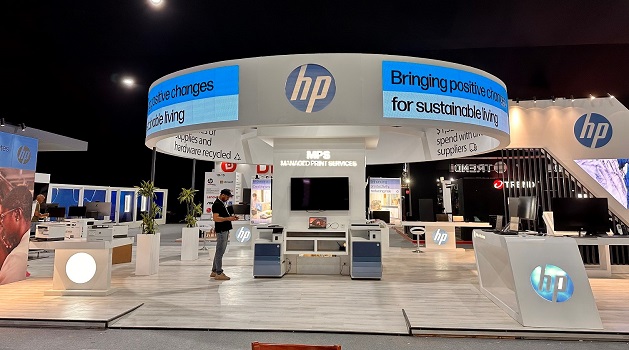
HP Inc is joining the inaugural GITEX Africa, bringing to the region its robust portfolio of products and services designed to deliver powerful hybrid experiences and workplace equity across all working styles, set ups, and locations.

HP’s exhibition of a comprehensive set of innovative hybrid work solutions will be held at Booth 1C-10 in Hall 1 at GITEX Africa, in Morocco.
GITEX Africa – the largest tech event on the continent – aims to accelerate the construction of new tech communities and to help advance the shared goal of amplifying Africa’s digital aspirations and achievements.
HP joins this all-inclusive gathering of industry leaders to connect with African stakeholders and customers and to showcase how the company is working to shape the continent’s future through sustainable, inclusive, and tech driven solutions.
“HP’s focus and investment in Africa have always been high and we are even more energized to increase it. Especially in these changing times, we believe in helping our customers and partners to be more competitive, productive, and efficient.
“The rules of work have completely shifted over the past couple of years, and we have entered a new era of work where the lines between office- and home-based work are now blurred.
“Our future-ready portfolio of products and services has evolved to reflect this, especially in countries with compromised infrastructure and connectivity,” says Ertug Ayik, Managing Director for Middle East and Africa at HP.
“The work we do in Africa has always had a focus on advancing equity, supporting education, and removing barriers to business for entrepreneurs through technological innovation.
“GITEX Africa shares all these goals – making our participation at this most prominent tech summit even more pertinent,” says Salah Ouardi, Managing Director Northwest Africa, at HP.
The shift to working flexibly and from various locations has accelerated the need for organizations to scale their network and security capabilities, equaling snap decision making for the deployment of solutions that optimize security and user experience. HP’s Future-Ready portfolio redefines effective collaboration and productivity from commercial PCs, workstations, peripherals, and services that deliver exceptional experiences from anywhere – ushering in the new era of hybrid work.
Identifying and deploying the right collaboration solution to guarantee the best experience remains a core consideration, evidenced by findings from the 2023 HP Wolf Security Hybrid Report.
Even though only 22%1 of workers consider themselves ‘thriving’ in hybrid work the majority (90%) of those thrivers believe that access to the right technology and tools leads to a positive work experience.
Such findings support the idea that every workplace (regardless of the stage of hybrid work adoption) needs to maximize and transcend obstacles and innovations to ease into – and adapt to the new future of work.
With the normalization of hybrid work, the right digital strategy can enable employees to blend physical and digital work in a manner that best serves the immediate business operating needs and ensures uninterrupted productivity for employees. A software service that can make this a reality is not only a requirement but an undeniable priority.
HP Wolf Protect and Trace with HP Wolf Connect is the world’s first software service that bears such capabilities as locating, locking and erasing a PC remotely, even when it’s turned off or disconnected from the Internet2.
Providing a highly resilient and secure connection to remote PCs, Wolf Connect equips IT with the capability to protect sensitive data on the move. IT teams can readily manage a dispersed hybrid workforce – reducing the time and effort needed to resolve support tickets, secure data from loss or theft to mitigate potential breaches and optimize asset management.
Considering the ongoing hybrid work trend, HP’s high-performance printing solutions are designed to help both businesses of all sizes to maximize productivity and minimize disruptions, catering to the demands of modern-day ways of working by offering technologies to boost their productivity and consumers to print sustainably and cost-efficiently.
The all-new HP Color LaserJet series printers are powered by HP’s next generation sustainable toner, which delivers up to 27% reduced energy3 use and up to 78%4 less plastic in the packaging.
Based on a recent HP survey5 more than half of the hybrid workers surveyed said that they had missed their office printer more than happy hour or a free lunch and to address the need for a true workplace of the future, the HP LaserJet Managed E800/E700 series, support and inspire a productivity-focused hybrid workforce, with intelligent solutions that can make work flow faster.
The next generation of refillable printers, the HP Smart Tank printers deliver an enhanced user experience with an intuitive and seamless set-up, smart features, and better connectivity -including self-healing Wi-Fi and mobility with Smart App.
Made from up to 25%6 recycled plastics, and with an ink refill system that creates more prints with less waste are an ideal option for high-volume print needs where quality is preferred, but sustainability is also valued.
Hybrid work is one of the greatest shifts the workforce has ever experienced but it’s also one of the biggest business challenges of this decade. CIOs are under extraordinary pressure to digitally transform their businesses and overhaul their processes while ensuring their employees are productive and motivated.
They need to offer an amazing digital employee experience in a way that doesn’t compromise security and allows for flexibility as their business needs change. With offerings like HP Active Care and HP Proactive Insights, among others, HP Workforce Solutions empower customers to transform the way they work.
With a rich 80-year heritage, HP’s deployment of its Future-Ready Portfolio exemplifies an understanding and appreciation of the future of work. From high end performance to seamless collaboration and productivity between devices and locations, HP is delivering exceptional experiences from anywhere.
This is further embodied by HP’s recent joining with UC (Unified Communications) experts Poly, with a focus on hybrid working innovation and even more importantly, meeting equality – to ensure everyone is heard and seen clearly.
HP is showcasing a range of innovative new offerings designed to set up customers for success in the hybrid working era at Booth 1C-10 in Hall 1 at GITEX Africa 2023.



Kashifu Inuwa, the Director General of the National Information Technology Development Agency, has issued a decisive mandate for African nations to establish domestic cloud infrastructure and data sovereignty or risk permanent digital subservience.

Speaking during a high-level strategic session at the GITEX Africa 2026 summit in Morocco, Inuwa argued that the continent must move beyond being a passive consumer of foreign technology to becoming a primary architect of its own digital ecosystem.
He warned that the current state of continental fragmentation leaves Africa vulnerable to external disruptions and prevents the realization of a truly integrated digital economy.
Inuwa characterised the modern global landscape as an environment defined by high-velocity data processing and pervasive intelligent systems, noting that digital integration is now a non-negotiable prerequisite for national survival.
He grounded this technical reality in a striking analogy, describing the cloud as the fundamental life-support system of the modern world. “In today’s reality, digital is no longer optional; it is a way of life,” Inuwa stated. “And the cloud is the oxygen that sustains that life.
The question we must ask ourselves is: who controls that oxygen?”
The push for cloud sovereignty represents a move toward localised data residency and autonomous computational power. Inuwa stressed that without regional data centers and unified regulatory frameworks, African nations remain subject to the policy shifts and geopolitical priorities of overseas providers.
He advocated for a shift from fragmented, siloed efforts toward a federated regional approach that pools resources and expertise to build a robust, self-sustaining African cloud. This transition is essential for ensuring that the massive datasets generated by African users are utilized to train local artificial intelligence models and catalyse internal economic growth rather than being exported for external profit.
The NITDA boss expressed concern over Africa’s limited share of global digital infrastructure, noting that while the continent accounts for between 15 to 19 percent of the world’s population, it holds only about 0.6 percent of global data centre and computing capacity.
He described the imbalance as a structural disadvantage that exposes African countries to risks around data security, economic dependency, and limited participation in the global innovation ecosystem.
“This is not just a technology gap, it is a sovereignty gap,” Inuwa stated. “We are generating data, but we are not in control of how and where that data is stored, processed, or monetised.”
He warned that over reliance on foreign owned cloud platforms could have long term implications for national security, economic competitiveness, and policy autonomy, especially as data becomes a critical resource in the global economy.
Despite these challenges, Inuwa highlighted Africa’s immense potential, pointing to its youthful population, expanding internet penetration, and fast growing startup ecosystem as key drivers of digital growth.
He said the continent is uniquely positioned to leapfrog legacy systems and build modern, scalable infrastructure that can support innovation across sectors.
However, he stressed that achieving this vision would require coordinated action among African governments, private sector players, and regional institutions.
“There is no single country in Africa that can do this alone,” he said. “We must collaborate, integrate our efforts, and build shared infrastructure that benefits the entire continent.”
Central to his recommendation is the creation of a “cloud of clouds” a federated cloud ecosystem that connects multiple national and regional cloud platforms into a unified, interoperable network.
Such a system, he explained, would allow countries to maintain control over their data while benefiting from shared standards, scalability, and cross-border collaboration.
Inuwa pointed to Europe’s Gaia-X as a useful reference model, noting that while Africa’s context is different, the principle of building a trusted and interconnected cloud ecosystem remains relevant.
He emphasised that cloud sovereignty should not be misunderstood as protectionism or digital isolation, but rather as the capacity for self determination in the digital age.
“Sovereignty is about having the ability to make our own choices, to define our own standards, and to build systems that reflect our values and priorities,” he said.
Inuwa further noted that developing indigenous cloud capacity could unlock significant economic opportunities, including job creation, local innovation, improved digital services, and increased investor confidence.
It could also strengthen Africa’s position in emerging technologies such as artificial intelligence, big data analytics, and the Internet of Things, all of which depend heavily on robust cloud infrastructure.
The DG concluded by emphasising that the quest for digital sovereignty is not merely a technical objective but a strategic imperative for long-term stability. He asserted that for Africa to achieve meaningful autonomy in an increasingly digitised world, it must secure its own computational foundations.
By establishing indigenous control over data processing and storage, the continent can insulate its critical national infrastructure from external volatility while ensuring that its digital future is determined by its own policies and priorities. The message was clear: Africa must harmonise its infrastructure and localise its computational assets now or face an era of unprecedented digital marginalisation.
As global competition in the digital space intensifies, Africa’s ability to act collectively and strategically will determine whether it emerges as a major digital powerhouse or remains on the periphery of the digital revolution.
E-Business
As Nigerians Struggle to Save, Mutual Benefits Highlights Power of Structured Financial Planning


A growing number of Nigerians are struggling to build sustainable savings habits, leaving many without a financial safety net in times of need. Insights from the PiggyVest Savings Report 2025 reveal a concerning trend of declining savings culture among Nigerians. A significant segment of the population either does not prioritise saving or lacks the discipline to maintain consistent savings, with many unable to cater for emergencies or achieve meaningful financial satisfaction.

Mutual Benefits
Released in March 2026, the report which sampled over 20,000 respondents in rural and urban areas across all six geopolitical regions in Nigeria, highlights key gaps in financial behaviour. Highlighted issues revolve particularly around emergency preparedness and long-term financial planning, underscoring the urgent need for more structured and accessible savings solutions.
With rising living costs and economic pressures, many Nigerians are increasingly focused on meeting immediate needs, often at the expense of saving for the future. As a result, emergency funds remain inadequate or non-existent for a large proportion of households.
This reality has far-reaching implications, not only for individual financial stability but also for broader economic resilience. Without a financial buffer, unexpected events such as medical emergencies, job loss or business disruptions can quickly escalate into crises.
Financial experts note that the challenge is not just about earning more income, but about adopting disciplined and structured approaches to saving.
Unlike informal or ad-hoc savings methods, structured financial products combine consistency, growth and protection, ensuring that individuals are better equipped to navigate uncertainties.
This is where solutions like Mutual Benefits Assurance’s savings and investment offerings play a critical role.
A leading player in Nigeria’s insurance industry, Mutual Benefits’ savings and investment products are designed to help individuals and families build financial discipline while enjoying the added advantage of protection.
Products such as the Individual Savings and Protection Plan (ISPP), Children Education Plan (CEP) and Mutual Investment Plan (MIP) help customers build disciplined savings, earn competitive returns through compounded interest and benefit from life insurance coverage, providing an added layer of security. Similarly, the Personal Pension and Investment Plan (PPIP) provides financial support in the event of job loss, whether voluntary or involuntary, while also serving as a valuable tool to supplement retirement income. In the event of death, designated beneficiaries receive the entitled benefits.
By combining savings with protection, these solutions address two critical gaps identified in the report: lack of emergency funds and low financial confidence.
Structured savings plans not only encourage financial discipline but also provide reassurance that funds will be available when needed. In contrast to informal savings methods, they offer a more reliable pathway to achieving both short-term and long-term financial goals.
For many Nigerians, this represents a much-needed shift from reactive financial habits to proactive financial planning.
As Nigeria continues to navigate economic uncertainty, the importance of financial preparedness cannot be overstated. Encouraging a culture of saving supported by structured, accessible financial products will be key to improving financial well-being across the population.
Mutual Benefits remains committed to empowering Nigerians with solutions that promote financial security, resilience and peace of mind. By making savings simpler, more rewarding and more secure, the company continues to support individuals and businesses in building a more stable financial future.

e-commerce company, Jumia Nigeria, has announced a significant expansion of its logistics and pickup network across Nigeria, extending its reach into underserved regions and strengthening access to e-commerce services for millions of consumers.

The expansion, executed during the first quarter of 2026, marks a deliberate shift toward upcountry growth, with new and expanded operations across Northern Nigeria, including Kebbi, Sokoto, and Kaduna, while also strengthening presence in strategic cities like Zaria. The move is designed to close long-standing coverage gaps in high-potential areas and bring its services closer to more customers.
According to the company, the expansion reflects a convergence of customer demand, infrastructure strategy, and long-term market development, as more Nigerians outside major urban centres seek reliable access to digital retail.
“We are seeing a structural shift in where demand is coming from. What this expansion does is align our infrastructure with that reality. By extending our network deeper into the country, we are not only improving service delivery, but we are also unlocking new demand, enabling more sellers to participate in the digital economy, and building a more inclusive retail ecosystem that reflects the true scale of the Nigerian market,” said Temidayo Ojo, CEO of Jumia Nigeria.
The rollout includes a significant increase in pickup stations and delivery touchpoints across both established and emerging cities. Existing urban centres such as Lagos, Ibadan, Abuja and Port Harcourt have seen network density increase, while new and previously underserved locations are being integrated into Jumia’s logistics grid. This broader footprint is supported by investments towards parcel distribution centres, designed to decentralise inventory flow, reduce delivery time, and optimise operating costs across regions.
As part of the expansion, Jumia has also strengthened its logistics partnerships and delivery capacity, enabling more efficient last-mile fulfilment while creating income opportunities for a growing network of logistics partners and JForce agents. The company notes that these investments are critical to sustaining scale as order volumes increase across a more geographically diverse customer base.
Looking ahead, Jumia plans to extend its expansion into the South-East and South-South regions ahead of the peak retail season, further increasing its national coverage and reinforcing its position as a leading e-commerce platform in Nigeria.

PowerLabs to Scale Intelligent Energy Orchestration Across Africa with New Funding

Nigeria Demands Cloud Sovereignty to Anchor Africa’s Digital Independence

Digital Encode Sponsors PAFON 3.0 as CVO Prof. Adewale Set to Deliver Keynote on Cybersecurity and Trust

Polaris Bank Targets Youth with Financial Literacy Drive

As Nigerians Struggle to Save, Mutual Benefits Highlights Power of Structured Financial Planning

Spotify’s Loud & Clear Report Reveals Over ₦60Bn Revenue for Nigerian Artists in 2025

Kuda MFB Increases Kuda for Her Business Grants to ₦10 Million

Why JustMarkets Is a Strong Choice for Gold Trading

Canal+ to Cut Jobs as Part Sweeping Restructuring

Nigeria tops global rankings for USDT, USDC ownership




 E-Financial2 days ago
How Sterling Bank Is Empowering 1m Women with ₦500Bn

 E-Financial2 days ago
See Key Changes in BVN Rule from May 1 by CBN

 E-Financial3 days ago
How Unethical Deals Triggered CBN Takeover of Union Bank -Forensic Report

 E-Financial3 days ago
BVN Database hits 68.6m – NIBSS

 E-Business3 days ago
Kaspersky Warns of Digital Medicine Risks on the Occasion of World Health Day

 Broadcasting3 days ago
Multichoice Bleeds Customers in South Africa, Loses 580,000 Subscribers

 E-Financial2 days ago
Paga Group Rejigs Leadership as Oviosu, Founder Becomes Group CEO

 E-Financial2 days ago
Reputation: The Real Currency Powering Fintechs