

E-Business
HP Unleashes Powerful Gaming Portfolio to Push Gamers to New Heights

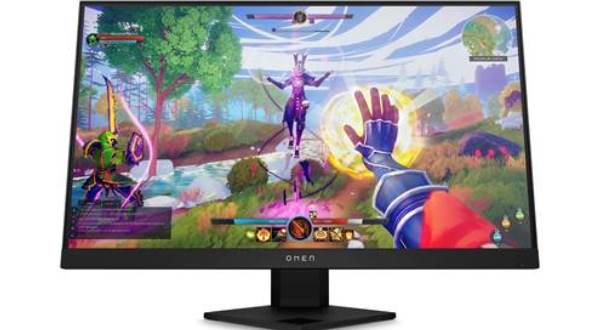
HP introduced its latest gaming hardware and software designed for today’s gamers with the powerful OMEN 16 and OMEN 17, bright and customisable OMEN 25i Gaming Monitor, and community gaming with OMEN OASIS Beta feature in OMEN Gaming Hub.

The company also debuted Victus by HP, its next-generation mainstream-level gaming PC portfolio, with a 16-inch laptop.
Gaming continues to be an outlet for entertainment and connecting with friends. Two out of three people are spending more time watching videos and gaming than they did prior to the pandemic, with one in four gaming three to four hours more and almost one in five gaming six to ten hours more a week.
HP’s next-generation gaming portfolio is designed for both veteran gamers and enthusiast explorers to be entertained, connected, and empowered to progress in their favourite games.
“Our constant focus with gaming is to create innovative technologies that progress the medium forward for everyone, be it enthusiast level OMEN users or newcomers to this growing and endlessly entertaining industry,” said Judy Johnson, Director of Gaming and Esports, HP Inc.
“We are offering a compelling entry point for anyone who wants to game with Victus by HP, high power and performance with new additions to our OMEN line-up, and OASIS, a new feature for OMEN Gaming Hub, to optimise gameplay streaming while bringing people together.”
Seasoned gamers crave the latest advancements in hardware and software that allow them to experience today’s titles at the max settings so they feel truly immersed when they get a last second multiplayer win or defeat that final boss.
The latest additions to the OMEN ecosystem focus on delivering new experiences that push beyond the expected to keep gamers connected and entertained, and excited for what is next.
OMEN 16 presents gamers with stunning graphics experience by bringing the latest games to life with up to an NVIDIA® GeForce® RTX™ 3070 Laptop GPU 8 GB or AMD RDNA™ 2 architecture-based graphics. Crush content with up to Intel® Core™ i7-11800H7 or 8-core AMD Ryzen™ 9 5900HX Mobile Processors 8.
It enables gamers to quickly use multiple apps with up to 32GB DDR4 3200 MHz and get ultra-fast access to critical files with up to 1TB PCIe Gen 4×4 SSD9 or up to two 1TB PCIe SSDs supporting Raid 09.
OMEN 16 Laptop – 4 – Intel
HP’s innovations in internal design continue to push the boundaries of what is possible with blades that are 2.5 times as thin and have over a 200% increase in blade count compared to the OMEN 15 so that air flow is increased to meet the demands of powerful internals.
Meanwhile, gaming sessions last longer from anywhere with increased battery capacity from 52.5Whr to 83Whr for up to 9 hours of battery life.
OMEN 17 arrives in its most advanced form yet with Desktop-Grade Gaming, allowing one to cruise through the latest AAA hits with up to an NVIDIA® GeForce® RTX™ 3080 Laptop GPU 16 GB with a TGP maximum up to 165W and up to Intel® Core™ i9-11900H processor7. It also allows for multitasking between games, browsers, or apps like a pro with up to 32GB DDR4 3200 MHz memory and play faster and harder with up to 1TB PCIe Gen 4×4 SSD9 or up to two 1TB PCIe SSD supporting Raid 09.
OMEN 17 Laptop
It offers gamers a cooler and more comfortable play experience when questing through the latest games, thanks to the addition of 24 more blades that are 17% thinner along with a 14% larger outlet open ratio, which contributes to a -5 °C reduction in temperature on the keyboard surface deck compared to the previous generation and keeps those gamer palms feeling cozy.
The Victus by HP was created to introduce gamers to an accessible, yet elevated, gaming experience built with OMEN’s DNA. As the younger sibling to the pro-ready OMEN brand, Victus aims to help anybody from any background outplay the ordinary in their quest to find out what type of gamer they are.
As the first entrant in the Victus line, the Victus by HP 16 comes with a distinctive lifestyle design featuring three striking colour options in mica silver, performance blue, and ceramic white, all with a standard backlit keyboard printed with the memorable font found on OMEN devices.
Victus by HP 16 is built sustainably with post-consumer recycled ocean bound plastic utilised in the construction of the speaker housings and bottom base of the chassis26 and outer boxes and fiber cushions that are 100% sustainably sourced and recyclable.
Victus by HP 16
HP also unveiled the OMEN 25i Gaming Monitor which makes waves as the first ever OMEN gaming monitor to feature HP Eye Ease with Eyesafe® certification to reduce eye stain while playing.
This hardware enabled low-blue light solution is built right into the display, making it unnecessary to adjust settings or fret about a compromised colour experience thanks to a 30% reduction of excessive blue light compared with a standard LCD display.
OMEN 25i Gaming Monitor
OMEN Gaming Hub is evolving to address the needs of today’s gamer as a centralized solution for everything from optimising your gaming PC, customizing your hardware, and enhancing the gaming experience.
User research shows 91% of gamers prefer sharing streams to small parties of 1-20 people, with 61% stating that sharing live gameplay experiences is important, and 49% having a desire to share webcams32.
With this insight, OMEN Gaming Hub added OMEN OASIS, currently in beta, to provide gamers with quick and simple access to gameplay streaming with their friends.
OASIS on OMEN
OMEN OASIS is a downloadable and easy to use add-on to OMEN Gaming Hub designed to optimise sharing gameplay, game nights, or watch parties with your friends. It features up to a 16-person invite-only party, so inviting your friends is easy and intuitive, and everyone can join in on the fun. Friends can communicate with either high-quality voice or simple text chat. Now with OASIS, gamers can share their real-time gameplay in high definition and low latency.
The OMEN 16, OMEN 17 and Victus by HP 16 are expected to be available in June, while the OMEN 25i Gaming Monitor is expected to be available in July. The OMEN OASIS is currently available in Beta in the US, but will soo be available to the rest of the world.



African CEOs continue to trail their global counterparts in deploying artificial intelligence (AI) across business functions, as they remain stuck in experimental AI phases, finding it difficult to scale initiatives into enterprise-wide deployments.

This is one of the key findings of PwC’s 29th Global CEO Survey: Africa perspective. It found that more than 150 CEOs in Africa who participated in the survey demonstrate strong operational resilience and reinvention as they navigate currency fluctuations, political uncertainty, infrastructure constraints and supply chain disruptions.
It highlights a slower pace of digital transformation that could limit long-term competitiveness in Africa. While awareness and early adoption of AI are growing, enterprise-wide deployment remains limited, according to the survey.
The survey was conducted from 30 September to 10 November 2025 and surveyed 4 454 CEOs across 95 countries, including Africa.
Skills shortages, fragmented data governance, underdeveloped cloud infrastructure and risk-averse investment strategies are preventing African organisations from moving beyond pilot projects into full-scale AI-driven transformation, it finds.
“AI adoption in Africa is real, but scaling it across the enterprise remains a challenge,” says Christiaan Nel, AI Africa leader at PwC South Africa. “Caution must be balanced with urgency − those investing modestly today risk falling behind competitors scaling rapidly.”
Finding their way
Despite these challenges, African CEOs demonstrate strong operational resilience. The survey shows that 81% are optimistic about improving economic conditions, well above the global average of 65%, while 47% are confident about revenue growth over the next year.
The survey underscores that AI adoption highlights a broader reinvention gap. Only 41% of CEOs have clear AI roadmaps, and 37% formalised responsible AI processes. Skills availability remains a major barrier, with just 37% confident in sourcing and retaining talent for AI initiatives.
PwC research shows that when AI is implemented effectively, African companies experience tangible benefits: 56% report increased employee productivity, 53% gain executive time, 23% see revenue growth, and 25% achieve cost reductions. This confirms that AI can drive efficiency and transformation, but only if infrastructure, governance and investment keep pace, notes the study.
Vikas Sharma, Africa cyber leader at PwC Mauritius, explains: “The challenge is structural. Fragmented cloud environments, unclear data governance and underdeveloped cyber security make scaling AI difficult. Without these foundations, AI initiatives remain tactical rather than transformational.”
Beyond AI, CEOs are using technology to reinvent products, reach new customers and modernise operations. PwC highlights that cloud, analytics and digital frameworks are essential enablers for enterprise-wide AI, helping leaders move from experimentation to transformation.
Importantly, African organisations are using technology to augment rather than replace employees, maintaining workforce stability while improving productivity, it states.
Ambition versus execution
Although 55% of African CEOs consider innovation critical to strategy, only 13% are willing to take high risks in innovation projects.
Underlying capabilities reveal the challenge: just 16% operate dedicated innovation centres, 25% have processes to stop underperforming research and development, and 29% rapidly test ideas with customers.
Lullu Krugel, chief economist and ESG leader at PwC South Africa, adds: “The leaders who build enduring businesses protect their core while creating the future. Operational strength alone is not enough; transformation must be bolder.”
Investment restraint is evident: 59% of respondents report little to no change in IT spending, and only 8% are willing to make large investments despite geopolitical uncertainty. Confidence in acquisitions is lower than the global average, with 40% planning growth through acquisition, compared to 46% globally.
Yet diversification offers a competitive-edge. Nearly half of African CEOs have entered new sectors through services and product offerings in the past five years, generating 24% of revenue from these ventures. Technology leads planned expansion efforts at 17%, followed by real estate, retail and transport/logistics.
PwC concludes that Africa’s CEOs have the ambition and resilience but must move from operational excellence to strategic reinvention. This requires embracing risk as a catalyst for transformation, strengthening digital infrastructure, investing in change leadership and aligning AI adoption with enterprise-wide strategy.
Hannelie Gilmour, consulting and transformation platform leader at PwC South Africa, concludes: “Africa is uniquely positioned to leapfrog global peers. Tomorrow’s stability comes from today’s innovation. CEOs who act decisively will shape the continent’s next chapter.”

A new Kaspersky review reveals how cybercriminals revived and refined phishing techniques to target individuals and businesses in 2025, including calendar-based attacks, voice message deceptions and sophisticated multi-factor authentication (MFA) bypass schemes.

The findings emphasise the critical need for user vigilance, employee training and advanced email protection solutions to counter these persistent threats moving forward.
Calendar-based phishing targets office workers
A tactic originally from the late 2010s, calendar-based phishing, has reemerged with a focus on B2B environments. Attackers send emails with calendar event invitations, often containing no body text, hiding malicious links in the event description.
When opened, the event auto-adds to the user’s calendar, with reminders urging them to click links leading to fake login pages, such as those mimicking Microsoft.
Previously aimed at Google Calendar users in mass campaigns, this method now targets office employees. Organisations should conduct regular phishing awareness training, such as simulated attack workshops, to teach employees to verify unexpected calendar invites.
Voice message phishing with CAPTCHA evasion
Phishers are deploying minimalist emails posing as voice message notifications, containing sparse text and a link to a basic landing page. Clicking the link triggers a chain of CAPTCHA verifications to bypass security bots, ultimately directing users to a fraudulent Google login page that validates email addresses and captures credentials.
This multi-layered deception highlights the need for employee training programmes, such as interactive modules on recognising suspicious links and advanced email server protection solutions like Kaspersky SecureMail, which detect and block such covert tactics.
MFA bypass via fake cloud service logins
These sophisticated phishing campaigns are targeting multi-factor authentication (MFA) by mimicking services like pCloud (a cloud storage provider that offers encrypted file storage, sharing and backup services).
These emails, disguised as neutral support follow-ups, lead to fake login pages on lookalike domains (e.g., pcloud.online). The pages interact with the real pCloud service via API, validating emails and prompting for OTP codes and passwords, granting attackers account access upon successful login.
To counter this, organisations should implement mandatory cybersecurity training and deploy email security solutions like Kaspersky Security for Mail Servers, which flags fraudulent domains and API-driven attacks.
“With phishing schemes growing more deceptive, Kaspersky urges users to treat unusual email attachments, like password-protected PDFs or QR codes, with caution and verify website URLs before entering any credentials.
“Organisations should adopt comprehensive training programmes, which includes real-world simulations and best practices for spotting phishing attempts. Additionally, deploying robust email server protection solutions ensures real-time detection and blocking of advanced phishing tactics,” comments Roman Dedenok, Anti-Spam Expert at Kaspersky.


Nigerian Data Protection Commission (NDPC), has expressed its commitment to balance information around data privacy and protection.

Dr. Vincent Olatunji, national commissioner, NDPC, stated this in Abuja, at the National Data Privacy Summit with the theme, “Privacy in the Era of Emerging Technologies,” organised by the commission.
Olatunji said the NDPC, at the moment, was looking at balancing information around data privacy and protection.
“What we are doing is just to look at how to balance information around privacy and protection, which is really important, because as we are innovating, at the same time, we have to consider issues around privacy and protection,” he stated.
He added that the commission has been very bold in taking risks that would bring about growth.
“Our starting point is growing at a very alarming rate, and we are not afraid of anything. We can take risks. And that is why a lot is happening in Nigeria, and this is the level of clarity,” he explained.
In his address, Dr. Aminu Maida, executive vice chairman (EVC) of the Nigerian Communications Commission (NCC), stated that Internet of Things holds promise for Nigeria’s economy.
The EVC, who was represented by Abraham Oshadami, executive commissioner, Technical Services (ECTS), noted that, “in an era in which digital assets, Internet of Things, future digital computing and other transformative technologies are key, and both a cornerstone of building trust for the adoption and a prerequisite for sustainable progress.
“Emerging technologies hold immense promise for Nigeria’s grand economy, but they also introduce complex risks to personal and individual rights.
“So, balancing innovation through post-ethical safeguards and public trust is the first step to ensuring that global digital advancement benefits all Nigerians without compromising their privacy or their security,” he added.
“As we just heard from the Nigeria Police, telecom operators have a vast amount of sensitive historical information daily, including connectivity apps and collaboration on privacy, security, and number protection, both to their and their inheritors,” he said.
Dr. Bako Shurkuk, commissioner for Science, Technology and Innovation, Plateau State, who represented Caleb Mutfwang, Governor of Plateau State, said, emerging technologies can be harnessed to attain sustainable growth.

Alawuba Advocates Security, Bankable Projects, Infrastructure Development to Promote South-East Vision

Ecobank Profit Jumps 29 Percent to N950Bn

Trump Says He Made no Mistake Sharing Video Depicting Obamas as Apes

Orya, Ex-NEXIM MD Jailed 490 Years for N2.4Bn Fraud

Airtel Nigeria Commits to Upgrade of its Network Infrastructure for Improved Quality of Service

19 Nigerian Banks Meet CBN Recapitalization Targets Ahead of March Deadline

Nigerian Terra Industries Secures $11.8m for Expansion

US invests $115m in counter-drone tech for World Cup security

Firm Detected a Fivefold Surge in QR Code Phishing Attacks in the Second Half of 2025

Firm Detected a Scam Exploiting OpenAI’s Teamwork Features




 General News2 days ago
Globacom Donates ₦1Bn to Lagos State Security Trust Fund

 Telecom3 days ago
MTN Guns for $2.76bn IHS Towers Buyout in African Telecom Power Grab

 E-Financial3 days ago
Incentives alone won’t win over Africa’s next billion fintech users — Kuda MFB MD
 Telecom2 days ago
Airtel Nigeria Commits to Upgrade of its Network Infrastructure for Improved Quality of Service

 Telecom3 days ago
Google Calls on Africa’s AI Trailblazers for 10th Startup Accelerator Cohort
 E-Business3 days ago
Firm Reviews the Evolution of Phishing Threats in 2025

 E-Business2 days ago
PwC Reveals AI Scaling Gap Slows Africa’s Digital Transformation

 General News3 days ago
EdTech Platform Unveils over 5,000 Self-Paced Courses for Skills, Knowledge, and Literacy