

News
HURIWA Calls FG Out over NBC’s N2Bn, N500m Bribe @ MTN

Human Rights Writers Association of Nigeria (HURIWA), one of the nation’s foremost pro-democracy and civil Rights organisations has described the recently signed executive order by President Muhammadu Buhari as unconstitutional and saying that the government has been very hypocritical with the fight against corruption.
HURIWA claimed that “under the President’s nose a minister allegedly mismanaged N2 billion from the National Broadcasting Commission for digitisation of broadcasting but till now both the minister of information and DG of NBC are walking the corridors of power free”
Comrade Emmanuel Onwubiko, national coordinator, and the Miss Zainab Yusuf, media Affairs director of the Rights group said that “under the nose of the President An allegation of N500 million bribery made against his chief of staff that he extorted money from MTN was swept under the carpet”
According to HURIWA, “Nigerian National Petroleum Corporation gave out contracts to some ghost companies to the tune of $26 billion without complying with Public procurement Act and when the minister of state for petroleum complained about this monumental heist the President simply asked the NNPC GMD and the minister of state for petroleum to go and work together”
 President Muhammadu Buhari
“The President is the minister for petroleum but under the last three years several billions of dollars remained uncounted for to the extent that the governors of the 36 states of the Federation raised their voices to condemn this broad day light robbery” HURIWA noted.
HURIWA said that it may institute a case at the Federal High Court to seek the nullification of the illegal and outrageously unconstitutional executive order targeted at opposition political office seekers.
The full statement read:
The Executive Order On Suspicious Assets Is Unconstitutional- Huriwa
Human Rights Writers Association of Nigeria (HURIWA), one of the nation’s foremost pro-democracy and civil Rights organisations- has described the recently signed executive order by President Muhammadu Buhari in which the perception or interpretation is being given that the executive arm has the power of law making, as unconstitutional.
Besides, HURIWA gave indication that it may institute a case at the Federal High Court to seek the nullification of the illegal and outrageously unconstitutional executive order targeted at opposition political office seekers.
In a media release endorsed by Comrade Emmanuel Onwubiko, National Coordinator, and the Miss Zainab Yusuf, media Affairs Director, of Rights group wrote as follows:
“Under the constitutional democracy in practice in Nigeria as clearly provided for in the Constitution of the Federal Republic of Nigeria of 1999 as amended, sections 4, 5 and 6 have clearly demarcated the constitutional powers of each arm of government with section 4 ceding the power of law making in the to the National Assembly and state Assemblies.
Section 5 gives the President and the executive arm of government that he heads the power to implement policies and to exercise powers as specified in any legislation passed by the National Assembly and sign by him or if he withhold his assent the National Assembly can apply their power of veto to override the refusal of the executive head of government to sign the legislation and by the veto override the piece of legislation becomes a law of the Federal Republic of Nigeria.
Section 6 gives the judicial powers of the federation on the Courts of competent jurisdiction.
With due respect, the President cannot exercise the powers that is not donated to his office by the Constitution.
Secondly, the so called Executive Order is a total duplication of the Economic and Financial Crimes Commission’s Act which is an Act of parliament which contains several provisions regarding temporary or permanent forfeiture and how the forfeited assets have to be administered transparently but the power to grant such temporary or permanent forfeiture belongs to the Courts of competent jurisdiction because that is the forum for the interpretation of the laws.
The Executive head of government will be committing outrageous illegality if he is allowed to just wake up and sign what he calls executive orders which purports to seize the powers already domiciled in the Constitution or other pieces of legislations that were properly passed.
The executive order is possibly a politically tainted move to crush opposition politicians, take over their assets over nebulous charges and make them financially impotent to confront the incumbent President in the next year’s general election in which the incumbent plans to run.
Besides, the Constitution in section 36(5) clearly stated that a suspect or an accused person is totally innocent in the eyes of the law.
The executive order seeks to overrule this vital section of the Nigerian Constitution. The constitution is clear on what happens to any action of government that contradicts any relevant section of the Constitution.
The executive order on seizures of assets is null, void and of no moment.
I’m optimistic that Nigerians of goodwill will challenge this attempt to institutionalize dictatorship in the competent courts of law.
The Constitution recognises the rights of citizens to own moveable and immovable property in any court of the Country.
The government of Muhammadu Buhari cannot hide under the guise of declaration of state of emergency on corruption and deprive a citizen of his/her protected and guaranteed right.
Only the court has this kind of power and the accused must be guaranteed fair hearing.
The president is simply seeking to exercise tyrannical power to deprive his opponents of their assets to cripple their political activities.
The current administration has been very hypocritical with the fight against corruption.
President Muhammadu Buhari spent 103 days on medical tourism in London at public costs but abused the law on transparency and accountability by failing and refusing to declare the exact amount spent on his health from public treasury.
Even when the Freedom of information Act allows a citizen to know how our funds are spent but President Muhammadu Buhari forced the central bank Governor to refuse the application for release of information on how much of public fund was spent treating the current President.
Under the nose of the current President, Nigerian national Petroleum corporation gave out contracts to some ghost companies to the tune of $26 billion without complying with Public procurement Act and when the minister of state for petroleum complained about this monumental heist the President simply asked the NNPC GMD and the minister of state for petroleum to go and work together.
The President is the minister for petroleum but under the last three years several billions of dollars remained uncounted for to the extent that the governors of the 36 states of the Federation raised their voices to condemn this broad day light robbery.

Under the nose of the President An allegation of N500 million bribery made against his chief of staff that he extorted money from MTN was swept under the carpets.
Under the watch of the President $48 million was found in a flat in Ikoyi but till date no certainty on who owns the cash.
In the Nigerian Intelligence Agency over $250 million was diverted but till date the whereabouts of such huge funds are unknown and the Acting director general of NIA who raised the alarm as good whistleblower was physically harassed out of the place and I’m told he fled into the United States for his life.
Under the watch of this President the minister of communication was accused by his media adviser of corrupt enrichment running into multimillion Naira including purchases of choice housing assets in Abuja and Ibadan and state of the art Printing press but because the minister is campaigning for the re-election of the President that alleged crime had been concealed.
The disgraced SGF and Buhari’s friend embezzled nearly N500 million allegedly from North East reconstruction fund but he is not prosecuted.

Under the President’s nose a minister allegedly mismanaged N2 billion from the National Broadcasting Commission for digitisation of broadcasting but till now both the minister of information and DG of NBC are walking the corridors of power free.
The school feeding programme whereby over N500 bullion was budgeted and released is mired in widespread corrupt practices.
The President should perish the thought of witch-hunting his political opponents and allow the anti graft bodies to work by operating without political interferences. He should rather appoint a good Nigerian who is independent minded and free from corruption to head the Economic and Financial Crimes Commission.
The signing of this illegal executive order shows that the President has lost confidence on the EFCC leadership which had in any case received damaging reports from Department of state services which specifically indicted the Chairman of EFCC of a range of corrupt enrichment allegations.

The EFCC’S acting Chairman has also failed confirmation hearing twice and so can’t continue as head of that agency.
Buhari has influenced EFCC to go after PDP regarding the Presidential campaign fund for 2015 but the APC which spent hugely to beat an incumbent is free from EFCC’S investigations.
The Executive order is therefore DEAD ON ARRIVAL. The National Assembly must not allow the President take over their legislative powers and Nigerians who love democracy and constitutionalism must head to court to quash this manifest illegality of President Muhammadu Buhari.
We recall vividly that President Buhari signed what he termed the executive order on preservation of assets seized in connection with corruption and stated interalia that:
“Like I have said many times, if Nigeria does not kill corruption, corruption will sooner-or later kill Nigeria,’’ President Buhari said while signing Executive Order No.6 to further strengthen institutions on curtailing and restricting illicit activities in the country.
“It has thus become necessary to re-kit and re-tool our arsenal to be able to effectively tackle corruption’s perilous counter-attack against the Nigerian State. Accordingly, the Federal Government of Nigeria has declared a national emergency to deal with that crisis.
“In this regard, the Federal Government of Nigeria in line with its anti-corruption strategy seeks to ensure that justice is not defeated or compromised by persons involved in a case or complaint of corruption,’’ he said.
We can also recall that the President said the viability and continuous well-being of the nation faces enormous threat from corruption, pointing out that, “Whilst there are many reasons why Nigeria has been struggling; regrettably, the most unfortunate cause of great disparity between Nigeria’s wealth and its poverty is endemic corruption.’’
“It is in consequence of this that I have decided to issue the Executive Order No. 6 of 2018 to inter alia restrict dealings in suspicious assets subject to investigation or inquiry bordering on corruption in order to preserve such assets from dissipation, and to deprive alleged criminals of the proceeds of their illicit activities which can otherwise be employed to allure, pervert and/or intimidate the investigative and judicial processes.
“Or for acts of terrorism, financing of terrorism, kidnapping, sponsorship of ethnic or religious violence, economic sabotage and cases of economic and financial crimes, including acts contributing to the economic adversity of the Federal Republic of Nigeria and against the overall interest of justice and the welfare of the Nigerian State,’’ .
We in the Human Rights Writers Association of Nigeria (HURIWA) believe that the executive order is simply an exercise in futility because it’s inherently unconstitutional and is a political gambit to cripple political opponents because of 2019 Election which is only few months away.
*Comrade Emmanuel Onwubiko; is the National coordinator of Human Rights Writers Association of Nigeria (HURIWA).


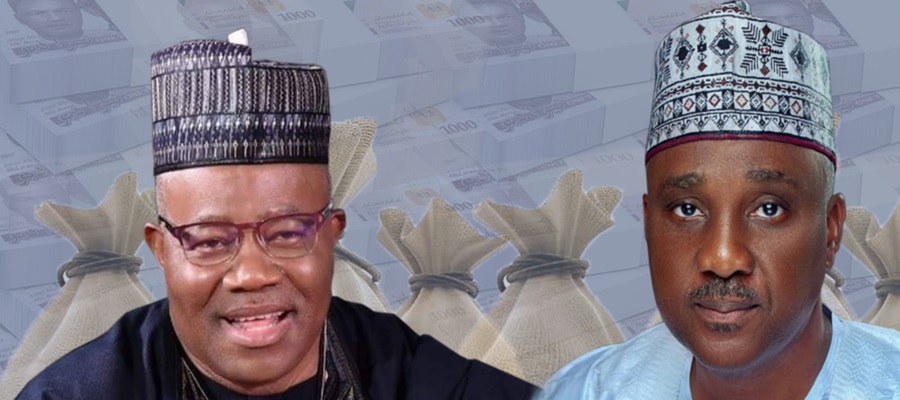
Socio-Economic Rights and Accountability Project (SERAP) has given Godswill Akpabio, Senate President, and Tajudeen Abbas, speaker of the House of Representatives, seven days to explain how over N1.3 billion was allocated in the 2026 Appropriation Act to a presidential council that the Presidency has described as fictitious.

In a Freedom of Information (FoI) request dated July 4, 2026, SERAP asked the National Assembly leadership to release certified copies of all documents related to the approval of the N1,302,978,784 allocation to the Presidential Foreign Intervention Promotion Council (PFIPC)/Presidential Economic Advisory Council.
The rights group also called on the National Assembly to invoke its investigative powers under Sections 88 and 89 of the 1999 Constitution to probe the circumstances surrounding the allocation and identify those responsible for what it described as apparent irregularities in the budget process.
SERAP further requested records identifying the lawmakers and committees that considered the allocation, as well as the public officials or representatives who defended the budget proposal before the committees.
The civil organisation also sought clarification on whether the allocation originated from the Executive’s 2026 Appropriation Bill or was introduced during the legislative appropriation process.
It equally demanded to know whether any lawmaker questioned the legal status or operational mandate of the council before approving the allocation.
The FoI request follows a July 1 statement by the Presidency denying the existence of the Presidential Foreign Intervention Promotion Council and insisting that the Federal Government never created the body.
Describing the conflicting claims as alarming, SERAP said they raised “serious concerns regarding the integrity of Nigeria’s appropriations process, legislative oversight, public financial management, and accountability.”
The FoI request, signed by Kolawole Oluwadare, deputy director, SERAP, stressed that Nigerians have a constitutional right to know whether public funds were appropriated to an entity that does not legally exist.
SERAP said, “Nobody has a more sacred obligation to obey the law than those who make the law, and that the National Assembly has a constitutional responsibility not merely to approve the Executive’s budget proposals but to rigorously scrutinise them before authorising public expenditure.”
The organisation argued that disclosure of the requested documents would enable Nigerians to determine whether the National Assembly fulfilled its constitutional obligations under Sections 80, 81, 88, and 89 of the Constitution in approving the allocation.
SERAP warned that if the requested information is not released within seven days of receipt or publication of the letter, it would initiate legal proceedings to compel the National Assembly to disclose the documents.
The organisation further maintained that making the records public would strengthen confidence in the National Assembly’s credibility, enhance transparency in the appropriation process, and promote accountability in the management of public funds.
It also cited the Freedom of Information Act, the Nigerian Constitution, the African Charter on Human and Peoples’ Rights, the International Covenant on Civil and Political Rights, and the Tshwane Principles as legal bases for its demand for full disclosure.

World Bank has said Nigeria’s greatest fiscal challenge is weak revenue mobilisation rather than excessive borrowing, urging the Federal Government to strengthen revenue generation to support sustainable economic growth and meet its debt obligations.

The World Bank Country Director for Nigeria, Mr. Mathew Verghis, stated this during an interview on Channels Television on Friday.
According to him, Nigeria’s debt profile remains moderate by international standards and does not place the country among nations experiencing debt distress.
“From our assessment, Nigeria doesn’t have a high indebtedness problem; it has a low revenue problem,” Verghis said.
He explained that Nigeria’s debt-to-Gross Domestic Product (GDP) ratio is lower than that of many comparable economies, adding that the country’s fiscal challenge lies more in its limited revenue base than in the volume of its borrowing.
“When we looked at the numbers, Nigeria is a moderately indebted country, meaning it has less debt relative to its economy than most of its neighbours and many other countries.
“Nigeria is in a very different situation from Ghana, for example, which is going through a debt restructuring,” he said.
Verghis defended government borrowing, describing it as a legitimate tool for financing long-term investments capable of stimulating economic growth and improving citizens’ welfare.
“Nigeria borrows for the same reasons that all countries borrow. If you want to deliver results to people, the money available on an annual basis is not enough.
“So you borrow, deliver results, and that improves your ability to repay,” he said.
He cited electricity infrastructure as an example, noting that expanding access to power for millions of Nigerians would require substantial upfront financing.
“To be able to connect and provide energy to 32 million Nigerians, Nigeria needs to borrow money now.
“But with increased access to energy, the country will become wealthier and better positioned to repay the loans,” he added.
The World Bank official, however, warned that Nigeria’s low revenue generation poses a greater risk to fiscal sustainability than its current debt burden.
“Nigeria’s debt is not particularly high, and in fact, it is quite moderate by international standards.
“Its revenues are very low by international standards, and unless those revenues are raised, it will not be able to pay back debt,” he said.
Verghis said improving revenue mobilisation would enable the government to invest more in critical sectors such as infrastructure, healthcare, education and agriculture, while supporting job creation, strengthening human capital development and reducing poverty.
He noted that the World Bank’s recently unveiled Country Partnership Framework for Nigeria for 2026 to 2032 places job creation at the centre of its support for the country.
According to him, the framework will focus on investments in infrastructure, healthcare, agriculture and digital connectivity to promote inclusive and sustainable economic growth.
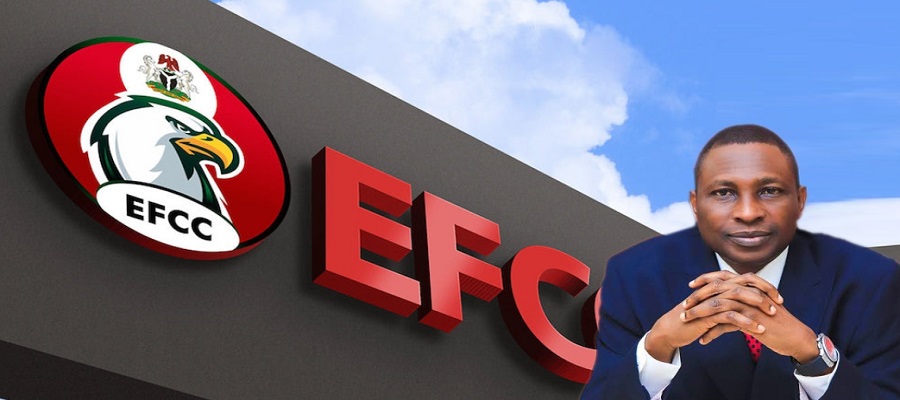
Ola Olukoyede, chairman of the Economic and Financial Crimes Commission (EFCC), has disclosed that the commission recovered more than N7.2 million stolen from the bank account of a serving judge by suspected internet fraudsters in a midnight cyberattack.

Ola Olukoyede, Chairman of the Economic and Financial Crimes Commission (EFCC).
Olukoyede made the disclosure at the public presentation of two books authored by retired High Court judge, Justice Alaba Omolaye-Ajileye.
He said the serving judge, who is from a South-South state, contacted him around 1:00 a.m. after receiving multiple debit alerts indicating that funds had been withdrawn from her account.
According to him, the stolen money represented savings the judge had accumulated over six years to finance her child’s education.
Olukoyede said the EFCC immediately swung into action and successfully recovered the entire sum before 6:00 p.m. on the same day.
He said the incident underscored the increasing sophistication of cybercriminals and the urgent need for stronger collaboration among law enforcement agencies, the judiciary and members of the public in tackling financial crimes.
The EFCC chairman also called for amendments to Nigeria’s legal framework to accommodate the use of artificial intelligence (AI) in criminal investigations and prosecutions.
According to him, existing evidence laws should be reviewed to recognise AI-generated evidence as technology continues to reshape crime detection and investigation.
Also speaking at the event, former Attorney-General of the Federation and Minister of Justice, Chief Kanu Agabi (SAN), urged anti-corruption agencies to intensify efforts to trace and recover public funds allegedly stolen and stashed in foreign countries.
Agabi stressed the need for sustained collaboration among relevant institutions to strengthen Nigeria’s anti-corruption efforts and improve accountability in public service.
In his remarks, a former President of the Nigerian Bar Association (NBA), Chief Wole Olanipekun (SAN), called for stricter enforcement of the country’s cybercrime laws to curb the growing menace of internet fraud.
Olanipekun said effective implementation of existing laws, alongside stronger institutional cooperation, would help address the increasing threat posed by cybercriminals to individuals and the nation’s financial system.

SERAP Asks Akpabio, Abbas for Explain N1.3Bn Budgeted for ‘Fictitious’ Presidential Council

No Plans for Fresh Tariff Hike – MTN

FG Denies N8 Trillion ‘Shadow Budget’, Says IMF Quoted out of Context

Tokenization, Blockchain Technology will Transform Financial Institutions – IMF

Weebly Websites to Shut Down for Nigeria, 66 Other Countries from September

Mobile Internet Gender Gap Widest in Africa – GSMA

Nigeria Launches FreeTV Nationwide

NASENI Moves to Digitize CCB’s 5m Assets Declaration and Operations

UK, Nigeria Launch £15m Growth Programme to Accelerate Economic Transformation

Court Deals Fresh Blow to NBC, Throws Out Appeal over Broadcast Fines




 Broadcasting2 days ago
Why We’re Partnering With NIHOTOUR To Bring Nigerians In South Africa Home – Steve Babaeko

 News2 days ago
FG Clears N39Bn Pension Arrears for NITEL, PHCN, Other Retirees

 News2 days ago
How Fraudsters Emptied a Judge’s Account of N7.2 Million in Midnight Attack

 Telecom2 days ago
MTN Nigeria Celebrates Volunteers at Y’ello Care Impact Showcase

 E-Financial2 days ago
SEC Grants Approval to Luno, Other Crypto Firms under Regulatory Sandbox

 Telecom2 days ago
Xenophobia: MTN Nigeria Belongs to Nigerians, Not Only South Africans — Toriola

 Telecom2 days ago
Google Play launches $1m fund to support African game developers

 Telecom2 days ago
MTN Takes ‘The Gathering on 100’ Youth Empowerment Initiative to Kano