

Broadcasting
HURIWA Calls Out Kawu over Alleged Ethnic Cleansing at NBC

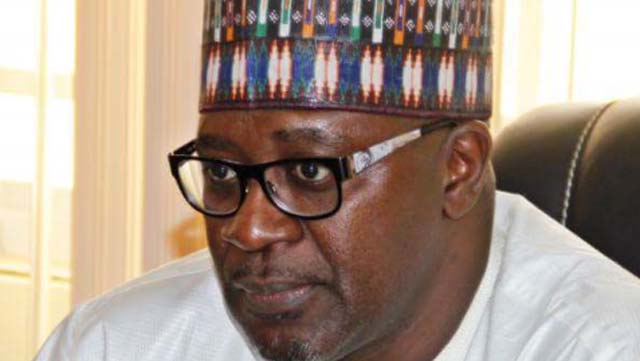
Human rights Writers Association of Nigeria (HURIWA), has accused Modibbo Kawu, director general of the National Broadcasting Commission (NBC) of exhibiting extreme Igbo phobia and for waging a relentless but illegal campaign of Ethnic cleansing through subterfuge of top Igbo born public servants in that federal government’s publicly funded institution.
The prominent pro-democracy and civil Rights advocacy, said that from available information and from investigations it carried out it has found out that the DG is systematically destroying the NBC which was built and nurtured by his predecessors over the years.
HURIWA has therefore asked President Muhammadu Buhari to relieve him of this appointment because he is not a fit and proper person for such a technically oriented position or suspend him for the time being pending the determination of the criminal suit against him which the government is pursuing.
The Rights group said the report which we compiled from our close monitoring of affairs at the NBC has revealed that Modibbo Kawu does not miss any opportunity to tell the world that he is an Hausa-Fulani apologist, and never relents to trace his ancestral origin to a place he fondly calls ‘Wurno’ in either Yobe or Sokoto State.
HURIWA therefore expressed shock that the current administration sits by and allow the National Broadcasting Commission to be reduced to an Ethnic platform by the current DG.
It said that “Soon after he was appointed DG of NBC, he set out to accomplish what can be styled an Ethnic agenda of political and religious victimization of his perceived enemies as well as ethnic cleansing.
He did not waist time to replace the heads of both the Internal Audit and the procurement units, all Igbos.
According to the group, “We have it on good authority that he allegedly told the staff of the NBC on assuming duties, that the president has personally sent him to the Commission to rid it of corrupt licensing practices with regard to license procedures which he called ‘black market’ licensing procedure, and that he was directed by Mr. President to make NBC a world –class Regulatory Agency.
But instead of elevating the Commission, Kawu has eventually brought down the Commission with his allegedly unwholesome and substantially unethical practices. Since he took over the running of the Commission, Modibbo Kawu cannot lay claim of any tangible achievement he has recorded.
He has polarized the agency; the digitization project has gone into comatose. In his pursuit of vainglory he is alleged even on the basis of a public document before the Competent court of law that he allegedly squandered funds meant for the digitization project for which the anti-graft agency- ICPC reportedly instituted a case.
“He also allegedly boasted that it was his writing prowess that earned him his appointment as the DG, NBC. Therefore HURIWA has been informed that he sees every other staff as a threat and a supporter of PDP. He started immediately dislodging whatever jobs or contracts that were carried out by his predecessors and allegedly replaced them with his friends and family members. We will be asking the relevant committees of the National Assembly to investigate these damaging allegations which we gathered authoritatively from our discreet investigations. We want the Senate to interview the staff in camera so it can get the whole gamuts of the mounting allegations against Modibbo Kawu who left to run for Apc’s governorship ticket and returned to still continue the very sensitive job of the chief regulator of the nation’s broadcasting industry in a field the requires the highest standards of global best practices and professionalism devoid of party politics.”
“It was said that immediately, the ICPC started investigation into the N2.5 billion he allegedly paid to a private firm and the winner of a bidding round to join the publicly owned affiliate of NTA as one of the two national Digital Switchover Operator- Pinnacle Communication, claiming he had ministerial approval, he is alleged to have resorted to name calling through his alleged pseudo names, allegedly using the social media to attack his perceived enemies including the HURIWA for daring to probe into the alleged misappropriation of N2.5 billion which was later uncovered by the ICPC. He allegedly made serious effort to blackmail the ICPC, the Vice President, the Minister of Information and Culture, the APC Leader, Ahmed Bola Tinubu and the Yorubas, claiming that they wanted him removed from office”.
“As soon as the case was mentioned in court and witnesses were called by ICPC, he allegedly swore that he was going to deal ruthlessly with the witnesses called by the ICPC from the office to testify what they know about the transaction.”
HURIWA was informed after the last court hearing on July, 2019 and another date fixed for the continuation of the case in October 2019, he fired his first Salvo to his perceived enemies from a particular tribe: the IGBOS, by transferring three very senior officers of Igbo extraction, two of them on Directorate cadre from headquarters, to zonal offices.
“One of the officers he transferred to Enugu was the Secretary to the Management Board who was one of the witnesses in the court case. The DG was said not to be happy about his testimony and swore to deal with him. Ironically, he could not do anything to the other key witnesses who are Directors. One of the key witness in-charge of legal services has already retired. The other is the Director, Engineering/Technology, somebody Kawu cannot do anything against because he is reportedly afraid of him. He is said to know quite well that the Director is very ‘stubborn’ and a no-nonsense person, who says things the way he sees it and is ready to say more, according to sources”.
“HURIWA has been told that another key witness Kawu cannot touch is the Deputy Director of Finance and accounts who authorized the payment.
Our sources said he could not summon enough courage to transfer him after allegedly boasting that he was going to deal with those that testified against him.
He learnt that the Accountant will make so much noise that could attract sympathy from his tribesmen in authority, like the Vice President, the Speaker House of Representative, Senator Bola Ahmed Tinubu and the ICPC. He reportedly chickened out.
Rather, he transferred another Igbo man, a chief accountant to Sokoto zone. His alleged grouse against this man is that he did not allow him to have his way while he served as the Head of Procurement, consequently, he redeployed him to Finance and Accounts and thereafter transferred him to Sokoto. We are demanding thorough probe of these allegations.”
HURIWA said it will also petition the relevant government agencies to find out if the complaints and accusations/allegations of sexual harassment of female staff is true and then take action against the DG of NBC because HURIWA was told the DG recently transferred a lady lawyer who allegedly refused every advances he made on her, on the allegation that she leaked the list of approved broadcast licenses to the press, where he substituted some names and allocated six licenses allegedly to himself, which ICPC is presently said to be investigating. ”
HURIWA has been told that in the history of the NBC, no past Director General has ever allocated any broadcast license to himself, but Kawu within just three years in Office as the DG, has allegedly allocated six broadcast licenses to himself which is why we are asking the Senate to carry out thorough investigation of all the allocations of licenses made so far since the allegations against the DG are not subsiding.
The Rights group said it will be asking the National Assembly to investigate the recent transfers which included some names from the North within their region, because those few Northerners sent to their region is just a mere smokescreen and just a cover up to show some semblance of general transfer.
“The main target is just one tribe, the IGBOS. We tried to find out what admin officers of Directorate cadre will be doing at the zone with officers of the same grade levels heading the zone. Suggestions have been made in the past to redeploy an officer who has been promoted to Directorate cadre at the zone to Headquarters, but he refused. Only to engage in wanton transfer of particular ethnic group from Headquarters to the zonal offices to be redundant and to frustrate such officers out of service. Among those transferred by him recently are two Christians who made their contributions during a general staff meeting held at Headquarters. He did not like the way they presented their contributions during the meeting,according to allegations reaching us.”
“In saner climes, this man (Modibbo Kawu) should have been suspended by the government that appointed him because of the ongoing court case against him. And in some other instances, officers that have court cases would have been interdicted, pending the determination of their cases. This is to avoid any interference whatsoever with the ongoing court case. But he is left by Government to use government money to allegedly prosecute his case against the same government that appointed him, thereby fighting this same government with government money. Using government money since he has not been suspended and therefore getting his juicy payments and using office paraphernalia to fight government by allegedly paying his lawyers with government money is highly unethical. This is very unfortunate and we thereby ask President Buhari to suspend the DG pending the determination of the suit against him by ICPC”.


Mr. Charles Ebuebu, director General of the National Broadcasting Commission (NBC), has called on Nigerian content creators to actively participate in the country’s Digital Switchover (DSO), describing the transition as a major opportunity for visibility, revenue growth, and industry collaboration.

Mr. Charles Ebuebu, DG, NBC
Speaking as Special Guest of Honour at the induction ceremony of the Electronic Media Content Owners Association of Nigeria (EMCOAN) in Lagos, Ebuebu stressed that the success of the DSO depends on engaging content to populate the nation’s new digital channels.
“Without content, the DSO’s success would be incomplete. We are urging content owners to collaborate with the Commission to ensure Nigeria’s digital future is rich, diverse, and sustainable,” he said.
The NBC boss highlighted that the upcoming FreeTV Direct-to-Home (DTH) platform, along with its mobile applications, would provide content creators with nationwide reach, advanced analytics, and brand partnership opportunities.
Nigeria’s DSO, which marks the shift from analogue to digital broadcasting, is being implemented by the NBC using the Nigcomsat satellite infrastructure. The programme aims to deliver over 100 nationwide channels and expand access to Nigerians in remote areas via hybrid decoders, addressing long-standing infrastructure and funding challenges. The project, which has experienced delays since 2012, now has strong government backing and is scheduled for launch in April 2026.
Ebuebu commended EMCOAN members for their contributions to strengthening Nigeria’s creative economy and encouraged them to leverage the opportunities offered by the DSO to promote local stories, culture, and creativity on both national and global stages.
During the ceremony, EMCOAN honoured its distinguished members, naming Wale Adenuga, MFR, as Grand Patron and Mr. Yinka Adebayo as Patron.
Prominent figures in the broadcasting content industry, including Wale Adenuga, Opa Williams, Agatha Amata, Jibe Ologeh, High Chief Emeka Ossai, Debbie Odetayo, Amina Mohammed, and Frank Elaboya, attended the event.
Representing the NBC at the event was Mr. Ralph Akpan, director of the Lagos Zone, while EMCOAN president, Mr. Adeniji Omirin, MD of ADNOM Media, urged members to fully engage in the digital switchover.
Canal+ is to cut jobs at MultiChoice as part of a sweeping restructuring plan aimed at stabilising the African pay-TV operator, following years of operational and financial pressure.

The move comes alongside a planned $115 million capital injection, underscoring the urgency of efforts to revive the business after the French media group took control.
The planned layoffs are expected to form a core element of a broader cost-cutting and efficiency drive, as Canal+ seeks to streamline MultiChoice’s operations and improve profitability.
The restructuring signals a shift toward leaner operations, with a focus on eliminating redundancies and optimising the company’s cost base.
MultiChoice has struggled in recent years with declining subscriber numbers across key African markets, weighed down by macroeconomic pressures, currency volatility, and changing consumer behaviour.
The rise of global streaming platforms has intensified competition, chipping away at the company’s traditional pay-TV dominance.
Canal+’s intervention marks a pivotal moment for MultiChoice, reflecting a more aggressive approach to repositioning the business.
By combining fresh capital with structural reforms, the new owners are aiming to both stabilise short-term performance and lay the groundwork for longer-term growth.
The $115 million injection is expected to provide immediate financial relief, supporting operations and potential strategic initiatives.
However, the accompanying job cuts highlight the depth of the challenges facing the company and the scale of transformation required to restore competitiveness.


Nigeria has ranked first globally in the ownership of the two largest stablecoins, Tether (USDT) and USD Coin (USDC), reflecting the country’s growing reliance on dollar-linked digital assets.

USDT, USDC
Stablecoins such as USDT and USDC are designed to maintain a fixed value against the U.S. dollar, allowing users to store money digitally while avoiding the price volatility associated with cryptocurrencies like Bitcoin.
According to the 2026 Stablecoin Utility Report released by BVNK, about 59 percent of Nigerian crypto users hold USDT, while 48 percent own USDC, giving the country the highest combined ownership rate among all nations surveyed.
The report placed Nigeria ahead of several major economies, including Australia and India, highlighting the country’s strong adoption of dollar-denominated digital assets. Australia ranked second with 34 percent USDT ownership and 29 percent USDC, while India placed third with 30 percent USDT and 27 percent USDC holdings.
The study also examined adoption levels across other regions. Countries such as Colombia and Singapore showed strong usage of both stablecoins, while adoption levels were also notable in South Africa and the United States.
Other markets included in the analysis were Philippines, Thailand and Argentina, where stablecoin ownership has also increased significantly. Among European economies, the report said France and Germany showed moderate levels of adoption, while Latin American markets such as Mexico and Brazil recorded smaller but growing usage rates.
The United Kingdom also appeared in the ranking with modest levels of stablecoin ownership. The report noted that USDT ownership exceeds USDC in many countries, including Nigeria, Australia, India, Singapore, the Philippines, Thailand, Argentina and France.
However, USDC is often viewed as a more compliance-focused stablecoin because of its stronger transparency and regulatory alignment. In some markets, including South Africa, Colombia, Germany and Brazil, the report found that USDC adoption slightly exceeds USDT.
More broadly, the data suggests that stablecoin adoption is being driven largely by emerging economies rather than advanced financial markets. According to the report, countries such as Nigeria, Argentina and the Philippines are among the biggest users of stablecoins, where people increasingly rely on dollar-pegged digital assets to protect savings from currency volatility and facilitate cross-border payments.

Anti Graft Agencies Raise Alarm over Rising Crypto-Linked Financial Crimes

NITDA Takes Over National Digital Architecture System

NDIC Insures 99 Percent of Bank Customers

FG Shifting Focus to “Meaningful Connectivity” to Drive Inclusion – Minister

CBN Bars Chronic Loan Defaulters from Accessing Loans

Spotify’s Loud & Clear Report Reveals Over ₦60Bn Revenue for Nigerian Artists in 2025

Madonna University Taps Tech Guru Adote for Strategic Board Role

China Threatens to Shut Nigeria’s Satellite Over $11.44m Unpaid Debt

MTN Nigeria Posts Record N1.70 Trillion Pre‑Tax Profit, Declares N20 Dividend for 2025

Jumia Tech Week 2026 Begins with Tech Deals on Smartphones, Electronics, and Everyday Technology




 General News2 days ago
NCC to Curb SIM Fraud, Strengthen Digital Security with New Platform

 General News2 days ago
Kidnappers Now Use Banks to Collect Ransoms — Expert

 Broadcasting2 days ago
NBC Boss Urges Content Ceators to Participate in DSO

 E-Financial2 days ago
CBN Says Bank Customers Won’t Lose Deposits because of Recapitalisation

 News2 days ago
Francis Okafor Stuns China, Emerges Second-Place Winner @ Tencent OpenClaw Hackathon

 E-Business2 days ago
Jury Finds Meta, Google Liable for Woman’s Social Media Addiction

 E-Financial1 day ago
Breaking…..Kuda Lays Off Many Employees in Broad Restructuring

 Telecom2 days ago
IFC Invests $45m to Green African Telecom Sites