

Broadcasting
HURIWA Calls Out Kawu over Alleged Ethnic Cleansing at NBC

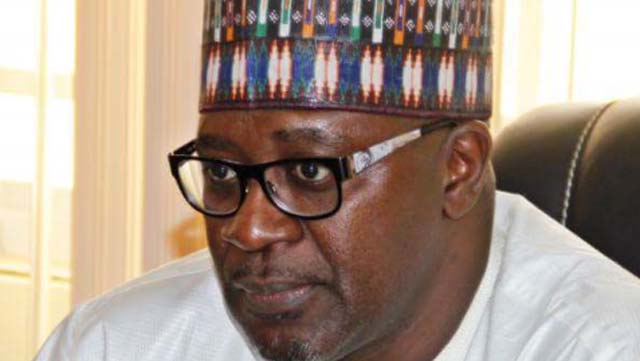
Human rights Writers Association of Nigeria (HURIWA), has accused Modibbo Kawu, director general of the National Broadcasting Commission (NBC) of exhibiting extreme Igbo phobia and for waging a relentless but illegal campaign of Ethnic cleansing through subterfuge of top Igbo born public servants in that federal government’s publicly funded institution.
The prominent pro-democracy and civil Rights advocacy, said that from available information and from investigations it carried out it has found out that the DG is systematically destroying the NBC which was built and nurtured by his predecessors over the years.
HURIWA has therefore asked President Muhammadu Buhari to relieve him of this appointment because he is not a fit and proper person for such a technically oriented position or suspend him for the time being pending the determination of the criminal suit against him which the government is pursuing.

The Rights group said the report which we compiled from our close monitoring of affairs at the NBC has revealed that Modibbo Kawu does not miss any opportunity to tell the world that he is an Hausa-Fulani apologist, and never relents to trace his ancestral origin to a place he fondly calls ‘Wurno’ in either Yobe or Sokoto State.
HURIWA therefore expressed shock that the current administration sits by and allow the National Broadcasting Commission to be reduced to an Ethnic platform by the current DG.
It said that “Soon after he was appointed DG of NBC, he set out to accomplish what can be styled an Ethnic agenda of political and religious victimization of his perceived enemies as well as ethnic cleansing.
He did not waist time to replace the heads of both the Internal Audit and the procurement units, all Igbos.
According to the group, “We have it on good authority that he allegedly told the staff of the NBC on assuming duties, that the president has personally sent him to the Commission to rid it of corrupt licensing practices with regard to license procedures which he called ‘black market’ licensing procedure, and that he was directed by Mr. President to make NBC a world –class Regulatory Agency.
But instead of elevating the Commission, Kawu has eventually brought down the Commission with his allegedly unwholesome and substantially unethical practices. Since he took over the running of the Commission, Modibbo Kawu cannot lay claim of any tangible achievement he has recorded.
He has polarized the agency; the digitization project has gone into comatose. In his pursuit of vainglory he is alleged even on the basis of a public document before the Competent court of law that he allegedly squandered funds meant for the digitization project for which the anti-graft agency- ICPC reportedly instituted a case.
“He also allegedly boasted that it was his writing prowess that earned him his appointment as the DG, NBC. Therefore HURIWA has been informed that he sees every other staff as a threat and a supporter of PDP. He started immediately dislodging whatever jobs or contracts that were carried out by his predecessors and allegedly replaced them with his friends and family members. We will be asking the relevant committees of the National Assembly to investigate these damaging allegations which we gathered authoritatively from our discreet investigations. We want the Senate to interview the staff in camera so it can get the whole gamuts of the mounting allegations against Modibbo Kawu who left to run for Apc’s governorship ticket and returned to still continue the very sensitive job of the chief regulator of the nation’s broadcasting industry in a field the requires the highest standards of global best practices and professionalism devoid of party politics.”
“It was said that immediately, the ICPC started investigation into the N2.5 billion he allegedly paid to a private firm and the winner of a bidding round to join the publicly owned affiliate of NTA as one of the two national Digital Switchover Operator- Pinnacle Communication, claiming he had ministerial approval, he is alleged to have resorted to name calling through his alleged pseudo names, allegedly using the social media to attack his perceived enemies including the HURIWA for daring to probe into the alleged misappropriation of N2.5 billion which was later uncovered by the ICPC. He allegedly made serious effort to blackmail the ICPC, the Vice President, the Minister of Information and Culture, the APC Leader, Ahmed Bola Tinubu and the Yorubas, claiming that they wanted him removed from office”.
“As soon as the case was mentioned in court and witnesses were called by ICPC, he allegedly swore that he was going to deal ruthlessly with the witnesses called by the ICPC from the office to testify what they know about the transaction.”
HURIWA was informed after the last court hearing on July, 2019 and another date fixed for the continuation of the case in October 2019, he fired his first Salvo to his perceived enemies from a particular tribe: the IGBOS, by transferring three very senior officers of Igbo extraction, two of them on Directorate cadre from headquarters, to zonal offices.
“One of the officers he transferred to Enugu was the Secretary to the Management Board who was one of the witnesses in the court case. The DG was said not to be happy about his testimony and swore to deal with him. Ironically, he could not do anything to the other key witnesses who are Directors. One of the key witness in-charge of legal services has already retired. The other is the Director, Engineering/Technology, somebody Kawu cannot do anything against because he is reportedly afraid of him. He is said to know quite well that the Director is very ‘stubborn’ and a no-nonsense person, who says things the way he sees it and is ready to say more, according to sources”.
“HURIWA has been told that another key witness Kawu cannot touch is the Deputy Director of Finance and accounts who authorized the payment.
Our sources said he could not summon enough courage to transfer him after allegedly boasting that he was going to deal with those that testified against him.
He learnt that the Accountant will make so much noise that could attract sympathy from his tribesmen in authority, like the Vice President, the Speaker House of Representative, Senator Bola Ahmed Tinubu and the ICPC. He reportedly chickened out.
Rather, he transferred another Igbo man, a chief accountant to Sokoto zone. His alleged grouse against this man is that he did not allow him to have his way while he served as the Head of Procurement, consequently, he redeployed him to Finance and Accounts and thereafter transferred him to Sokoto. We are demanding thorough probe of these allegations.”
HURIWA said it will also petition the relevant government agencies to find out if the complaints and accusations/allegations of sexual harassment of female staff is true and then take action against the DG of NBC because HURIWA was told the DG recently transferred a lady lawyer who allegedly refused every advances he made on her, on the allegation that she leaked the list of approved broadcast licenses to the press, where he substituted some names and allocated six licenses allegedly to himself, which ICPC is presently said to be investigating. ”
HURIWA has been told that in the history of the NBC, no past Director General has ever allocated any broadcast license to himself, but Kawu within just three years in Office as the DG, has allegedly allocated six broadcast licenses to himself which is why we are asking the Senate to carry out thorough investigation of all the allocations of licenses made so far since the allegations against the DG are not subsiding.
The Rights group said it will be asking the National Assembly to investigate the recent transfers which included some names from the North within their region, because those few Northerners sent to their region is just a mere smokescreen and just a cover up to show some semblance of general transfer.
“The main target is just one tribe, the IGBOS. We tried to find out what admin officers of Directorate cadre will be doing at the zone with officers of the same grade levels heading the zone. Suggestions have been made in the past to redeploy an officer who has been promoted to Directorate cadre at the zone to Headquarters, but he refused. Only to engage in wanton transfer of particular ethnic group from Headquarters to the zonal offices to be redundant and to frustrate such officers out of service. Among those transferred by him recently are two Christians who made their contributions during a general staff meeting held at Headquarters. He did not like the way they presented their contributions during the meeting,according to allegations reaching us.”
“In saner climes, this man (Modibbo Kawu) should have been suspended by the government that appointed him because of the ongoing court case against him. And in some other instances, officers that have court cases would have been interdicted, pending the determination of their cases. This is to avoid any interference whatsoever with the ongoing court case. But he is left by Government to use government money to allegedly prosecute his case against the same government that appointed him, thereby fighting this same government with government money. Using government money since he has not been suspended and therefore getting his juicy payments and using office paraphernalia to fight government by allegedly paying his lawyers with government money is highly unethical. This is very unfortunate and we thereby ask President Buhari to suspend the DG pending the determination of the suit against him by ICPC”.


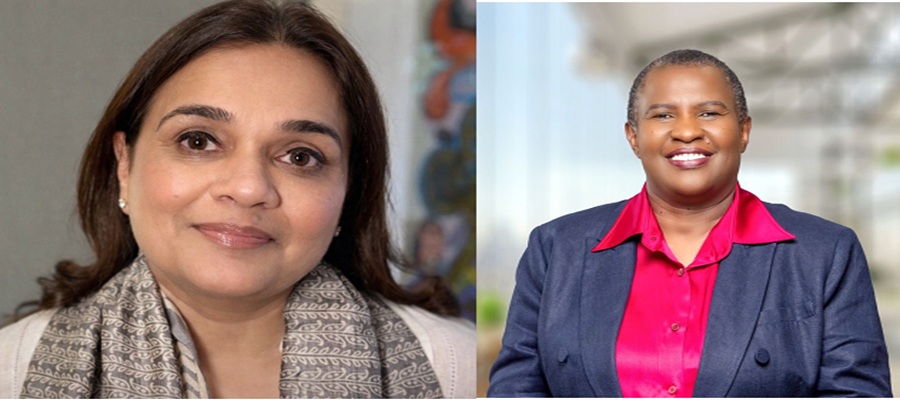


Broadcasting Organization of Nigeria (BON) has established six committees to help strengthen and modernize the country’s broadcasting industry.

The committees will focus on content creation, skills development, digital transformation, sustainability, policy and commercial opportunities
The initiative aims to support industry growth and improve collaboration between broadcasters, regulators and media experts
The official launch recently, was led by Tony Akiotu, president, BON and attended by media professionals, program directors, former journalists and heads of specialized media organizations.
The event brought together several prominent figures in Nigeria’s media industry, including veteran broadcaster and trainer Bimbo Oloyede, Tony Uyah of M4S TV, Kingsley Uranta of Channels Television, Ismael Sani of Platinum TV and Ibrahim Shehu of Trust TV.
Together, they are expected to help drive innovation and support the growth of Nigeria’s broadcasting sector.
According to Akiotu, the committees are intended both to help shape industry policy and to provide a forum for dialogue between BON and broadcasting experts.
Akiotu said the ad hoc committees were intended to strengthen BON’s work and ensure that the umbrella body for Nigeria’s broadcasters played a more direct and meaningful role in developing the country’s broadcasting sector.
The six committees reflect the sector’s main priorities. The first focuses on collaboration and innovation to promote content creation.
The second is dedicated to training and talent development, while the third focuses on industry sustainability by improving the sector’s long-term financial viability.
A fourth committee will focus on digital transformation and work with the National Broadcasting Commission (NBC) on regulatory issues.
The remaining two committees will oversee public policy advocacy and the development of sports and commercial rights to help broadcasters increase revenue and attract more investment. Together, the committees are expected to guide BON’s efforts to modernize and strengthen Nigeria’s broadcasting industry.
The committees, chaired by members of BON’s General Assembly and supported by the organization’s Secretariat, have an initial 12-month mandate that may be renewed if necessary.
They are required to submit a progress report within three months and implement approved recommendations within the following six months.
The arrangement is intended to ensure close oversight and the timely implementation of their work.
Akiotu also reminded committee members that Nigeria pioneered television broadcasting in Africa and urged them to carry out their work with greater effectiveness and efficiency.
Nigerian Education Loan Fund (NELFUND) says it is investigating about 34 tertiary institutions over allegations that they failed to refund students whose tuition fees were paid twice under the Federal Government’s student loan scheme.

The Managing Director of NELFUND, Mr Akintunde Sawyerr, disclosed this during an interview on Arise Television.
Sawyerr said the agency had deployed a five-member investigative team, including operatives of the Economic and Financial Crimes Commission (EFCC) and internal auditors, to examine the allegations.
According to him, the investigation was prompted by numerous complaints received from affected students.
“As of right now, there are 34 institutions that we are looking at closely with respect to this issue,” he said.
Sawyerr explained that the double payment issue arose because President Bola Tinubu directed that the student loan scheme commence in the middle of an academic session instead of at the beginning.
He said the decision compelled many students to pay their tuition fees to meet registration deadlines while awaiting approval of their loan applications.
“What happened is that a lot of schools got double payment; some from the students and some from us,” he said.
“The refund process is entirely out of our hands. It is the recipient of the double payments that is obliged to make refunds to the students.”
The NELFUND boss noted that many students had borrowed money from family members, friends and other sources to pay their tuition with the expectation of receiving refunds once the loans were disbursed.
He said while some institutions had promptly refunded affected students, others had failed to do so.
“Some have been very good at this. Others haven’t been so good at it,” Sawyerr said.
“I reserve judgement on the intentionality around it because, for some of them, they just didn’t have the process to make refunds.”
Sawyerr disclosed that NELFUND was exploring a tokenised payment system that would enable students to authorise tuition payments directly to their institutions, thereby reducing the likelihood of duplicate payments.
He said the agency deliberately chose not to disburse tuition loans directly to students to minimise the risk of fund diversion.
“Paying the funds to the students could really lead to the temptation for them to divert and do other things,” he said.
The managing director, however, acknowledged that NELFUND lacked the statutory powers to compel institutions to refund students or prosecute officials found culpable.
He added that many frustrated students had submitted complaints not only to NELFUND but also to anti-corruption agencies, including the EFCC and the Independent Corrupt Practices and Other Related Offences Commission (ICPC).
Sawyerr also expressed concern over increases in tuition fees by some institutions following the introduction of the student loan scheme.
He said NELFUND had declined to pay institutions that increased their tuition fees beyond acceptable levels.
“Some schools, because they get paid easily, started to put up their fees. We refused, point blank, to pay institutions who had hiked their fees beyond a certain level,” he said.
He reaffirmed the agency’s commitment to investigating every reported irregularity and strengthening the implementation of the student loan programme through continuous monitoring and internal reviews.

Police Busts Syndicate Who Allegedly Stole N3Bn from Financial Institution

MTN Accelerates Network Expansion to Meet Surging Telecom Demand

Court Remands Akujobi, Ex Access over alleged Theft of N294.5m

TeKnowledge, Equinix Partner to Advance Nigerian Digital Infrastructure

NSIB Faults Runway Identification, Reveals Cockpit Disagreement in Asaba Jet Incident

NASENI Moves to Digitize CCB’s 5m Assets Declaration and Operations

Mobile Internet Gender Gap Widest in Africa – GSMA

Nigeria Launches FreeTV Nationwide

CANAL+ Partners Samsung to Pre-Load DStv Stream on New Samsung TVs In Nigeria, Other African Countries

Lebara Nigeria Launches Lebara Play, Africa’s First Telecom-Owned Micro-Drama Platform




 Telecom2 days ago
NCC Seeks Cost-Based Pricing Framework for Ducts

 E-Financial2 days ago
CBN Warns against Rejection of N100 Banknotes

 News2 days ago
Flutterwave Secures Circle Ventures Investment to Deepen USDC Payment

 Telecom1 day ago
Fixed Wired Internet Market Lags as Mobile Gains Ground

 Telecom2 days ago
Meta Introduces Muse Image With Advanced AI Image Editing Across WhatsApp and Instagram

 E-Financial2 days ago
BVN Enrollments Hit 69.55m- NIBSS

 News2 days ago
How EFCC Turned Recovered Loot Into School Supplies for Thousands of Nigerian Students

 News2 days ago
CJN Warns Judges: Reject Gifts or Risk Petitions and Ruined Careers