

News
Hydro Electric Core Generator Bags Renewable Energy Innovation Challenge 2024

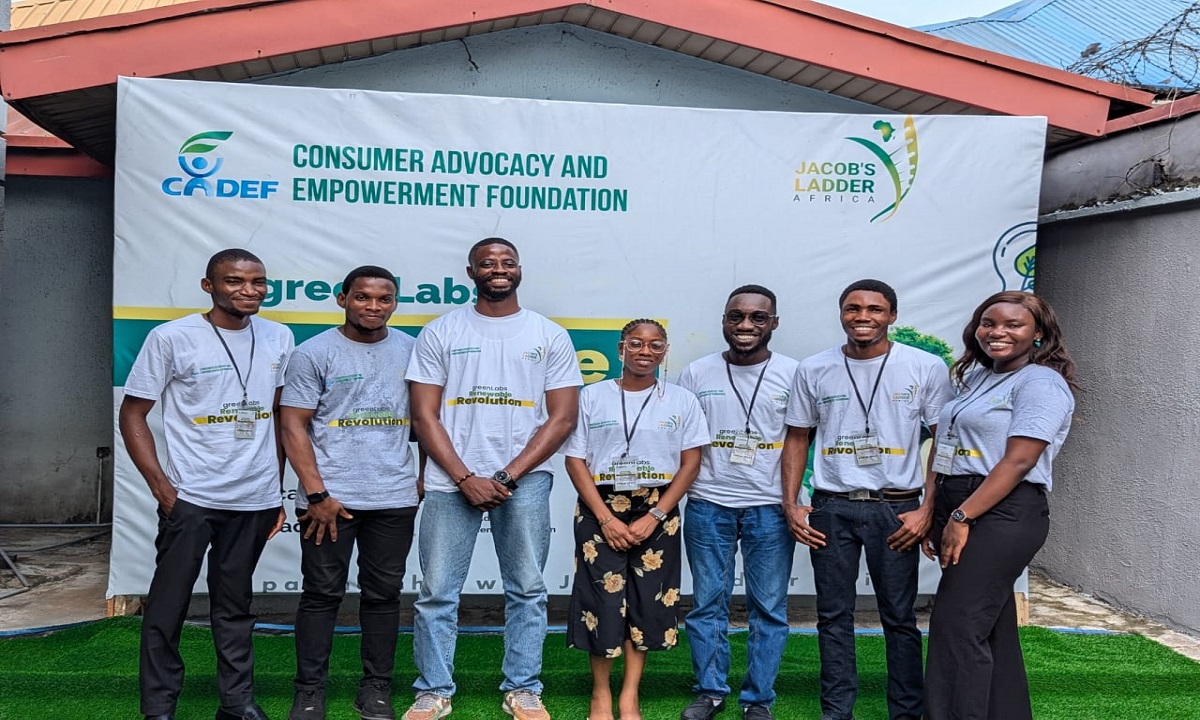
Hydro Electric Core Generator has emerged as the winner of the Renewable Energy Innovation Challenge 2024, earning accolades for its innovative approach to addressing Nigeria’s pressing electricity deficit.

Out of 12 groundbreaking projects that made it to the final stage, including solutions like Waste2Light, Agroflow, and SunPod, the Hydro Electric Core Generator clinched the top spot for its unique, scalable approach to hydroelectric power generation.
Agroflow was named the Audience Favorite for this year’s competition, while E-Waste2E-Access took second place, with Loopbox securing the third position.
James Emmanuel Ikenna, the visionary founder of the Hydro Electric Core Generator, expressed his deep commitment to improving energy access in Nigeria.
“Nigeria has the highest number of people without access to electricity in the world, with over 86 million people still without power,” Ikenna said.
He believes that his innovation could bridge this gap, particularly in rural areas where access to conventional power sources is limited.
Unlike traditional large-scale hydroelectric generators that require extensive infrastructure and large dams, Ikenna’s Hydro Electric Core Generator is designed for smaller-scale, affordable deployment.
The device operates using a pump inside a tank, which transfers water to a small receiver tank acting like a capacitor, smoothing the flow of DC current.
This design eliminates the need for fuel, relying solely on water that recycles within the system, making it not only sustainable but highly cost-effective.
The Hydro Electric Core Generator’s 3kVA model, estimated to cost around N200,000 to build and around N220,000 to N230,000 to purchase, could provide a viable power source for low-income households and communities.
“You don’t need fuel, just water, which is reserved within the system,” Ikenna noted, emphasizing its affordability.
In his acceptance speech, Ikenna expressed gratitude to Consumer Advocacy and Empowerment Foundation (CADEF) and Jacob’s Ladder Africa for supporting him, while also appealing to the government, private sector, and funders to help bring his vision to life.
“This project should be made available for rural communities with limited energy access,” he urged.
“Electricity fosters great research and can drive technological advancement in society.”
In her opening remarks, the executive director, CADEF, Prof. Chiso Ndukwe-Okafor, said today concluded the three-week Renewable Energy Innovation Challenge, an initiative designed to foster clean energy solutions from innovators across Nigeria.
Held in partnership with Kenya-based organization Jacob’s Ladder Africa, the Innovation Challenge aims to equip young Nigerian entrepreneurs with the skills, mindset, and resources needed to develop sustainable, climate-friendly business ideas.
“We launched this challenge as a platform for participants to refine their ideas with the help of mentors and industry experts,” said Prof. Ndukwe-Okafor.
“Some participants brought new concepts, while others refined existing ones. Today, we’ve seen a variety of presentations that reflect the depth and creativity in Nigeria’s clean energy sector.”
Prof. Ndukwe-Okafor therefore tasked the innovators on mindset adjustment, adding that, “Without a shift in perspective, we risk following the same ineffective paths that have held back our country.
“By building the right business and financial structures, we aim to position these entrepreneurs for success and sustainability.”
Through this innovation challenge, CADEF and JLA envision creating a generation of Nigerian entrepreneurs equipped not only with innovative solutions but also with the resilience and skills to sustain and scale their businesses, ultimately contributing to Nigeria’s energy independence and economic growth.
Karen Chelangat, Chief Innovation Officer at JLA, emphasized the importance of partnerships in tackling the significant challenges across Africa.
“The challenges in Africa require collaboration among people and organizations with aligned values and visions for socio-economic gains across the continent,” she said.
“Nigeria, with its large population and vast pool of young talent, is a key player in driving impactful solutions for the region. CADEF stood out as a partner with whom we share a commitment to equitable and socio-economic empowerment.”
Chelangat spoke about JLA’s ambitious goal to create 30 million jobs in Africa’s green economy by 2033. “Africa faces high unemployment, yet global investment in the green economy is accelerating,” she noted.
“In 2022, the U.S. invested as much in renewable energy as it did in fossil fuels, signaling the global shift. Our mission is to prepare young Africans to tap into these opportunities.
“We’re focused on empowering them with skills in renewable energy, water and waste management, and sustainable food systems.”
Gaji Omobolaji Tajudeen, Permanent Secretary of the Office of Environment Services, Lagos, therefore urged the young innovators to seize the moment.
“Your ideas are not just concepts; they have the potential to reshape communities and create sustainable futures.
“We must innovate for today while considering the long-term impacts on our society, economy, and environment,” he stated.



Ola Olukoyede, chairman of the Economic and Financial Crimes Commission (EFCC), has disclosed that the commission recovered more than N7.2 million stolen from the bank account of a serving judge by suspected internet fraudsters in a midnight cyberattack.

Ola Olukoyede, Chairman of the Economic and Financial Crimes Commission (EFCC).
Olukoyede made the disclosure at the public presentation of two books authored by retired High Court judge, Justice Alaba Omolaye-Ajileye.
He said the serving judge, who is from a South-South state, contacted him around 1:00 a.m. after receiving multiple debit alerts indicating that funds had been withdrawn from her account.
According to him, the stolen money represented savings the judge had accumulated over six years to finance her child’s education.
Olukoyede said the EFCC immediately swung into action and successfully recovered the entire sum before 6:00 p.m. on the same day.
He said the incident underscored the increasing sophistication of cybercriminals and the urgent need for stronger collaboration among law enforcement agencies, the judiciary and members of the public in tackling financial crimes.
The EFCC chairman also called for amendments to Nigeria’s legal framework to accommodate the use of artificial intelligence (AI) in criminal investigations and prosecutions.
According to him, existing evidence laws should be reviewed to recognise AI-generated evidence as technology continues to reshape crime detection and investigation.
Also speaking at the event, former Attorney-General of the Federation and Minister of Justice, Chief Kanu Agabi (SAN), urged anti-corruption agencies to intensify efforts to trace and recover public funds allegedly stolen and stashed in foreign countries.
Agabi stressed the need for sustained collaboration among relevant institutions to strengthen Nigeria’s anti-corruption efforts and improve accountability in public service.
In his remarks, a former President of the Nigerian Bar Association (NBA), Chief Wole Olanipekun (SAN), called for stricter enforcement of the country’s cybercrime laws to curb the growing menace of internet fraud.
Olanipekun said effective implementation of existing laws, alongside stronger institutional cooperation, would help address the increasing threat posed by cybercriminals to individuals and the nation’s financial system.

Federal Government has cleared nearly N39 billion in outstanding pension liabilities owed to retirees under the Defined Benefit Scheme (DBS), including former employees of the defunct Nigerian Telecommunications Limited (NITEL), Mobile Telecommunications Limited (MTEL), the Power Holding Company of Nigeria (PHCN) and other federal government agencies.

The Pension Transitional Arrangement Directorate (PTAD) disclosed this in a statement, saying the payments were in line with President Bola Tinubu’s Renewed Hope Agenda, which prioritises the settlement of inherited pension liabilities and improved welfare for retired public servants.
According to the directorate, the largest component of the payment, amounting to N25 billion, covered about 35 months of outstanding pension arrears owed to nearly 10,000 eligible retirees of the defunct NITEL and MTEL.
PTAD also said it disbursed about N9.5 billion as the first tranche of Back End Computation (BEC) arrears to eligible pensioners of the defunct Power Holding Company of Nigeria.
The Executive Secretary of PTAD, Mrs Tolulope Odunaiya, described the payments as a significant milestone in the Federal Government’s efforts to clear inherited pension obligations and strengthen confidence in the Defined Benefit Scheme.
Odunaiya said the settlement was made possible following presidential approval granted in 2025 and funding provided under the 2026 Appropriation Act.
She noted that the intervention had enabled the directorate to resolve long-standing pension liabilities affecting thousands of retirees.
“The successful settlement reflects the Federal Government’s commitment to sustaining pension reforms and ensuring that retirees receive their entitlements promptly in line with the objectives of the Renewed Hope Agenda,” she said.
Odunaiya thanked the affected pensioners for their patience while the liabilities remained outstanding and reaffirmed PTAD’s commitment to transparent, efficient and pensioner-focused service delivery.
She added that the directorate would continue to work towards improving pension administration and ensuring timely payment of retirees’ benefits.


A Federal High Court, Lagos has declared Mrs. Ebele Okpala, a female banker with Keystone Bank, wanted over alleged N35 million fraud.

Apart from declaring the banker who is said to be outside the country wanted, Justice deinde Dipeolu, trial judge in the matter, also directed the Department of State Security (DSS), Nigerian Immigration Service (NIS), and Nigeria Customs Service (NCS), to arrest her upon arriving the country.
Justice Dipeolu made the above order while granting a motion ex-parte marked FHC/L/530C/2024, filed and moved by M. Bello, on behalf of the Nigeria Police.
In the motion, Ebele Okpala and one Perpetual Onyeto, also a banker were listed as first and second defendants/respondents in the suit, while DSS, NIS and NCS were listed as cited parties/respondents.
In urging the court to make the above orders, Bello, informed the court that the application was pursuant to several sections of the Administration of Criminal Justice Act (ACJA) 2015, and under the court’s inherent jurisdiction. Adding that the application was supported by an affidavit deposed to by Inspector Tope Akerele of the Force Criminal Investigation Department (FCID), Special Fraud Unit (SFU), Ikoyi, Lagos.
In granting the application, Justice Dipeolu held, “After considering the application and the supporting affidavit, the request had merit and granted all the reliefs sought by the prosecution.
“That an order is hereby made that the 1st defendant/despondent be declared wanted and placed on the wanted list of the Nigeria Police Special Fraud Unit, 13, Milverton Road, Ikoyi, Lagos until she is arrested.
“That an order is hereby made compelling cited parties/respondents to assist in apprehending 1st defendant/Respondent once he enters into the country.
“That an order is hereby made permitting the Publication of the name of the 1st defendant/despondent in the National Daily Newspapers and Social Media handles by the Nigeria Police Special Fraud Unity Ikoyi, Lagos for the purpose of fulfilling the requirement of the Order 1 above.”
Recall that both the wanted banker and the second defendant/respondent were previously arraigned before the court by the operatives of the police Special Fraud Unit, PSFU.
Specifically, the two bankers were arraigned before the court sometimes in September 2024, on alleged conspiracy, theft, money laundering, fraudulent lift of lien placed on bank’s customer’s account and obtaining the sum of N35 million by false presence.

World Bank Okays New $1.25Bn Loan for Nigeria

Xenophobia: MTN Nigeria Belongs to Nigerians, Not Only South Africans — Toriola

SEC Grants Approval to Luno, Other Crypto Firms under Regulatory Sandbox

MTN Nigeria Celebrates Volunteers at Y’ello Care Impact Showcase

Listicle: 10 Essential Meta Safety Tools Every Parent and Teen Should Know

Mobile Internet Gender Gap Widest in Africa – GSMA

London Strengthens Global Investment Ties with Africa @ First Ever London-Africa Business Summit

FG Targets Alleged N3tn Capital Flight, Opens Airtime Credit Market to Nigerian Fintechs

Nigeria Launches FreeTV Nationwide

NASENI Trains 50 Women in Kano on Renewable Energy Technologies Under She-Powers Initiative



 Telecom2 days ago
MTN Foundation, Microsoft Empower Nigerian Educators with AI Integration Skills

 E-Financial3 days ago
UBA Surprises Thousands of Customers with Over ₦400 Million Cash Bonus

 Broadcasting2 days ago
Spotify partners Afro Nation Portugal to expand African music experience

 Telecom2 days ago
NCC Raises Alarm as Nigeria Lags in Fibre Internet, Pushes for Urgent Expansion

 Telecom2 days ago
Airtel Nigeria CEO Urges Adoption of Intelligent Technology Platforms to Accelerate National Growth

 E-Financial2 days ago
CBN Cracks Down, Revokes Licences of 46 Microfinance Banks

 E-Business2 days ago
Report Reveals More than Half of Users Encountered Fraud or Scams Online

 Telecom2 days ago
WhatsApp Usernames Spark Privacy Fears