

News
Hyprop & Attacq Acquire 100% Interest in Nigeria’s Ikeja City Mall

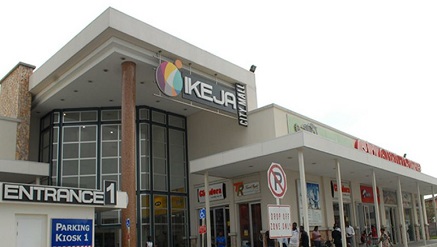
Actis, a leading emerging markets investor, RMB Westport, a notable sub-Saharan Africa real estate investment management and development group and Paragon Holdings, a leading Nigerian investor group have confirmed the sale of Ikeja City Mall to South African Real Estate Investment Trust (REIT), Hyprop Investments Limited (Hyprop) and Attacq Limited (Attacq), a JSE-listed real estate capital growth fund.
Hyprop acquired a 75% interest in Ikeja City Mall and Attacq has acquired the remaining 25%.
Actis and local partner Paragon Holdings sourced the development site in 2008.
RMB Westport, initially appointed by Actis as the development manager in 2008, invested as an equity partner in 2010.
Actis has now sold its 60% majority stake, while Paragon Holdings and RMB Westport have both sold their 20% stakes in the mall.
Ikeja City Mall, Lagos’ largest mall, is a world-class retail and leisure development in Ikeja, a densely populated suburb of Lagos, with a population of 4.5 million people.
As the largest mall in Lagos it comprises over 22,000m² and has a tenant mix anchored by Shoprite, offering South African brands including Mr Price, Spur, MTN and Markham and international brands including Nike, Lacoste, Tommy Hilfiger, TM Lewin, Mango, i-Store, KFC, and Max Fashion.
Actis and RMB Westport managed the development process from concept to completion: investing the initial equity; raising development finance; managing the construction; securing the tenants; operating the mall and bringing it to market at the right time, working in partnership with Paragon Holdings.
The mall opened its doors in December 2011 fully let, and today attracts up to 800,000 shoppers per month.
Ikeja City Mall is Hyprop’s first investment in Nigeria. This acquisition is an attractive investment and complements Hyprop’s strategy of investing in high quality, income-producing shopping centres, in key cities across sub-Saharan Africa.
Pieter Prinsloo, CEO of Hyprop, commented: “Hyprop is well‐placed to capitalise on opportunities across sub-Saharan Africa, due its partnership with the Atterbury Group and Attacq, whose combined expertise facilitates exploiting opportunities as they arise.”
David Morley, head of Real Estate at Actis, commented: “This sale reflects the strong retail opportunity in West Africa and the interest of quality institutional investors in sub-Saharan real estate assets. This is the sixth exit from the first Actis real estate fund. It is a continuation of Actis’ proven cash to cash track record of delivering A-grade real estate assets in sub-Saharan Africa, positioned to be attractive to both international and local institutional buyers. Over two funds, Actis has committed to 17 institutional quality developments in seven countries totalling a gross asset value of $1.3bn.”
“RMB Westport has earmarked a number of sub-Saharan Africa territories as key jurisdictions in which to develop retail and commercial property. Private consumption is increasingly emerging as one of the key drivers of growth in African economies, and foreign direct investment remains strong. RMB Westport’s current portfolio of 11 investment-grade developments with a gross asset value of $1bn is perfectly placed to unlock investor value. Reliable project delivery, which has been central to Ikeja City Mall’s success, is our core focus,” says Michael O’Malley, Director of RMB Westport who has spent the past 20 years working on retail and mixed-use projects in 12 African countries.
Morné Wilken, CEO of Attacq, said: “Our strategic investment in Ikeja City Mall forms part of Attacq’s larger African investment strategy and was executed with the assistance of the experienced AttAfrica team. It is our first investment in Nigeria, an African market with fantastic growth prospects. It adds to our investment in the growing portfolio of dominant, quality retail malls in sub-Saharan Africa.”
Frank Obi, group executive director of Paragon Holdings commented “We are pleased to have been a part of this landmark project from its inception to the present. It is a testament to the foresight and resolve of our leadership, and to the position of Lagos State and its government as leading hosts to serious investors in Africa. We look forward to working with quality foreign investors to develop outstanding real estate projects in the years ahead.”
Actis invests exclusively in the emerging markets with a growing portfolio of investments in Asia, Africa and Latin America; it currently has US$7.6 billion funds under management. Applying developed market disciplines to emerging markets, c. 100 investment professionals in ten countries identify investment opportunities in private equity, energy and real estate.
Africa lies at the core of our firm’s investment strategy. Over 40% of Actis’ investments are located in Africa, with over $1.9 billion invested across 18 countries on the Continent.
Actis is the most experienced private equity real estate investor in sub-Saharan Africa, with a track record that pre-dates its first closed-end fund formed in 2006. Since then the firm has led investment in 17 developments totalling $1.3bn gross asset value in eight cities across seven countries, and sold six of them. Its highly experienced team has an average of 20 years in real estate.
Also, Africa’s leading specialist shopping centre REIT, operates an internally managed portfolio of shopping centres in major metropolitan areas across South Africa.
Hyprop also has a growing presence in sub-Saharan Africa, through a joint venture with Attacq Limited (Attacq) and the Atterbury Group.
All investments in sub-Saharan Africa (excluding South Africa) are held through Hyprop Investments Mauritius, a wholly owned subsidiary of Hyprop. The sub-Saharan African portfolio includes shopping centres Accra Mall, Westhills Mall and the recently opened Achimota Mall (all in Accra, Ghana), and Manda Hill Centre in Lusaka, Zambia. Construction is underway at Kumasi City Mall, Kumasi, Ghana (completion date 2017).
Similarly, Attacq is a leading South African capital growth property company listed on the JSE. Attacq’s vision is to deliver exceptional sustainable capital growth through creative local and international real estate developments and investments.
Attacq pursues this vision through its strategic drivers of Invest, Develop and Grow. Attacq’s business has two key focus areas: Investments and Developments. Investments comprise completed buildings held directly and indirectly.
Developments comprise land, greenfields development of land or brownfields development by refurbishment of existing buildings. Investments provide stable income and balance sheet strength to responsibly secure and fund high-growth opportunities within Developments.
RMB Westport is a real estate investment management and development firm, focused on creating value-added real estate developments in high-yield geographies in sub-Saharan Africa. RMB Westport is a joint venture between Rand Merchant Bank (RMB), a division of FirstRand Bank Ltd and the Westport Property Group.
RMB Westport’s real estate and property development experts are renowned for their innovative approach to developing sustainable solutions.
RMB Westport develops properties that maximise investor value by delivering the right projects, in the right location, on time and on budget. Please visit www.rmbwestport.com for more information.
Paragon Holdings Limited (PHL) is a diversified Pan African conglomerate with interests in strategic sectors of the economy in Nigeria and across Africa.
The overriding objective of the Group is to create thriving businesses manned by competent human resources to deliver the value proposition for each business initiative.



National Agency for Food and Drug Administration and Control (NAFDAC) has alerted Nigerians on counterfeit and unregistered Cerelac Mixed Fruits and Wheat products being sold in Lagos.

NAFDAC said Nestle Nigeria, the genuine Marketing Authorisation Holder of the product, received a complaint of suspected counterfeit purportedly manufactured by Nestlé Spain, bearing Batch Code 308002910.
It said that Nestle Nigeria reported that the complainant described that the counterfeit product emitted an odour suggestive of possible contact with fuel.
NAFDAC said that preliminary review of the product by Nestle Nigeria indicated that it had expired, in spite of the container displaying an expiry date of 10-2026, which suggested that the date coding had been tampered with (revalidated).
Nestle Cerelac Mixed Fruits and Wheat is a nutritious infant cereal, designed to be a delicious first food for infants.
NAFDAC said that its post-marketing surveillance’s directorate officers in Lagos conducted a surveillance visit to Maxland Shopping Centre, 193 Ago Palace, Okota, where the product was purchased by the complainant.
It added that the suspected counterfeit and unregistered Cerelac were found on sale at the premises and subsequently mopped up, while Nestle assisted in identifying the distinguishing features between registered and unregistered product.
According to the regulatory agency, Nestle revealed that the unregistered product used a hyphen (-) to separate the day from the year, while the registered product used a slash (/) to separate the day from the year.
“It is important to note that Nestle Nigeria is not aware of the channels through which the products are supplied into the country.
“Healthcare professionals and consumers are advised to report any suspicion of the sale of substandard and falsified regulated products to the nearest NAFDAC office, call 0800-162-3322, or send an email to [email protected],” NAFDAC said.
The agency warned that counterfeit formula often lacked essential nutrients, vitamins and minerals, leading to stunted growth or developmental issues.
It said that such formula might also contain contaminants that might lead to severe health consequences to infants or even death.
NAFDAC reiterated its commitment to safeguarding public health adding that it would continue surveillance activities to ensure the quality, safety, and efficacy of all NAFDAC-regulated products circulating in Nigeria.
It said that all zonal directors of the agency and state coordinators had been directed to carry out surveillance and mop up the revalidated product, if found within the zones and states.
The agency urged distributors, retailers, healthcare professionals, and caregivers to exercise caution and vigilance within the supply chain, to avoid the distribution, sale, and use of fake products.

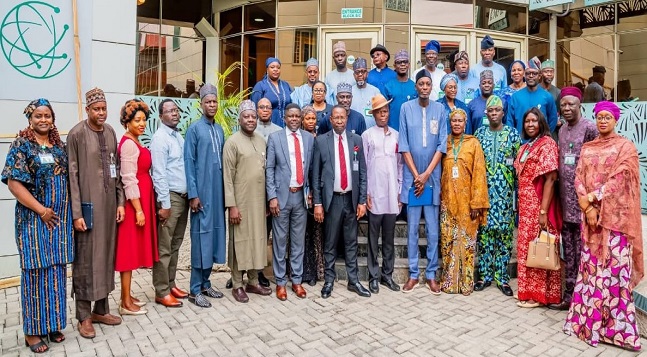
The National Information Technology Development Agency (NITDA) has reinforced its commitment to advancing Nigeria’s digital transformation agenda through strengthened collaboration with key strategic institutions, as it hosted the Director General of the National Institute for Policy and Strategic Studies (NIPSS), Professor Ayo Omotayo, alongside participants of the Senior Executive Course (SEC) 48, 2026.

The visit, which builds on an earlier strategic study tour, provided a platform for in-depth engagement on the role of digital innovation in driving sustainable economic growth, with particular focus on the Orange Economy.
Representing the Director General of NITDA, Kashifu Inuwa CCIE, the Director of Stakeholder Management and Partnerships, Dr Aristotle Onumo, highlighted the Agency’s commitment to fostering a vibrant digital ecosystem through inclusive policies, strategic partnerships, and capacity development initiatives.
“NITDA is committed to creating an enabling environment where innovation can thrive by bringing together government, private sector, academia, and creatives to drive Nigeria’s digital economy,” he stated.
Inuwa underscored the growing importance of the Orange Economy, describing it as a critical driver of innovation and economic value through intellectual property. He identified sectors such as digital content creation, film, animation, and digital art as key contributors to national development.
“The Orange Economy represents a powerful opportunity to transform our rich cultural heritage and creativity into sustainable economic growth,” he noted.
He further highlighted Nigeria’s unique advantage, particularly its youthful and creative population, while calling for stronger collaboration among stakeholders to fully harness the sector’s potential.
“With our youthful population and rich cultural assets, Nigeria is well-positioned to become a global leader in the Orange Economy if we deepen collaboration and investment across the ecosystem,” he added.
During the engagement, NITDA also presented its strategic initiatives aimed at supporting the digital and creative sectors, including digital infrastructure development, promotion of digital literacy, and implementation of policies that enable startups and innovators to scale.
Addressing challenges facing the sector, Inuwa pointed to issues such as limited access to funding, infrastructure gaps, weak intellectual property protection, and ecosystem fragmentation, while emphasising the need for coordinated action.
“Addressing challenges such as funding gaps, infrastructure deficits, and intellectual property protection is critical to unlocking the full potential of Nigeria’s creative economy,” he said.
The Agency reiterated its target of achieving 70 per cent digital literacy by 2027, noting that ongoing programmes are equipping millions of Nigerians with essential digital skills, including those in underserved and informal sectors.
In his remark, Professor Omotayo described the visit as an important opportunity to deepen understanding of how digital technologies are reshaping economic sectors, particularly the creative industry. He noted that the insights gathered would contribute significantly to policy recommendations aimed at strengthening Nigeria’s economic framework.
Participants of the SEC 48 programme engaged actively during the session, raising questions on capacity development, access to tools, and frameworks for protecting digital content. NITDA highlighted its ongoing collaborations with industry stakeholders to provide training, innovation hubs, and access to digital tools for young Nigerians.
The engagement concluded with a renewed commitment from both NITDA and NIPSS to strengthen collaboration in research, policy development, and capacity building, aimed at positioning Nigeria as a globally competitive force in the digital and creative economy.

Nigeria Revenue Service (NRS) has assumed responsibility for collecting mineral royalties from mining operators nationwide, following new tax laws effective January 1, 2026.

NRS
The shift emerged from a Thursday meeting between Solid Minerals Development Minister Dele Alake and NRS Chairman Dr. Zacch Adedeji. Their joint statement, endorsed by both, confirms NRS now administers all federally collectible revenues, including royalties.
Enacted by President Bola Tinubu on June 26, 2025, the Nigeria Tax Laws 2025 empower this transition. The Ministry of Solid Minerals Development remains a key partner, supplying pricing data, geological insights, and sector coordination.
NRS Special Adviser Dare Adekanmbi’s statement outlines collaborative steps: a nationwide sensitization program for operators on filing and payments; development of a digital royalty system; and regular joint technical sessions to address issues.
Both agencies pledge orderly, transparent implementation to boost the mining sector. Operators must comply with obligations and join upcoming programs.
The move aims to streamline revenue collection while fostering mining growth.

Offset Communications Slams N50m Suit against Qore Technologies for Alleged Copyright Infringement

Compensation for Poor Service Quality is Automatic- NCC

SERAP Sues CCB over Electoral Act, New Tax law

Tinubu Approves N3.3 Trillion Payment Plan to Boost Power Supply

NDPC Investigates Remita, Others over Alleged Data Breaches

Spotify’s Loud & Clear Report Reveals Over ₦60Bn Revenue for Nigerian Artists in 2025

Madonna University Taps Tech Guru Adote for Strategic Board Role

China Threatens to Shut Nigeria’s Satellite Over $11.44m Unpaid Debt

Healthcare Under Attack: Why Cybersecurity is Now Critical Care

Why JustMarkets Is a Strong Choice for Gold Trading




 News2 days ago
NITDA Strengthens Collaboration with NIPSS to Drive Digital Innovation, Orange Economy Growth

 E-Financial2 days ago
CBN, Banks, Fintechs Launch PSPC to Boost Nigeria’s Payment System

 General News2 days ago
FG, Others Say Nigeria Wastes 38m Tonnes of Food Annually

 E-Financial2 days ago
CycleFlow, IFC Launch Supply Chain Finance Platform in Nigeria

 E-Financial2 days ago
Anchor Gets Nigerian, Canadian Licences as Transactions Crosses $2.5Bn

 E-Financial2 days ago
Ecobank Assures of Seamless Easter Banking Services

 News2 days ago
NRS Takes Over Mineral Royalties Collection Under New Tax Laws

 E-Financial1 day ago
N4.65 Trillion in the Vault, but is the Real Economy Locked Out?