

News
ICT Can Curb N1.5tri Expended on Education Tourism– Shittu

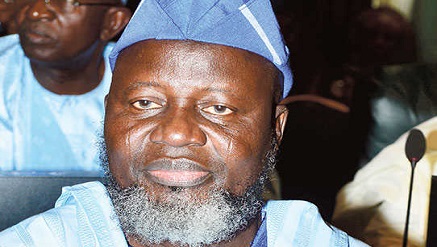
Adebayo Shittu, minister of Communications, has said that recent commitment of the federal government to the development of Information Communication Technology (ICT) can drastically reduce the huge amount of N1.5 trillion being spent on Nigerian students studying in foreign educational institutions.
He was optimistic that if the Federal Government succeeded in establishing the proposed ICT University of Nigeria, the country will not only develop world- class local capacity, but also reduce the strain on the naira through reduction of foreign currency sourced for the training of citizens outside the country.
The minister said government is prepared to use ICT to foster youth empowerment and development through granting of loans, sponsorships and financial support among other innovative schemes to lucrative business ideas.
The minister made this disclosure at a lecture titled; Jobs Nowhere But Jobs Everywhere: ICT To The Rescue Of Unemployed Youths And Graduates at the Faculty of Law, University of Ibadan at the weekend said about 20 million youths and graduates are currently unemployed.
Stating the acknowledgement of the Buhari’s administration to use ICT as a critical pillar to leverage on job and wealth creation as well as on economy and a critical tool in diversifying the Nigerian economy and recognising the role of ICT in making it a reality, he said, government established one form of ICT infrastructure or the other across the six geopolitical zones.

He disclosed that the plan to build a national ICT Park and Exhibition Centre in Abuja is part of the preparations for the 4th Industrial Revolution is on course. Similarly, and that a plan to “build a $1 billion-dollar ICT company” to boost indigenous technology has been articulated.
Elaborating on the planned ICT University, Shittu said,” We already have the Digital Bridge Institute (DBI) which is for short term training programmes, in six locations across the country and we will transform this Institute into the ICT University of Nigeria. This unique University would by God’s grace take off effectively in September 2017 and would be run as a Public Private Partnership with the best business and entrepreneurship models.
“I have engaged with several stakeholders at the international level, Facebook, Motorola, Ericsson and am still talking to many more stakeholders. We are encouraging them to come and adopt the respective university campuses as their own.
“I am happy to report that this project is receiving a global boost and endorsement. The committee set up has been working round the clock on the realization of this objective, and has indeed submitted its final report on Tuesday 18th July 2017. A Vice Chancellor and other senior officials would soon be appointed.
“The ICT University will be a multi-campus institution of the present Digital Bridge Institute (DBI) of the Nigerian Communications Commission (NCC) located in Abuja, Lagos, Enugu, Kano, Asaba and Yola.”
He said a recent World Bank report revealed that ICT is transforming the world of work, creating new job opportunities and making labour markets more innovative, inclusive and global and accordingly, ICT is influencing employment both as an industry that create jobs and as a tool that empowers workers to access new forms of works in new and more flexible ways.
He added that the ICT sector alone contributed N500 billion into the nation’s economy in 2014 and created about 2.5 million jobs in 10 years. The statistics also show that the sector attracted about $30 billion of foreign investment from 2003 to 2014.
The minister, therefore urged Nigerian Universities to take a cue from what is happening in the Nigerian ICT ecosystem value chain and put their various faculties on the path of growth and prosperity by leveraging on ICT.
He also promised that the government would provide the much needed infrastructure and favourable policies that would create the enabling environment for young people to innovate unhindered in the various start-ups and innovative centres across the country.
“The digital revolution that has the power to transform societies is already underway. Success belongs to those who innovate and seize available opportunities. I want to assure you that I will go talking with development partners home and abroad on the importance of investing in ICT today to leapfrog the nation’s growth for today and the future.
“If we must achieve the desired goal of placing Nigeria on the global ICT mark thereby using it as major tool for job creation, earmarking investment for ICT is not enough. More importantly, we have to decide that we are going to do it by developing and churning out fit-for-purpose youths from our institutions for the exceptional ICT market and opportunities at the global level”, he said.



Atte Ayodeji, a Nigerian computer scientist,has developed an artificial intelligence algorithm capable of detecting, counting, grouping and generating healthy hair follicles during hair transplant procedures, an innovation that earned him the Best Innovative Technology award.

Atte Ayodeji
Ayodeji also graduated with a Distinction in his Master of Science (MSc) in Computer Science from Birmingham City University on Friday, adding another milestone to an impressive academic year.
Beyond his award-winning hair transplant innovation, the Nigerian researcher developed a system and framework on Explainable Artificial Intelligence (XAI) as a professional responsibility in the diagnosis of lung cancer.
His dissertation received a silver award at the PGXPO2026 Winter, further highlighting the impact of his research in applying artificial intelligence to healthcare.
Sunday Dare, special adviser on Media and Public Communication to President Tinubu, celebrated Ayodeji’s achievements in a post on X, recalling how he first met him in 2019 during his National Youth Service.
“In 2019 when I became a Minister of the Republic, I met a young man of medium height, genteel with penetrating eyes: Atte Ayodeji. His words rarely come out and he could easily be passed by unnoticed. But I noticed him especially when my SA Kemi Areola brought him to me asking my approval for him to do his Youth Service in my office. I approved. From then on he was unstoppable. His brilliance shown and he developed skills beyond his frame.”
Highlighting Ayodeji’s recent accomplishments, Dare congratulated him saying, “Congratulations Atte. I am proud of you!”
Mr. Joseph Tegbe, minister of Power, has said that the federal government plans to end power sector subsidies from 2027 and that there are no immediate plans for tariff increases.

Mr. Joseph Tegbe, minister of Power
The minister told journalists during the media interactive session at the weekend that the government has announced plans to phase out electricity subsidy payments from 2027 as part of efforts to address mounting liabilities in the power sector.
He explained that the planned removal forms part of the broader reforms aimed at ensuring the long-term sustainability of the electricity sector, while tackling the financial challenges confronting the industry.
According to the minister, despite the planned subsidy withdrawal, there are no immediate plans to increase electricity tariffs, reassuring consumers that the government is not considering a tariff hike in the short term.

Patience Okala, the National Coordinator and Chief Executive Officer of the Nigeria AfCFTA Coordination Office has urged African countries to stop exporting raw materials and instead focus on adding value to its natural resources if it is to fully harness the opportunities offered by the African Continental Free Trade Area.

She stated this on Thursday at the Streamsowers & Köhn 20th Anniversary Business Forum, where she stressed that value addition and beneficiation are essential to Africa’s industrialisation and long-term economic growth.
According to a statement issued on Friday by the Nigeria AfCFTA Coordination Office, she said the AfCFTA goes beyond the elimination of tariffs, serving as a framework for industrialisation, value addition, and job creation across the continent.
“AfCFTA is not only about tariffs; it is also about value addition. Africa has to stop exporting raw materials. We need to add value and ensure that beneficiation is done on the continent,” she said.
Okala also said Africa’s economic transformation would depend on the effective implementation of the AfCFTA rather than on the signing of trade agreements alone.
“We have moved beyond negotiations. The success of AfCFTA will be measured by the extent to which businesses can access new markets, trade seamlessly across borders, and benefit from the opportunities created by the agreement,” she said.
She noted that Nigeria had intensified efforts to implement the agreement under the leadership of the Minister of Industry, Trade and Investment, Dr Jumoke Oduwole, including the development of simplified AfCFTA guides in six languages to help businesses understand and take advantage of opportunities under the trade pact.
Okala called for stronger collaboration among governments, regulators, and the private sector to eliminate barriers to trade and investment and build a truly integrated African market.
“As we move from policy to implementation, our collective responsibility is to ensure that the opportunities created by AfCFTA become practical realities for businesses, particularly MSMEs, women-owned enterprises, and young entrepreneurs across the continent,” she said.

SERAP Asks Tinubu to Probe Alleged N6.79Bn Missing Police Funds, Firearms

FCT Court Awards Ex-Customers N15m against Stanbic IBTC over Data Privacy Breach

CBN Exposes over 13,000 BVNs Tied to Fraud as Banks Tighten Security

Atte, Nigerian Develops AI Algorithm for Hair Transplants

Dare Tackles Onaiyekan over Criticism of Tinubu, Says Economic is Working

NRC, Ponzi Scheme Collapses Resulting Loss of Billions of Naira

EFCC Busts NIS Visa Overstay Racket, Uncovers N700m in an Account

From Scarcity to Scale: What Africa Can Learn from India’s Agricultural Transformation

BON Establishes Six Ad Hoc Committees to Modernize Broadcasting

Tokenization, Blockchain Technology will Transform Financial Institutions – IMF




 Broadcasting2 days ago
Davido Shares Past Suicidal Thoughts, Drops Oriadé Album

 E-Business2 days ago
How Temu Helped a Madagascan Vanilla Family Business Sell Direct to Consumers Across Europe

 General News2 days ago
MTN Nigeria Posts N707.5bn H1 Profit, Declares N26 Interim Dividend

 News2 days ago
Cisco Explores AI for Nigeria Farmers

 News2 days ago
AfCFTA Urges Africa to Stop Exporting Raw Materials

 General News2 days ago
Gavi Okays $500m for Vaccines, PHCs in Nigeria

 E-Business2 days ago
82% of Organizations Concerned about AI Risks Even as Adoption Accelerates – Survey Reveals

 General News2 days ago
Police Uncover Fake Diplomatic Number Plate Syndicate in Abuja