

General News
ICT is Fast Becoming A Way of Life – Nnoruka

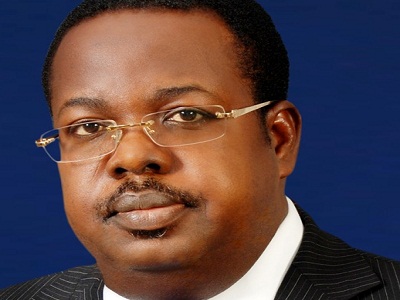
Nnamdi Nnoruka is the chief executive officer of IT & C Networks Limited, a leading distributor and supplier of MSI Computers range of products in Nigeria and West Africa. Nnoruka has had multifaceted exposure to technology having started as an Air force Pilot. In the course of going through the officer cadre, he got exposed to various forms of management training courses. He is also a lawyer by profession. Before moving on to the ICT space, Nnoruka went to the London Business School where he bagged a Post Graduate Degree in business management and strategy. He spoke to funmi ilesanmi.
Internet Connectivity in Nigeria Then and Now
Well, not much has changed from when I started because quality bandwidth still remains a very scarce and expensive commodity in Nigeria as at now. Most of the satellites in orbit are facing away from where we are; only very few have good footprints in sub-Saharan Africa. That is why there is not much to choose from, you have to work with particular satellite bandwidth providers to be able to deliver home form of bandwidth and quite often because it’s scarce and very expensive because demand is very high, they are not meeting up with the demand so the price keeps going up. That is why these things are very expensive and that is why very good quality bandwidth is also very scarce. That is as at now but the good news is that all these is about to change. With the arrival on the scene of players like MainOne and Glo1, obviously by the time they have really rolled out, which will happen definitely in the next couple of months, the story will be totally different. I am not saying they will solve all the problems, I am not saying all of a sudden we would be like anywhere else in the world like Europe and the entire East Asia but we would improve tremendously to the betterment of everybody.
As we speak, it is still very problematic. One of the things that has changed though from when we were trying to provide the services and now is that the big boys like MTN, Globacom and so on have to into the internet service provision space and that has made it very difficult for smaller players like us to continue even in doing what we were trying to do because due to economy of scale, there is no way we can match the big players in terms of pricing and possibly quality of service. This made internet more ubiquitous than it was but still the quality is still lacking and the pricing is still comparable to what it was then but now that MainOne and Glo 1 are in the picture, we are looking forward to a drastic change. We are hoping that we would see a very significant price drop, people should be able to pay N5,000 in a month and get very decent bandwidth on a 24 hour basis.
Patronage of Obsolete Products
A lot has happened in that area with people like us coming into the field with a brand like MSI that was not too well known in Nigeria. MSI has been in Nigeria for a long time but MSI being the manufacturer of very good quality PCs have always been known for their mother boards, VGA cards and other components. A couple of years back they made a strategic decision to go ahead and manufacture their own personal computers so now they have a very wide range of fantastic laptops, netbooks and all in one PCs. They also have other products- they have servers and so on. One thing is very clear; they are of very good quality and good pricing. Keeping the pricing within the affordable limit is what has been driving us, otherwise their products are premium products and because they are premium products they tend to be highly priced. A friend of mine who is one of our resellers traveled to Dubai recently and apparently a PC that we normally give to him at N50,000, he saw it there and they gave it to him at $420. He called me and was screaming literarily on the phone and I am not pretending about this; that is to tell you what we are trying to do. What we have done is that we are not driven by excessive profits. I am not telling you that we are not trying to make profit, we are trying to run a business naturally the business that should sustain itself, pay salaries and all that and also for us to get something out of but the ultimate thing we want to do is to make very good quality and affordable PCs available to members of the public. We are not the only one doing this, a whole lot of other players have come into the field and because of our activities pre-existing players have taken a clue and they have come down with their pricing in order to compete with us. The net effect of what we have done is that we have brought down the prices of good quality PCs, desktops, laptops and all that.
Hopefully, we will continue to drive down these prices but you know there is a limitation because the components are generally controlled by monopolies in the world. I mean at least 80 percent of the chips, the processors are produced by Intel and everybody buys them. About the same percentage of operating systems are produced by Microsoft so everybody must buy from Microsoft. That kind of practice puts a limit to what we can do but in the next couple of months we are coming with something that would literarily place a laptop in the hands of every school child at lesser prices. This is what we are working on and we will continue to do what we are learning to do better now.
Expansion Plans
Basically, we are distributors. What we are mainly concerned with is bringing our range of products and making them available to members of the public through our resellers. We are not set up as a reseller. What you are seeing here is just for you to have an idea of the range of what we have but we are not hoping that if we are looking to sell here, then we would not be here, we would be on the high street with well appointed shops and well decorated places where people would want to come in and buy. We are not set up as resellers, we are basically distributors.
What we may look forward to doing in future might be to open a reselling outlet but why I am not too hot on doing that immediately is that I do no want to compete with my customers, my customers are the resellers. People walk in here and talk to me, we are still in the process of trying to make people know the brand and the only way we can do that is to put these things in the hands of people and get them to use and experience the MSI brand. If an individual walk in here, he or she will still be able to buy but that is not what we are set up to do. What we are set up to do is to make ourselves available to our customers so that our customers who are resellers will be able to buy maybe 50 units, 100 units to sell. Again, you know the internet is everywhere, if you go to www.itcafrica.com, you will see a range of our products an0.d we have put prices there. The reason is for it to guide our resellers. If you to a MSI reseller and you say that the price of this is this, by this we try to control the price. We are in business to deliver to people at affordable prices and for us to achieve that we have to impress it on our resellers as well. If you already know that the price of a U130 is N55,000 and our reseller tells you it is N60,000, you will tell him no, that the price is N55,000. If he fails to sell it to you, you come to us, we will give it to you at that price, which is why we have put our prices transparently on the internet so everybody can see. Also, our address is there so any reseller that is serious to do business with us at least for the first time will come here. Subsequently, we can know where he is or have other arrangements of moving the goods to him so we don’t have to be everywhere.
Support
Another aspect to our business is to provide technical support. Having brought the goods in, it is also our responsibility to make sure that when our resellers sell to end users, the end users get good value for their money. So if you bought our system that has a year warranty for instance and two months into use you suddenly realize that the power is not good enough or the scene is not working, not that you allowed it to fall or you allowed it to get damaged physically, then naturally the warranty kicks in and we are the people to provide that warranty support to you ultimately.
Training for Resellers
We have tried to institute training for our resellers at least pricing. We held the first one sometime towards the end of May and during this type of session, we bring in resource persons to talk to them and tell them about what the computer is basically all about. We also talk to them about our mindset, about our orientation, our values and our culture. Why we do things the way we do them so that they would understand the IT & C Networks Limited framework. What is driving us is making ICT available to people so that this can change the way we do things. We also try to make them feel part of the passion that we feel as to what we do. We believe that MSI is a very good brand and we are passionate about it. MSI is one of the biggest brands whose owners do their own manufacturing which others do not. MSI maintains a standard, they have control over their schedules and conduct very extensive research and development and that is why if you point to any of the MSI brand, I will tell you something unique about it. There is always something very unique about it because they do their own production and are always moving with time.
Challenges in Distributing the MSI Brand
Very serious challenges I must tell you. The fact that the MSI brand is relatively new, most people have not heard about. It is a new brand coming into an environment that is already dominated by the better known brands, that is number one. Number two is the fact that ICT is still at the infant stage in Nigeria and as a result users are not yet discerning. Whereas if they were discerning, they would know the features they are looking for in the PCs that we have but they do not know. Government does it, corporates do it and of course the average Nigerian does it.
Impact of Economic Meltdown on Volume of Business
It has affected it adversely. The rate of uptakes of ICT slowed down definitely. A lot of people who desired to purchase laptops, PCs and so on cannot do so because disposable income has shrunk and people are more concerned about basics needs like food, shelter, school fees, then they can now start talking about computers. But you know something, ICT is fast becoming a way of life and most people have discovered that this is no longer a luxury. Though there has been a slow down but then this is something that is becoming increasing inevitable that everybody must have access to his or her own computer.
IT & C Networks Limited
IT & C Networks Limited was incorporated in 2004 for the purpose of carrying out the business of ICT generally. That came about when I was at the London Business School. It became clear to me that that would be the way to go. I saw ICT as a way of bridging the yearning and growing gap in terms of infrastructural development between Nigeria and the rest of the developed world. I saw ICT as a means of bridging that gap and I decided that whatever happens, I was going to play in that space so I went ahead and incorporated the company. We started business towards the end of 2005 in Abuja and then we were providing internet access to people. The aim of doing so was that most people could not have access to decent internet connections, we bring bulk internet and give it to people at affordable prices. In doing that we went into partnership with a Canadian company called Omni-globe and we started running services in Abuja. We met a whole lot of challenges because I was coming from the angle of an entrepreneur and I wasn’t an ICT professional in that sense. Obviously, I had to learn on the job so we made a lot of mistakes, a lot of them very costly mistakes. We had a whole lot of challenges trying to cope with technologies involved in the lastmile delivery of internet services. I must tell you that we did do a lot, we achieved a lot, I also learnt a lot in that process. First of all, I realized that one of the major barriers to people having access to internet was access to personal computers, unfettered access to personal computers. It was so bad then that people resulted to buying used and dumped PCs, laptops being shipped in by very unscrupulous Nigerians and foreigners from all over the world and been sold to people at very exorbitant prices. People were parting with their monies and not getting good values for them. I saw that as a very big challenge and at some point, I realised that this was a major problem, I identified it and decided to address it. In the course of trying to do that, I got in touch with MSI and we agreed to partner to bring in quality PCs and make them available to Nigerians at affordable prices.
Again, one of the areas that I saw where we could make a lot of impact is in the educational sector because people have to acquire the capacity to use ICT to change the way things are done in Nigeria and to bring about that bridging of the gap I mentioned. From the scratch, we realized that for children of priviledged people who constitute not less than five percent of the entire society, they go to schools where they have access to these things, the rest of the children do not have access to these so, that portends a lot of problems in the future and we decided that we are going to make a lot of emphasis on the educational sector. We tried to provide internet access and we try to deal particularly with the educational sector where we think we can make a whole lot of difference.
Again, we corporate with ICT giants like Microsoft, Intel and so on to bring in very affordable solutions to government and other agencies involved in the delivery of education. That is what IT & C is all about.



A “colonel and a major” in a “worldwide highly sophisticated money-laundering syndicate on a breathtaking scale” have been jailed for nine years and 7 and half years respectively.

Ejike Francis Ogbuefi (42) of Clonard Road, Crumlin, Dublin 12, and Steven Silvester (32) of the Paddocks, Morristown, Newbridge, Co Kildare, were both convicted of directing the activities of a criminal organisation following a trial at Dublin Circuit Criminal Court in February.
Ogbuefi was also convicted of 32 counts of money laundering and seven of conspiracy to launder money.
The jury also convicted Silvester of five counts of money laundering, two of attempted money laundering, four of conspiracy to launder money and one of using a false instrument.
Both defendants had no previous convictions here or in another jurisdiction.
The court heard that both men were assessed to be above mule herders and money mules in the operation, with Ogbuefi having a more active role.
During the sentence hearing, Judge Martin Nolan suggested to the investigating garda that the men were a “colonel and a major”, which Det Garda Steven Kelly agreed with.
Imposing sentence on Friday, the judge said both men were involved in the offending and played certain roles.
He noted that the scheme’s ambition was to “get accounts to launder illicit monies” which were “undoubtedly the product of criminal behaviour” and that third parties unknown to the court suffered as a result.
“Both men were reasonably experienced in how the banking system works” and aware of its weaknesses which they tested, sometimes successfully, the judge said.
The judge said he had considered the mitigation and there was a “good chance” the men would not reoffend in future, but that the court could not be certain.
The judge noted that money laundering is a “serious problem” and the court often dealt with cases of people who provided their bank details to be used in these schemes.
“These bank accounts are absolutely necessary for all fraud, because monies have to come to earth somewhere,“ the judge said, noting that the defendants’ main role was to procure bank accounts so that money could be sent to others who profited.
He imposed on Ogbuefi a sentence of nine years and imposed a 7½ year sentence on Silvester, whom he considered to be at a lower level.
Kelly told Seoirse Ó Dúnlaing, prosecuting, that the Garda investigation looked at various bank accounts, transactions and online communications.
Evidence suggested both men were receiving requests, often from phone numbers in Nigeria, to launder money from different types of frauds.
Kelly agreed with Conor Devally, defending Ogbuefi, that his client is from Nigeria and his family is law-abiding.
Garda Kelly agreed with Maurice Coffey, defending Silvester, that his client became involved in this criminality some time after his arrival in Ireland in 2015 and had no record of shopping in high-end stores or trappings of wealth.
It was also accepted that Ogbuefi appeared to have a more active role than Silvester.
Defence counsel told the court their clients accepted the verdicts of the jury and were remorseful.
Testimonials were handed to the court on behalf of both men.
Mr Devally asked the court to view Ogbuefi as being “appointed to a position of local authority in a wider organisation”.
Mr Coffey said Silvester was under pressure and desperate at the time.
He asked the court to consider that his client did not come to Ireland to get involved in this offending, but fell into temptation at a time of vulnerability.

Nnimmo Bassey, environmental activist and food sovereignty advocate has raised concerns over the growing influence of junk food culture and global food politics on Nigeria’s food systems.

Nnimmo Bassey, environmental activist
Bassey warned that the increasing consumption of highly processed foods poses serious risks to public health, cultural identity, and national food security.
He made these remarks on Thursday while speaking at the Sustain-Ability Academy lecture on Food, Power and the Politics of Hunger, organised by the Health of Mother Earth Foundation in collaboration with the University of Port Harcourt.
“Food is not just for sustenance; it is central to our identity, our relationships, and our traditions,” he said.
He explained that traditional diets reflect the diversity of Nigeria’s ethnic groups and have historically fostered unity within communities.
Bassey traced the evolution of food systems in Nigeria, highlighting how colonialism, commerce, and conflict have reshaped local diets.
He referenced the Nigerian Civil War as a turning point when food was weaponized, leading to widespread malnutrition and long-term dietary changes, particularly in the Eastern region.
The activist criticized the rapid rise of fast food consumption, describing it as a product of modern society’s demand for instant gratification.
According to him, fast food outlets use sensory stimulation, bright lighting, loud music, and constant visual entertainment to distract consumers from questioning the nutritional value of what they eat.
“People leave with more than just a full stomach, they carry heavy metals, artificial colourings, and harmful substances in their bodies,” he said.
Bassey also expressed alarm over the increasing presence of genetically modified organisms (GMOs) in Nigeria’s food system.
He argued that such products, often introduced without sufficient scrutiny, could have long-term health and environmental consequences.
He further cautioned against the role of political leaders in normalizing unhealthy consumption patterns.
“When top politicians publicly consume junk food and sugary drinks, they send a dangerous message that such habits are acceptable or even desirable,” he said.
At the heart of his argument is what he described as “food colonialism” a system driven by global power dynamics, where economic pressures, debt, and cultural influence shape local food choices to benefit multinational corporations at the expense of local farmers.
Bassey called for a “decolonization” of food systems across Africa, urging governments and citizens to prioritize indigenous foods, protect seed-sharing traditions, and resist policies that undermine local agricultural practices.
He also challenged prevailing narratives around hunger, questioning whether food insecurity is truly a result of low productivity.
“In countries like Nigeria, nearly half of all food produced goes to waste. The issue is not just production, but distribution, policy, and power,” he explained.
The session concluded with a call for urgent reforms to ensure fairness, resilience, and sustainability in food systems, with a focus on supporting smallholder farmers and addressing the structural causes of hunger.


At least 80% of governments will deploy artificial intelligence (AI) agents to automate routine decision-making, enhancing efficiency and service delivery by 2028.

This is according to market research firm Gartner, which highlights a growing shift toward digital governance, where AI-powered systems will increasingly handle repetitive administrative tasks, such as processing applications, managing public records and responding to citizen queries.
“Government chief information officers are under growing pressure to embed AI into decision-making capabilities rapidly and responsibly,” says Daniel Nieto, senior director analyst at Gartner. “The rise of multimodal AI, alongside conversational and agentic systems, has expanded what public organisations can automate, understand and anticipate.”
The Gartner report comes as South Africa is moving to embed AI into public administration, with early use cases emerging across service delivery, disaster response and internal operations, even as full-scale deployment of autonomous “AI agents” remains some years away.
The country’s National AI Policy Framework, released in 2024, has set the direction for adoption, with a comprehensive national policy expected by 2027.
Implementation is likely to follow from 2027 onwards, positioning the country for a more structured and regulated rollout of advanced AI systems across departments.
While South Africa has yet to deploy AI agents at scale, government and research initiatives indicate that agent-like systems are already taking shape.
Global use cases
Globally, governments are rapidly deploying AI agents to automate public services and internal operations, shifting from simple chatbots to systems that can execute tasks and coordinate workflows.
In the US, federal and city agencies are using AI agents to handle citizen queries, draft documents and manage call centres, while in China, autonomous systems are being integrated into administrative processes and urban management.
European governments are piloting AI-driven tools in policing and public service delivery, and in emerging markets, agentic platforms are being used to improve disaster response, financial inclusion and digital identity systems.
However, Gartner notes that fragmentation is one of the most persistent barriers to AI value in government.
According to a Gartner survey of 138 respondents from government organisations worldwide between July and September 2025, 41% of respondents cited siloed strategies and 31% cited legacy systems as key challenges to adopting and implementing digital solutions.
“Technology modernisation alone has not resolved these issues,” says Nieto.
The market analyst firm says as AI transitions from experimentation to being deeply embedded in decision-making, governance approaches must also evolve. It points out that traditionally, AI governance has centred on managing models, data and algorithms.
However, it states that decision intelligence (DI) shifts this focus towards the governance of decisions themselves; for example, on how they are designed, executed, monitored and audited. This shift in governance is especially critical in government, where public legitimacy relies on transparency and fairness, the firm explains.
Measurable impact
The Gartner survey found that 39% of respondents cited improved service and citizen satisfaction as primary reasons to invest in building citizen trust.
The firm notes that DI offers a structural foundation for operationalising this trust by making decision pathways explicit and auditable.
“By governing decisions, rather than just isolated AI components, governments can better balance automation with human judgement, particularly in high-stakes or rights-impacting contexts,” says Nieto. “Regulated industries and governments cannot rely on opaque ‘black box’ systems for consequential decisions. DI elevates explainability from a technical requirement to a governance imperative.”
Because of the need for transparency in decision-making, Gartner predicts that by 2029, 70% of government agencies will require explainable AI (XAI) and human-in-the-loop (HITL) mechanisms for all automated decisions that impact citizen service delivery.
Gartner explains that XAI and HITL designs are foundational to public-sector DI. These mechanisms ensure decision logic can be inspected, explained and challenged. Because of XAI and HITL, humans also retain authority over exceptions, appeals and high-risk cases, and accountability is preserved even as automation increases, it adds.
While efficiency remains important, Gartner says citizen trust in government’s ability to provide effective services is becoming a key driver of digital transformation. Fifty percent of government respondents cited improved citizen experience as one of their top three priorities.
“As AI and decision intelligence increasingly automate and streamline service delivery, the traditional notion of ‘citizen experience’ evolves,” says Nieto.
“When citizens receive what they need from the government automatically, direct interactions may decrease, making trust in the system’s reliability, fairness and transparency even more critical. Because trust is so imperative in these situations, the predictive capacity to anticipate potential needs could reshape how government digital services are delivered.”

Court Jails ‘Colonel’, ‘Major’ of Global Money-Laundering Ring

Court Bans Kenyan Telcos from Recycling SIM Cards

Providus Bank Fully Meets CBN Capital Requirement, Sets Record Straight

African Tech Start-ups to Receive $46m of Speedinvest Africa Fund

U.S. Charges Three in $2.5 Billion Plot to Smuggle Nvidia AI Chips to China

Kaspersky Discovers New Phishing Campaign Exploiting Google Tasks Notifications to Steal Corporate Credentials

esentry 2025 Report Shows Healthcare, Financial Services and Telecoms as Staging Grounds for Increased Cyberattacks in Africa

AfDB, UNDP Launch $10Bn AI Initiative for Africa

Mutual Benefits Assurance Settles ₦5.9bn Claims in January 2026

MultiChoice Suspends Yearly DStv Price Hike as Canal+ Pushes Growth




 E-Financial3 days ago
CBN Introduces Stricter BVN Rules to Curb Fraudulent Transactions

 E-Financial3 days ago
Binance is Missing from Ghana’s Crypto Sandbox
 News2 days ago
African Tech Start-ups to Receive $46m of Speedinvest Africa Fund
 Telecom2 days ago
Court Bans Kenyan Telcos from Recycling SIM Cards

 News3 days ago
Nigeria, UK Sign £746M Landmark Ports Deal

 E-Financial3 days ago
World Bank Debars 3 PwC Subsidiaries for 21 Months over Alleged Project Fraud
 E-Financial2 days ago
Providus Bank Fully Meets CBN Capital Requirement, Sets Record Straight

 Telecom2 days ago
Binance Earn: Simple Way to Earn Rewards on Idle Crypto Holdings