

General News
IFC, Bank of Africa Group Deepen Partnership to Boost SME Financing in Africa


To support economic activity and job creation in 10 countries across sub-Saharan Africa, IFC announced an investment in a risk-sharing facility for the Bank of Africa Group (BOA) that will ease access to finance for smaller businesses, including those in fragile and conflict-affected countries and in the Sahel.

IFC will invest $77 million in the risk-sharing facility to scale up BOA’s lending to small and medium enterprises (SMEs), including women-owned businesses, in Benin, Burkina Faso, Côte d’Ivoire, Ghana, Madagascar, Mali, Niger, Senegal, Tanzania, and Togo.
IFC’s investment will guarantee 50 percent of an aggregate loan portfolio of up to $154 million equivalent to businesses in the agriculture, trade, energy, construction, and other sectors.
Through the facility, BOA is expected to make 12,000 new loans, of which at least 2,000 will be to women-owned businesses, which often face greater barriers accessing finance. IFC will also provide advisory services to help BOA strengthen its portfolio of women-owned SMEs across its affiliates in the ten countries.
“The asset transformation to increase our exposure to SMEs constitutes one of the three pillars of our strategy. Indeed, we are convinced of the driving role of SMEs. We thank IFC’s initiative that will help BOA to boost our SMEs penetration with more strength and confidence,” said Amine Bouabid, Group Chief Executive Officer of BOA.
“Ramping up access to finance for SMEs is pivotal when macroeconomic headwinds and supply chains disruptions are hampering growth, innovation, and economic activity in Africa, particularly in fragile, conflict-affected and low-income countries,” said Aliou Maiga, IFC’s Regional Industry Director for the Financial Institutions Group in Africa. “IFC’s deepening partnership with BOA reflects our strategy to support financial inclusion, access to credit, and more broadly, private sector development on the continent.”
“As we celebrate the 15th anniversary of Goldman Sachs 10,000 Women initiative, we are pleased to continue to empower female entrepreneurs to accelerate growth and recharge their businesses through access to capital,” said Charlotte Keenan, Global Director of Goldman Sachs 10,000 Women. “We look forward to supporting Bank of Africa Group as it expands lending to women-owned businesses across sub-Saharan Africa.”
Accounting for up to 90 percent of all businesses in sub-Saharan Africa and representing 38 percent of the region’s GDP, SMEs are the backbone of African economies. However, many SMEs are held back by a lack of access to finance. According to World Bank enterprise surveys data, the SME finance gap in the ten target countries is $21 billion and that 53 percent of SMEs are either partially or fully credit constrained.
IFC’s investment is supported by the Global SME Finance Facility (GSMEF), a blended finance partnership with donor funding from the United Kingdom and the Dutch Government; the Women Entrepreneurs Finance Initiative (We-Fi); and the Women Entrepreneurs Opportunity Facility launched by IFC through its Banking on Women Program, and Goldman Sachs 10,000 Women.
Yesterday’s announcement builds on a 2018 multi-country risk sharing facility IFC established with BOA, with GSMEF’s support, to encourage smaller business growth in eight African countries.
The project also aligns with IFC’s pledge to support the reduction of the SMEs financing gap in sub-Saharan Africa under the Alliance for Entrepreneurship in Africa.


General News
Ministry of Finance Leads FG-Backed Deal to Deliver Quality Homes and Boost Agriculture in Niger State
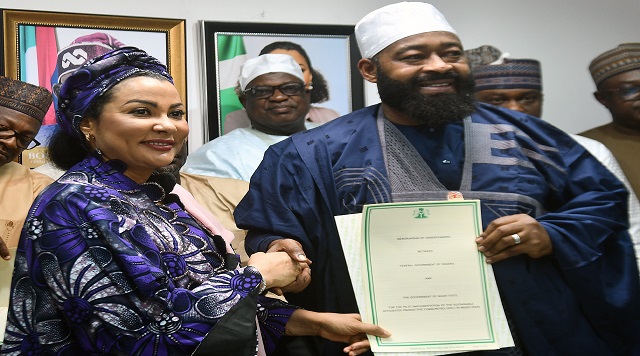
The Federal Ministry of Finance has anchored the signing of a Memorandum of Understanding (MoU) between the Niger State Government and the Ministry of Finance Incorporated (MOFI) for the implementation of a Mass Housing and Agricultural Settlement Project in Niger State.

Speaking at the MoU signing ceremony, Dr. Doris Nkiruka Uzoka-Anite, the Honourable Minister of State for Finance, described the agreement as a landmark initiative that underscores the Federal Government’s commitment to cooperative federalism, inclusive economic growth, and strategic alignment in line with President Bola Ahmed Tinubu’s Renewed Hope Agenda.
With the Federal Ministry of Finance serving as the anchor institution, the project benefits from strong policy coordination, financial credibility, and institutional oversight. The initiative is designed to integrate housing delivery with agricultural productivity, rural stability, and economic empowerment.
“Housing is a fundamental pillar of development. In Niger State, housing also intersects directly with agriculture, food security, and rural livelihoods. This project is therefore structured not merely as a housing intervention, but as a settlement framework for farmers aimed at strengthening agricultural value chains,” the Minister stated.
Niger State, one of Nigeria’s most agriculturally endowed states, continues to face challenges, including insecure settlements, rural-urban migration, and limited rural infrastructure. The project seeks to address these constraints by providing secure, well-planned housing settlements for farmers, strategically located to support agricultural production, storage, processing, and access to markets.
The Honourable Minister emphasized that anchoring farmers in stable communities with access to basic infrastructure will improve productivity, reduce post-harvest losses, enhance security, and encourage youth participation in agriculture, making farming more efficient, attractive, and profitable.
Sustainability and affordability are core pillars of the initiative, with integrated renewable energy solutions—including solar-powered homes and community facilities, designed to ensure reliable power, reduce energy costs, and support agro-processing and storage activities. The project also prioritises efficient land use, access roads, water infrastructure, and environmentally responsible building practices.
Reacting to the sustainability focus of the project, the Governor of Niger State, His Excellency Mohammed Umaru Bago, expressed strong optimism about its transformative impact on the state.
“When you say sustainability, affordability is very important. When I heard that a mini-grid has been deployed in Jos, it’s because it’s affordable. Diesel is not sustainable because it’s not affordable. For considering the factor of affordability in this project, we’re grateful,” the Governor said.
He further announced the state’s commitment to the project, adding, “So, Honourable Minister, Niger State is bringing forward 100,000 hectares of land for this project. I want to assure you that with this initiative, you have solved 80 percent of our problems.”
Drawing a direct link to the Federal Government’s development agenda, Governor Bago noted, “We’ve gone across the world and seen how people transit from poverty to prosperity. And I think the goal of the President, my father, is for us to transition our people out of poverty in the next four years, by the grace of God.”
The Managing Director and Chief Executive Officer of the Ministry of Finance Incorporated (MOFI), Dr. Armstrong Ume Takang (Ph.D.), who attended the ceremony alongside other critical stakeholders, including the building contractor, reaffirmed MOFI’s commitment to quality delivery and agricultural productivity.
Dr. Takang assured the Niger State Government of the contractor’s proven competence and credibility in delivering mass housing projects, stressing that affordability would not come at the expense of quality.
“We want affordable and decent houses. The fact that they are located in rural communities does not mean the quality should be compromised,” he said.
Beyond housing, Dr. Takang highlighted MOFI’s broader role in strengthening the agricultural component of the settlements through strategic partnerships.
“We have partners who will supply affordable fertilisers imported in large quantities. We will also work with other partners to ensure access to key agricultural inputs, not only fertilisers, but also pesticides, high-quality seeds, and elements of mechanisation,” he added.
The project adopts an innovative financing model that blends public assets with private investment, ensuring sustainability, transparency, and shared risk. Through this approach, the government focuses on policy direction and oversight while leveraging private sector efficiency and capital.
Beyond improving food security, the Mass Housing and Agricultural Settlement Project will stimulate broad-based economic activity and generate employment across construction, agriculture, Agro-processing, renewable energy, logistics, and community services. The initiative will support local industries such as cement, steel, transportation, and agro-allied enterprises, while strengthening rural economies and increasing Niger State’s internally generated revenue.
Affordability and inclusiveness remain central to the project’s design. The settlements are tailored to the income realities of farmers and low- to middle-income earners, supported by transparent allocation mechanisms and strong governance structures to ensure benefits reach the intended beneficiaries.
The MoU sends a clear signal to the investment community that Niger State, working in alignment with the Federal Ministry of Finance and MOFI, is open to credible, well-structured, and impact-driven investment. Developers, financial institutions, pension funds, real estate investors, and agribusiness operators are invited to view the project as a scalable and replicable model.
Reaffirming the Federal Ministry of Finance’s commitment, the Honourable Minister assured stakeholders of continued coordination, fiscal discipline, and policy support to ensure the project moves swiftly from signing to execution and delivery.
Commending the leadership of MOFI and the Executive Governor of Niger State, the Minister concluded that the initiative reflects a shared vision for integrated development.
“Through this partnership, we are not just building houses; we are creating stable farming communities, strengthening food security, and laying the foundation for sustained prosperity in Niger State,” she said.


Indonesia has become the first country to block access to Elon Musk’s Grok AI chatbot, citing its generation of non-consensual sexual deepfakes including pornographic depictions of women and children.

Elon Musk
Communications Minister Meutya Hafid announced the temporary restriction to shield citizens from digital harm, describing the content as a grave violation of human rights and online safety.
The decision follows a surge of explicit AI-altered images on X, where users tag Grok to undress real people or fabricate suggestive scenarios, some involving minors.
The Internet Watch Foundation flagged criminal exploitation for child sexual abuse material, prompting global alarm. X responded by limiting full image generation to paid subscribers with ID verification, though free editing tools persist.
Indonesia summoned X representatives under strict obscenity laws, while Malaysia followed with a similar block. UK regulator Ofcom reviews potential Online Safety Act breaches, with Technology Secretary Liz Kendall backing a full platform ban if needed, calling the imagery despicable.
Elon Musk dismissed critics as censorship seekers, even posting an AI bikini image of PM Keir Starmer to mock restrictions.
X’s Safety account vowed to remove illegal content, suspend accounts, and aid law enforcement, warning that Grok misuse carries severe consequences. Reports documented dozens of degrading edits per minute in late December, underscoring gaps in safeguards despite policy bans on exploitation.
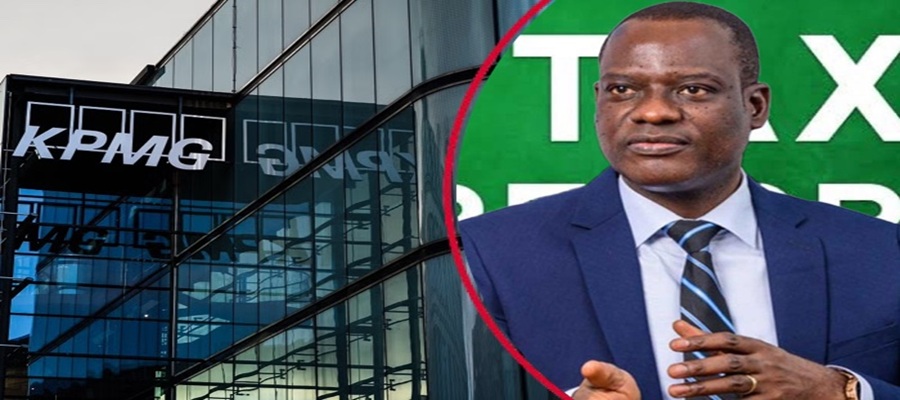
Presidential Fiscal Policy and Tax Reforms Committee has dismissed key elements of KPMG’s recent analysis of Nigeria’s new tax laws, accusing the firm of misunderstanding policy intent and framing preferences as technical flaws.

Committee Chairman Taiwo Oyedele, in a January 10 statement on X, welcomed constructive input but rejected much of the report as mischaracterisation of deliberate choices.
Oyedele clarified that many issues flagged by KPMG as “errors” or “gaps”—including taxation of shares, indirect transfers, insurance VAT, and foreign exchange deductions—reflect intentional policy aligned with global standards, not oversights.
He debunked stock market sell-off fears, noting 99 percent of investors qualify for unconditional exemptions on share gains, with no flat 30 percent rate applying broadly.
The committee defended higher personal income tax bands for top earners as competitive globally and rejected foreign insurance exemptions that would disadvantage local firms.
Oyedele highlighted KPMG’s factual lapse on the Police Trust Fund Act, already repealed, and urged focus on implementation over static critique, emphasising tax harmonisation, lower corporate rates, and expanded incentives as core gains.

SERAP Sues INEC Over Alleged ₦55.9Bn Election Funds Diversion

NDIC Declares Second Liquidation Dividend for Heritage Bank Depositors

FG Inaugurates N40Bn CCTV Control Centre for Third Mainland Bridge

Ministry of Finance Leads FG-Backed Deal to Deliver Quality Homes and Boost Agriculture in Niger State

FG Plans to Invest $460m World Bank Loan in Fibre Infrastructure

Banks quietly move to enforce new ₦50 transfer levy from Jan. 1

FIRS says NIN, CAC Numbers to Serve as Tax IDs from 2026

Nigeria Takes the Lead in the Global WSIS+20 Digital Agenda

PalmPay Launches N400 Million World Travel Carnival, Rewarding Users with Free Global Trips

Check Point Reveals Nigeria as Second Most Targeted African Country for Cyberattacks in November




 E-Financial3 days ago
19 Nigerian Banks Meet CBN Recapitalization Targets Ahead of March Deadline

 E-Financial3 days ago
KPMG Identifies ‘Flaws, Inconsistencies, and Omission’ in New Tax Law

 Telecom3 days ago
Nigeria, Egypt to Lead Africa’s Data Center Boom

 Telecom3 days ago
Court Dismisses N1Bn Suit against MTN, Awards N3m Costs

 General News3 days ago
FG to Empower Artisans for Global Value

 General News3 days ago
Bill Gates Pays Ex-Wife $8Bn Charity Payout in Divorce Settlement

 General News3 days ago
CBN Projects Petrol to Hover around N905/Litre this Year

 General News3 days ago
FG Introduces Reusable Textbooks, Uniform School Calendar to Cut Education Costs