

Telecom
IFC Invests in AXIAN Telecom Bond to Support Digital Connectivity in Africa


To scale up access to quality mobile connectivity for millions of individuals and businesses across Africa and to further support the continent’s digital economy, IFC has invested in a maiden bond issuance by AXIAN Telecom.

The bond, the first issued by AXIAN Telecom, will refinance the company’s existing debt and support its digital infrastructure network expansion, primarily in Tanzania and Togo.
By scaling up its digital infrastructure, AXIAN Telecom will continue to promote Africa’s growing digital economy and digital finance by bringing accessible, reliable and secure digital services in markets where access to affordable, quality mobile connectivity remains challenging.
IFC subscribed to 12 percent of the bond (equivalent to $50 million) as an anchor investor in a total issuance of $420 million.
“IFC’s anchor investment will help us fulfill our ambition to be an end-to-end partner in Africans’ digital transformation journey and to secure their affordable access to digital infrastructure and services,” said Hassanein Hiridjee, AXIAN Telecom’s Founder and Chairman of the board.
“With internet access in Africa largely relying on mobile networks, providing affordable and reliable mobile connectivity is an important way to bridge the digital divide,” said Makhtar Diop, IFC’s managing director. “IFC’s investment in AXIAN Telecom’s bond is consistent with the World Bank Group’s efforts to establish a more competitive and reliable telecommunications sector as part of the Digital Economy Initiative for Africa (DE4A), which aims to support the African Union (AU) digital transformation strategy for Africa.”
African countries, on average, spend about 1.1 percent of GDP annually on investments in digital transformation, including digital infrastructure, compared to 3.2 percent for developed countries.
Capital markets are critical for filling the infrastructure investment gap in emerging and developing markets. Since 2019, IFC has supported digital infrastructure and other infrastructure companies with public bond issuances totaling over US$3 billion with more than US$500 million of IFC’s own funds and by mobilizing an additional US$2 billion in capital.
AXIAN Telecom represents IFC’s second recent bond investment in Africa’s digital economy. This investment follows IFC’s participation in a bond issued by Liquid Intelligent Technologies, Africa’s largest independent fiber, data center and cloud technology provider.
IFC is also an active investor globally in green and sustainability-linked bonds including Continuum Green Energy’s first green bond and IFC’s first sustainability-linked bond investment with Sembcorp.
Surging demand for digital connectivity during the COVID-19 pandemic led IFC’s commitments to the telecoms, media and technology sector in emerging markets to exceed US$1 billion in the fiscal year ending June 2021. Almost three-quarters of the commitments were made in Africa.



Legend Internet Plc, an internet service provider, plans to merge with Spectranet, Nigeria’s largest ISP by subscribers, in a deal that signals a new wave of consolidation as competition intensifies in the broadband space.

The proposed transaction, disclosed in a regulatory filing to the Nigerian Exchange (NGX) on Monday, will see both companies combine their businesses under a unified corporate structure.
The deal is pending approval from the Federal Competition and Consumer Protection Commission (FCCPC) and the Nigerian Communications Commission (NCC), with completion targeted for Q2 2026.
The merger brings together two players that have long competed for the same urban broadband customers and signals that Nigeria’s internet service provider market may be entering a consolidation phase.
With infrastructure costs rising, spectrum constraints tightening, and competition intensifying from MTN and Airtel’s home broadband arms, mid-tier ISPs face growing pressure to scale or get squeezed.
Legend’s board, which approved the transaction in October 2025 before shareholders ratified it in November, framed the deal in terms of network capacity and operational efficiency.
“The proposed merger aligns with Legend’s long-term strategy to expand broadband infrastructure and strengthen its position within Nigeria’s telecommunications sector,” Legend said in the filing.
“The Transaction is expected to deliver significant strategic and financial benefits, including enhanced network capacity through the integration of fibre and wireless infrastructure, improved operational efficiency, and expanded coverage across key urban markets.”
The combined entity would inherit Spectranet’s established brand recognition among home and SME broadband users alongside Legend’s listed status and infrastructure footprint.
The filing did not disclose the financial terms of the transaction, including the valuation or the structure of the share arrangement.
The deal also reflects broader shifts in Nigeria’s ISP market, where scale, network quality, and capital investment are becoming critical to survival. By merging with Spectranet,
Legend is betting that consolidation can deliver the scale needed to compete more aggressively.
Spectranet, once a dominant force in Nigeria’s fixed wireless segment, enters the merger from a position of relative weakness. In 2025, its active subscriber base fell below 100,000 for the first time since the NCC began publishing ISP data. The company lost 3,732 users in the second quarter alone, marking its second consecutive quarterly decline.
That drop came amid intensifying competition from newer entrants and alternative technologies. Satellite internet provider Starlink, for instance, has recorded rapid growth, increasing its subscriber base significantly over the same period. Fibre-focused players like FibreOne are also expanding, putting additional pressure on legacy wireless operators.
Despite these challenges, Spectranet remains a significant player. As of late 2024, it controlled about 47.3% of Nigeria’s wireless ISP market and remained the largest ISP by subscriber count as of mid-2025. However, its lead has been narrowing, underscoring the urgency of strategic repositioning.
For Legend Internet, the merger could provide a faster route to scale than organic growth alone. The company, which listed on the NGX in April 2025 through a listing by introduction, has seen a volatile stock performance.
After debuting at ₦5.64 per share and climbing to a high of ₦10.35 in May 2025, the stock fell to a low of ₦4.30 in September before beginning a recovery. As of March 23, 2026, Legend’s shares trade at around ₦6.00, giving it a market capitalisation of approximately ₦12 billion. The stock has gained about 13.4% year-to-date, suggesting a modest return of investor confidence following its post-listing swings.

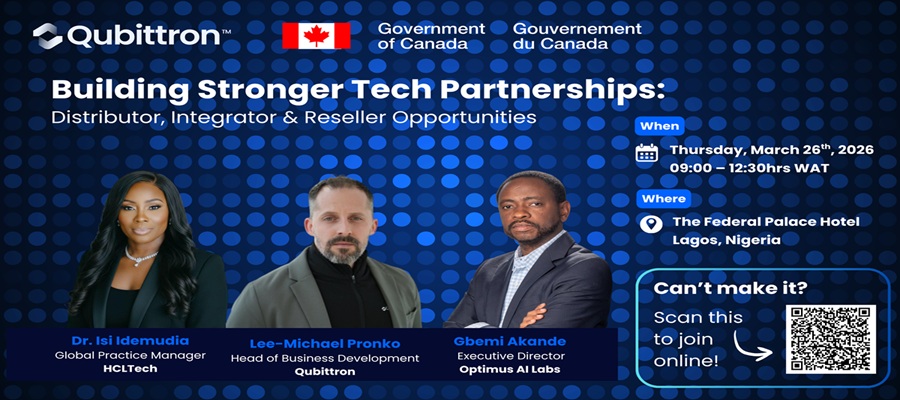

Canada–Nigeria
The forum will convene technology leaders, innovators, distributors, systems integrators, and policymakers from Canada and Nigeria to explore new commercial opportunities and deepen bilateral collaboration in the digital economy.
To participate, register here.
Designed as a strategic engagement platform, the event will showcase Canada’s advanced technology capabilities while connecting Canadian companies with Nigerian partners across key sectors including artificial intelligence, cybersecurity, telecommunications, enterprise solutions, and smart infrastructure.
Driving Cross-Border Innovation
The forum aims to strengthen innovation ties between both countries by facilitating partnerships that support digital transformation, business growth, and knowledge exchange.
Proceedings will begin at 8:30 AM with registration and introductions led by the Trade Commissioner, followed by official welcome remarks at 9:00 AM by the Head of Office at the Deputy High Commission of Canada in Lagos.
Keynote on Technology Transformation
A keynote address will be delivered from 9:10 AM to 9:30 AM by Mr. Olagoke Orija, representing the Country Manager of Microsoft Nigeria.
The keynote will highlight opportunities for technology-driven transformation and collaboration within Nigeria’s rapidly evolving digital landscape.
Panel Session: Strengthening Tech Partnerships
A key highlight of the forum will be a panel discussion scheduled from 10:00 AM to 10:45 AM, themed:
“Building Stronger Tech Partnerships: Distributor, Integrator & Reseller Opportunities.”
The session will explore practical models for collaboration between Canadian and Nigerian companies, with focus on:
- Expectations of Nigerian firms from international technology partners
- Success factors in joint ventures, distribution, and co-development
- Case studies of Canada–Nigeria technology collaboration
Panelists include:
- Lee-Michael J. Pronko (Canada)
- Dr. Isi Brennan (USA)
- Gbemi Akande – Optimus AI (Canada)
Sector-Focused Syndicate Sessions
From 10:45 AM to 12:00 PM, participants will engage in sector-specific syndicate sessions featuring presentations from leading Canadian technology firms:
- Agile Agilist – Artificial Intelligence
- Cetark – Cybersecurity
- Ethica Channel Enablement Inc – Telecommunications
- Telepin – Telecommunications
- SimplyCast – Enterprise Solutions
- Viion Systems – IoT and Smart Infrastructure
Each company will deliver focused 15-minute presentations, highlighting solutions and partnership opportunities.
Networking and Cultural Exchange
An interactive Q&A session will take place from 12:00 PM to 12:20 PM, allowing participants to engage directly with presenters.
This will be followed by a Wine Tasting Networking Session (12:20 PM – 12:50 PM), curated by Nicotawines, featuring premium selections from Canadian wineries and distilleries including Tawse Winery, Macaloney Distillery, Lakeview, and Reif Estate Winery.
Closing and Outlook
The forum will conclude at 1:00 PM with closing remarks from the Senior Trade Commissioner, reaffirming Canada’s commitment to building sustainable and mutually beneficial partnerships within Nigeria’s technology ecosystem.
Register here to participate.
About the Trade Commissioner Service (TCS)
The Trade Commissioner Service supports Canadian companies seeking international business opportunities and facilitates trade, investment, and innovation partnerships worldwide. Through its presence in Nigeria, the TCS works to strengthen bilateral economic ties and foster collaboration between Canadian and Nigerian businesses.

Quest Merchant Bank has been appointed as Transaction Advisor for Project BRIDGE, a broadband infrastructure initiative of the Federal Ministry of Communications, Innovation and Digital Economy (FMCIDE), led by Bosun Tijani, the minister.

Project BRIDGE, short for Broadband Infrastructure Development for Digital Economy, is designed to deepen Nigeria’s digital backbone through the deployment of about 90,000 kilometres of open-access fibre-optic cables nationwide.
The initiative is expected to boost broadband penetration, strengthen connectivity and drive inclusive economic growth.
Under the mandate, Quest Merchant Bank will work with the ministry and the Project Implementation Unit to structure the project’s financial and commercial framework.
This includes developing bankable investment models, engaging investors and designing a public-private partnership structure to ensure efficient execution and sustainability.
Afolabi Olorode, acting managing director, described the project as a critical intervention for Nigeria’s digital economy.
“Project BRIDGE represents a critical step in strengthening Nigeria’s digital backbone and unlocking the immense opportunities within the country’s digital economy. We are honoured to partner with the FMCIDE under the leadership of Honourable Minister, Dr Bosun Tijani on this important initiative,” he said.
He added that the bank would leverage its expertise in infrastructure finance to develop “a robust and investable framework that will attract private capital and support long-term national development.”
Also speaking, Yetunde Falore, head of Investment Banking at Quest Merchant Bank, said the project comes at a defining moment for Nigeria’s digital economy.
“Nigeria’s digital economy is entering a defining phase, and infrastructure initiatives such as Project BRIDGE will play a central role in expanding connectivity, deepening digital inclusion, and supporting sustainable economic growth,” she stated.
Falore noted that the bank would focus on ensuring the timely and efficient delivery of the project in its advisory role.
The initiative aligns with the Renewed Hope agenda of President Bola Ahmed Tinubu, which prioritises digital infrastructure expansion and private sector participation in critical national assets.

Nigeria Spends $470m on AI-powered Surveillance Devices- Report

Metaverse Collapses, Horizon Worlds Shuts Down on Quest

FG Plans New HIV Prevention Injection in 8 States, FCT

SEC Issues Six-Week Ultimatum to Market Operators to Submit Recapitalisation Plan

NIMC Disowns Fake NIN Portal

Kaspersky Discovers New Phishing Campaign Exploiting Google Tasks Notifications to Steal Corporate Credentials

esentry 2025 Report Shows Healthcare, Financial Services and Telecoms as Staging Grounds for Increased Cyberattacks in Africa

AfDB, UNDP Launch $10Bn AI Initiative for Africa

MultiChoice Suspends Yearly DStv Price Hike as Canal+ Pushes Growth

MTN Nigeria Posts Record N1.70 Trillion Pre‑Tax Profit, Declares N20 Dividend for 2025




 E-Financial2 days ago
CBN Wins Central Bank of the Year Title @13th Global Awards

 E-Financial23 hours ago
DLM SPV PLC Lists ₦9.00bn AAA-Rated Medium-Term Notes on FMDQ Exchange, Sets Benchmark in Corporate Bond Market

 General News2 days ago
Tech Firms Sack over 45,000 so Far in 2026

 News2 days ago
Morney Launches in Nigeria as E-invoicing Drives Finance Digitisation

 General News2 days ago
Jury Finds Elon Musk Liable for Misleading Twitter Investors

 General News2 days ago
Rockefeller, Global Energy Alliance Cross $100 million Mark in Africa Electrification Push

 Telecom2 days ago
FG Taps Quest Merchant Bank for Advisory on 90,000km Fibre Project

 News2 days ago
Dr Krishnan Ranganath to Lead UniCloud Africa in Continental Digital Infrastructure Push