

General News
Indigenous Software Developers Lack Exposure – Emmanuel

Amos Emmanuel, chief software architect, Programos Software Limited, is a seasoned IT practitioner. His company is a leading indigenous software firm, a founding member of the Nigerian Software Development Initiative (NSDI).
Emmanuel has spearheaded the development the self-selling household capital market operations software use in over 100 stockbroking firms in Nigeria.
He spoke to Chike Onwuegbuchi and Emeka okafor.
Impact of IT on Stock broking
Before now, operation in the Nigerian Stock Exchange was typically manual, very cumbersome practice. Most accountants do very Herculean processes before they can get a whole day transaction through and with intervention and of course with the Integra development software the accountants rarely have duties to do more because we have used IT to almost take over most of these processes thereby creating the time for them to relax, not that we have used the software to take over their jobs but we have succeeded in taking redundant processes off their hands and make them to see the actual areas of their processes so that they can go home on time. That is one of the reasons why in the last 10 years Nigerian capital market has actually improved a lot more and became much deepened, in that they now can see a lot more to do than those that probably just conform with those that really require much time on them and that is why most of them are thinking of operating an online setting. Thinking of operating an online setting means that they are now able to bring all their remote business territories together. With software, they are able to operate in diverse business territories across and outside the country. And all these processes are plugged to one embassy and they are operating as one single corporate entity and this is made possible by IT. So before now you have branches that don’t even know what the head office is doing so you have a disconnect but with IT, you are able to bring all these branch expansions together and they are able to expand because they are sure they can expand in control not expanding in fears . Before now, when you record fraud once in any of your branches and record another, you wouldn’t want to continue and you will feel like closing down the business but now most of the dealers need more branches because you can’t actually be proud of branch you can’t control but through the help of a software product Nigerian brokers from time to time achieve this with safe and protected environment.
Online Forex Stock Broking
The online dealing is not forex as in foreign exchange and currency trading per se. The online framework for capital market has to do with the possibility of a typical investor being able to place his mandate or wanting to buy or sell an investment via the internet and also enabling the investor to view his account with the dealer and see the statement of account. As well as to know what the balance is and of course being able to do portfolio evaluation to know how his cost of investment has been over a period of time and what it could be in present time which will help him determine if his investment is gaining or losing .These are the kind of information anywhere in the world that investors want to know about their investment not just that they sold or bought and nobody monitors or provide information. But now, even the customer has the capability of getting the information at will which does not require him to visit a stock broker.
The broker is now able to offer transparent service to his customer. In view of fraud, he wouldn’t even want to think online in the first place. That is actually one of the ways this product has been able to create transparency and of course build in the trust that people need in the market before they can actually put their investment.
Strength of locally Made Software in investment space
Nigerians have a way of underestimating the capacity in Nigeria. I must say that the Nigerian software development capacity is great and in fact great to the extent that even foreign countries wish to know what we are doing and are even looking for what level of collaboration they can have among Nigerian developers.
Our problem in Nigeria is mainly exposure but we know what we are looking out for and with the kind of system design we put in place it will take a foreign option time to compete with it because they may not really understand what we are doing. It could be very difficult for a foreign option to come to Nigeria and want to play and bring their product alongside our own. Those foreign options don’t have support and capacity. They don’t have local content. Local content in our professional tradition and that is partly one of the reasons I think in Nigeria Programmos is a software with a local content. We actually have to go with what Nigerians require, what our official requirements and traditions are, and we build by those standards. If you are a foreign competitor you need to come down at that level to ensure that you also provide what I suits our system locally.
Success Development Academy Initiative
I personally don’t learn because there is an examination somewhere ahead of time but I have a project that requires development to accomplish. I am into pensions insurance; I am into science, medicine and so many other things just because I need to deliver a solution. So as an IT person that is total and versatile, you need to be everywhere because you are an application. IT in itself is a tool and that tool must be applied and to be applied you need the right tool of the profession on your palm. So, the idea of training has to do with linking people to the standard. The tools of software and computer are to be used in business process of what they do on daily basis. To make optimal use of the software one need to know and understand their work and when they are doing their work software will not do any magic or pre-empt what you think. Education is very important as people are made to do what they are supposed to do. Education is critical to us and one of the products Programmos also sells is that we do not joke with education.
In fact we run free management training for university graduates from the universities and we train them. Training improves the manpower development of companies. We also train on the executive level. We have training for the accountants, operations people, marketing people, customer service and quality improvement people.
Patronage of the investment software
The product is actually what creates the patronage. If we introduce a product into the market we don’t care what the financial sectors do. If they like, they can go back to foreign option. We have our counterparts doing a similar thing but there’s need for you to ensure that the product has high quality. One of the problems we have as indigenous developers is lack of exposure and that is why sometimes we implore government to try and see how they could come to the aid of some of these entrepreneurs and see how exposure can be achieved. Government should sponsor indigenous practitioners anytime they want to trips outside of the country for exposure. Take for example sometime in 2003, when some software developers took time to visit the Silicon Valley in California, U.S.A. It was a great exposure and I will say that trip actually helped a great number of us because by the time we came back to this country we were able to find our footing, discover ourselves and we were able to know how to project our businesses in a manner a typical American will see us and there is something better now than what we were doing before.
Application against Online Crime
As a programmer and as a software developer, I have online solution; crime to a certain point is in my design and development. The treat around the solution is where we start from. In talking about security the principal thing you need is acceptability, integrity, availability and confidentiality. If any of these factors is missing the security is grounded. On cyber matters or any other form of security question the same rules apply. If you have various scenarios of abuse of the system, it is not technology that has abused that system or that is not working but it is actually the given framework that has distorted the security. It is in light of this that things like ATM cards are affected. One of the factors of security is availability meaning that information that is meant for A should not be disclosed for B but one way or the B is in possession of the information. It is security that has been beaten and not the fault of the technology. The corruption in the society has a major impact and not the technology itself. In fighting crime there has to be a convergence of physical and IT security.
Programmos Software and Financial Sector
Programmos software of course as you know is the pioneer software development company and we are solely responsible for printing customized software products for peculiar interests. Programmos has particularly created a niche around itself in the Nigerian capital market. The ICT automation of the Nigerian capital market dates back to as far as 1997. As the automation of the Nigerian capital market started, there was the introduction of the Canadian design. The Canadian content was introduced but we have to by that design provide a local software product that was tailored after that Canadian product and in the manner that a dealer in the Nigerian Stock Exchange would be able to use. Programmos relates with the licensed dealers of the Nigerian Stock Exchange and not the Nigerian Stock Exchange itself. And we have over 200 of these licensed dealers and over the years made this product available to them and it has made their automation a lot more easier because some of these processes could be cumbersome but with our software we have been able to make it possible for them to operate and of course much more secured in terms of being able to control their processes and trying to operate in a manner compliant with what the rules and regulation of the regulatory authority say. So as a software company we can say that our software has done very well in that area of the Nigerian financial system to at least ensure that the capital market operations are simply protected through indigenous product like our Integra development software.


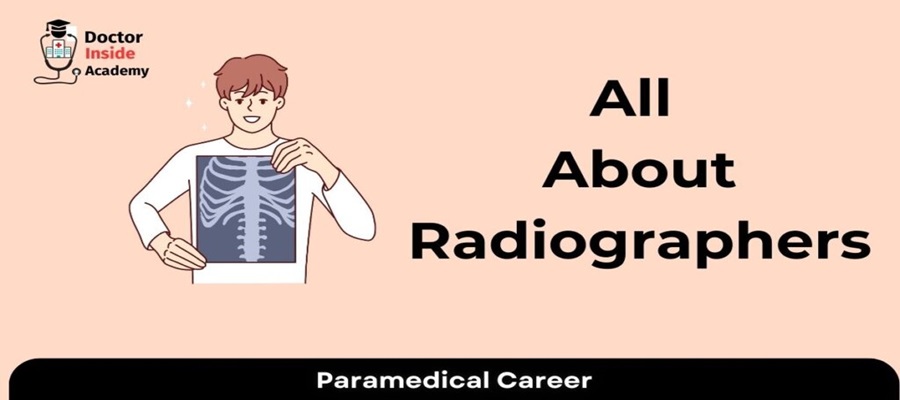
Association of Radiographers of Nigeria (ARN) has rejected the Medical and Dental Practitioners Act (Repeal and Re-enactment) Bill 2026 currently before the National Assembly, describing it as a targeted and calculated existential assault on their profession.

According to the body the legislative attempt will erode the profession of radiography and transfer its statutory responsibilities to the Medical and Dental Council of Nigeria.
Dr Musa Dembele, president of the association, gave the warning while addressing a press conference at the Kano NUJ Press Centre on Saturday.
He said, “The Medical and Dental Practitioners Act (Repeal and Re-enactment) Bill, 2026 (HB 2695) is not a reform but a targeted, calculated, and existential assault on the profession of radiography.”
He also described the bill as an attempt to introduce a “jurisdictional override” intended to dismantle the Radiographers Registration Board of Nigeria.
“This is a legislative execution of a profession that has served Nigeria for over 50 years,” he said.
Dembele pointed to Section 8(1) of the bill, which grants the Medical and Dental Council of Nigeria exclusive authority, describing it as “a legislative nuclear weapon” that strips the Radiographers Registration Board of Nigeria of its mandate.
The association also accused the bill of “conceptual theft” by redefining radiology in a way that erases radiography as an independent scientific discipline.
“The bill seeks to legally erase radiography as an independent profession and subjugate radiographers to the disciplinary authority of a council composed of individuals with no expertise in radiographic science,” the association said.
On financial matters, the association accused the bill of promoting “extortion as regulation,” noting that it mandates that 70 per cent of practising fees be shared with the Nigerian Medical Association.
“This reveals the true motive — financial colonisation,” Dembele said.
The association also raised concerns over HB 2699, the Radiographers Registration Board of Nigeria Amendment Bill, which it said seeks to weaken the board from within.
It described the inclusion of medical doctors on the board as “a fundamental violation of the doctrine of professional self-regulation” and warned against excessive ministerial control that could politicise regulation.
The association stressed that globally, radiography regulation is profession-led, citing examples from the United Kingdom, Canada, and Australia, and noted that Nigeria cannot afford to adopt a substandard model that contradicts established international norms.
The association therefore called on the National Assembly to protect the integrity of the Nigerian healthcare system by rejecting the bill in its entirety.
It also called for a stakeholders’ summit to develop a harmonised regulatory framework that respects the co-equal status of all health professions, as obtained in the United Kingdom, Canada, and Australia.
“The association aligns with the position of the Joint Health Sector Unions, medical laboratory scientists, physiotherapists, and other critical stakeholders who have also rejected similar legislative attempts,” he added.


Zarttech extends a sincere apology to individuals and partners who may have been affected during the course of its operations. The company recognizes that its journey included challenges and acknowledges the importance of accountability, respect, and transparency toward everyone who was part of its story.

At its core, Zarttech was founded with a mission to bridge the global tech talent gap by connecting diverse IT professionals with opportunities around the world. The company sought to remove barriers that often prevent talented individuals from accessing global work, while promoting fairness and reducing bias in the technology recruitment process.
Through its work, Zarttech contributed to a broader shift in how Africa is perceived in the global technology ecosystem. By highlighting the expertise, creativity, and potential of African developers and technology professionals, the company helped bring greater visibility to the continent’s growing pool of world-class talent.
Zarttech’s mission centered on creating opportunities that connected businesses with skilled professionals across Africa, Europe, and South America while demonstrating that innovation and excellence in technology know no geographic boundaries.
Beyond its business activities, Zarttech also supported initiatives aimed at empowering women in technology across Africa through training and education programs, reinforcing its belief that inclusive access to opportunity can help shape a more equitable global tech industry.
While the company’s chapter has come to an end, the impact of the conversations it helped spark about African talent, global collaboration, and opportunity without borders continues to be part of a larger movement transforming the global technology landscape.


Nigerian Content Development and Monitoring Board (NCDMB) has been named a Local Content Partner at African Energy Week (AEW) 2026, in a move that positions the agency as a key driver of indigenous capacity building in Africa’s energy sector.

NCDMB
The event, scheduled to hold from October 12 to 16 in Cape Town, South Africa, will give the NCDMB a high‑profile platform to showcase Nigeria’s local content framework, industrial projects and investment opportunities to global investors and policymakers.
The NCDMB, a parastatal regulatory agency under the Federal Ministry of Petroleum Resources, has increasingly anchored its interventions on skills development, infrastructure and industrialisation.
In March 2026, the board launched a 12‑month pipeline engineering training programme for 33 young engineers in Port Harcourt, in partnership with Renaissance Africa Energy and MJD Oilfield Services.
The programme focuses on pipeline pigging, corrosion control and integrity management, aligning the workforce with major government infrastructure projects such as the Ajaokuta‑Kaduna‑Kano Gas Pipeline.
On infrastructure, the NCDMB is advancing construction of a 204‑room Radisson‑managed hotel and conference centre in Yenagoa, Bayelsa State, expected to be commissioned in December 2026. Located adjacent to the Nigerian Content Tower, the facility is designed to support industry collaboration, conferences and business meetings within the local content ecosystem.
The board has also commissioned a Clinical Skills and Simulation Laboratory at Bayelsa Medical University, enhancing healthcare training and service delivery in host communities through modern simulation technology.
Industrial expansion remains a core pillar of the NCDMB’s strategy. Under the Nigerian Oil and Gas Parks Scheme, pilot parks in Odukpani, Cross River State, and Emeyal‑1, Bayelsa State, are nearing completion and are projected to generate about 2,000 jobs each.
These shared‑services industrial hubs are designed to localise manufacturing, reduce project costs and enable indigenous companies to scale up production along the upstream and midstream value chains.
From a financing and policy standpoint, the NCDMB is deploying multiple funding mechanisms, including a 100‑million‑dollar equity investment scheme, a 500‑million‑dollar intervention fund and a 20‑million‑dollar initiative targeted at women‑owned enterprises in the oil and gas sector.
Recent enforcement measures, such as tighter expatriate quota controls and mandatory compliance certification for operators, signal a shift toward deeper localisation, greater transparency and stronger investor confidence in Nigeria’s energy industry.
Speaking on the significance of the board’s role at AEW 2026, the Executive Chairman of the African Energy Chamber, NJ Ayuk, said the NCDMB’s participation underscores Africa’s commitment to building domestic capacity and retaining value within the continent.
“Local content is not just policy – it is the foundation for sustainable growth, job creation and energy security across African markets,” Ayuk noted.
As African Energy Week 2026 gathers global investors, policymakers and energy operators, the inclusion of the NCDMB as a Local Content Partner highlights the growing importance of in‑country value creation. With focused sessions on skills development, technology transfer and industrialisation, the forum is expected to generate concrete partnerships and commitments that can help build resilient, competitive and investment‑ready energy ecosystems across Africa, with Nigeria positioned at the centre of the regional value chain.

ARN Rejects Medical Bill over Attempt to ‘Scrap’ Profession

Meningitis Kills a Quarter Million People a Year -Study

NIGCOMSAT Supports Startups Growth with the Launch of Accelerator 3.0

Stakeholder says AI is Crucial to Nigerian Data Centres Amid Persistent Grid Collapse

NFVCB Boss Urges Stronger Distribution Channels @ Coal City Film Festival 2026

Spotify’s Loud & Clear Report Reveals Over ₦60Bn Revenue for Nigerian Artists in 2025

Madonna University Taps Tech Guru Adote for Strategic Board Role

China Threatens to Shut Nigeria’s Satellite Over $11.44m Unpaid Debt

Jumia Tech Week 2026 Begins with Tech Deals on Smartphones, Electronics, and Everyday Technology

FCCPC Bans Lagos ‘No Refund’ Policy, Vows Fines and Shutdowns for Traders




 E-Financial3 days ago
Breaking…..Kuda Lays Off Many Employees in Broad Restructuring

 Telecom2 days ago
Google Rolls Out Search Live AI to 200+ Countries, Including Nigeria

 E-Financial2 days ago
CBN Bars Chronic Loan Defaulters from Accessing Loans

 E-Financial2 days ago
NDIC Insures 99 Percent of Bank Customers

 E-Business2 days ago
FG Shifting Focus to “Meaningful Connectivity” to Drive Inclusion – Minister

 General News2 days ago
Anti Graft Agencies Raise Alarm over Rising Crypto-Linked Financial Crimes

 E-Business2 days ago
NITDA Takes Over National Digital Architecture System

 E-Financial8 hours ago
CBN bars large‑ticket loan defaulters from banking services in tough new crackdown