

General News
UBA’s Q3 Earnings Hits N120Bn

The United Bank for Africa (UBA) Group has that it recorded gross earnings of N120.3 billion in its third quarter operations which ended on June 30, 2008.
The bank’s results, which were made available to the News Agency of Nigeria (NAN) in Lagos today, showed that the figure represented about 60 per cent growth over N75.3 billion earnings recorded in the corresponding period in 2007.
The bank’s profit before tax stood at N34.88 billion during the period, about 77 per cent increase over N19.691billion made in the same period last year.
Its profit after tax also rose to N28.848 billion from N17.131 billion realised in its third quarter in 2007.
The bank said that it would pay N2.5 billion as tax for its operations during the period.


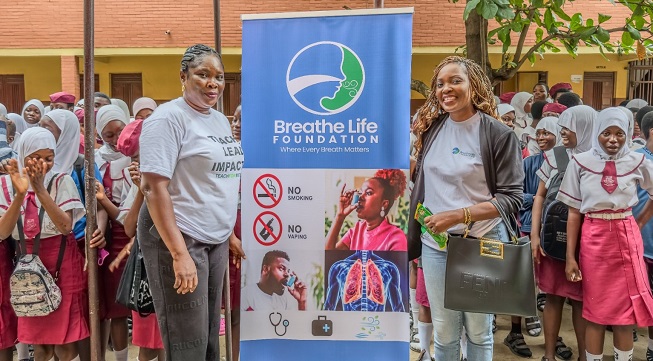
Breathe Life Foundation partnered with Teach Nigeria Fellow, Ms Bunmi Rotimi, to deliver a respiratory health awareness session for over 200 senior students of Cleggs Girls High School, Surulere, Lagos.

The session equipped students aged 15–19 years with practical knowledge about the risks associated with smoking, vaping, and shisha, while challenging the misconception that shisha is a safer alternative to cigarettes or other substances.
Through an engaging and interactive discussion, students explored the influence of peer pressure and learned practical strategies for making healthier, more informed lifestyle choices.
They also gained a better understanding of common environmental triggers of asthma and other respiratory conditions, including cigarette smoke, generator fumes, bush burning, mosquito coil smoke, candles, charcoal, and firewood.
The session highlighted an important reality: young people may not always recognise how seemingly routine lifestyle choices and environmental exposures can gradually affect their respiratory health, quality of life, and long-term wellbeing.
For Breathe Life Foundation, this reinforces the importance of shifting the conversation from treatment to prevention through awareness and education. By equipping young people with the knowledge to identify risks and make healthier choices early, the Foundation is helping to build a generation that is more conscious of – and better prepared to protect – its respiratory health.
Breathe Life Foundation is dedicated to advancing respiratory health, an often-neglected public health priority. Healthy lungs are essential to life, yet respiratory diseases remain among the world’s leading causes of death and disability, even though many are preventable and treatable.

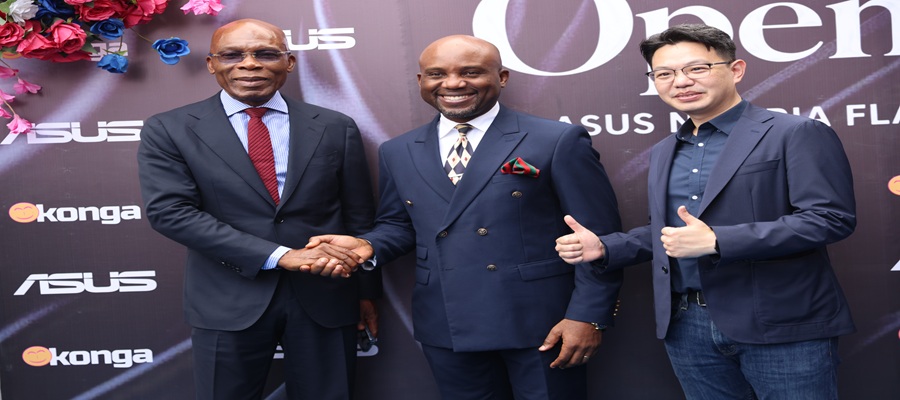
Nigeria’s technology retail landscape reached another significant milestone on Monday, August 3, 2026, as global technology giant ASUS, in partnership with Konga, officially commissioned its first flagship experience store in West Africa.

Strategically located at 16 Otigba Street, Computer Village, Ikeja, Lagos; the heartbeat of Nigeria’s technology ecosystem, the state-of-the-art facility represents a major investment in customer experience, product accessibility, and digital innovation.
The launch also reinforces Konga’s growing reputation as a preferred gateway for leading global technology brands into the Nigerian market.
The landmark event attracted Dr Kingsley Tochukwu Udeh, SAN, minister of Innovation, Science and Technology, who officially commissioned the store.
Also in attendance were the Chairman of Zinox Group, Leo Stan Ekeh; Chief Operating Officer of Konga, Dave Omoregie; VP Omni-channel & Commercial Planning, Melvin Onochie; and Head of Marketing and Communications at Konga Group, Victor Oluwaleye.
The ASUS team was led by E.EMEA General Manager, Aaron Tsai, alongside Business Development Manager, Sunnie Chen; Sales Manager, Mohammed Kazim; Gaming Product Manager, Joy Chen; Marketing Manager, Adeola Odeleye; and Sales Specialist, Williams Okenna.
The Honourable Minister described the facility as a defining achievement for Nigeria’s digital economy, noting that it is far more than the opening of a retail outlet.
He called it a strong vote of confidence by a global technology brand in Nigeria’s innovation, science, and technology ecosystem and the immense potential of its market.
He noted that his presence underscored the Federal Government’s commitment to fostering stronger collaboration between the public and private sectors, describing such partnerships as essential to achieving Nigeria’s ambition of building a one-trillion-dollar economy driven by private enterprise and enabled by government.
The Minister paid tribute to Leo Stan Ekeh, describing him as one of the foremost architects of Nigeria’s digital transformation.
He announced that Ekeh had recently agreed to champion the Federal Government’s Youth and Students in Innovation initiative, a flagship programme aimed at equipping young Nigerians with entrepreneurial and technology skills.
According to him, Ekeh’s decades of visionary entrepreneurship have played a pivotal role in shaping the country’s technology ecosystem and attracting prominent technology companies into the Nigerian market.
Using the occasion to address the international business community, the Minister encouraged global investors and brands to look beyond establishing commercial operations in Nigeria and actively partner with the government in driving national development.
He assured investors of the Federal Government’s commitment to creating an enabling environment that safeguards investments and delivers sustainable returns.
Speaking at the event, ASUS E.EMEA General Manager, Aaron Tsai, expressed appreciation to partners, government representatives, and customers for their support.
He explained that the flagship store was conceived to provide consumers with direct access to authentic ASUS products, and expressed confidence that the partnership with Konga will further accelerate the brand’s growth and strengthen customer engagement in the region.
The experience centre features dedicated sections showcasing ASUS’ complete portfolio of premium laptops, gaming devices, AI-powered PCs, and cutting-edge innovations. A standout attraction is an interactive digital display that allows visitors to explore ASUS’ latest technologies virtually before making purchase decisions, creating a more engaging and informed customer journey. Plus, every ASUS device purchased through the flagship store or online on Konga comes with a special one-year replacement warranty at no extra cost.
In his remark, Chief Operating Officer of Konga Group, Dave Omoregie, said the flagship store reflects Konga’s deliberate strategy to give Nigerian consumers a seamless blend of online and offline retail.
He noted that Konga’s logistics network, payment infrastructure, and nationwide retail footprint uniquely position the company to support global brands like ASUS at scale, while ensuring customers enjoy authentic products backed by reliable after-sales service.
According to him, the partnership demonstrates what becomes possible when world-class technology brands trust Nigerian platforms to deliver exceptional experiences, adding that Konga remains committed to setting the operational standard for authentic technology retail across the country.
The launch further reinforces the enduring partnership between ASUS and Konga, built on shared values of innovation, authenticity, and customer satisfaction.
It also highlights Konga’s continued evolution beyond traditional e-commerce into a comprehensive omnichannel technology ecosystem that combines online convenience with physical retail experiences.
For Nigerian consumers and businesses, the new ASUS Flagship Experience Store represents more than a retail outlet; it is a symbol of confidence in Nigeria’s technology market. It highlights Konga’s commitment to bridging the gap between global technology brands and Nigerian consumers. With its robust logistics infrastructure, digital payment solutions, and nationwide physical retail presence, Konga continues to set the standard for authentic, accessible, and reliable technology retail across Africa.
The flagship store opening featured guided product demonstrations, immersive technology experiences, exclusive launch-day offers and customer engagement activities celebrating this historic milestone.
Customers can begin shopping immediately at the ASUS Flagship Experience Store, located at 16 Otigba Street, Computer Village, Ikeja, Lagos. Visitors can explore authentic ASUS products, experience live product demonstrations, receive expert guidance, and access dedicated Starlink customer-support services.

Socio-Economic Rights and Accountability Project (SERAP) has called on President Bola Tinubu to direct, Lateef Fagbemi (SAN), attorney general of the federation and minister of Justice; Olatunji Rilwan Disu, inspector-general of Police, and relevant anti-corruption agencies to investigate allegations that more than ₦6.79 billion in public funds were missing, diverted or misapplied within the Nigeria Police Force and the Federal Ministry of Police Affairs.

The allegations are contained in the Auditor-General of the Federation’s 2022 Annual Report, published on September 9, 2025.
In a letter dated August 1, 2026, and signed by Kolawole Oluwadare, deputy director, SERAP, the organisation urged the government to ensure that anyone implicated in the report is prosecuted and that all missing public funds, firearms and ammunition are recovered.
“Anyone suspected to be responsible—including contractors, companies and public officials implicated in the report—should be promptly prosecuted, while all missing public funds, firearms and ammunition should be fully recovered, secured and properly accounted for.”
SERAP described the Auditor-General’s findings as a serious breach of public trust.
“The Auditor-General’s findings suggest a grave betrayal of the public trust and raise serious concerns about corruption and the management of public funds, police exhibits, firearms and ammunition.”
The organisation also expressed concern over allegations involving missing firearms, unauthorised use and release of police exhibits, and poor storage of weapons.
“The report also raises serious concerns over missing firearms and ammunition, the unauthorised use and release of police exhibits, failures to properly account for exhibits, and the insecure storage of firearms, creating significant risks to public safety and national security.”
According to SERAP, the alleged diversion of funds meant for policing and the reported irregularities have weakened the operational effectiveness of the Nigeria Police Force.
“The diversion of funds meant for policing, abandoned security projects, missing firearms and ammunition, and the misuse of police exhibits undermine the operational effectiveness of the Nigeria Police Force, weaken public confidence and may contribute to Nigeria’s worsening insecurity.”
The organisation said the Auditor-General’s report documented several alleged financial irregularities, including payments for projects that were never executed, abandoned contracts, inflated contract costs, irregular procurement, unretired cash advances, unsettled insurance claims and payments for services allegedly not rendered.
“The report documented numerous alleged financial irregularities within the Nigeria Police Force and the Federal Ministry of Police Affairs, including payments for projects that were never executed, abandoned contracts, inflated contract costs, and irregular procurement.”
“The report also documented unretired cash advances, unsettled insurance claims, payments for services allegedly not rendered, and other suspected diversion and misapplication of public funds amounting to over ₦6.79 billion.”SERAP further cited allegations of missing firearms and ammunition, failures to properly account for recovered weapons and exhibits, and insecure storage of firearms.
“The allegations also include missing firearms and ammunition, the unauthorised use and release of police exhibits, failures to properly account for recovered firearms and other exhibits, and the insecure storage of firearms, posing serious risks to public safety and national security.”
The organisation gave the Federal Government seven days to act on its demands, warning that it would pursue legal action if no response is received.
“We would be grateful if the recommended measures are taken within seven days of the receipt and/or publication of this letter. If we have not heard from you by then, SERAP shall consider appropriate legal action to compel your government to comply with our request in the public interest.”
SERAP also argued that the allegations, if left unaddressed, would violate constitutional provisions requiring the government to combat corruption and safeguard the welfare and security of Nigerians.
Among the specific findings cited from the Auditor-General’s report were allegations of payments for abandoned and unexecuted police projects worth hundreds of millions of naira, inflated contract values, unretired cash advances, irregular procurement processes, unsettled insurance claims exceeding ₦681 million, over ₦1 billion in uncleared insurance policy liabilities, missing firearms and ammunition, unauthorised release of police exhibits, and contracts allegedly awarded without due diligence by the Federal Ministry of Police Affairs.

Dimension Data to Channel Funds to Support Nigerian Fibre Expansion

FG Commences 90,000km Fibre Optic Rollout within Weeks

Kaspersky Reveals a New Malicious Framework Targeting Cryptocurrency Users with the Use of OkoSpyware

Nigeria CommunicationsWeek Retracts Story on Pan African Towers Litigation

Firm to recruit over 100 professionals to boost NRS e-Invoicing compliance

NRC, Ponzi Scheme Collapses Resulting Loss of Billions of Naira

From Scarcity to Scale: What Africa Can Learn from India’s Agricultural Transformation

EFCC Busts NIS Visa Overstay Racket, Uncovers N700m in an Account

BON Establishes Six Ad Hoc Committees to Modernize Broadcasting

NELFUND Investigates 34 Universities Over Students’ Missing Tuition Refunds




 News3 days ago
Atte, Nigerian Develops AI Algorithm for Hair Transplants

 News3 days ago
FG to Abolish Subsidies in Power Sector in 2027 – Minister

 E-Financial3 days ago
FCT Court Awards Ex-Customers N15m against Stanbic IBTC over Data Privacy Breach

 E-Financial3 days ago
CBN Exposes over 13,000 BVNs Tied to Fraud as Banks Tighten Security

 Telecom3 days ago
Starbase Technologies Introduces Yolly, a Reward-Based Social Entertainment Platform

 General News3 days ago
Dare Tackles Onaiyekan over Criticism of Tinubu, Says Economic is Working

 E-Business2 days ago
Kaspersky Identifies Cyberespionage as a Growing Threat Across Africa, Others

 General News3 days ago
SERAP Asks Tinubu to Probe Alleged N6.79Bn Missing Police Funds, Firearms