

Telecom
Information Technology Pivotal for Achieving Digital Nigeria– DG NITDA


Mallam Kashifu Inuwa Abdullahi, director general of National Information Technology Development Agency (NITDA), has said that Information technology is connecting billions of people by providing them with access to knowledge and services, helping people to live more sustainably by making preservation or even regeneration of our natural resources possible.
The DG made this known on Wednesday during his remarks at the Nigeria Information Technology Reporters Association (NITRA) Innovative Forum Webinar with the theme: “Multi-Stakeholder Approach to National Recovery Post-COVID-19 Pandemic”.
He said, “The outbreak of the COVID-19 Pandemic has completely changed the way we live our lives.
“The onset of the pandemic has proven to be an extremely disruptive occurrence that has exacerbated the effects of several social issues previously unknown.
“This has also led to increase in entrepreneurial activities were Enterprises and individuals have shown increased creativity in tackling the challenges posed by the crisis.
“Virtual meetings are adopted by public and private institutions to address the issues of social distancing using video conferencing applications”.
Mallam Abdullahi asserted that in order to prepare Nigeria for the disruption caused by the Pandemic, the Federal Ministry of Communications and Digital Economy under the leadership of the Honourable Minister, Federal Ministry of Communications and Digital Economy, Dr Isa Ali Ibrahim Pantami, has put in place many initiatives and programs towards a robust post COVID-19 experience, in line with the National Digital Economy Policy and Strategy for a Digital Nigeria.
The Policy, anchored on 8 Pillars – Developmental Regulation, Digital Literacy and Skills, Solid Infrastructure, Digital Services Development and Promotion, Soft Infrastructure, Digital Society and Emerging Technologies, and Indigenous Content Development and Adoption – outlines strategies for transforming Nigeria into a leading digital economy providing quality life and digital economies for all.
The National Information Technology Development Agency (NITDA), one of the implementing arms of the Ministry, was mandated by the National Information Technology Development Act (2007) to create a framework for the planning, research, development, standardization, application, coordination, monitoring, evaluation and regulation of Information Technology practices, activities and systems in Nigeria.
The Agency’s role therefore is to develop Information technology in the country through regulatory standards, guidelines and policies.
It is the prime Agency for e-Government implementation, Internet governance and General IT development in Nigeria. Our activities in NITDA are aimed at fast-tracking the realisation of the objectives of NDEPS.
“We at NITDA, based on the directives of the Honourable Minister of Communications and Digital Economy, swiftly initiated several policies and programs for the technology ecosystem and startups to be able to withstand the potential impact of the Pandemic.
“We rolled out these initiatives in order to ensure that technology continues to enable innovation and entrepreneurship while addressing challenges of the society”, he said.
Tech4COVID-19 Committee was constituted with the aim of identifying the challenges the Technology ecosystem is facing during the COVID-19 Pandemic and to propose measures to cushion the effects of the pandemic.
“Members of the Committee were drawn from both the public and private sector and are key players in the Technology ecosystem who have made significant contributions to the Technology and Innovation ecosystem.
“The Committee’s recommendations include strategies to ensure we retain about 100,000 ICT Jobs as well as create additional 30,000 in Post COVID-19 Era through this initiative, he added.
The Agency organised Nigeria COVID-19 Innovation Challenge where Nigerians were challenged to come up with innovation to meet the challenges of the COVID-19 Pandemic and beyond.
Over 1,500 startups participated and three emerged winners Algorizmi, a patient management solution particularly for victims of the COVID-19 Pandemic, Smart Disinfection Chamber, smart tunnel which can be used for disinfection of persons entering any location and Myclinic.ng, an online platform that enables users to hold video consultations with qualified medical doctors from anywhere and at any time, he asserted.
Mallam Abdullahi stated that “Nigeria has over 130 hubs and several hundreds of technology startups.
“These have the capacity of driving innovation and entrepreneurship, and stimulating the economy.
“The Academia, which has always been at the forefront of research and development, needs to expand its horizon to include innovation.
“We need more hubs in the academia to nurture the creativity of our youths. Collaboratively, we in NITDA are can make Nigeria a nucleus of innovation.
“To improve agricultural practices and create jobs, we initiated the National Adopted Village for SMART Agriculture (NAVSA), an ecosystem-driven digital platform where we engage farmers and focus on using precision/smart farming techniques to ensure significant improvement in efficiency and productivity thereby increasing crop yield; increased profit margin and create more jobs.
“We are partnering with relevant stakeholders to ensure the success of the scheme.
“As an example, MTN has developed a special package for smart farmers that come with 4G SIM cards with a one year internet data subscription, he added.
The Nigeria Data Protection Regulation (NDPR), aimed at safeguarding the rights of persons to privacy, fostering safe conduct for the transactions involving the exchange of personal data, preventing manipulation of personal data, and ensuring that Nigerian businesses remain competitive in international trade through the safeguards afforded by a just and equitable legal regulatory framework, facilitated the creation of 2,686 jobs, added over 2 billion naira into the economy, and generated over 12 million naira to the Federal Government by filing Audit Reports.
The Agency has also deployed ICT infrastructure across the country. In addition to the numerous capacity building programmes in line with the Digital Literacy and Skills pillar of the National Digital Economy Policy and Strategy, the Virtual Learning Platform of the NITDA Academy for Research and Training that provides access to wide variety of programmes from industry stakeholders has so far attracted over 33,000 active learners.
Earlier in his remarks, Mr Ike Nnamani, president Medallion Communications, stated that skills acquisition is key to the growth and development of any country.
“There is need to improve in the services rendered to the public and at the same time the price should be reasonable for affordability.
“Telecommunications is moving to data which is the new trend simple because of its easy access and usage which makes work faster and easier.
“Data centers are imperative towards the delivering services to the public which will boost the economy’s output, he added.
Nnamani asserted that there is need to build more data center across the country to provide easy access to services, simply because subscribers need good service to effect their operations which will aid the swift growth and development of the country Gross Domestic Product (GDP).
Mr Aderemi Adejumo, managing director CloudFlex, said that the programme is coming at the right time the country needs it the most and applauded NITRA for this initiative towards the drive of Information Technology development across the country.
He added that 90% of the businesses in the country are been moved abroad which is affecting the country’s GDP and output bringing about the fall in some sectors of the economy.
“The low implementation and push towards the growth of the IT sector has affected the activities of the sector and there is need to boost the sector simply because of its contributions to the Nations GDP.
Adejumo said that Nigeria is the most important economy to the world due to the vast population and the potentials embedded in the citizens towards achieving goals and objectives.
We need to boost the skills of our citizens which will bring out the potentials embedded in them towards the growth of the country.
NITRA Innovative Forum is annual Information and Communication Technology roundtable organised by the Nigeria Information Technology Reporters Association (NITRA).
The flagship event, which started in 2018, takes different sub themes each year to address the needs of the industry and set a pace for development.
This year, NITRA sees an enormous opportunity to ICT development and growth despite the COVID-19 scourge.
The event will seek to discuss the level of preparedness of ICT stakeholders to embrace the challenge of being pivotal to the stability and growth of all other sectors, during and after the pandemic.


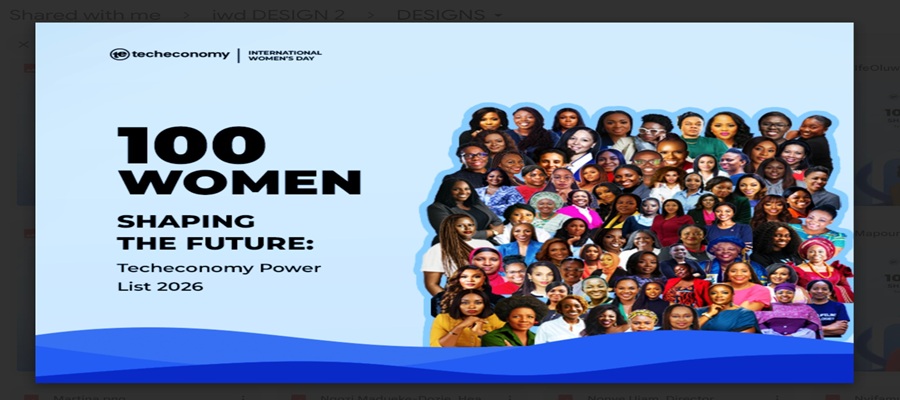
In celebration of International Women’s Day (IWD) 2026, Techeconomy, a leading business news platform in Nigeria, has unveiled its “100 Women Shaping the Future: Techeconomy Power List 2026,” recognizing exceptional women driving innovation, leadership, and impact across technology and the broader digital economy.

Techeconomy
The annual recognition spotlights women who are transforming industries through entrepreneurship, policy leadership, digital innovation, financial inclusion, media, education, and emerging technologies.
The initiative is part of Techeconomy’s commitment to promoting gender inclusion and highlighting female leadership shaping Africa’s technology ecosystem.
The Techeconomy IWD Power List features a diverse group of women, from corporate executives and startup founders to policymakers, ecosystem builders, and social innovators, whose work continues to influence the future of technology, business, and digital transformation in Nigeria and across Africa.
Speaking on the initiative, Joan Aimuengheuwa, the Managing Editor at Techeconomy, noted that the recognition goes beyond celebrating titles, focusing instead on impact, resilience, and the ability to shape the future through innovation and leadership.
According to her, “the women on the list represent different sectors including fintech, banking, healthcare, agriculture, education, communications, and the creative economy, demonstrating the growing role of women in advancing technology-driven development.
The unveiling aligns with the global celebration of International Women’s Day, which highlights the achievements of women and calls for accelerated progress toward gender equality. Across the world, the technology sector continues to push for greater female representation and leadership as part of efforts to build more inclusive digital economies.
Also speaking, Oluwatosin Aloba, the Brand Manager at Techeconomy, said: “Techeconomy IWD 2026 Power List is specially designed to inspire the next generation of female innovators and leaders by showcasing role models who are breaking barriers and redefining possibilities in the technology landscape.
“Techeconomy encouraged industry stakeholders, institutions, and the broader public to celebrate the achievements of these women while continuing to support policies, programs, and investments that expand opportunities for women in technology”, she added.
The full list of the “100 Women Shaping the Future: Techeconomy Power List 2026” is available on the Techeconomy website or visit: https://techeconomy.ng/techeconomy-iwd-2026-power-list-celebrates-100-women-shaping-the-future-of-tech/.

National Information Technology Development Agency (NITDA), via its Office for Nigerian Digital Innovation (ONDI), has partnered with the Japan International Cooperation Agency (JICA) to launch applications for the fifth cohort of the iHatch Startup Incubation Programme, targeting 37 innovation hubs—one per state and the Federal Capital Territory (FCT).

NITDA
The initiative selects hubs as state-level managers to run incubation programmes, addressing uneven support outside Lagos and Abuja. “Nigeria’s startup ecosystem has grown rapidly, but access remains uneven,” said ONDI National Coordinator Victoria Fabunmi. “iHatch builds stronger hubs, standardises quality, and boosts investment readiness across all regions.”
Amid Africa’s $3.42 billion startup funding in 2025, Nigeria’s innovation clusters in major cities, sidelining rural founders. Selected hubs will incubate five startups each for at least one year, providing structured guidance for growth and funding. Hubs gain operational support, resources, and performance rewards—prioritizing ecosystem leadership over cash grants.
Eligibility and Timeline
Eligible hubs must:
Operate for at least one year with local engagement.
Possess infrastructure for incubation activities.
Applications close March 16 at ondi.nitda.gov.ng/#/ihatch.
Fabunmi emphasized: “By equipping hubs with tools, curriculum, and oversight, iHatch ensures consistent outcomes for founders everywhere,” tackling geographic gaps to scale local innovation.
French media group Canal+ has announced a €100 million turnaround plan to revive growth at MultiChoice, Africa’s largest pay-TV operator, after the DStv owner lost hundreds of thousands of subscribers and suffered a decline in revenue in 2025.

MultiChoice
The move follows Canal+’s full takeover of the South Africa-based broadcaster, which has been squeezed by weaker household purchasing power across Africa and intensifying competition from global streaming platforms.
According to Canal+’s latest financial disclosures, MultiChoice ended 2025 with 14.4 million subscribers, down from 14.9 million a year earlier, while revenue fell 6 per cent to €2.4 billion.
Adjusted earnings before interest and tax dropped 14 per cent to €159 million, prompting Canal+ to describe 2025 as “another challenging year” marked by falling subscriber numbers and an unsustainably high cost base.
The group cited currency depreciation in key markets such as Nigeria and persistent electricity shortages as major headwinds making it harder for households to maintain pay-TV subscriptions.
Canal+ also pointed to problems at Showmax, MultiChoice’s streaming service, describing one of its key contracts as an “expensive failure” and confirming that the arrangement is being shut down as part of a wider refocus on the core pay-TV business.
Under the new “boost plan,” which will roll out from 2026, Canal+ aims to restart subscriber growth and improve profitability across MultiChoice’s footprint by investing in content, pricing, distribution and sales.
On content, the French group says it plans to assemble the “best content on the African continent” by blending premium international programmes with more locally produced films, series and sports tailored to African audiences.
It will also simplify subscription packages and adjust pricing structures to make DStv and related offerings easier for customers to understand and afford.
To expand reach, Canal+ intends to subsidise hardware such as decoders and satellite dishes, lowering entry costs for new users.
In addition, the company will recruit more than 1,000 sales staff across African markets as it shifts MultiChoice towards a more aggressive, “sales-focused” model designed to win back and attract subscribers.
Alongside this investment push, Canal+ is embarking on significant cost-cutting measures, including a voluntary severance plan for some MultiChoice support staff and a restructuring of Irdeto, its technology and cybersecurity subsidiary.
Canal+ now expects to generate over €250 million in synergies by 2026, up from an earlier €150 million estimate, driven by the shutdown of loss-making Showmax contracts, operational restructuring at MultiChoice and rationalisation of company-owned properties.
The cost of delivering these savings is projected at between €70 million and €100 million. Despite the planned reforms, the group still anticipates a slight further decline in MultiChoice’s subscriber base in 2026, though the pace of losses is expected to slow, with adjusted earnings before interest and tax forecast to rise modestly to about €170 million as cost savings begin to offset weaker revenue and higher expenses.
Canal+ gained effective control of MultiChoice on 20 September 2025 after acquiring a majority stake, later buying out remaining shareholders and delisting the company from the Johannesburg Stock Exchange in December 2025.
The French media group has said it intends to complete a secondary listing on the JSE before June 2026 to reinforce its presence in Africa’s fast-growing media and entertainment market.
The €100 million boost plan underlines the mounting pressure on traditional pay-TV operators across the continent as currency weakness, rising living costs and rapid expansion of streaming services force a strategic rethink of legacy television business models.

Court Freezes Bank Accounts of Petrocam, Founder over Alleged N9Bn Zenith Bank Debt

FG Approves First National Policy on Cosmetic Safety, Health

FCCPC Says Telcos, Energy Firms Lead Consumer Complaints in Nigeria

Microsoft Expands Africa AI Push while DeepSeek Gains Users

Mobile Phones Used by Food Vendors Could Spread Infections- Experts

Dr. Cairo Ojougboh Foundation Bolsters Nigeria’s Education Drive with ₦2.7m Student Support

Kaspersky Brings more Transparency to Threat Detection with New Hunt Hub

Kaspersky Discovers New Phishing Campaign Exploiting Google Tasks Notifications to Steal Corporate Credentials

esentry 2025 Report Shows Healthcare, Financial Services and Telecoms as Staging Grounds for Increased Cyberattacks in Africa

AfDB, UNDP Launch $10Bn AI Initiative for Africa




 Telecom3 days ago
China Threatens to Shut Nigeria’s Satellite Over $11.44m Unpaid Debt

 Telecom3 days ago
US Court Dismisses All Claims Against Binance in Major Anti-Terrorism Lawsuit Victory

 Telecom3 days ago
TikTok Pumps $200k into AI Media Literacy for Sub-Saharan Africa at Nairobi Summit

 General News3 days ago
More Nigerians Emerge Millionaires in Week 9 of NIVEA’s Consumer Campaign

 E-Business3 days ago
NITDA, Nkenne AI Seek to Localise AI for Nigerians

 E-Business2 days ago
FG Moves to Strengthen Children’s Online Safety

 Telecom3 days ago
NCC Orders Telcos to Report Cyberattacks Within 4 Hours from 2027

 E-Business3 days ago
Meta to Charge Location Fees on Ads to Six Countries from July 1, 2026