

General News
Inmarsat Plans Free Flight-Tracking for Airline Safety


Inmarsat, a mobile satellite communications provider, said it will offer basic, two-way communications services to track commercial airline flights free of charge in an effort to improve passenger-jet safety following the disappearance of Malaysia Airlines Flight 370 (MH370).
In a matter of months Inmarsat also plans to offer an enhanced, fee-based aircraft-tracking service to airlines, as well as streaming black-box data capabilities aimed at avoiding the high cost of protracted aircraft search and rescue efforts.
In a presentation to a conference on aircraft tracking hosted by the International Civil Aviation Organization (ICAO) in Montreal recently, Inmarsat said it could provide the basic free service immediately over its existing L-band satellite network as part of the anticipated adoption of further aviation safety service measures by the world’s airlines following the loss of MH370 in March.
“We’re looking for them to adopt this offer as a commitment to an evolution for the safety of the air transport industry,” Rupert Pearce, chief executive officer of the Company said.
He added that the Company has a very close working relationship with all the major regulators, and “we want to take these proposals and see if they will provide what is necessary to implement this very quickly.”
In the near-term, the proposal entails a low-tech fix that would increase the frequency of Inmarsat network transmissions with roughly 80% of the world’s commercial long-haul fleet through its Classic aeronautical service, and Swift Broadband which already serves some 5,000 aircraft and which is being installed on new planes at the rate of about 500 per month.
The satellite transmissions or “pings” would check in with planes every 15 minutes, rather than every hour.
In addition, the aircraft’s response would be enhanced to include positional GPS data, such as speed, direction and altitude in the process.
Beyond the basic free service, Pearce said Inmarsat is planning to invest “some millions of dollars” of its own money to improve its network and implement enhanced tracking services and a “black-box-in-the-cloud” capability.
The move comes as one of Inmarsat’s principal competitors, Iridium, is designing a second-generation constellation of low-Earth-orbiting satellites that it hopes will offer a similar service by 2018.
“From a technical perspective, we can make these services available within a very short number of months,” Pearce said, adding that the company’s existing L-band satellite network links to hardware already installed on aircraft worldwide.
Pearce said the fee-based service offering would make enhanced position reporting available to provide more timely information to airlines, delivering data “that will allow aircraft to fly closer together safely, reducing fuel bills and making flying more eco-friendly.”
Another paid service will offer black-box streaming off the aircraft based on certain trigger events.
“This would allow you to reach back to find out what was on the flight data recorder up to the point when you have your event, and then track in real time thereafter and provide situational awareness in the cockpit,” Pearce said.
Following the disappearance of MH370, Inmarsat engineers used data from the Inmarsat 4-F1 commercial communications spacecraft to assist in the search, though Pearce said the satellite pings and handshakes on which the company’s analysis was based were simply “our network talking to our network.”
He said, it was “pure luck and happenstance that we were able to use that in the case of MH370 to come up with some approximation of where the aircraft flew and where it might be now.”
With the proposed flight-tracking service, Pearce said Inmarsat would use its scalable two-way global broadband network to improve upon even next-generation Automatic Dependent Surveillance-Broadcast (ADS-B) capabilities.
“We don’t think broadcast-only is the way to go, because when the dot disappears from your network, you have no idea why, and you have to go to different systems and services to talk to the cockpit,” he said. “But with Inmarsat, already you have the scalable capability to move to two-way communications to get rich situational awareness and start to take action. We already have the global network, and our services are to safety standard, partly because we’ve been providing them to the aviation industry for more than 20 years.”
For all three services, Pearce said no additional equipment is necessary.



Senate on Tuesday approved the fresh $6 billion loan request forwarded to the lawmakers by President Bola Tinubu.

Lawmakers approved the fresh loan on the same date the request letter was read by Godswill Akpabio, senate president.
The Senate approved the loans following the presentation and consideration of the report by Senator Aliyu Wamakko, chairman, Senate Committee on Local and Foreign Debts.
President Tinubu had written to the Senate seeking approval to borrow a total of $6 billion to finance key government projects and address budgetary gaps.
The requests were contained in two separate letters addressed to Godswill Akpabio, president of the Senate, and read during Tuesday’s plenary.
In the first letter, the President requested approval to obtain a $5 billion loan from Abu Dhabi Bank.
According to the President, the facility will be used to cover the nation’s budget deficit and support debt financing, among other fiscal obligations.
The request forms part of the Federal Government’s efforts to stabilise public finances and sustain ongoing government programmes.
In a separate communication, Tinubu also sought approval to secure a $1 billion UK Export Finance loan facility from London Citi Bank.
The loan is intended for the rehabilitation of key port infrastructure, including the Lagos Port Complex and Tin Can Island Port.
The President said the project aims to address critical infrastructure deficiencies in the country’s maritime sector
According to him, the rehabilitation will help improve efficiency, enhance safety standards, and support Nigeria’s efforts to diversify its economy beyond oil.
He added that the initiative would also strengthen Nigeria’s position as a regional trade hub.
Both requests have now been considered and approved by the Upper Legislative Chamber.
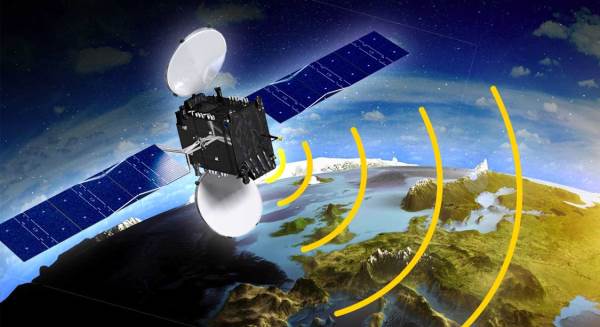
Federal government has fixed 2028 and 2029 for the launch of two communication satellites, NIGCOMSAT-2A and NIGCOMSAT-2B, as part of efforts to strengthen security and expand digital connectivity.

The government will be committing over $22 billion on the ambitious space-led growth agenda focused on new satellite launches, increased industry revenue and expanded broadband access in underserved communities.
At the opening of the 2026 Nigerian Satellite Week in Abuja, Dr Bosun Tijani, minister of Communications, Innovation and Digital Economy, confirmed the government’s approval for the acquisition of two new satellites—NigComSat 2A and 2B, describing the move as a “defining commitment” to national development, digital sovereignty and economic competitiveness.
Also, Mrs Jane Nkechi Egerton-Idehen, managing director of Nigerian Communications Satellite Limited (NigComSat), noted that the projects have moved beyond procurement to the execution stage.
She said the satellites are designed to enhance intelligence gathering, surveillance, and connectivity across Nigeria and neighbouring countries, particularly in support of security operations.
“For 2A and 2B, we have started the process. We have closed the tender and are now back into the financing and implementation stage. 2A is built to come up in 2028, and 2B for 2029.
“When they are up and running, they are expected to provide security within the borders and neighbouring countries. They will support the security agencies because data collection and intelligence in real time is important. Satellites like communication satellites allow that, irrespective of where they are,” she said.
On his part, Tijani, said the satellite programme forms part of a broader government strategy to deepen digital infrastructure nationwide.
According to him, the initiative complements ongoing investments in fibre-optic expansion and telecommunications infrastructure, while extending connectivity beyond Nigeria’s borders.
“The President’s approval of NIGCOMSAT-2A and 2B demonstrates a clear commitment to building the future. These satellites will enhance security, connect remote communities, and extend our fibre-optic network into neighbouring countries.
“Some of these neighbouring countries pay up to ten times more for internet capacity than Lagos. Extending our fibre network will not only improve connectivity but also enhance border security and regional collaboration.
“Satellite technology affects everything, from how a child in a rural community accesses the internet to how farmers make critical decisions and how businesses operate across distance,” he said.

Federal government has announced the launch of CLHEEAN, an artificial intelligence-powered mobile application designed to improve interactions between citizens and public institutions.

It is also a civic education and community engagement app.
Developed under the National Orientation Agency (NOA), the platform functions as a virtual assistant accessible via mobile devices.
It allows users to access information on public policies, ask questions, and interact directly with government services.
The app includes features such as instant messaging, voice recognition, and multilingual support, including several local languages, to reach a wider audience.
With CLHEEAN, users can also submit feedback, report concerns, and take part in discussions on public policies. The approach is intended to strengthen citizen participation and improve communication between the government and the public.
Lanre Issa-Onilu, director general of the NOA, said the initiative addresses a long-standing gap between citizens seeking to be heard and systems that do not always respond effectively, adding that the platform marks a step toward closing that gap.
The launch comes as Nigeria continues to face challenges in citizen engagement and the dissemination of public information.
By leveraging artificial intelligence, authorities aim to make public services more accessible while improving transparency and responsiveness.
The initiative also reflects a broader trend across Africa, where governments are increasingly exploring the use of AI to modernize public services and strengthen ties with citizens.

How Recycled SIM Card Linked to N50m Kidnapping Nearly Landed me in Jail – Businesswoman

Senate Gives Tinubu Nod to Borrow Fresh $6Bn

FG Earmarks $2Bn to Launch 2 Satellites in 2028, 2029

CBN Directs Banks, Fintechs to Complete Cybersecurity Audit Tool

FG Launches CLHEEAN to Streamline Access to Government Services

Spotify’s Loud & Clear Report Reveals Over ₦60Bn Revenue for Nigerian Artists in 2025

Madonna University Taps Tech Guru Adote for Strategic Board Role

China Threatens to Shut Nigeria’s Satellite Over $11.44m Unpaid Debt

Jumia Tech Week 2026 Begins with Tech Deals on Smartphones, Electronics, and Everyday Technology

FCCPC Bans Lagos ‘No Refund’ Policy, Vows Fines and Shutdowns for Traders




 E-Financial3 days ago
CBN bars large‑ticket loan defaulters from banking services in tough new crackdown

 General News3 days ago
ARN Rejects Medical Bill over Attempt to ‘Scrap’ Profession

 Telecom3 days ago
NIGCOMSAT Supports Startups Growth with the Launch of Accelerator 3.0

 News3 days ago
Meningitis Kills a Quarter Million People a Year -Study

 Telecom3 days ago
FG Unveils Digital Economy Research Fund Scheme

 News3 days ago
Stakeholder says AI is Crucial to Nigerian Data Centres Amid Persistent Grid Collapse

 E-Financial2 days ago
NGX REGCO Fines 5 Firms N291m for Market Manipulation
- General News3 days ago
Nigeria Advances Digital Governance as NITDA takes over NGEA Portal