

General News
Interoperability Key To Scaling Africa’s E-Mobility Sector – Report

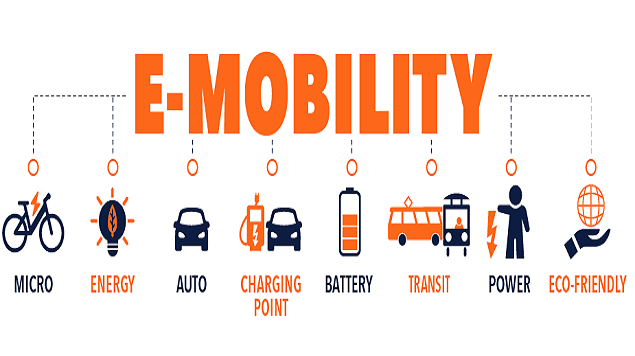
The Powering Renewable Energy Opportunities (PREO) programme has released a new report titled Driving Interoperability: Insights from PREO’s E-Mobility Portfolio, offering a deep dive into how interoperability can unlock scalable, investable business models in sub-Saharan Africa’s electric mobility sector.

Launched last week during Africa E-Mobility Week 2025, the report was co-funded by the UK Government under the Transforming Energy Access platform and the IKEA Foundation.
It examines how shared systems, technical alignment, and collaborative infrastructure can help transition Africa’s e-mobility landscape from fragmented pilots to commercially sustainable ecosystems. Transport remains a lifeline for millions across the region, with two- and three-wheelers powering everything from motorcycle taxis to delivery services.
Yet much of this mobility depends on fossil fuels, driving up costs, worsening air pollution, and hindering decarbonisation efforts. As African countries ramp up clean energy access, electric mobility represents a transformative opportunity to lower costs, cut emissions, and build resilient urban transport networks.
Drawing on five years of data and lessons from early-stage investments in e-mobility enterprises, PREO’s report identifies the limitations of vertically integrated models, which often lead to duplicated infrastructure, fragmented supply chains, and inefficient asset use.
Instead, it advocates for interoperability through shared systems such as neutral battery swap stations, modular battery designs, and open-access charging networks that can serve multiple electric vehicle (EV) brands. These approaches, the report notes, not only reduce capital requirements and operational waste but also enhance rider experiences and make emobility more accessible and affordable.
Beyond operational benefits, interoperability supports circular economy goals by lowering material consumption and minimising electronic waste. The PREO programme, delivered by the Carbon Trust and Mercy Corps’ Energy 4 Impact, hosted a dedicated session during Africa E-Mobility Week to discuss the report’s findings.
The event brought together key players from across the sector to explore the commercial and technical foundations of interoperability, lessons from pilot projects, and pathways for crosssector collaboration.
The publication features case studies from five pioneering companies, Mazi Mobility, AG Energies, CHAJI, STIMA Mobility, and Ecobodaa, showcasing real-world applications of interoperability across infrastructure, battery systems, charging networks, asset ownership, and digital platforms.
It concludes with a fourpart roadmap that outlines steps for advancing technical alignment, shared infrastructure development, business model harmonisation, and supportive policy frameworks.
According to PREO, interoperability could be a game-changer for Africa’s e-mobility industry. By allowing companies to specialise, aggregate demand, and collaborate through shared systems, it provides a commercially viable path to scale.
As the sector matures, this approach could lower costs, attract private investment, and broaden access to clean, affordable transport solutions, ultimately creating jobs, improving air quality, and accelerating Africa’s transition to a low-carbon economy.



As part of its Children’s Day celebration, PalmPay, through its Young Stars initiative, has rewarded 60 outstanding students, inspiring young learners across public schools.

The initiative goes beyond rewarding high-performing students, it is also about building confidence, widening ambition, and reminding children that their future can be bigger than their present circumstances.
For Mohammed Jubril, one of the beneficiaries, the recognition has already changed how he thinks about what is possible.
Inspired by the support he has received, Mohammed shares a bold dream for the future: “I want to become a governor one day so I can help more children like me get access to education and opportunities.”
His words capture the deeper impact of the Young Stars programme. For many of the children recognised. The award is not just a reward for past performance. It is a signal that their efforts matter, their dreams are valid, and their future is worth investing in.
During the engagement sessions at the event, the pupils also excitedly shared their aspirations, speaking with enthusiasm about the careers they hope to pursue in the future. From doctors and teachers to engineers, pilots, and entrepreneurs, the children expressed big dreams and a strong sense of purpose, reflecting how early encouragement and recognition can help shape ambition and confidence.
For many students in public schools, access to educational support often determines not just academic outcomes, but how far they allow themselves to dream. Through the Young Stars Initiative, PalmPay is helping to change that narrative by affirming that excellence deserves recognition, and potential deserves investment.
For Mohammed’s family, the impact is both practical and deeply emotional. His father describes the recognition as a moment of renewed confidence for his son and a reminder that hard work can open doors to real opportunity.
As the initiative continues to reach more pupils across Lagos public schools, it leaves behind a powerful message; when children are supported, they don’t just perform better, they dream bigger.

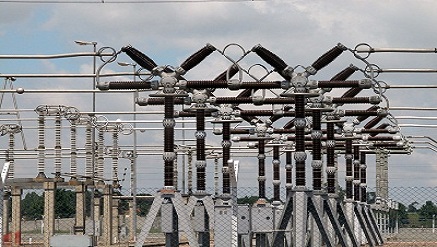
Electricity Distribution Companies (DisCos) in Nigeria generated a total of N597.55 billion in revenue during the first quarter of 2026 despite persistent power supply challenges and consumer complaints over service delivery.

The figures are contained in the latest commercial performance factsheets released by the Nigerian Electricity Regulatory Commission (NERC).
According to the data, the 11 electricity distribution companies collectively recorded N204.74 billion in revenue in January, N196.68 billion in February and N196.13 billion in March, bringing total collections for the three-month period to N597.55 billion.
The report showed that the companies maintained an average monthly revenue collection of about N199.18 billion during the period.
NERC’s data revealed varying levels of commercial performance among the distribution companies, with differences in billing efficiency, collection efficiency and revenue recovery rates.
In January, the DisCos billed customers N268.20 billion and recovered N204.74 billion, leaving N63.46 billion in unpaid bills.
The sector recorded a billing efficiency of 79.72 per cent and a collection efficiency of 76.34 per cent during the month.
In February, total billings stood at N242.29 billion, while collections amounted to N196.68 billion, resulting in an outstanding balance of N45.61 billion.
Billing efficiency improved to 87.44 per cent, while collection efficiency rose to 81.17 per cent.
For March, total billings reached N246.43 billion, with revenue collections of N196.13 billion, leaving a shortfall of N50.30 billion.
Billing and collection efficiencies for the month were recorded at 83.89 per cent and 79.59 per cent respectively.
The report also highlighted significant volumes of unbilled energy across the quarter, indicating ongoing operational and commercial challenges within the electricity distribution segment.
Among the top-performing firms were Eko Electricity Distribution Company and Ikeja Electric, which consistently posted stronger revenue recovery rates.
Eko DisCo notably achieved a recovery efficiency of over 100 per cent in February, according to the report.
However, some operators continued to face collection challenges.
Kaduna Electricity Distribution Company recorded one of the lowest recovery efficiencies during the review period, posting 41.20 per cent in February.
The NERC commercial performance report tracks key indicators including energy received, energy billed, total billings, revenue collections and recovery efficiency to assess the operational and financial health of electricity distribution companies.
The revenue performance comes against the backdrop of continued complaints from electricity consumers over high tariffs, estimated billing, inadequate metering and frequent power outages.
Nigeria also experienced significant power supply disruptions during the first quarter, largely attributed to gas supply constraints affecting electricity generation.
Industry data indicated that electricity generation at some points declined from about 4,000 megawatts to below 2,000 megawatts due to shortages in gas supply to thermal power plants.
Operational data from the Nigerian Independent System Operator showed that thermal plants require about 1.63 billion standard cubic feet of gas daily to operate optimally.
However, actual gas supply as of Feb. 23, 2026, stood at approximately 692 million standard cubic feet per day, representing less than 43 per cent of required demand.
The shortfall forced several generating plants to reduce output or shut down operations, prompting the Transmission Company of Nigeria (TCN) to implement load-shedding measures across the national grid.
Industry stakeholders have continued to advocate improved metering, stronger measures against energy theft and enhanced customer service to improve sector efficiency and revenue collection.

As part of Connecting Africa, CNN’s Victoria Rubadiri meets companies making deals to expand intra-regional trade. She also sits down with Sanya Alleyne the Adviser to the Organization of Eastern Caribbean States (OECS) Business Council to get a sense of the current landscape of South-South trade.

At the Afri-Caribbean Investment Summit in Abuja, Nigeria, Rubadiri meets Aisha Maina, the brains behind the summit who believes providing the opportunity to meet face to face is the pathway to creating a tangible trade link. She explains why this is her belief, “When you go to the Caribbean and you go anywhere in the world, they talk about African drums, they have the African dances, but because they’re so far away from Africa, it’s what has been handed down. And I wanted them to see the real thing, what we have […] it has become a flourishing relationship, and that’s why I keep saying that the bridge is built. Because they have connected.”
From agriculture to financial services, businesses leaders have said that no sector should be overlooked if new partnerships are to be formed. Alleyne delves into how this looks for trade with the Caribbean, “The Caribbean has a longstanding history in being able to attract foreign direct investment. And the same goes for the continent of Africa. It is just about being able now to drill down into the weeds of it and being able to flesh out a framework that we can be able to facilitate, create a trade.”
For Alleyne, the next ten years are hoping to hold, “Regular commercial flights between the continent and the region. I think success would be being able to trade in our indigenous currencies to settle payments. And I also believe success would be the ability of our peoples to understand each other, become closer, and see ourselves as one.”

FG Seeks Inclusive, Human-centred Artificial Intelligence Policies

Glo to Improve Customers’ Digital Lifestyle with “More Data, More Value” Package

Chinese Bank Supports Nigeria Towers Project

London Strengthens Global Investment Ties with Africa @ First Ever London-Africa Business Summit

NASENI Trains 50 Women in Kano on Renewable Energy Technologies Under She-Powers Initiative

MTN, VDT, Zoracom, Digital Realty Back 2026 Girls in ICT Campaign

Vitel Wireless Partners Fintechs to Expand Access to Services

CPN Begins Crackdown on Quack IT Professionals, Vows Tougher Action against Cybercrime

FG to Launch Nationwide Free Digital TV Platform June 17

Nigeria Hit by 24.1m Data Breaches – Surfshark




 Telecom3 days ago
Legend Internet Reports Losses despite N505m Revenue

 Telecom2 days ago
Aba to Host MTN’s “The Gathering” with Pitchathon Offering ₦5 Million Prize Pool for Emerging Startup Founders

 General News2 days ago
PalmPay Young Star Awardee Hopes to Become a Governor

 E-Business3 days ago
INEC Probes Claims of Leaked Voter Data from CVR System

 E-Financial3 days ago
Ecobank Raises Record $450m in Nature Bond for Africa’s Biodiversity

 E-Financial3 days ago
NPS, New Payment Infrastructure Hits 153,000 Transactions in Pilot Phase

 News3 days ago
FG Expands Digital Learning Drive, Delivers ICT Equipment to Colleges Across Six Zones

 E-Business3 days ago
Firm Warns of Attackers Using Text Symbols to Form Malicious QR Codes