

E-Financial
Investors Worry about Banks’ N814Bn Non-Performing Loans

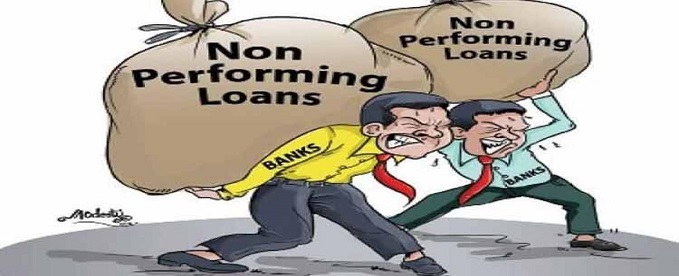
Investors at the weekend, urged government to stimulate economic activities, particularly, in ensuring security and facilitating the movement of agricultural produce as well as the seamless export of commodities.

This according to the Guardian is because; investors are dissatisfied by the huge rise in banks’ Non-Performing Loan (NPLs) in the 2021 financial year, triggered by the prevailing economic downturn.
The investors argued that the Central Bank of Nigeria (CBN) might be reaching the limit of its monetary policy tools in stimulating the economy. This is particularly so if the fiscal complements are not immediately activated.
They expressed fear that the trend, if not controlled, could shrink banks’ bottomline in the current financial year and impact negatively on their dividend yield.
According to them, government’s inability to provide an enabling environment that will boost operations of companies under the real sector and improve their profits would ultimately shore up banks’ NPLs, and erode their profitability.
This is exacerbated by the pressure of the COVID-19 crisis on corporate cash flows for debt service, particularly, the impact of the foreign exchange (forex) rate crises, which has increased the level of corporate loan default
The CBN had, in its pursuit of domestic macroeconomic and financial stability, compelled the Deposit Money Banks to increase lending to real sector, smallholder farmers, Micro, Small and Medium Enterprises (MSMEs) consumer credit and mortgage facilities for bank customers; growing external reserves; and supporting efforts aimed at diversifying the economy through intervention programmes.
The Guardian quoted Godwin Anono, president of Standard Shareholders Association,as saying that the situation is made worse by the fact that most companies are yet to recover from the economic recession, the persistent weak domestic operating conditions, and sluggish economic growth witnessed in the past few years.
According to him, the nation’s economic rebound will require not only complementary fiscal policies, but also actions to achieve the desired objectives, particularly in improving the transportation network in the country so that goods can be moved easily from farmland to the market, which will reduce wastage and contain costs to boost the manufacturing sector.
Guardian findings revealed that the aggregate NPLs of nine banks increased to N814.08 billion in 2021, representing 3.16 per cent increase from the N789.1 billion reported in 2020.
The nine banks are Access Holdings Plc, Zenith Bank Plc, Wema Bank Plc, FCMB Group, Union Bank of Nigeria Plc, Stanbic IBTC Holdings Plc.
Others include Guaranty Trust Holding Plc, United Bank for Africa Plc, and Ecobank Nigeria. However, with the banking sector’s NPL ratio closing 2021 at 4.85 per cent, some of the nine banks remained within the five per cent NPL ratio stipulated by the Central Bank of Nigeria.
Further findings also show that while some of the banks recorded an increase in their NPLs during the period under review, a number of them recorded a significant decline in their NPLs.
The banks’ audited 2021 financial statements showed that Access Holdings, Zenith Bank and GTCO reported the top three highest NPL by value among the nine banks, while Stanbic IBTC Holdings reported the lowest.
Access Bank, in 2021 ,reported N181.5 billion NPL by value, representing an increase of 4.3 per cent from the N161.2 billion it recorded in 2020, while Zenith Bank’s hit N146.8 billion in 2021 from N125.2 billion recorded in 2020, an increase of 17.3 per cent. Wema Bank, in 2021, reported N21.3 billion, an increase of 19.3 per cent from N19.3 billion in 2020, while FCMB Group’s NPL rose to N45.93 billion, representing a 61 per cent increase from N28.57 billion it reported in 2020.
Others are Union Bank of Nigeria with N38.66bn NPL in 2021 from N29.45bn reported in 2020, as Stanbic IBTC Holdings reported a 23.4 per cent drop in its NPL to N20.3 billion in 2021 from N25.5 billion in 2020.
Anono pointed out that the state of the economy could send those loans into becoming delinquent when the borrower does not intend to make it so, noting that when the economy is challenged, the tendency of loans becoming delinquent is huge.
To boost the performance of the real sectors, Anono stated that port and land border reforms must be implemented to achieve a more efficient exportation process and to reduce smuggling activities, alongside the establishment of a special court for speedy adjudication of disputes arising from commercial transactions.
Also imperative, according to him, is significant improvement in security of lives and properties in the country, particularly on the farmlands, that have been ravaged by herdsmen crisis and ensuing violence claiming lives.
Furthermore, he stressed the need for fiscal response to include implementations of measures to improve electricity generation, transmission and distribution in Nigeria, as it is key to reducing the costs of doing business, so that locally manufactured goods would be competitive both in local and international markets.



Abiodun Olokunjuwon, a retired civil servant based in Ibadan has instituted a N50 million lawsuit against Moniepoint Microfinance Bank at the Oyo State High Court, alleging that the fintech company opened unauthorized bank accounts in her name without her knowledge or consent.

Filed in February 2026, the suit is among the first significant cases testing the enforcement of the Nigeria Data Protection Act 2023 against a Nigerian fintech institution.
According to the statement of claim, the plaintiff became aware of the alleged unauthorized accounts only after her legitimate bank account was restricted pursuant to a garnishee order linked to a debt she denies incurring.
The restriction reportedly prevented her from accessing funds needed for essential transactions.
The claimant alleges that Moniepoint opened two separate accounts in her name using her National Identification Number (NIN) and Bank Verification Number (BVN) without proper authorization or verification.
Following the discovery, she submitted a Data Subject Access Request (DSAR) under the NDPA 2023. Documents allegedly provided by the bank, according to the suit, revealed significant verification lapses.
The plaintiff claims the accounts were opened using falsified documents, including what she describes as a fake NIN slip and contact information unrelated to her.
She further alleges that the accounts listed a Lagos residential address where she has never lived.
The suit contends that Moniepoint failed to implement adequate identity verification and address confirmation procedures before creating and operating the accounts. It further alleges breaches of statutory obligations under the NDPA 2023, including:
- Failure to ensure personal data processed was accurate and lawfully obtained
- Failure to implement appropriate technical and organizational security measures
- Failure to prevent unauthorized or fraudulent processing of personal data
The claimant maintains that these alleged lapses resulted in serious personal and financial harm.
The plaintiff is seeking N50 million in damages for emotional distress, health complications, and disruption to her financial life.
She is also asking the court to order the permanent closure of the allegedly unauthorized accounts.
No date has been fixed for hearing on the matter.

TAJBank Limited has received A1 credit ratings from Agusto & Co and Datapro, marking an upgrade from the Bbb+ rating assigned by Agusto about two years ago and placing the non-interest lender among the highest rated operators in Nigeria’s non-interest banking space.

The rating agencies attributed the improved score to the bank’s high quality balance sheet and strong earnings ratios in the 2025 financial year. The assessment also covered credit risk and operational resilience.
Despite the prevailing economic challenges, the bank was noted to have strengthened its position through operational efficiency and customer-focused services in line with ethical banking principles.
Speaking on the development during an interactive session with journalists on the sidelines of a banking stakeholders’ event in Abuja, the Founder and Chief Executive Officer, Hamid Joda, described the ratings as evidence of the bank’s focus on risk management and internal controls.
He said, “TAJBank Limited latest ratings by these reputable agencies have again validated the management’s commitment to world-class standardisation of the bank’s operations, especially in terms of innovative, real time, techno-powered services and risk management for our growing customers on a sustainable basis.”
Joda added that the bank’s priority remains the deployment of high operational standards to protect customers’ interests.
“As we have consistently maintained, our primary goal is to deploy world-class operational standards and services to protect the interest of our customers with a view to surpassing their expectations and retaining TAJBank at the leading edge of the NIB subsector on a sustainable basis.
“The message these latest best ratings by Agusto & Co and Datapro of our bank is sending to our customers, investors and stakeholders in the non-interest banking space is that with TAJBank, they can be rest assured of safety of their investments, transactions and readiness of the bank’s management to give all that it takes to grow their businesses and support their individual socio-economic wellbeing come rain or shine,” he said.
Also commenting on the ratings, the bank’s Executive Director, Sherif Idi, said the A1 scores reaffirmed management’s commitment to best practice standards.
“The A1 ratings by Agusto & Co and Datapro, the foremost ratings agencies in the country, have reaffirmed TAJBank’s management’s unwavering commitment to best practice standards through prioritisation of investment in human capital, innovative technologies and branch network expansion to consistently make our bank the preferred choice for customers in the NIB subsector of the banking sector,” he said.
E-Financial
Fidelity Bank Launches HerFidelity Apprenticeship Programme 2.0 to Boost Women Entrepreneurship


Fidelity Bank Plc, leading financial institution, has announced the launch of the second edition of its flagship women-empowerment initiative, the HerFidelity Apprenticeship Programme 2.0 (HAP 2.0).

Fidelity Bank
Designed to equip women with practical, income‑generating skills and structured pathways to entrepreneurship; HAP 2.0 will build on the success of its inaugural edition held in 2023.
Speaking with journalists at a media chat to herald the launch of HAP 2.0, the Divisional Head, Product Development, Fidelity Bank Plc, Osita Ede, explained that the initiative has been enhanced to deliver greater impact.
“HerFidelity Apprenticeship Programme 2.0 reflects our commitment to continuous improvement. Having evaluated feedback from the first edition, we have returned with stronger partnerships and deeper mentorship programmes to ensure that women acquire not just skills, but sustainable economic opportunities,” he said.
“At the heart of the programme is guided, real‑world learning. Participants will undergo intensive apprenticeship training under reputable institutions and industry experts across select fields such as hair styling, shoe making, auto mechatronics, and interior decoration,” Ede added.
He noted that HerFidelity Apprenticeship Programme 2.0 goes beyond skills acquisition by offering participants a wide range of business advisory services. These include business and financial literacy training, mentorship support throughout the apprenticeship journey, access to Fidelity Bank’s women‑focused and SME financial solutions, as well as guidance on business formalisation and growth strategies.
Further emphasising the bank’s vision, Ede said, “By integrating structured mentorship with entrepreneurial development, Fidelity Bank is positioning women not just as trainees, but as future employers, innovators, and economic contributors within their communities. This aligns with our mandate to help individuals grow, businesses thrive, and economies prosper.”
Interested participants are encouraged to indicate their interest by visiting https://bit.ly/Apprenticeshipbyherfidelity.
Ranked among the best banks in Nigeria, Fidelity Bank Plc is a full-fledged Commercial Deposit Money Bank serving over 10 million customers through digital banking channels, its 255 business offices in Nigeria and United Kingdom subsidiary, FidBank UK Limited.
The Bank is a recipient of multiple local and international Awards, including the 2024 Excellence in Digital Transformation & MSME Banking Award by BusinessDay Banks and Financial Institutions (BAFI) Awards; the 2024 Most Innovative Mobile Banking Application award for its Fidelity Mobile App by Global Business Outlook, and the 2024 Most Innovative Investment Banking Service Provider award by Global Brands Magazine. Additionally, the Bank was recognized as the Best Bank for SMEs in Nigeria by the Euromoney Awards for Excellence and as the Export Financing Bank of the Year by the BusinessDay Banks and Financial Institutions (BAFI) Awards.

Obasanjo, Vanguard’s Amuka Lead Prayers for Zinox Chief Leo Stan Ekeh @70

Retiree Slams N50m Suit against over Alleged Privacy Breach, Unauthorized Accounts

Court Fines Lafarge Africa N2m for Using Ex-Employee’s Name, Details Online after Dismissal

GSMA Launches Innovation Fund to Accelerate Green Transition Through Mobile Technology

NITDA Urges Stronger State Partnerships as Key to Digital Economy Goals @ South-South Stakeholders Forum
Nigeria’s 9 Top FinTech Firms Valued at $10.6Bn in January 2026

CBN Upgrades Licences of Opay, Moniepoint, Kuda, Palmpay, Paga to National Status

Kaspersky Launches OT Calculator to Align Cybersecurity Investments with Business Goals

NITDA, NBC Explore Strategic Collaboration on Digital Transformation, Media Regulation

Accidental Billionaire Opts for Jail Instead of Returning Money Credited Him by Mistake




 News3 days ago
ABoICT Lecture 2026 to Focus on Impact of AI, IoT on Business Operational Efficiency

 General News3 days ago
Leo Stan @ 70: Blessed and Bruised by Country, Eyes Next Disruption

 General News2 days ago
Zinox Technologies and TD Africa Forge Strategic Partnership to Revolutionize African Tech Ecosystem

 Telecom2 days ago
Uwaje Pays Tribute to Leo Stan Ekeh @70

 Telecom2 days ago
Cyber Immunity Emerges as Shield for Nigerians Amid Rising Scams

 E-Financial2 days ago
$214Bn Missing, Institutions Silent: Is Accountability Dead in Nigeria?

 General News2 days ago
NITDA, Abia Partner on Enterprise Architecture Reform

 E-Business2 days ago
Interswitch Partners Abia to Digitise Public Hospitals