

/home/kenneth/web/nigeriacommunicationsweek.com.ng/public_html/wp-content/themes/zox-news/parts/post-single.php on line 153
">
Warning: Undefined array key 0 in /home/kenneth/web/nigeriacommunicationsweek.com.ng/public_html/wp-content/themes/zox-news/parts/post-single.php on line 153
Warning: Attempt to read property "cat_name" on null in /home/kenneth/web/nigeriacommunicationsweek.com.ng/public_html/wp-content/themes/zox-news/parts/post-single.php on line 153
IS Enters the Terabit Era, Deploys of Infinera Technology

Internet Solutions (IS), a pan-African telecommunications provider has announced the deployment of the Infinera DTN-X platform across the company’s South African long distance fibre network.
This is the first deployment of its kind for South Africa and the African continent and will deliver businesses with the simplicity, scalability, and efficiency that it requires from a fibre network.
As a result, Internet Solutions is now able to react to changing business demands and requirements, as well as provision bandwidth capacities, much faster than ever before.
“With this deployment of Infinera’s DTN-X platform, Internet Solutions is able to light up high-bandwidth capacity on our 2000km fibre network” said Prenesh Padayachee, chief technology officer at Internet Solutions.
“This also allows us end-to-end control over our fibre deployments which ultimately gives us full control over every aspect of our fibre networks” adds Padayachee.

Businesses will also benefit from the capacity boost that is inherent within Infinera’s 500 gigabit per second (Gb/s) FlexCoherent super-channels platform – this includes the management of redundancy that is critical for uninterrupted connectivity services.
Utilising some of the more advanced features on the DTN-X platform, Internet Solutions is now also able to provision protected circuits to clients at the telco infrastructure layer.
These protected circuits provide additional connectivity protection and security, and it allows Internet Solutions to provision back-up fibre routes to clients directly.
With the deployment of the Infinera DTN-X platform, Internet Solutions has a total capacity of 8 Tb/s (terabits per second) on its fibre backbone.
“We believe that South Africa’s bandwidth requirements will triple in the next year and the demand for bandwidth intensive applications and services will increase beyond anything that we have seen to date” said Padayachee.
“With this technology, we will be able to deploy additional bandwidth intensive services such as content distribution services and replication services for disaster recovery, without cost constraints, and which are critical for businesses wanting to ensure that no data is lost across its servers or network.”
As the SDN (Software Defined Networks) era advances, Internet Solutions will also be looking to provide both clients and the wholesale market with the ability to create and control their own virtual network without actually owning any part of the Layer 1 infrastructure.
This is a possibility with the Infinera Intelligent Transport Network solution.
“For Internet Solutions, this deployment of Infinera’s cutting-edge network technology will enable us to differentiate ourselves and our services from other ICT providers. This is particularly important as we scale our network to meet the growing industry demand” added Padayachee.


Warning: Undefined array key 0 in /home/kenneth/web/nigeriacommunicationsweek.com.ng/public_html/wp-content/themes/zox-news/parts/post-single.php on line 493
Warning: Attempt to read property "cat_ID" on null in /home/kenneth/web/nigeriacommunicationsweek.com.ng/public_html/wp-content/themes/zox-news/parts/post-single.php on line 493
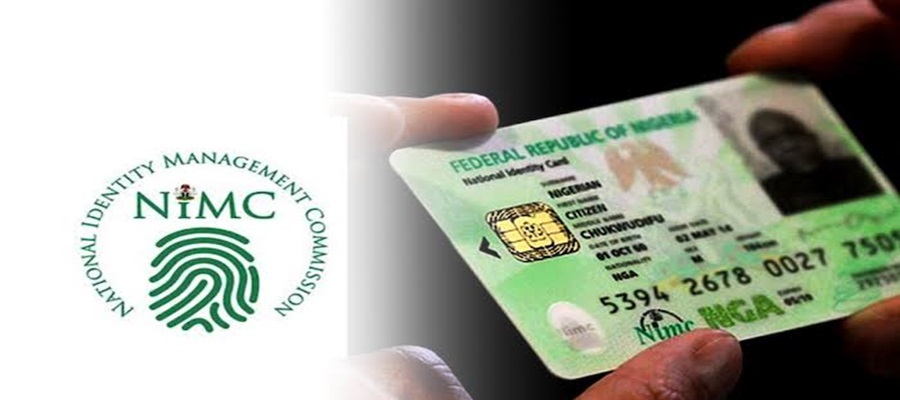
President Bola Tinubu has directed the National Identity Management Commission (NIMC) to ensure that every Nigerian is enrolled in the national identity database before the end of 2026, according to Abisoye Coker-Odusote, director general and chief executive officer of the agency.

Abisoye Coker-Odusote, director general and chief executive officer, NIMC
Coker-Odusote, who appeared on Channels Television, said the directive forms part of the federal government’s efforts to establish a comprehensive national identity system capable of supporting effective governance, planning, and service delivery.
“The President has given us till the end of this year to make sure that we capture every single Nigerian,” she said.
According to her, NIMC is working with partners under the World Bank-supported Identification for Development (ID4D) project to accelerate nationwide enrolment.
“What we have done is we have partnered through the World Bank ID4D project with front-end partners. They are part of the digital identity ecosystem. These are private citizens that we’ve enabled and given jobs to enrol citizens on our behalf,” she explained.
She stressed that the National Identification Number (NIN) remains a unique identifier, ensuring that every individual is registered only once.
“That’s why it’s called a unique identifier, so that you’re only enrolled once,” the NIMC DG added.
Coker-Odusote said Nigeria’s actual population remains uncertain, with estimates ranging from 200 million to 250 million, making a comprehensive identity database essential for national planning.
“It is estimated that we’re 200 million. When we’re done enrolling, we will then know the actual numbers that we have. Some estimates say 230 million, while a few people say 250 million.
“Your identity is basically the foundation for effective governance and service delivery. How can you plan if you don’t know the total number of persons that you have? We have been mandated by Mr President to go down to the community levels to enrol every single Nigerian”, she said.
Responding to concerns about whether an individual could obtain multiple identities by registering in different locations or under different names, the NIMC boss said the commission’s biometric verification system prevents such occurrences.
She explained that while the previous system could accept duplicate enrolments before detecting them later, the current process automatically identifies and invalidates multiple registrations.
“The legacy system had no way of verifying at the front end whether you had already been captured. Once the record comes into the system, it flags it as a duplicate or that the person already exists in the database.
“You would only have one identity generated for you. The other record goes into a deduplication bucket where it is invalidated,” she said.
The NIMC DG added that biometric verification, including fingerprints and facial recognition, makes it virtually impossible for one person to maintain multiple identities.
“Absolutely. One of the things that this Act has done is to cement our role in capturing biometrics. Private and public sector organisations will no longer capture biometrics independently. They will validate identities through API integration with NIMC.
“The telcos are already doing that with us. If you need a SIM card, they capture your facial biometrics, which are matched against our database in real time to confirm that you are who you claim to be. We’re using biometric validation to tighten security around identity confirmation,” she said.
The remarks come weeks after Tinubu signed the National Identity Management Commission (NIMC) Act 2026 into law on June 26, repealing the 2007 legislation.
The new law reinforces the “One Person, One Identity” policy by making the NIN the country’s foundational identity credential for accessing government and essential private services, including banking, passport applications, tax administration, pensions, land transactions, and consumer credit.
It also introduces stiffer penalties for identity theft, multiple registrations and unauthorised access to personal identity data, while strengthening data privacy protections and granting NIMC wider powers to investigate identity-related offences.

Financial Derivatives Company (FDC) Limited, a premier economic think-tank and financial advisory firm, led by Bismarck Rewane, has reported that Nigerians have accumulated an estimated $59 billion in cryptocurrency holdings.

Bismarck Rewane
According to data released by the firm highlights the country’s emergence as one of Africa’s and the world’s major players in digital assets.
The earlier disclosure reflects a profound shift in Nigeria’s financial landscape.
In Africa’s largest economy, crypto has moved from a fringe activity to a mainstream tool amid persistent inflation and naira volatility.
Citizens and businesses are increasingly turning to dollar-pegged stablecoins and decentralised platforms, building a parallel financial system with significant economic influence.
Nigeria continues to rank among global leaders in adoption.
According to Chainalysis’ 2024 Global Crypto Adoption Index, the country placed second worldwide for grassroots adoption, driven by widespread use in everyday transactions and cross-border commerce.
Despite these impressive statistics, a notable contradiction remains in public perception.
While stocks, real estate, mutual funds, and foreign currency are openly discussed, many Nigerians still approach cryptocurrency with caution, often downplaying their involvement.
Crypto assets, or cryptocurrencies, are digital assets utilizing cryptography, peer-to-peer networking, and distributed ledger technologies (like blockchains) to secure, verify, and record transactions.
Unlike traditional fiat currencies issued by central banks, these assets operate without central intermediaries, functioning globally as alternative stores of value or transactional mediums.
General News
Nearpays, Nigerian Fintech Becomes First African Startup to Win UN’s AI for Good Innovation Factory

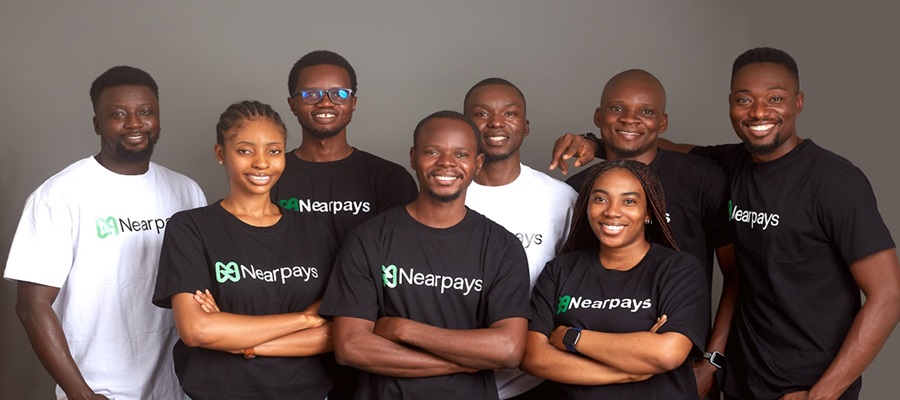
Nearpays, Nigerian fintech, has won the AI for Good Innovation Factory grand finale — the first African startup ever to take the global title in the competition, which runs as part of the United Nations’ AI for Good Global Summit.

The competition drew more than 500 startups worldwide, each pitching AI solutions aimed at social and economic challenges.
The summit itself is organised by the UN through the International Telecommunication Union (ITU) in partnership with several UN agencies, convening governments, researchers, startups, and technology companies around AI’s role in development.
Nearpays’ route to the title ran through Johannesburg, where it won the African regional competition, before advancing to the global finals in Geneva.
There, the company progressed through the semi-finals and claimed the grand finale — a first for the continent.
The company describes the win as bigger than a corporate milestone, calling it a victory for African innovation and proof that technology built to solve local problems can compete, and win, on the world stage.
Nearpays was founded to close a stubborn gap in African payments: small and medium-sized businesses that can’t afford or access traditional point-of-sale terminals.
Cost, availability, and deployment hurdles have kept many merchants — particularly in rural and underserved communities — locked out of digital payments.
Its answer is SoftPOS: an AI-powered platform that turns compatible Android smartphones into payment acceptance devices, letting merchants take contactless card payments with nothing more than their phones. AI is embedded across the platform, supporting payment processing, compliance, fraud detection, and business operations.
Crucially, the platform was built for African infrastructure realities — it works both online and offline, so merchants can keep accepting payments even without internet connectivity.
The company credited its team’s years of product development and customer engagement for the result, and thanked the UN, the ITU, and the AI for Good initiative for building a platform where innovators can apply AI to real-world problems.
It also said it hopes the win encourages more African founders to build technology that answers local needs while competing internationally.
For Nearpays, the title closes one chapter and opens another, as the company pushes on with expanding digital financial infrastructure across Afric

Tinubu Orders NIMC to Enrol Every Nigerian by End of this Year – DG

Nigerians Accumulate $59Bn in Cryptocurrency Assets —FDC

Nearpays, Nigerian Fintech Becomes First African Startup to Win UN’s AI for Good Innovation Factory

Nokia’s 14 Years of Mobile-Phone Supremacy Ended in an Afternoon

MTN Nigeria Slashes Cost of Broadband Internet Router, Unwraps New Data Bundles for Low-Budget Users

NRC, Ponzi Scheme Collapses Resulting Loss of Billions of Naira

Nigeria Launches FreeTV Nationwide

NASENI Moves to Digitize CCB’s 5m Assets Declaration and Operations

Lebara Nigeria Launches Lebara Play, Africa’s First Telecom-Owned Micro-Drama Platform

CANAL+ Partners Samsung to Pre-Load DStv Stream on New Samsung TVs In Nigeria, Other African Countries




 News2 days ago
Xora Finance, Fintech Firm Refuses to Hire Nigerians over Alleged Dishonesty

 Telecom2 days ago
NCC Advances Dig Once Policy, Engages Stakeholders on Cost-Based Framework for Duct Sharing

 Telecom2 days ago
NCC to Keynote Telecom Sector Sustainability Forum 7.0

 General News2 days ago
FG Secures Fresh $208.3m World Bank Loan for Cash Transfer

 News2 days ago
PalmPay Nigeria Appoints Samuel Oluyemi as Chief Operating Officer
 News2 days ago
How Ponzi Scheme Victims can Seek Legal Remedies — Lawyers

 General News2 days ago
SERAP Sues INEC over Alleged N800Bn 2027 Tinubu Campaign Fund

 E-Business2 days ago
Kaigama,Catholic Archbishop of Abuja Warns against Misuse of AI