

News
Issues in Public Relations Practice in Nigeria


Two unrelated incidents conspired to compel me to eventually make this intervention, which I have been planning forever. One was a personal experience a professional colleague shared with me, recently-a story that touches the heart, in a manner of speaking.
After a recent event, he lamented, his Managing Director received a Google Alert barely an hour after, showing a report of the event by an online publication generously illustrated with photographs, but rather than compliment his effort, the boss derided and dismissed the report saying he would rather it appeared “on the front page of the prominent national dailies than be hidden in an obscure publication online.” Wow!
The other incident was the launch by BlackHouse Media, a Public Relations company, of the first ever Nigeria PR Report inspired by Ayeni Adekunle, the founder and CEO of BHM.
At the BHM event, the panelists and indeed the audience raised several issues of interest, which I solemnly believe were (are) crucial, if not everything, to the practice of Public Relations.
I will return to these events presently, as I seek to highlight some of the key issues that are driving the new paradigm in public relations practice in Nigeria, from my perspective as a practitioner in one of the more active sectors of the economy, Telecommunications.
Identity Crises: I am of the opinion that Public Relations industry in Nigeria is facing an identity crisis, and this hasn’t got everything to do with the moribund existence of the Nigeria Institute of Public Relations (NIPR), but with the obvious lack of certainty of what professionally constitutes Public Relations.
At the BHM event, Mr. Yomi Badejo-Okusanya, Chief Executive Officer of CMC-Connect and one of the more successful practitioners in the industry, decried how Experiential Marketing, Below the Line (BTL) Activations and Events Management were painfully excised from their business.
Badejo-Okusanya’s lamentation lent credence to my position that the industry needs to define or redefine the content or components of the business. We cannot be into everything and still expect to be accorded respect as professionals.
Public Relations, based on my experience, should focus on communication, perception and reputation management without dabbling into the more mundane details of organizing events and producing calendars, diaries, Christmas hampers and “killing” stories in the media (a task made extremely difficult, if not impossible with social media and citizen journalism).
The question here really is: What is PR and what is NOT. Or who are we and what do we really do? When will the Nigeria Institute of Public Relations (NIPR) cease to be an arm of the Federal Ministry of Information? Can PRCAN and IABC jointly champion the birthing of another institute that will be truly professional and devoid of government inference and control?
Content Creation and Story-Telling: These are two important elements of Public Relation, which seem to have climbed out of the back burner, perhaps with a gentle nudge from the burgeoning advent of social media.
The communication aspect of Public Relations is purposive, that is, communication with a purpose.
There might be no communication without a purpose, but the true defining characteristic of this form is the clear objectification, which is pursued logically and then measured, at the end of the day. Story-telling simply means bringing the functionality of your product or service or even idea to the consumer in a tangible, demonstrative manner.
For instance, a video or article on how a customer has used and benefitted from Airtel’s SmartTrybe detailing the functionalities and benefits is a good story to tell, and should be told often by PR practitioner managing Airtel Nigeria.
In other words, the PR practitioner, and not the media, should lead and drive the narrative of every sensible organization.
There are, however, some lamentable limitations, which are militating against the creation of good quality content and effective use of story-telling as PR tools.
One, lamentably, is the paucity of skills, good writing skills on the part of the practitioners, and the other is a lack of interest in reading by customers as against the keen interest in deals, promos and freebies (which, on face value, are by no means illegal).
The solutions are as simple as the problems are complex. Practitioners must go back to the basics. One of the core competencies of a good PR professional is good writing skills, which is powered by reading and a sharp analytical mind.
You cannot give what you do not have. Consequently, the customers or the audience, if you like, can then easily be segmented by an intelligent practitioner and messages designed and targeted to appeal to them, in their comfort zones.
Communication has long evolved from the Hypodermic Needle Theory, where every message, like an injection or the traffic light is supposed to elicit similar reactions, to Berelson’s Catch All Law, where some kinds of communication, when brought to the attention of some people through some kinds of mediums will elicit some kinds of responses. Enter social media.
Digital and Social Media: I cannot resist the temptation of saying that my friend’s boss, whom I mentioned in my opening lines, is not in tune with current trends. He is still analogue and needs to be converted very quickly.
The conundrum in his ignorant comment was that the online publication rather than his old school hard copy newspaper will give him the mileage he has spent the organization’s scarce resources for.
There are few questions to be asked here. How many people buy the so called newspapers? What are the print run or circulation figures of the newspapers? What is the pass on rate of those publications? In other words, how many people read the newspapers as against the millions who own smart phones and are more often than not connected to the internet and, therefore, follow online publications?
You cannot compare the potentials inherent in the 94m internet subscribers for mobile GSM (according to the latest Nigeria Communications Commission figures) to those of the paltry 1m (or even less) aggregate circulation of the traditional publications.
The latter is even less, if you discount for unsold copies. As a matter of fact, many would rather invest in buying more gigabytes to browse the internet and consume the social media than buy a hardcopy publication.
Now, this is not to say that those hardcopy publications are not relevant, but they offer far less eye balls than the social media and are, therefore, more effective.
Talking about digital and social media, the number of subscribers to Facebook, Twitter, WhatsApp and Instagram, to mention a few, are growing exponentially. When you juxtapose these numbers with the massive demographics of an active youth population, which accounts for over 60 per cent of the population or more, then you will understand why you can only ignore the social media at your own peril.
Perhaps, the crucial thing here is developing a strategy for engaging the over 150m Nigerians, especially the youth segment, via social media.
In my former life at Cadbury Nigeria, we got occasional feedback from customers through letters from the post office, face-to-face encounters during market visits and complaints by customers who graciously take the pain to return bad products.
I used the word graciously instructively because I believe that in those days of zero or little feedback, it took serious effort and customer loyalty to bring a defective product to the notice of a manufacturer. Today, a customer with access to data will share the experience plus photos on social media and allow the manufacturer to do the chasing. I should know this!
I must hasten to add that most of the traditional media, including television and radio stations have also established online presence, with varying degrees of perfection.
So, there you have it; some extra opportunities for telling your stories and driving your narrative. Have you checked the volume of feedback that comes with online stories, especially with the traditional media, say The Punch, ThisDay, The Guardian, Vanguard, Channels TV and AIT? Massive! And massive communication opportunities too! It is such a conundrum that a platform which gives us so much opportunity to tell our story and sell our products is equally a veritable weapon of mass destruction. Talk about the law of unity and conflict of opposites!
PR as a Management Function: Most definitions of Public Relations enthusiastically claim it is a Management Function.
Perhaps, this is only practiced in the breach. But for a few organizations like mine, the Public Relations functions are sequestered in either the Legal or Human Resources or Marketing Departments.
Let me share a personal story: When GSM was launched back in 2001, I hoped and prayed to be part of the revolution. So, it was with open hands I accepted invitations to interview at both MTN and Econet, as it used to be known then.
When I checked, the PR department at MTN was a part of the Marketing function, while that of Econet was part of the Executive (CEO’s).
I prayed more for the latter – for two reasons. That was the model I was used to from Cadbury Nigeria, where I worked, and, secondly, it was in synch with the textbook definition of PR as a management function.
You cannot be a management function, when you are not part of senior management or executive management, as the case may be.
Thankfully, my prayer was answered. MTN rejected me (in a manner of speaking) and Econet hired me, and the rest, as they say, is now history.
Today, as Director of Corporate Communications & CSR, I sit in the Executive Management of the organization, where I participate actively in the leadership roles and responsibilities-looking after Public Relations (including online PR), Internal Communications and Corporate Social Responsibility (CSR).
Now, that is the classical model and indeed the way it should be. Here, like other leaders in the organization, you get a helicopter view of the business and contribute from your perspective as a business executive managing communication and reputation.
Budgets: Corollary to being a management function is having a budget line strictly dedicated to Public Relations. In most organizations, the budget still sits elsewhere leaving the function at the mercy or whims and caprices of the budget owner.
As a matter of fact, most organizations see Public Relations as a cost centre and not revenue centre-understandably.
I say understandably because PR doesn’t generate funds directly. Even in our line of business, we struggle to bring in customers, even if we try. However, the impact of what we do helps to not only retain the customer we have but also encourage new ones to come on board.
This is what most PR practitioners have failed woefully to demonstrate to their employers or clients. How do we justify the meager budget we get? And indeed the budgets are meager compared to Marketing, for instance.
After all, they will tell you, PR is prayed for and not paid for. Well, that is not exactly the case in reality. Many things are certainly paid for in PR but not news-and that is a subject I want to deal with presently.
Data and Measurement: I call him “Ayeni The Great” and indeed Adekunle Ayeni is a great man. He is bold and courageous, and regardless of the limitations and imperfections of his Nigeria PR Report, he has clearly set the agenda for record-keeping, data collection and impact assessment of PR activities.
This has been a huge lacuna in the industry. How do we justify our budget? How do we even justify our work and the attendant pay? How do we demonstrate the impact of our work? How do we measure our work?
The first lesson in Research Methodology is: What cannot be measured should not be done. One of the banes of PR practice globally is the proclivity to compare its work and effect with marketing. That is clearly defeatist, firstly, and downright laziness, secondly.
Public Relations must do away with comparing its output with advertising column inches. In fact, it must move from output to outcome.
Several research methodologies are available to serious-minded professional to demonstrate outcome and impact. Additionally, Public Relations practitioners should start making informed commentary and intellectual interventions through lectures, presentations and publications to deepen the knowledge base and provide ready resources for reference by professionals and intending practitioners.
Ayeni, with his book, has broken the jinx, which, hopefully, will spurn a rack of other similar, even better interventions.
Brown Envelope: As far as I am concerned, this is a most embarrassing topic to discuss, but I will discuss it.
An age-long practice of inducing journalists to report an organization or client positively or to use its press releases, it has regrettably defined the relationship between Public Relations practitioners and their friends in the media.
So, the question one is compelled to ask is: Where is the love? Where is the so called goodwill which PR practitioners seek to “build and sustain” between their organizations and stakeholders?
There are serious ethical issues surrounding this behavior and any dialogue on the legality or illegality of it confers a status of importance to the aberration.
My position is NO! It is unprofessional to give an envelope, whether brown or white to a journalist-and I am sad some practitioners stood up to defend or justify it and described it as transport facilitation, etc.
NO sir! Even the use of phone recharge cards, airtime or other products, which some of us in the telecommunications industry (and even some outside of it) is unethical, because the objective is to “induce” or “motivate” journalist to report your activity or use your material.
Why would I be bothered about whether a journalist made a call or not, sent an email or not or posted a photo or not, if it is not inducement?
In the civilized world, samples are returned after the trial period for products like mobile phones, laptops, televisions, cars, etc, or the reporters are made to pay a book value for them. In Nigeria, it is seen as a right, which unfortunately reflects the Entitlement Culture prevalent in Nigeria.
To me, Brown Envelope is ethically, legally and morally wrong. Journalists are paid to do the job they do.
I can even tolerate Christmas, wedding, birthday and anniversary gifts (which, inexplicably, disappear once a journalist leaves a relevant beat), but to assure journalists of “transport facilitation” or to encourage the use of a report by any other means than a good copy is reprehensible both for the giver and the taker. This is an issue the Institute should be punishing people for, were it really in existence.
The Future of PR: Regardless of the sustained efforts of charlatans and the inclement economic environment, Public Relations still boast a bright future.
The rise in consumerism with the full complement of social media has opened a new vista for PR to flourish. People or organizations, who have products, services or ideas to sell to an increasingly incredulous, highly fastidious and very vocal and technologically empowered population surely need astute public relations people to help them tell their stories and manage their narratives strategically.
We have gone past wondering what people were doing with their feedback and opinions before now. They are really dishing them out now, and whether you like it or not, the behavior is fast assuming the attributes of a culture, a culture of social protest, vehemence or retort, if you will. For instance, managing the reputation of the leading opposition party, the People’s Democratic Party (PDP), will be one hell of a job and very rewarding too-probably not in pecuniary terms, but who knows!
The 2015 presidential election clearly illustrates how much public relations can influence social conversation which in turn influences behavioral change-as exemplified by the change of the Buhari narrative from pre-2014 to what it became from late 2014 to the time he was ultimately elected in April 2015.
If there was ever a time public relations should get its mojo back, it is now with the growing social disquiet, confounding economic uncertainty and complicated political manipulations-all needing the professional intervention of PR practitioners, not charlatans.
*Emeka Oparah is Director, Corporate Communications & CSR, Airtel Nigeria


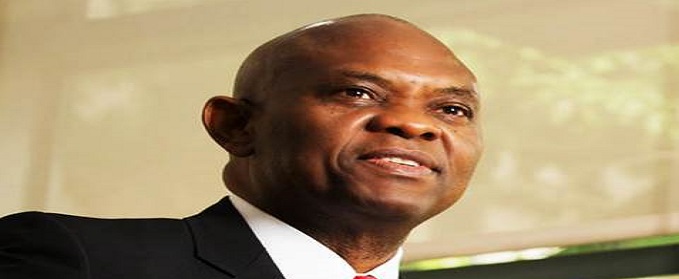
Tony Elumelu, Nigerian businessman and philanthropist, has warned about the growing dangers of artificial intelligence misuse after an AI-generated video falsely showed him promoting a forex and cryptocurrency trading platform.

Tony Elumelu,
The founder of Tony Elumelu Foundation revealed this in a post on his X account on Monday, explaining that the video appeared highly convincing but was entirely fabricated.
In the post, he also tagged Elon Musk, X owner, and Nigeria’s Federal Ministry of Communications, Innovation and Digital Economy while calling for stronger safeguards against the misuse of artificial intelligence.
“A few days ago, my team flagged an AI-generated video of me endorsing a forex and crypto platform.
“It looked and sounded remarkably real, but it was completely fake. This incident highlights a growing and serious threat to digital trust,” he wrote.
He stressed that he has no affiliation with any cryptocurrency or foreign exchange trading platforms.
“For the avoidance of doubt, I am not associated with any crypto or forex trading platforms.
“My commitment to inclusive prosperity has always been through long-term investments, building sustainable businesses, and empowering entrepreneurs,” he said.
While acknowledging the transformative potential of artificial intelligence, Elumelu urged African youths to embrace the technology responsibly and use it to develop scalable solutions.
“I strongly believe in the potential of AI. It is a defining technology of our time, and African youth must be at the forefront of adopting it to build scalable solutions. We cannot afford to be left behind in the global tech race,” he added.
The business leader, however, warned that rapid technological advancement also presents risks if not properly regulated.
“But the flip side of rapid innovation is the risk of abuse. The ease with which identities can now be cloned to deceive the public is alarming.
“Policymakers and regulators must act now to establish safeguards and hold those using it to scam innocent people accountable,” he said.
Elumelu also urged the public to remain vigilant and protect themselves from digital fraud.
“We must create a safe digital environment where true innovation can thrive without being overshadowed by fraud. Protect your hard-earned money, stay alert, and let us continue to build the Africa we deserve,” he said.


By Solomon Yaji
Kashifu Inuwa, the Director-General of the National Information Technology Development Agency (NITDA), has emphasised the critical role teachers play in driving Nigeria’s digital transformation, noting that classrooms will be central to shaping the country’s technology-driven future.

Inuwa made the remark during a stakeholders’ dialogue organised by the Development of Educational Action Network Initiative (DEAN) in Abuja.
Speaking on the theme “Nigeria’s Current Digital Landscape: Our Reality and Its Practical Connection to Education,” the NITDA DG, who was represented by the agency’s Director of Stakeholder Management and Partnerships, Dr. Aristotle Onumo, said the rapid expansion of the digital economy is reshaping the education sector and redefining the role of teachers in modern learning environments.
He explained that while digital technologies have created unprecedented access to information and opportunities for students, they also present challenges that require guidance and responsible use.
According to him, teachers must go beyond the traditional role of knowledge transmission to become mentors who help students navigate the digital world safely and responsibly.
“Teachers are no longer just instructors; they are now guides who help students identify credible information, avoid harmful online content, and develop responsible digital behaviour,” he said.
Inuwa added that educators must cultivate critical thinking among students while equipping them with the skills needed to thrive in an increasingly technology-driven society.
He reaffirmed NITDA’s commitment to advancing digital literacy nationwide through initiatives such as the Digital Literacy for All programme and partnerships with educational institutions aimed at strengthening teachers’ digital capacity.
The NITDA boss stressed that empowering teachers with digital skills is vital to preparing Nigerian students for the future workforce and ensuring the country remains competitive in the global digital economy.
Nigeria is currently pursuing an ambitious digital literacy agenda, targeting 70 per cent digital literacy by 2027 as part of broader efforts to build a knowledge-driven economy powered by innovation and technology.
Earlier in his remarks, the Executive Director of DEAN Initiative, Semiye Michael, said the workshop was designed to re-engineer teachers’ capacity in line with the realities of the digital economy.
“We need to strengthen teachers’ competence and provide them with access to the necessary digital infrastructure,” Michael said, adding that the engagement would help shape policies that support technology-driven learning in Nigerian schools.
He described the workshop as an “awesome experience,” noting that ideas generated during the session would be consolidated into a policy guide for the ministry and other relevant agencies.
Michael further noted that strengthening teachers’ digital capacity would be vital to enhancing Nigeria’s competitiveness in the global knowledge economy.
The event attracted key stakeholders from the Federal Ministry of Education, Nigerian Communications Satellite Limited (NIGCOMSAT), as well as private sector experts.


A new Amnesty International poll exposes stark public distrust in Nigeria’s judiciary, with nearly 97% of respondents believing judges face external influence and lack independence in their duties.

Amnesty International
Shared on social media by Amnesty International Nigeria, the poll asked if Nigerian judges operate freely. An overwhelming majority answered “No,” with only a tiny fraction expressing confidence amid fears of pressure from political actors or powerful interests.
Judicial independence underpins democratic governance, enabling impartial rulings based on law alone. In Nigeria, doubts have intensified after controversial decisions in high-stakes political cases.
While not a scientific survey, the findings echo civil society demands for reforms to boost transparency, accountability, and trust. Advocates stress that bolstering court autonomy is vital for upholding the rule of law and citizens’ rights nationwide.

Crypto Transactions Hit $96Bn in Nigeria -SEC

PwC Warns Nigeria Telcos of AI Fraud Risks

Lawyer Drags FG Court over Controversial Health Data Sharing Agreement with US

Elumelu Tags Elon Musk, Disowns AI-Generated Scam Video

FG Determined to Protect Rights, Privacy Online- NITDA

Kaspersky Discovers New Phishing Campaign Exploiting Google Tasks Notifications to Steal Corporate Credentials

esentry 2025 Report Shows Healthcare, Financial Services and Telecoms as Staging Grounds for Increased Cyberattacks in Africa

AfDB, UNDP Launch $10Bn AI Initiative for Africa

Mutual Benefits Assurance Settles ₦5.9bn Claims in January 2026

MultiChoice Suspends Yearly DStv Price Hike as Canal+ Pushes Growth




 Telecom3 days ago
VDT Communications Achieves Two Prestigious Certifications ISO /IEC 27001:2022, ISO/IEC 27032:2023 Reinforcing its Leadership in Broadband Service Provision

 E-Financial2 days ago
CBN Rolls Out New Rules for Safer Instant Payments, More Customer Control

 News2 days ago
NIMMME Inaugurates Engr. Michael Orekyeh as 13th National Chairman in Abuja

 Telecom2 days ago
MTN Nigeria Races Ahead in Fibre Broadband Market

 E-Financial2 days ago
CBN Tightens BVN Rules to Curb Fraudulent Banking Transactions

 E-Financial2 days ago
Nova Bank Appoints Jude Anele as Managing Director/CEO

 E-Business2 days ago
Tech Expert Unveils BAT-BOT AI App to Curb Fake News ahead of 2027 Elections

 Broadcasting15 hours ago
Spotify’s Loud & Clear Report Reveals Over ₦60Bn Revenue for Nigerian Artists in 2025