

E-Business
Jack Dorsey: Unpicking Twitter Boss’s Passion for Nigeria

By Nduka Orjinmo – BBC News
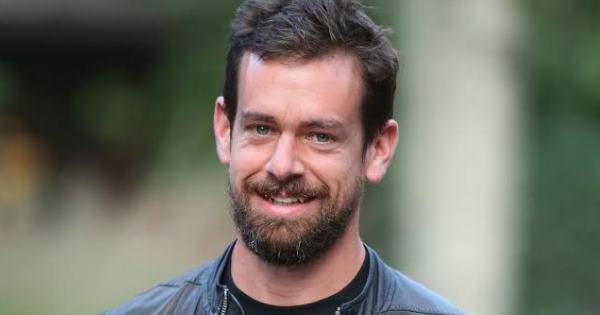
Twitter CEO Jack Dorsey is no stranger to controversy but in Nigeria he has become embroiled in the battle between the country’s tech-savvy youths and a ruling class that is seen to be out-of-touch with their thinking.

Jack Dorsey, Twitter Boss
His Twitter platform was used to galvanise support for last year’s #EndSars protests, which began as a movement against police brutality and morphed into a confrontation between the political class and Nigeria’s youth.
But Twitter is now blocked in the country after a recent tweet by President Muhammadu Buhari, 78, was deleted.
Many Nigerians adore Mr Dorsey. His ideals of open internet, freedom of expression and economic rights resonate with those who feel marginalised by their government.
Far from being intimidated by the Twitter ban, Mr Dorsey has kept tweeting about Nigeria and has captivated many here.

As the nation marked Democracy Day on 12 June and protests were held in different cities calling for a reversal of the block on Twitter, he tweeted the Nigerian flag with an emoji of a handshake and “#bitcoin”.
— jack (@jack) June 12, 2021
The next day he retweeted an article calling for the Nigerian government to pursue a Bitcoin standard, and quoted a tweet with the caption “the people of Nigeria will lead #bitcoin”.
Some analysts say this shows Mr Dorsey is a businessman looking after his interests.
While he is more famous as the CEO of Twitter, Mr Dorsey is also the founder of Square and Cash App, two payment processing platforms with interests in cryptocurrencies, especially Bitcoin.
Cryptocurrencies targeted
Nigeria’s cryptocurrency market is the largest in Africa.
High inflation and a weak national currency has led millions to turn to digital currencies, which some see as safer and more reliable.
“There will always be room for products and solutions that help Nigerians save, invest and hedge in currencies other than in naira [the local currency],” said Faith Obafemi, a cryptocurrencies expert in Lagos.
She said there was space in the Nigeria cryptocurrencies market for services like trading that Mr Dorsey’s financial apps can provide.
However, Nigeria’s crypto-market is under regulation after the central bank placed restrictions in February.
Concerned by the growing adoption of digital currencies and what it saw as the harm it posed to the Nigerian economy, the government barred financial institutions from dealing in them.
But the regulation has had the opposite effect as investors have seen an increase in activity.
Much like the way people have got around the Twitter ban, there has been a surge in cryptocurrency transactions between individuals that bypass the financial institutions.
“When you look at the Twitter ban and you look at the cryptocurrency ban, it really draws from the same government-driven fear which is: ‘To what extent can we allow Nigerian youths to exercise freedom on the internet?’,” said Senator Ihenyen, head of Nigeria’s blockchain and cryptocurrencies association.
Mr Dorsey’s defenders argue that while he is advancing his business interests, he also appears to be genuinely interested in Nigeria – even though he overlooked it for Twitter’s Africa headquarters, preferring Ghana instead.
One-stop shop for everything
Mr Dorsey visited Lagos as part of his tour of Africa in November 2019, and a Nigerian, Uche Adegbite, is among the social media giant’s senior directors.
Nigeria’s former Finance Minister and current World Trade Organisation head, Ngozi Okonjo-Iweala, had also previously served on Twitter’s board.
The founder of the Co-Creation Hub in Lagos, Bosun Tijani, who met Mr Dorsey during his visit, said the Twitter CEO left with a strong belief that the platform was having a real impact in Nigeria.
“It’s a country that is typically hierarchical but Twitter is one of the platforms that gives opportunity for people, regardless of who you are, to have conversations that naturally in the Nigerian context you never get to have,” he said.
In fact, Twitter in Nigeria is more than a platform. It is a one-stop shop for everything – from job openings, to a missing persons portal, and a civic space to hold public officials to account.
It made its biggest political impact during last year’s #EndSars demonstrations, when it became the platform of choice for the young demonstrators. They succeeded in forcing the president to scrap the Special Anti-Robbery Squad (Sars), a notorious police unit that was known for its brutality.
However, the peaceful protests were then hijacked by thugs who damaged public buildings across Nigeria.
For that, the government says it holds Mr Dorsey “liable”, with some officials going as far as to accuse him of being part of a campaign to remove President Buhari from office.
Buhari’s controversial tweet
Information Minister Lai Mohammed has alleged that Mr Dorsey raised funds through Bitcoin to sponsor one of the protest groups , and Twitter – which created a special emoji in support of the demonstrations – was used to stoke the crisis. Mr Dorsey has not commented on the allegations.
Relations hit a new low last month when the government blocked Twitter, alleging that the micro-blogging site was being used to undermine “Nigeria’s corporate existence” through the spreading of fake news that had “violent consequences”.
This came after Twitter deleted a tweet by President Buhari about the security issues in south-east Nigeria. He said “those misbehaving today” would be dealt with in “the language they will understand”.
The president faced a massive backlash from users who saw this as a threat of violence. As a result Twitter accused accusing Mr Buhari of violating its rules and removed the tweet.
The government was furious and accused Twitter of double standards. It highlighted messages by Nnamdi Kanu, the exiled leader of a banned group calling for secession from Nigeria, which it argued encouraged the killing of police officers.
Those tweets were subsequently deleted by Twitter.
The Twitter founder has largely stayed out of politics in other African countries, fuelling suspicion among his critics that he not only has a business interest in Nigeria, but also a political interest.
But Mr Tijani simply sees Mr Dorsey as representing a new breed of CEOs.
“He’s not the generation of Bill Gates. He’s part of the generation that doesn’t rely on the government,” he said.
Moreover, Nigeria’s youth are using his invention to push for political and economic change, worrying a government that does not have a good grasp of technology.
“[Government leaders] are beginning to see that this technology can be used to challenge them in ways that people have never been able to challenge them,” Mr Tijani added.
.


Kaspersky’s latest survey highlights a protection gap between macOS and Windows based devices. While macOS has long been regarded as the more secure operating system, 12% of its users reported malware infections compared with 9% of Windows users. Moreover, only 35% of macOS owners install dedicated security software, versus 42% of Windows users.

According to Kaspersky’s latest global survey*, Windows users report a higher adoption rate for most security measures, while macOS users show a modest advantage in a few privacy‑focused actions. At the same time, during the past year macOS users reported higher percentages than Windows users for a number of cybersecurity incidents.
The largest gap in cybersecurity approaches appears in the habit of not opening suspicious emails or links, with 62% of Windows users following this practice compared to 51% of macOS users.
What’s more, when it comes to cybersecurity software installation, macOS users are also lagging behind. While among Windows users 42% reported using digital‑life‑protection software, for macOS this rate is only 35%, what Kaspersky security experts call a worryingly low figure.
It is noteworthy that 12% of macOS respondents said they fell victim to phishing (fake emails, websites or messages) over the past year compared with 9% of Windows users. Moreover, during this period macOS users faced more scams and investment frauds (16% vs 13%), privacy violations (11% vs 8%) and thefts of personal data (12% vs 7%).
To counter these specific threats, robust anti-malware and anti-phishing protection is essential. Malware authors put a lot of effort into developing new, more powerful and stealthier versions of stealers, spies and other classes of malicious payloads, while relying on phishing techniques that allows them to get access to user’s data.
Dedicated security solutions add a crucial layer of real-time detection and defence that complements macOS’s built-in protection – and independent tests have repeatedly shown that effective options, such as Kaspersky Premium for macOS, deliver strong protection. In 2025, AV-TEST recognised it as the top-performing macOS security solution based on consistent, reliable results across a full year of evaluations.
When it comes to credentials and passwords safety, Windows users also show better security practices’ adoption rates. They lead in using a unique password for each account (38% vs 35%) and complex passwords (52% vs 45%), two‑factor or multi‑factor authentication (51% vs 46%).
Adopting a dedicated password manager becomes a logical next step. Such tools store all credentials in a secure vault protected by a single master password, eliminating the need to remember hundreds of passwords while keeping them safe from breaches.
They also support modern authentication methods like passkeys, enabling seamless, single-tap sign-in across all devices through secure synchronisation – capabilities offered by solutions such as Kaspersky Password Manager.
“There are entrenched stereotypes that macOS is inherently more secure because its user base is smaller, leading cyber‑criminals to deem it a lower‑value target, or because the platform itself includes many robust security features. While these observations are not entirely unfounded, the threat landscape has evolved dramatically.
Attackers actively employ phishing and commit supply chain attacks, which often allow them to affect users of any operating system in a single malware campaign. Moreover, mac specific malware is not rare and there are many malware families that target macs exclusively. Consequently, any device with an Internet connection, regardless of its operating system or form factor, requires cybersecurity software to defend against a wide range of cyber threats,” comments Sergey Puzan, cybersecurity expert at Kaspersky.
E-Business
Cyber Resilience a Critical Priority for Manufacturing Amid Rapid Digitalization – Report Shows

As 60% of manufacturers race toward full digitalisation, cyber risk is increasingly manifesting as a business risk, according to a new global report by Kaspersky and VDC Strategy.

This means cybersecurity is not merely a compliance function, it is a cornerstone of production assurance, safeguarding uptime, quality, and operational continuity.
Manufacturers are modernising to deliver safer, more consistent and more cost-effective production and digitalization is moving fast: just 9% of organisations describe themselves as fully digital today, but 60% expect to get there within two years, according to the joint report by Kaspersky and VDC, titled ‘Cyber Resilience, Built for Manufacturing’.
That shift links shop-floor equipment, production lines and site operations to platforms such as Manufacturing execution systems (MES), Supervisory control and data acquisition (SCADA) and historians, turning many plants into cyber-physical systems (CPS), where a digital disruption doesn’t stay digital. It can slow production lines, quarantine work in progress, invalidate traceability records, or halt production outright.
What’s driving manufacturing digitalization?
Manufacturers are digitising for measurable operational gains, not novelty. Survey respondents identified the primary drivers of their digital transformation strategy as:
- Improving production output or efficiency (24%)
- Reducing operational or production expenses (15%)
- Enabling new strategic opportunities (14%)
- Improving cyber resilience (13%)
The same connected systems that unlock these gains, including MES, IIoT sensors, automated material handling, remote engineering access, also become the systems that determine whether production can be trusted to keep running.
Cyber risk is now a business risk
Cyber risk has evolved from a mere IT concern to a direct threat to revenue generation, as environments transform into cyber-physical systems. In these integrated settings, digital disruptions like malware no longer just affect data, they can cause unsafe operations, scrapped batches, and halted production on the plant floor. This shift highlights the urgent need to treat cybersecurity as a key part of operational resilience.
According to the report, nearly 60% of manufacturing organisations estimate that cyber incidents cause damages exceeding $1 million per event, with an average disruption of 15.3 hours. The most significant losses often result from production halts, missed delivery commitments, and penalties, rather than just forensic costs.
In this context, downtime links cybersecurity risks to overall business performance. Cyber incidents can reduce Overall Equipment Effectiveness (OEE), strain staffing, and disrupt supply chains. Recovery involves more than system restore, it requires re-establishing confidence in process parameters, quality records, and traceability before resuming operations.
Mature cybersecurity programs now incorporate OT security into governance, focusing on metrics valued by production leaders such as time to restore, backup confidence, legacy asset coverage, and safe degraded operation. This alignment ensures cybersecurity supports continuous production and resilience, not just IT compliance.
However, challenges remain due to split ownership. While 59% of organisations’ IT departments manage security policies, these often overlook plant realities. Managing many security tools (44%) and OT patching issues (38%) show that cybersecurity must be embedded into daily routines of production, engineering, and quality teams. Only through such integration can cybersecurity effectively enhance operational reliability and defend against evolving threats.
“As manufacturing environments become increasingly interconnected, cybersecurity shifts focus from merely adding protective layers to ensuring the availability, resilience, and integrity of production processes. The goal is to minimise operational impact and speed up recovery, rather than solely preventing intrusions.
“Kaspersky offers a unified ecosystem that integrates IT, OT, and IIoT security, empowering manufacturers to pursue digital transformation securely. This strategy helps maintain operational continuity and reduces long-term cybersecurity costs,” comments Andrey Strelkov, Head of Industrial Cybersecurity Product Line at Kaspersky.
To implement this strategy, manufacturing companies can leverage solutions from the Kaspersky OT Cybersecurity Ecosystem, centered around Kaspersky Industrial CyberSecurity (KICS), a native Extended Detection and Response platform designed for critical infrastructure protection. KICS enables centralised detection and response to complex attacks across the entire industrial network, ensuring comprehensive visibility and security.


Nigeria Data Protection Commission (NDPC) has commenced a forensic investigation into the University of Lagos (UNILAG), Lotus Bank and Hackerbella Ltd over alleged violations of data protection laws involving students’ personal information.

The investigation follows public complaints alleging that students’ personal data were used to open bank accounts without a lawful basis.
Dr Vincent Olatunji, national commissioner and chief executive officer of the NDPC, directed the investigation team to conduct a comprehensive assessment of the circumstances surrounding the collection, processing, use and disclosure of the affected students’ personal data.
The investigation will also determine the respective roles and responsibilities of UNILAG, Lotus Bank and Hackerbella in the alleged processing of the data.
According to the Commission, the investigation will assess the data protection compliance obligations of the parties under the Nigeria Data Protection Act, 2023 (NDP Act), as well as potential risks posed to the rights and freedoms of the affected data subjects.
The NDPC said the probe would cover several areas, including Data Protection Impact Assessments (DPIAs), the lawfulness and transparency of credit scoring or profiling activities, and the use of automated decision-making systems.
It will also examine the adequacy of privacy notices, data-sharing arrangements, lawful bases for processing, data minimisation and purpose limitation.
Other areas include data retention policies and the adequacy of technical and organisational measures put in place to safeguard the rights and personal data of affected students.
The Commission reiterated that institutions entrusted with the personal data of students, staff and other members of their communities have a heightened responsibility to ensure that such information is processed lawfully, fairly, transparently and securely.
The NDPC therefore warned educational institutions that are yet to comply with its existing data protection compliance directives to take immediate steps to achieve compliance.
The Commission said it would continue to exercise its regulatory mandate to protect the privacy rights of Nigerians and ensure that organisations processing personal data comply with the provisions of the Nigeria Data Protection Act, 2023.

Airtel Nigeria Adds Over 1,000Cell Sites in Nationwide Expansion to Surpasses 17,000

MacOS Users Report More Cyber Threats than Windows Users – Survey Reveals

Mastercard, TeamApt Collaborate to Expand Digital Payments Across Africa

Access Holdings Sets New Benchmark in Nigeria’s Finance Talent Pipeline

ESUT Workers Get N82,000 Minimum Wage as Enugu Approves Fresh Salary Increase

EFCC Busts NIS Visa Overstay Racket, Uncovers N700m in an Account

Fact-Check: Elon Musk’s “Tesla Pi Phone” is Internet Rumor

NBC Tasks Broadcasting Stations over 2028 DSO Global Deadline

NBC Scraps Annual Digital Access Fee on DSO

Glo Sponsored African Voices to Feature Netflix’s “The Polygamist” Stars




 Telecom3 days ago
ipNX Joins Calls for Innovation-Friendly Ecosystem and Stronger Local Opportunities at Regenesys AI Summit

 E-Business3 days ago
NDPC Probes UNILAG, Lotus Bank, Hackerbella over Alleged Students’ Data Misuse

 E-Financial3 days ago
KudiWave Asks for Clarification over N750m Transfer from PalmPay Account

 News3 days ago
PalmPay Reinforces Commitment to Youth Empowerment on International Youth Day

 Telecom3 days ago
NCC Reports over 5,000 Fibre Cuts in 6 Months

 Telecom3 days ago
Google Selects Six Nigerian News Creators for Emerging Voices Growth Lab

 E-Financial3 days ago
Nigerians Borrow More to Buy Homes as Mortgage Demand Climbs – CBN

 General News3 days ago
NUPRC Warns of Counterfeit, AI-Generated Appointment Letters