

Broadcasting
Jobberman Launches Alliance for Better Work Initiative

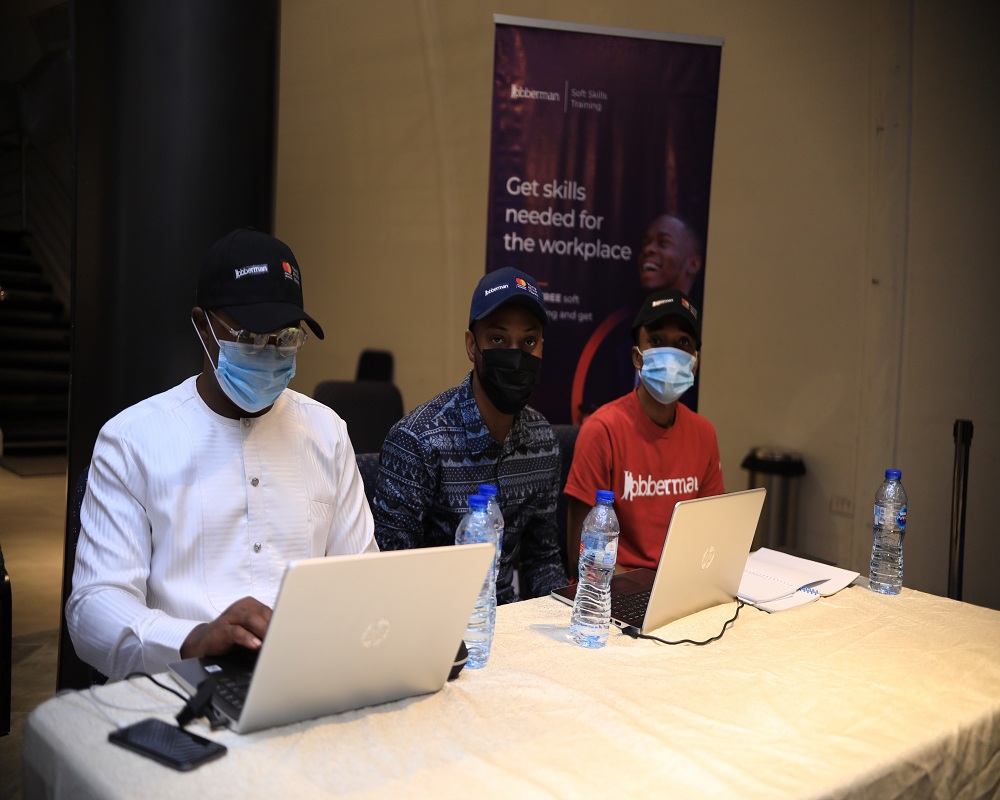
Jobberman, the single largest job placement website in sub-Saharan Africa, has announced its Alliance for Better Work initiative, as part of its longstanding partnership with the Mastercard Foundation.

The employer-centred initiative is geared to radically bolster recruitment in Nigeria, with a focus on driving female hires and providing integrated end-to-end support on the easy to use online jobs platform.
Large corporations to SMEs in Lagos, Abuja, Kano and Kaduna will be able to capitalise on access to over 182,000 pre-vetted jobseekers between the age of 18-35, segmented by industry and qualification level and with a core focus on the agricultural, creative and digital sectors in Nigeria.
The Alliance for Better Work has been designed to improve job retention, workplace productivity, business development and, crucially, bridge the gap on gender unemployment which according to recent data is 35.2% compared to 31.8% for men.

To-date, employers have faced challenges such as cost for training new employees, a flood of unfiltered applications and wide skills gap.
The campaign will run in parallel to Jobberman’s successful soft skills training program, which has already equipped 190,628 young people between the age of 18-35 for the workplace, as well as placing more than 82,600 in dignified employment.
The latest drive will see the pioneering platform draw from its leading expertise in the market to tackle both strands of recruitment with equal volition and on course to reach its target of securing employment for 3 million young people by 2025.
The Alliance will establish a commitment between Jobberman and employers in the agriculture, creative, digital, finance, healthcare, retail/FMCG, advertising and education sectors to #hirebetter and move beyond the inertia of costly recruitment processes.
According to Jobberman’s data insights, companies can spend an average of 4-6 weeks on their hiring process and cost an estimated 20-25% of the annual gross salary of a candidate to recruit.
The Alliance for Better Work is an exclusive recruitment club that gives employers access to the largest pool of trained quality candidates in the country, innovative end-to-end recruitment and post-hiring support, brand amplification, and exclusive rates, all tailored to companies specific needs.
Speaking on the initiative, Rolake Rosiji, CEO of Jobberman Nigeria said, “The Alliance for Better Work is ultimately about unlocking the competitive advantage of Nigerian companies, often lost in long and poor cycles of recruitment.
“By joining forces with Nigeria’s most astute companies we aim to set a standard of progressive recruitment practices that will allow businesses to flourish. Plus, this opens up the opportunity to accelerate our mandate with Young Africa works in placing trained young people in dignified work.
Employees are a company’s greatest asset and Jobberman has the experience, the tools, platform and the resources to make this a reality for employers.”

Chidinma Lawanson, Country Head Nigeria, Mastercard Foundation, added, “The Mastercard Foundations Young Africa strategy aims to give 10 million youth, and women access to dignified and fulfilling work in Nigeria – 70% of which must be women.
“The Foundations’ partnership with Jobberman is one of the many ways that we intend to achieve this. The launch of the Alliance for Better Work Campaign is intentional in filling the gap in the recruitment process, particularly as it pertains to gender unemployment. We look forward to seeing its impact.”
With over a decade in the recruitment business, Jobberman has used its platform to develop job seeker skill sets, identify gaps in the labour market and streamlined the hiring processes for employers.
The partnership with the Mastercard Foundation is steering transformative change in the issues surrounding unemployment in Nigeria. The partnership aims to train 5 million job seekers and place 3 million in dignified employment over the next five years.



Canal+ is to cut jobs at MultiChoice as part of a sweeping restructuring plan aimed at stabilising the African pay-TV operator, following years of operational and financial pressure.

The move comes alongside a planned $115 million capital injection, underscoring the urgency of efforts to revive the business after the French media group took control.
The planned layoffs are expected to form a core element of a broader cost-cutting and efficiency drive, as Canal+ seeks to streamline MultiChoice’s operations and improve profitability.
The restructuring signals a shift toward leaner operations, with a focus on eliminating redundancies and optimising the company’s cost base.
MultiChoice has struggled in recent years with declining subscriber numbers across key African markets, weighed down by macroeconomic pressures, currency volatility, and changing consumer behaviour.
The rise of global streaming platforms has intensified competition, chipping away at the company’s traditional pay-TV dominance.
Canal+’s intervention marks a pivotal moment for MultiChoice, reflecting a more aggressive approach to repositioning the business.
By combining fresh capital with structural reforms, the new owners are aiming to both stabilise short-term performance and lay the groundwork for longer-term growth.
The $115 million injection is expected to provide immediate financial relief, supporting operations and potential strategic initiatives.
However, the accompanying job cuts highlight the depth of the challenges facing the company and the scale of transformation required to restore competitiveness.

Nigeria has ranked first globally in the ownership of the two largest stablecoins, Tether (USDT) and USD Coin (USDC), reflecting the country’s growing reliance on dollar-linked digital assets.

USDT, USDC
Stablecoins such as USDT and USDC are designed to maintain a fixed value against the U.S. dollar, allowing users to store money digitally while avoiding the price volatility associated with cryptocurrencies like Bitcoin.
According to the 2026 Stablecoin Utility Report released by BVNK, about 59 percent of Nigerian crypto users hold USDT, while 48 percent own USDC, giving the country the highest combined ownership rate among all nations surveyed.
The report placed Nigeria ahead of several major economies, including Australia and India, highlighting the country’s strong adoption of dollar-denominated digital assets. Australia ranked second with 34 percent USDT ownership and 29 percent USDC, while India placed third with 30 percent USDT and 27 percent USDC holdings.
The study also examined adoption levels across other regions. Countries such as Colombia and Singapore showed strong usage of both stablecoins, while adoption levels were also notable in South Africa and the United States.
Other markets included in the analysis were Philippines, Thailand and Argentina, where stablecoin ownership has also increased significantly. Among European economies, the report said France and Germany showed moderate levels of adoption, while Latin American markets such as Mexico and Brazil recorded smaller but growing usage rates.
The United Kingdom also appeared in the ranking with modest levels of stablecoin ownership. The report noted that USDT ownership exceeds USDC in many countries, including Nigeria, Australia, India, Singapore, the Philippines, Thailand, Argentina and France.
However, USDC is often viewed as a more compliance-focused stablecoin because of its stronger transparency and regulatory alignment. In some markets, including South Africa, Colombia, Germany and Brazil, the report found that USDC adoption slightly exceeds USDT.
More broadly, the data suggests that stablecoin adoption is being driven largely by emerging economies rather than advanced financial markets. According to the report, countries such as Nigeria, Argentina and the Philippines are among the biggest users of stablecoins, where people increasingly rely on dollar-pegged digital assets to protect savings from currency volatility and facilitate cross-border payments.
Spotify has unveiled Nigeria-specific data from its annual Loud & Clear report, highlighting how Nigerian artists generated more than ₦60 billion in revenue from the platform alone last year, amid explosive growth in streams, local consumption, and global discovery.

The report, which analyzes millions of data points to illuminate music streaming economics, shows Nigerian artists’ revenue surged over 140% in the past two years.
This boom stems from rising global appeal and stronger domestic engagement, with 30.3 billion streams and 1.6 billion listening hours on Spotify in 2025. First-time discoveries of Nigerian music hit 1.3 billion, up 26% from 2024.
Locally, Nigerian tracks dominated Spotify Nigeria’s Daily Top 50, accounting for over 80% of features, while consumption of homegrown artists jumped 170% year-on-year.
“Nigeria’s music scene thrives on creativity, innovation, and global influence,” said Jocelyne Muhutu-Remy, Spotify’s Managing Director for Africa. “Loud & Clear spotlights how artists are forging sustainable careers and deepening local ties.”
Key highlights include:
55% year-on-year growth in local streams for Nigerian female artists.
75% surge in streams for independent Nigerian artists.
Independents and indie labels earning 58% of all royalties from Nigerian artists on Spotify.
Spotify’s editorial playlists featured nearly 2,000 Nigerian artists in 2025, boosting visibility. Nigerian music appeared in 320 million global user playlists and over 12 million in Nigeria, totaling more than 60 million playlists worldwide.
The report also notes evolving tastes, with top-growing genres in Nigeria over five years including pop urbaine, alternative pop, anime, emo, and drill.
For full details, visit spotify.com/loudandclear.

Court Jails ‘Colonel’, ‘Major’ of Global Money-Laundering Ring

Court Bans Kenyan Telcos from Recycling SIM Cards

Providus Bank Fully Meets CBN Capital Requirement, Sets Record Straight

African Tech Start-ups to Receive $46m of Speedinvest Africa Fund

U.S. Charges Three in $2.5 Billion Plot to Smuggle Nvidia AI Chips to China

Kaspersky Discovers New Phishing Campaign Exploiting Google Tasks Notifications to Steal Corporate Credentials

esentry 2025 Report Shows Healthcare, Financial Services and Telecoms as Staging Grounds for Increased Cyberattacks in Africa

AfDB, UNDP Launch $10Bn AI Initiative for Africa

Mutual Benefits Assurance Settles ₦5.9bn Claims in January 2026

MultiChoice Suspends Yearly DStv Price Hike as Canal+ Pushes Growth




 E-Financial2 days ago
CBN Introduces Stricter BVN Rules to Curb Fraudulent Transactions

 E-Financial2 days ago
Binance is Missing from Ghana’s Crypto Sandbox

 E-Financial2 days ago
World Bank Debars 3 PwC Subsidiaries for 21 Months over Alleged Project Fraud

 News2 days ago
Nigeria, UK Sign £746M Landmark Ports Deal

 E-Financial2 days ago
Quest Merchant Bank Named Transaction Advisor for Nigeria’s Landmark Project BRIDGE Digital Infrastructure Initiative

 Broadcasting2 days ago
Canal+ to Cut Jobs as Part Sweeping Restructuring

 General News2 days ago
Gartner Forecasts Surge in AI-powered Public Services

 E-Business2 days ago
Study Reveals 83% of Employees Stay Connected to Work During Time Off, Fuelling Digital Anxiety