

News
Jovago.com Identifies 10 Costly Mistakes Hotel Owners Make


Hotel owners often make some basic mistakes when operating their hotels and then cannot understand why they either make no money or the hotel eventually closes down – below are just some general mistakes but these are not the only ones owners can make.
First there is the tendency to base room rates only on what competitors are doing instead of what is actually offered to the guest in relation to what it costs the hotel.
There has to be a balance between perceived value and the guests paying a fair value for what they are getting. Should a guest feel cheated the guest will never return.
It is very rare for a hotel to be premium in its reputation and location for it to charge what it wants.
Thus stated, where a hotel has no clear rate policy that dictates what the standard room type rates are and what is discounted to companies, groups or frequent guests can be costly for an owner.
Quoting on an individual negotiated basis can lead to mistakes. Some clients may abuse the discounts they are used to and if a hotel refuses to honour what they did before the guest may actually go elsewhere.
Though guest loyalty is a fallacy, if guests know how the hotel’s policy works and they know what to expect, they can actually become regulars and trust that for what they are paying for is fair in relation to what they are getting.
Such a rate policy is usually an internal document not shared with guests but highlights what the normal rates are and what a guest is offered for what they pay. Furthermore, it would also specify what discounted rate they would get based on a justification such as they are actually a group or a regular company or a regular guest. The guest is given the full rate and then the rate offered that best describes the qualification for such a discounted rate. No percentages should beused but rather the value of the discounted rates.
Writing on the mistakes hotelers make often times, Bruce Prins, notes that Hotels that misrepresent themselves as luxury or budget when in fact they are the opposite can alienate guests and cause the business to fail.
Services and facilities determine a hotel’s grading and status as either to be budget, economy, mid-scale, up-scale or luxury.
It is important for the owner to get professional advice on what grade their hotel is before making claims and deciding what rates to charge for their hotel rooms.
The practice of not doing preventative maintenance by checking all furniture, fittings and equipment daily or weekly and then using cheap labour or skills to conduct maintenance is destructive for a hotel.
The worst is when the hotel just plainly expects guests to stay in ahotel with paint peeling of walls, leakages everywhere and furniture and equipment either broken or not working at all.
A guest will realise they are being taken for a fool and move elsewhere. If it is a cheap hotel that chargescheap rates then this will attract guests that will go further to add to the deterioration of the hotel as an asset and its reputation.
Hotels that then add gimmicks to compensate for poor service, exorbitant rates or poorly maintained facilities, do so as a cheap attempt at making the guest feel that they are getting value for their money.
Gimmicks can be extra services, furniture or equipment added that actually do not really add value to the guest.
An example would be to place chocolates on the pillows at night time in a hotel where the air-conditioning does not even work. Hotels have to get the basics right such as cleanliness, hygiene, good service and working equipment before even attempting to add little touches to entice or appease guests.
Hotels do get old and money should be invested at least every five or ten years to ensurethe hotel is kept up to standard. That is if the hotel was properly thought out and built to begin with.
If no money hasbeen allocated for it or no investment is forthcoming, the hotel will lose out to its competitors and eventually go bankrupt.
In today’s world where competition is forever increasing no hotelier can afford to sitback and think the guest will just take it or leave it.
Owners that withdraw profits from the business on a continuous basis, especially during the first few years and then take loans when serious funds are needed are setting the hotel up for a disaster and wasting their money.
Profits should be kept in the business until all loans are paid and then these same profits should be used to either pay out as dividends or form part of future re-investment.
A hotel is a business but most of all its value is in its appreciation over time into an asset that can be sold at a high value, especially if it is successful and has a good brand name.
At least the building and land can be sold as is at a greater value when need be because property most of the time increases more in value than cash in the bank.
If staff in a hotel are exploited by either being paid far below what the average salary would be for their work, or not being given training or even being replaced at a whim without clear disciplinary policies applied consistently, it is a given that the hotel will lose business.
Staff would steal and in actual fact contribute to the hotel’s deterioration with a mediocre and apathetic attitude to their work, each other and the hotel guests.
It is common for anhotelier to also think that when the hotel pays to have people trained they will leave for better jobs. That may be so but then the question begs as to why the staff would be so eager to leave.
The fact that staff do leave hotels or move around is a normal situation in hotels world-wide and yet a lot of hotels that actually encourage staff turnover in a positive way find that they have better occupancies, happier customers and more profits.
The trick is to keep the staff that add the most value and show the most potential in ensuring the hotel is a success.
Lastly a hotel owner should be careful of who they encourage and even allow to stay in their hotel. When prostitutes are consciously allowed to operate in or from a hotel they draw in bad elements such as criminals and drug users.
Drug users or criminals then encourage kingpins to also frequent and then attract murderers and even entire gangs to take up residence.
Once the latter occurs the owner has no more control over his or her hotel and I subservient to the abuse and whims of the clandestine community he helps create within his or her own hotel.


News
How Moniepoint’s Founders, Tosin Eniolorunda and Felix Ike are Redefining African Tech and Finance


In an era where global tech giants dominate headlines, two Nigerian entrepreneurs are quietly revolutionizing financial services across Africa, proving that world-class innovation can emerge from homegrown talent and local institutions.

Tosin Eniolorunda and Felix Ike, co-founders of Moniepoint Inc, have built one of Africa’s fastest-growing fintech companies, not despite their exclusively Nigerian education, but in many ways, because of it.
Their journey from the lecture halls of Obafemi Awolowo University and the University of Lagos to the TIME100 Most Influential Companies list stands as a powerful testament to the caliber of talent nurtured within Nigerian universities and the transformative potential of locally-rooted vision.
Tosin Eniolorunda’s path exemplifies how Nigerian educational institutions can cultivate entrepreneurial excellence. After earning his degree in Mechanical Engineering from Obafemi Awolowo University, he didn’t follow the well-trodden path abroad but instead chose to build solutions for Nigerian challenges within Nigeria itself. This decision proved prescient.
Understanding the unique financial ecosystem and infrastructure gaps firsthand from the work at TeamApt Ltd where they were building from majority of the country’s banks, Tosin pioneered several industry firsts: introducing instant POS transfers to Nigeria, launching the country’s first virtual account services, and constructing a vertically integrated payments processing switch with full switching and processing licenses.
These feats and technological achievements must be viewed from the prism that these were deeply contextual innovations born from intimate knowledge of local needs, the kind of understanding that comes from being educated and embedded in the communities one serves.
Felix Ike’s contribution complements this vision with technical brilliance equally rooted in Nigerian educational excellence. Graduating with first-class honors in Computer Science from the University of Lagos, Felix brought to Moniepoint the kind of engineering rigor required to build mission-critical financial infrastructure.
As Chief Technology Officer, he has architected systems that are not just functional but scalable, resilient, and secure enough to serve over 10 million businesses and individuals across Nigeria and Africa. His work demonstrates that Nigerian universities are producing software engineering leaders capable of building world-class technology that can compete on the global stage with technology that processes millions of transactions daily and underpins the financial dreams of an entire continent.
Since its founding in 2015, Moniepoint has evolved into Africa’s largest distributor of financial services in Nigeria, with presence across all 774 local government areas. The company’s all-in-one financial ecosystem offering seamless payments, banking, credit, and business management solutions reflects a sophisticated understanding of what African businesses and individuals actually need to thrive.
The accolades have followed: recognition by TIME as one of the 100 Most Influential Companies in 2025, listing among CNBC’s top UK fintech firms, and ranking in the Financial Times’ Africa’s Fastest-Growing Companies for three consecutive years.
The Moniepoint story as an indigenously rooted but globally compliant player challenges prevailing narratives about where innovation must originate and what credentials are necessary for building transformative companies. Tosin and Felix’s success illustrates that Nigerian universities, when their graduates are empowered with vision, opportunity, and determination, can produce founders who don’t just participate in the global economy but reshape it.

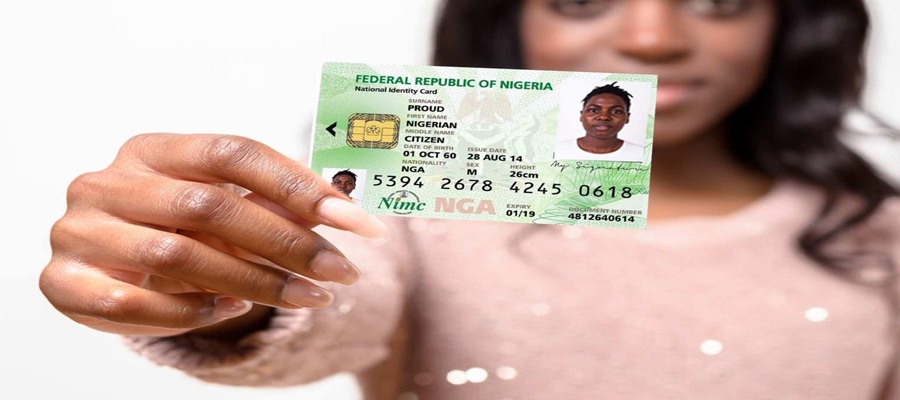
Federal Inland Revenue Service (FIRS) has announced that the National Identification Number (NIN) issued by the National Identity Management Commission (NIMC) will automatically serve as the Tax Identification Number (Tax ID) for all Nigerian citizens, while registered businesses will use their Corporate Affairs Commission (CAC) registration numbers.

FIRS
The disclosure was made during a public awareness campaign on the new tax laws posted on X (formerly Twitter) on Monday.
According to the Service, the Nigeria Tax Administration Act (NTAA), which comes into force in January 2026, mandates the use of Tax IDs for certain financial and commercial transactions, including bank account ownership.
FIRS explained that the measure is part of efforts to unify all previously issued Tax Identification Numbers (TINs) by both the federal and state revenue services into a single identifier.
“For individuals, your NIN automatically serves as your Tax ID, while for registered companies, your CAC RC number is used. You do not need a physical card; the Tax ID is a unique number linked directly to your identity,” the Service stated.
The agency noted that the requirement has been in place since the Finance Act of 2019 but has now been strengthened under the NTAA to ensure compliance and ease of administration.
Officials emphasized that the reform would simplify tax processes, reduce duplication, and improve transparency in Nigeria’s tax system.
The Service added that the integration of NIN and CAC numbers into the tax framework would also enhance data accuracy, curb tax evasion, and streamline the monitoring of taxable activities across the country.
Tax experts have described the development as a significant step toward modernizing Nigeria’s revenue administration, noting that it aligns with global best practices where national identity systems are linked to tax compliance.
The FIRS urged Nigerians to ensure that their NINs and CAC registration details are up-to-date, stressing that the identifiers would be required for transactions such as property purchases, contract awards, and access to certain financial services once the NTAA takes effect

The United States will begin a partial suspension of visa issuance to Nigerians from January 1, 2026, following a new presidential proclamation aimed at strengthening border and national security.

The US Mission in Nigeria announced on Monday that the restriction will take effect at 12:01 a.m. Eastern Standard Time in accordance with Presidential Proclamation 10998, titled ‘Restricting and Limiting the Entry of Foreign Nationals to Protect the Security of the United States.’
According to the mission, Nigeria is one of 19 countries affected by the measure.
Others listed are Angola, Antigua and Barbuda, Benin, Burundi, Cote d’Ivoire, Cuba, Dominica, Gabon, The Gambia, Malawi, Mauritania, Senegal, Tanzania, Togo, Tonga, Venezuela, Zambia and Zimbabwe.
The proclamation provides for a partial suspension of visa issuance covering nonimmigrant B-1/B-2 visitor visas, as well as F, M and J student and exchange visitor visas.
It also applies to immigrant visas, though with limited exceptions.
The statement read in part, “Effective January 1, 2026, at 12:01 a.m. EST, in line with Presidential Proclamation 10998 on “Restricting and Limiting the Entry of Foreign Nationals to Protect the Security of the United States,” the Department of State is partially suspending visa issuance to nationals of 19 countries – Angola, Antigua and Barbuda, Benin, Burundi, Cote D’Ivoire, Cuba, Dominica, Gabon, The Gambia, Malawi, Mauritania, Nigeria, Senegal, Tanzania, Togo, Tonga, Venezuela, Zambia, and Zimbabwe – for nonimmigrant B-1/B-2 visitor visas and F, M, J student and exchange visitor visas, and all immigrant visas with limited exceptions.”
US officials clarified that the policy does not apply to all travellers. Exemptions include immigrant visas for ethnic and religious minorities facing persecution in Iran, dual nationals applying with passports from countries not affected by the suspension, and Special Immigrant Visas for eligible US government employees.
Other exempted categories include lawful permanent residents of the United States and participants in certain major international sporting events.
The US government emphasised that the proclamation applies only to foreign nationals who are outside the United States on the effective date and who do not hold a valid US visa as of January 1, 2026.
“Foreign nationals, even those outside the United States, who hold valid visas as of the effective date are not subject to Presidential Proclamation 10998. No visas issued before January 1, 2026, at 12:01 a.m. EST, have been or will be revoked pursuant to the Proclamation,” the statement added.
Visa applicants from affected countries may continue to submit applications and attend interviews. However, the US Mission noted that such applicants “may be ineligible for visa issuance or admission to the US” under the new rules.
The announcement comes amid a series of recent US policy decisions that have raised concerns among Nigerians seeking to travel, study or migrate to the country.
In October, the United States added Nigeria back to its list of countries accused of violating religious freedom, citing persistent insecurity and attacks on Christian communities. This was followed by Nigeria’s inclusion on a revised US travel ban list that imposed partial entry restrictions on Nigerians.
The US has also tightened immigration and visa policies affecting Nigerians. Earlier this year, the validity of most non-immigrant visas issued to Nigerians was reduced to single-entry visas with a three-month duration.

How Moniepoint’s Founders, Tosin Eniolorunda and Felix Ike are Redefining African Tech and Finance

Ecobank Guarantees Seamless Digital Banking Services Throughout the Christmas and Year-End Period

Banks quietly move to enforce new ₦50 transfer levy from Jan. 1

Nigeria’s Internet Usage Hits 1.24m Terabytes – NCC

World Bank Reveals Obstacles to Growth of Mobile Money Accounts in Sub-Saharan Africa

Nigeria Records Highest Weekly Cyberattacks in Africa — Report

Cyber Tsunami Hits Nigeria as Breaches Surge 1,047%, esentry Q3 Report Reveals

Minister Claims Bandits Exploit Poor Network, Bounce Calls Off Multiple Towers

Financial Sector Faced AI, Blockchain and Organised Crime Threats in 2025 – Report

GenAI Adoption Among African workers Outpace Global Peers



 E-Financial2 days ago
Banks quietly move to enforce new ₦50 transfer levy from Jan. 1
 Telecom3 days ago
Nigeria’s Internet Usage Hits 1.24m Terabytes – NCC
 General News2 days ago
Ecobank Guarantees Seamless Digital Banking Services Throughout the Christmas and Year-End Period
 News1 day ago
How Moniepoint’s Founders, Tosin Eniolorunda and Felix Ike are Redefining African Tech and Finance