

News
Jumia’s Nigeria Food Index Shows Growth in Online Delivery


Jumia has published its first Nigeria Food Index, showing the impact of the coronavirus (COVID-19) pandemic on food trends in Nigeria.

The report, released over the weekend, shows that the online food delivery is changing habits in unexpected ways for businesses and consumers due to the pandemic.
It further shows that the growing popularity of fast food, coupled with the growing trends for convenience and value for money, have opened up opportunities for the food market in Nigeria.
The report indicates that the country’s agricultural sector experienced a major boom in 2019, significantly responsible for the 90.23 percent contribution made by non-oil sectors to Nigeria’s GDP.
The index further shows that the food and grocery retail market had total revenues of $44.9 billion, representing a compound annual growth rate (CAGR) of 8.7 percent in the last eight years.
Similarly, the report indicates that overall grocery retailing continues to expand, as consumers seek comfort and convenience when shopping for food. The food segment was the market’s most lucrative, with total revenues of $33.7 billion, equivalent to 75 percent of the market’s overall value.
Also, online food delivery is gaining momentum through companies such as Jumia Food. With the outbreak of the COVID-19 pandemic, the demand for food rose significantly, especially online food delivery as a result of the lockdown and social distancing guidelines. This was because many people relied heavily on food delivery as opposed to physical shopping in grocery markets.
The report highlighted two major drivers of the growth observed in 2020 – demography and the COVID-19 lockdowns. While with a growing population averaging 18 years old, a new generation of Nigerian middle class consumers are spending more money online on food and grocery services, the lockdowns induced by the COVID-19 pandemic also contributed to this evolution in habits.
The report further highlighted that, while most restaurants are popular in Lagos, Abuja, Port Harcourt and Ibadan, Lagos leads in terms of volume of online food orders. It also shows, among others, that pizza, Chinese and shawarma are the most promising cuisines; lunch leads in the time of orders with 65 percent; weekdays record the biggest volume in orders, peaking on Wednesday at 16 percent; males place more orders (56 percent) than females (44 percent); and Port Harcourt leads in delivery timing at 26 minutes.
The Index also shows that, while Kentucky Fried Chicken (KFC), Cold Stone Creamery and Pizza Hut come out as the most popular international brands in the country due to consumers’ proclivity to chicken-related orders, Chicken Republic, The Place, Kilimanjaro, Sweet Sensation and Drumstick are the most popular local food vendors due to the affordability of their offers.
Jumia, the leading e-commerce platform in Africa, explains that the positive trend recorded in the agricultural sector offers the prospect of increased jobs, greater prosperity, reduced hunger and improved opportunities for Nigerian farmers and entrepreneurs to participate in the global economy.
Over the years, Nigeria’s growing online audience has seen an increase in international brands setting up shop to tap into the growing middle-income segment. Direct investments from players such as KFC, Cold Stone Creamery and Pizza Hut have been achieved.
Online food delivery players such as Jumia have also played a key role in shaping supply chains and opening up the markets to new entrants. Local producers and restaurants have embraced this evolution and reached new consumers as well as grown their businesses in spite of these challenging times.
“This pandemic crisis has shown the world that online food delivery is not just a commodity, but a necessity. The food business adapted quickly to the new normal, by availing contactless and cashless deliveries,” said Shreenal Ruparelia, Chief Commercial Officer, Jumia Food.
“We also started to provide support to local food vendors to keep their businesses running during this difficult time. With our food partners, we will continue to deploy capabilities across the food value chain to ensure consumers buy food online safely and at the right price, in line with the theme of this year’s World Food Day celebration of ‘Grow, Nourish, Sustain Together,’” added Shreenal.
Nigeria’s population is expected to double over the next 30 years at a growth rate averaging around 2.3% a year. With its diversification plan from oil production, the country is set to witness growth in a large consumer market, such as the food and grocery retail market.
Jumia Food is Africa’s largest Food delivery company operating in 9 countries in the continent. The consumers can order restaurant meals, groceries, drinks, pharmacies, and supermarkets, having then delivered in less than 45 minutes.



Nigeria’s debt to World Bank’s International Development Association (IDA) rose by $2.08 billion in one year to $19.89 billion as of December 31, 2025, according to an analysis of external debt stock data released by the Debt Management Office (DMO).

The figure represents an 11.7 per cent increase from the $17.81bn owed to the global lender as of December 31, 2024.
So-called IDA is a member of the World Bank Group, headquartered in Washington, D.C. offering concessional loans and grants to the world’s poorest developing countries.
According to the report, Nigeria’s total debt to the IDA rose to roughly $18.2 billion to $18.7 billion by the end of 2025, making it the third-largest borrower globally from the IDA, behind Bangladesh and Pakistan.
DMO data showed that Nigeria’s IDA debt rose from $16.56 billion in 2024 to $18.51 billion n in 2025, an increase of $1.94 billion or 11.73 per cent.
International Bank for Reconstruction and Development (IBRD) exposure also increased from $1.24 billion to $1.38 billion, representing an increase of $141.84million or 11.41 per cent.
The increase means World Bank loans accounted for 38.36 per cent of Nigeria’s total external debt stock of $51.86 billion, as of the end of 2025.
News
World Health Summit Regional Meeting Opens in Nairobi, Focuses on Stronger African Health Systems

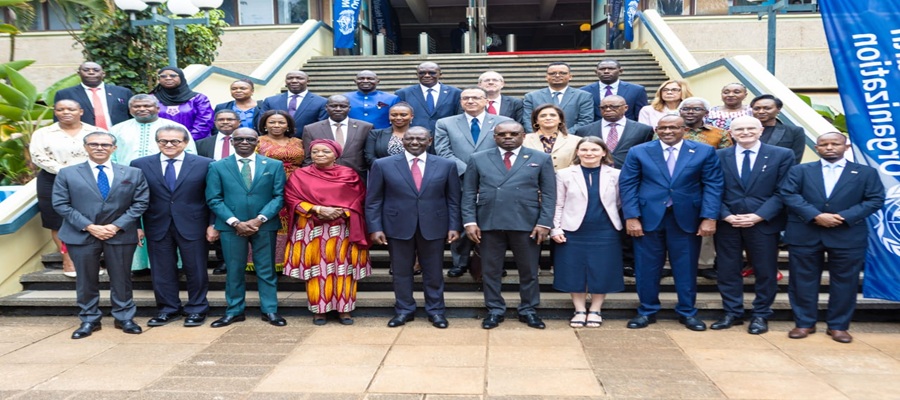
The 2026 World Health Summit Regional Meeting opened in Nairobi on Wednesday with a strong call for coordinated action to build more resilient health systems across Africa.

The summit, hosted by Aga Khan University in partnership with the World Health Organization (WHO), Kenya’s Ministry of Health, and the Africa Centres for Disease Control and Prevention (Africa CDC), attracted over 2,000 health leaders, policymakers, researchers, and development partners from more than 50 countries.
The meeting is themed: “Reimagining Africa’s Health Systems: Innovation, Integration and Interdependence.”
Speaking at the opening ceremony, Kenya’s President, William Ruto, urged African governments, health institutions, donor agencies, and development partners to move away from fragmented interventions and adopt system-wide reforms anchored on local ownership, strategic investment, and accountability.
Ruto said Africa must reposition itself within the global health architecture by leveraging its strengths and becoming a source of scalable health solutions rather than being viewed solely through the lens of persistent challenges.
“This imbalance is neither sustainable nor tenable. It calls for a decisive shift from fragmented, piecemeal interventions to comprehensive, system-wide transformation backed by coherent strategy, domestic and international financing, and accountable institutions,” he said.
President of the World Health Summit, Prof. Axel Pries, described the Nairobi meeting as a reflection of Africa’s growing influence in shaping global health priorities.
He said the summit was designed to convene leaders across sectors and regions to translate policy discussions into practical actions that strengthen health systems globally.
Also speaking, Prof. Lukoye Atwoli, International President of the World Health Summit Regional Meeting and Dean of Medical College East Africa at Aga Khan University, said the summit marked a shift in Africa’s role in global health governance.
“For too long, Africa has been the subject of health conversations held elsewhere. Today, African institutions, researchers, and policymakers are co-authors of global health policy,” Atwoli said.
President and Vice Chancellor of Aga Khan University, Dr. Sulaiman Shahabuddin, said despite ongoing challenges such as climate change, chronic diseases, inadequate funding, digital inequality, and workforce gaps, Africa’s health sector is increasingly better positioned to integrate systems, deploy technology, and develop talent for quality healthcare delivery.
WHO Regional Director for Africa, Dr. Mohamed Yakub Janabi, said the summit offered an important opportunity to strengthen collaboration and advance universal health coverage through robust primary healthcare systems.
According to him, discussions at the summit are expected to generate a practical blueprint for building a more coherent and integrated health ecosystem across the continent.
Kenya’s Principal Secretary for Public Health and Professional Standards, Mary Muthoni, said global health security must remain a top priority for governments.
“Global health security is not a luxury; it is a prerequisite for national stability. We must move from reactive crisis management to proactive pandemic preparedness,” she said.
Director-General of Africa CDC, Dr. Jean Kaseya, stressed the need for Africa to finance and build resilient health systems at scale to strengthen health security and reduce dependence on external support.
He said the Nairobi meeting provides a strategic platform for mobilising investments, strengthening partnerships, and advancing African-led healthcare solutions.
The summit will feature over 80 sessions focused on health financing, workforce development, digital health innovation, climate and health, and strengthening universal health coverage.
The meeting continues over the coming days with further discussions expected on emerging health challenges and long-term healthcare resilience across Africa.

The UK-Nigeria Technology Hub has launched its Creative Fund, a first‑phase grants initiative designed to address critical technical capacity gaps across Nigeria’s film, fashion, and music industries.

The fund will support the development of local digital production capacity, encourage the adoption of modern creative technologies, and promote the responsible use of Artificial Intelligence (AI), to strengthen Nigeria’s creative value chain.
The initiative directly supports the priorities of the UK‑Nigeria Economic Transformation and Investment Partnership (ETIP) Creatives Working Group launched in March 2025 and the delivers on commitments made during President Tinubu’s State visit to the UK in March 2026. It is designed to ensure that high potential creative projects can access the technical talent, tools, and resources required to produce, scale and complete their work locally.
Funded by the UK-Nigeria Tech Hub, under the UK Government’s Digital Access Programme and implemented by Tech4Dev, the Creative Fund responds directly evidence gathered through the State of the Creative Innovation Ecosystem in Nigeria, study in 2024. Drawing on over 1,700 survey responses, and fieldwork across seven states, the research showed that Nigeria’s creative economy employs approximately 4.2 million people and contributes around US$3 billion to GDP annually.
Despite this scale, the sector continues to face structural constraints – over 80% of practitioners are self-taught, fewer than 10% have access to formal financing, and high-value technical work is routinely outsourced outside the country. The Creative Fund is a direct response to these gaps, and central to the work of the ETIP Creative working Group.
Oyinkansola Akintola‑Bello, Director of the UK‑Nigeria Tech Hub, said: “Nigeria’s creative sector already delivers real economic value, and both governments have committed under the UK‑Nigeria Economic Transformation and Investment Partnership to supporting its growth.
“Through the ETIP Creatives Working Group, we are moving from ambition to action. The Creative Fund is a practical first‑phase intervention that addresses critical gaps in skills, infrastructure, and access to advanced tools, enabling Nigerian creatives to produce and scale high‑quality work locally.”
The Fund will support high-potential creative projects covering three industries; Film, Fashion, Music and will focus on initiatives that demonstrate strong potential for impact, scalability, and job creation.
It will subsidise projects that need to close technical gaps including critical specialists like VFX artists, sound engineers, post-production editors, and design professionals, or the digital tools and resources that make professional-quality work possible locally, for example digital asset management systems, content delivery tools, Digital Rights Management solutions, and AI-driven production technologies. The aim is straightforward; Nigeria’s best creative work should be made in Nigeria.
Abraham Akpan, Tech4Dev’s Country Manager for Nigeria and Sub-Saharan Africa said: “The Creative industries are a core part of the digital economy, bringing together technology, culture and entrepreneurship.
“This Fund is about ensuring that Nigeria’s creative success is underpinned by sustainable local talent and capacity, while deliberately expanding access to tools, skills and finance for those who have been historically excluded. By prioritising women-led enterprises, youth-led ventures, and underrepresented groups, the fund embeds inclusion into every stage of delivery.”
The Fund is open to creative companies, studios, production houses, fashion enterprises, and music labels leading projects with clear technical needs. Applications will be assessed on project quality, its potential for local and international impact, and the applicant’s level of commitment to co-investment.
The initiative also encourages the responsible use of emerging technologies, including artificial intelligence with selected projects expected to explore its application in production, storytelling, and innovation.
Applications are open now and will be accepted on a rolling basis throughout the programme period.

US to Deny Applicants Saying they Fear Persecution @ Home Visas

ALTON Rues Vandalism, Others as Critical Infrastructures Suffer Attacks

Opay Plans IPO in US, Targets $4Bn in Valuation

Meet Top Five Tech-Driven Banks and Their Overseers

FG Owes World Bank $2.08Bn in 2025 – Report

FG to Gift Nigerians over 100 Free TV Channels from May 15

UBA Beefs Up Mobile App Security to Stop Fraudulent Debits, Withdrawals

What Adekunle Gold’s Support Means for ‘The Gathering on 100

NRS Takes Over Mineral Royalties Collection Under New Tax Laws

MTN Suspends Data, Airtime Borrowing Service over New FCCPC Lending Rules




 Special Reports2 days ago
IFC, Standard Chartered Partner on Supply Chain Finance to Support African Businesses

 News2 days ago
World Health Summit Regional Meeting Opens in Nairobi, Focuses on Stronger African Health Systems

 E-Financial2 days ago
Fidelity Bank “Basking in Approval” under Onyeali-Ikpe, CEO

 General News1 day ago
Nigeria’s CardForté Turns Five, Showcasing Impact on Domestic Payment Infrastructure

 Telecom2 days ago
EU Warns Meta Could Face Huge Fine Over Underage Facebook, Instagram Users

 E-Business2 days ago
Firm Reveals a 37% Increase in Malicious Packages Compromising Software Supply Chains

 Telecom1 day ago
FG Okays 112 as Toll-Free National Emergency Response Number

 General News2 days ago
Flutterwave Partners ASIF to Champion Youth Entrepreneurship in Nigeria