

E-Business
Key Takeaways from BETT MEA & Turkey Leadership Forum 2016


Education and policy leaders drawn from Middle East, Africa and Turkey, recently, met at the inaugural BETT Middle East Leadership Forum held in Abu Dhabi, United Arab Emirates with the sole aim of achieving best practice guidance for (education) successful system change.
The 2-day Forum was unique in many ways, networking opportunities and inspiration from the world of education, especially, following world class contents shared by Microsoft Worldwide Education (MWE), the principal partners to #BETT_MiddleEast.
The thinking revolves round adopting technology to help improve education and learning, create opportunity, and raise living standards for people around the world, particularly in Middle East, Africa and Turkey.
Meanwhile, the African-America Institute “State of Education in Africa Report 2015” supports United Nation’s statistics which shows: “The Africa region has experienced an impressive increase in the number of students enrolled in primary school. Between 1990 and 2012, the number of children enrolled in primary schools more than doubled, from 62 million to 149 million children.
Unfortunately and “despite tremendous gains in primary school enrollment, no African country has achieved universal primary education.
“For a country to achieve universal primary education, all children must have completed a full course of primary schooling.
“Globally, 58 million children of primary school age were out of school in 2012. Of that number, 38 million children were in Africa. About half of all out-of-school African children will never step foot in a school in their lifetime”.
Anthony Salcito, vice president, Education for Microsoft Corporation’s Worldwide Public Sector organization, reminded the delegates, “This is a time in history that is very critical to push hard and drive for innovation and change in schools”. So we need to challenge each other to push harder and faster for the changes needed in the education sector. – See more: http://www.nigeriacommunicationsweek.com.ng/e-guest/tech-ll-fuel-changes-in-mea-education-sector-salcito#sthash.eGe61uhR.dpuf.
On this premise, Nigeria CommunicationsWeek key takeways from the Forum, are essentially summarized in Microsoft Education Framework christened “Ten Critical Components of School Transformation” (www.microsoft.com/en-us/education/school-leaders).
This decision was informed by Salcito’s presentation, who unequivocally, urged leaders from these regions to embrace the ten components of transformation that fall into two categories, relying squarely on Leadership and policy. The rest point at enhancing 21st century pedagogy
Feeling more educated on digitalizing education contents and localizing same, Mohammed Mahmud, a member of the Nigerian Parliament, even said, “What we learnt here are eye opening and impactful; as we return home (Nigeria), I will put up a team to assess how we can localize some of the things we learnt here. Truly and as advised by one of the speakers, we may not be able to do everything same time, but we will be doing ourselves a disservice if we don’t act now.
Leadership & Policy:
1.Establishing A Vision
2.Microsoft drums it loud that before school systems can embark on change they need a clear vision. Why? Defining one is complex because it touches on the perception, attitudes and everyday work of multiple stakeholders; involves the reallocation of fiscal and cultural resources; and disturbs the status quo. Thus, thrust of this anchores on helping policy leaders with examples from successful systems, and best practice to develop a cycle that includes a vision, strategic planning, implementation, and reflections on progress.
2. Partnerships and Capacity Building for Change
Microsoft’s message is that a public-private education partnership has the potential to be a significant catalyst for systemic change. This was even put forward by AAI, among other things, “Completing primary education helps to lay the foundation for building a skilled and better-educated workforce in Africa.
3. Organizational Capacity, Strategic Planning and Quality Assurance
A successful change strategy requires professional development, feedback and support for teachers along with a well-researched monitoring and evaluation system.
Professor Kate Omenugha, commissioner for Education, Anambra State, Nigeria nods in agreement to the aforementioned thus, “Coming back to ICT and looking at the curriculum in Nigeria, you need to start ICT teaching and learning, from the primary school…So the first thing was to demystify the new teaching tool for them. The past administration keyed into the Microsoft Academy which Anambra State is one of the 42 places across the globe where the Academy is being used. What does that mean to us? We have access to training facilities and certification of our teachers”.
4. Inclusion, Accessibility and Sustainability
Microsoft points to a direction that a commitment to personalized learning includes providing technology solutions that empower all students. We dare to say that for Africa to achieve the goal of raising globally competitive students, there is urgent need to personalized system of learning”. As Salcito said, this approach helps to build innovation, confident level & critical thinking of a child, and pays off in way of skill sets to meet challenges in today’s workplace.
21st Century Pedagogy
5. Personalized Learning
Personalized learning has the potential to overcome socio-economic, time and space limitations and maximize educational opportunities Clear guidelines from UNESCO present a roadmap towards individualized education.
UNESCO highlighted that “‘one size fits all’ approach to acquiring knowledge in today’s educational institutions does not successfully meet the needs of individuals of a knowledge society…”
6. Teacher and Leader Capacity
The need for “Building teacher and leader capacity is vital to successful transformation”, cannot be over emphasized.
7. Curriculum and Assessment
Responsive and creative use of technology is a powerful way to improve curriculum and assessment outcomes for students. For instance, exploring the allure of computer gaming makes learning fun.
“Educational games may be able to help circumvent major problems plaguing classrooms by placing students in a frame of mind that is conducive to learning rather than worrying about how smart they look,” said Paul O’Keefe, an NYU postdoctoral fellow at the time of the study and now at Stanford University’s Department of Psychology. It is imperatives that curriculum in the Nigeria’s education system be re-assessed to create room for digitization of the necessary areas.
8. Developing A Learning Community
A community of practice can provide a structure for fostering growth and development amongst peers to enhance learning goals.
9. Physical Learning Environments
The Microsoft Education Framework also contains the fact that anytime, anywhere virtual learning spaces are the manifestation of the connections that are redefining the 21st century school-community dynamics.
Thus, from whole-of-school transformation to mobile and smart learning solutions, these technology-enabled environments cultivate innovative learning and bring together all stakeholders in the building of a single ‘mega-learning space’.
10. Designing Technology for Effective And Efficient Schools
Combining cloud solutions that manage infrastructure with services and learning allows schools to operate more effectively.
Microsoft promised that not only does the technology they have support the running of a school, it also maximizes the potential of all students.
Thus, by unlocking and understanding student data educators can solve critical teaching challenges, improving learning outcomes and graduation rates. Reference: microsoft.com/en-us/education/school-leaders/school-systems-planning/components.aspx
—


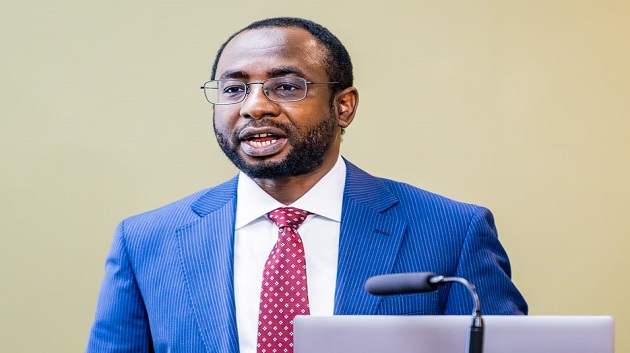
The Federal Government of Nigeria has reaffirmed its commitment to building a responsible, inclusive, and sovereign artificial intelligence ecosystem to enable Nigeria to transition from being a passive consumer of AI technologies to an architect and builder of indigenous AI systems.

This was said by the Director General of the National Information Technology Development Agency (NITDA), Kashifu Inuwa Abdullahi CCIE, while delivering a virtual address at the InnovateAI Conference held in Lagos.
The conference brought together policymakers, technology leaders, innovators, and stakeholders to discuss the future of artificial intelligence and its role in driving Nigeria’s digital economy and national development agenda.
Inuwa outlined Nigeria’s ambition to transition from being a consumer of artificial intelligence technologies to becoming a builder and owner of AI systems that reflect national values and priorities, in line with the National AI Strategy.
“Our goal is not just to use AI, but to architect and build our own AI systems in Nigeria,” he said, stressing that the country must take ownership of its AI future.
He noted that Nigeria’s approach to artificial intelligence extends beyond innovation to include governance, infrastructure, data sovereignty, and policy evolution.
According to him, “Responsible AI is never a finished job; it is an iterative journey. Our policies must evolve as the technology evolves, and we must avoid frozen laws by adopting living policies that adapt over time.”
He cited the implementation of the Digital Economy and E-Governance Bill as a key mechanism for generating insights that will help refine AI regulations and governance frameworks.
Inuwa also highlighted the challenge of data representation in global AI systems, noting that most models are trained on non-African datasets, which often results in bias against local dialects, cultures, and demographics.
“If a model shows bias against a local dialect or demographic, we cannot just patch it. We must reinvest in infrastructure to retrain it with inclusive and representative local datasets,” he stated.
He added that building national AI infrastructure is critical to achieving data sovereignty and ensuring that Nigeria is not merely an end user of foreign AI systems.
He further called for strategic partnerships with global technology companies and hyperscalers to build AI infrastructure in Nigeria while aligning with local values and national priorities.
“The world today is a global village. We need to work with global players, but they must understand our local nuances and help us build the infrastructure to retrain and develop AI models that reflect our context,” he said.
The NITDA Director General explained that adopting a comprehensive AI lifecycle approach, from responsible data collection and governance to deployment and continuous feedback, will enable Nigeria to move from reacting to AI developments to proactively designing indigenous AI systems.
“Without understanding how AI models are trained, how decisions are made, and how models are retrained, it will be difficult to build a responsible and trustworthy AI system,” he warned.
He reaffirmed that the Federal Government is intentional about promoting responsible AI and is working closely with the technology ecosystem to co-design national AI guardrails. He described platforms such as the InnovateAI Conference and other national AI dialogues as critical to shaping Nigeria’s AI future.


Mutual Benefits Assurance, a leading Nigerian insurance company, has paid a total of ₦5,937,665,353.57 in claims to policyholders in January 2026 alone, underlining its strong financial capacity and unwavering commitment to prompt claims settlement.

Mutual Benefits Assurance
A breakdown of the figures shows that ₦3,426,602,834.28 was paid under its General (Non-Life) Insurance portfolio, while ₦2,511,062,519.29 was paid across its Life businesses, including Group Life and Retail Life policies.
The significant payout within a single month reinforces Mutual Benefits’ reputation as a dependable insurer that honors its obligations swiftly and responsibly.
Commenting on the development, Olufemi Asenuga, Managing Director, Mutual Benefits Assurance Plc stated that claims settlement remains the core promise of insurance and the ultimate test of an insurer’s credibility.
“Insurance is built on trust. Our ability to settle over ₦5.9 billion in claims in one month demonstrates not only our financial strength, but also our deep commitment to our policyholders. At Mutual Benefits, we do not just sell policies. We stand by our promises,” he said.
With over three decades of operations, Mutual Benefits has consistently positioned itself as a strong and well-capitalised insurer.
The company operates both Life and General Insurance businesses and remains fully compliant with regulatory capital requirements as stipulated by the National Insurance Commission (NAICOM).
The January payout reflects Mutual Benefit’s robust underwriting standards, prudent risk management practices and efficient claims administration framework.
It also aligns with the company’s broader record of substantial claims settlement in recent years, reinforcing its standing as a trusted brand in the Nigerian insurance industry.
Mutual Benefits employs over 5,000 staff, managed by seasoned management team and an experienced Board of Directors. Industry observers note that prompt claims payment remains one of the most critical differentiators in Nigeria’s competitive insurance landscape.
By consistently settling valid claims without delay, Mutual Benefits continues to strengthen customer confidence, deepen market trust and expand its footprint across retail and corporate segments.
As the company begins 2026 on a strong footing, it reiterates its commitment to innovation, service excellence and delivering value to policyholders and stakeholders alike. Mutual Benefits Assurance focused on its mission to provide reliable risk protection solutions while maintaining the highest standards of professionalism and integrity.


National Information Technology Development Agency (NITDA) has issued an urgent cybersecurity warning about a serious Microsoft Office vulnerability (CVE-2026-21509) that attackers are actively exploiting.

This advisory, shared through Nigeria’s Computer Emergency Response Team (CERRT.NG), highlights the risks of this flaw and recommends immediate action to protect systems.
Microsoft has released quick security updates to fix this vulnerability, which has a severity score of 7.8, showing it is a serious risk. Attackers have already used it in targeted attacks.
CVE-2026-21509 affects multiple versions of Microsoft Office, including Office 2016, Office 2019, Microsoft 365 Apps, Office 2021, and later versions.
This flaw allows attackers to bypass security features meant to stop harmful Object Linking and Embedding (OLE) controls. OLE is an older Microsoft technology that can be used to embed links or content, but it has often been exploited by malware.
By exploiting this flaw, attackers can create specially designed Office documents.
When a user opens these documents, they can run malicious code or gain further access to the system.
Exploitation requires user interaction, meaning attackers often trick people into opening harmful Word, Excel, or other Office documents. Common methods include using email attachments or files from untrusted sources.
Because Microsoft confirmed that the vulnerability is being actively exploited, they have made emergency security updates available outside their usual schedule. Users and organisations should:
- Install the latest Microsoft Office security updates for all affected versions.
- Restart Office applications for Office 2021 and later to ensure that the updates take effect.
- Use registry-based settings for protection if updates can’t be applied right away.
- Follow good cybersecurity practices, like using endpoint protection and filtering emails.
Microsoft’s updates for Office 2021 and newer versions are automatically applied, but need a restart of the applications to be active.

IXPN Positions as the Regional Internet Exchange Hub for West Africa

Pheelz Shares His Journey on Glo-Sponsored African Voices

AI-Driven Memory Chip Fuels Global Phone Price Surge

NITDA DG Reaffirms FG Commitment to Responsible and Inclusive AI

Menxtt NG Emerges as Nigeria’s Virtual IT Hub for Premium Devices, Solutions
Nigeria’s 9 Top FinTech Firms Valued at $10.6Bn in January 2026

Firm Detected a Fivefold Surge in QR Code Phishing Attacks in the Second Half of 2025

Kaspersky Launches OT Calculator to Align Cybersecurity Investments with Business Goals

CBN Upgrades Licences of Opay, Moniepoint, Kuda, Palmpay, Paga to National Status

NITDA, NBC Explore Strategic Collaboration on Digital Transformation, Media Regulation




 E-Financial2 days ago
Ecobank Nigeria Fully Repays $300m Eurobond Notes

 E-Financial2 days ago
Zenith Bank Warns Public Over Fake Jim Ovia Investment Videos

 General News1 day ago
PalmPay Unveils First Batch of Winners in #LoveWithPalmPay Campaign

 E-Business2 days ago
Chams Carves Out Subsidiary to Support Africa’s Digital Transformation

 E-Financial2 days ago
BoI Secures CBN’s Approval for Non-interest Banking Operation

 E-Financial1 day ago
FirstCap MD says Payment Security Remains Biggest Barrier to Bankable Gas and Power Projects

 E-Business2 days ago
Nigeria, South Africa Drive Stablecoin Spending in Africa

 Telecom2 days ago
Africa’s Active Data Centres’ Capacity on Back Foot, Despite Investment Push