

E-Business
Konga Yakata Black Friday Sale Begins: Up to 85% Discount Across Categories


Konga, Nigeria’s leading e-commerce group, has officially kicked off its highly anticipated annual Konga Yakata Black Friday sale.

Launched on Friday, November 1st, and running through November 30th, 2024, this year’s Yakata sale brings unbeatable offers across all Konga subsidiaries, including Konga Online, Konga Retail, KongaPay, Konga Travel and Tours, Konga Health, and Konga Logistics.
Regarded as the “Biggest Sale of the Year,” Konga Yakata Black Friday offers consumers the opportunity to enjoy up to 85% discount on a wide range of products across categories, including groceries, phones and accessories, home appliances, fashion, and beauty.
This year’s campaign brings significant relief to shoppers as Konga aims to help Nigerians navigate current economic challenges.
As a trusted and authorized retailer of leading Original Equipment Manufacturers (OEMs), Konga provides shoppers with unmatched access to genuine products from renowned brands such as Starlink, L’Oreal, Apple, Samsung, Philips, Zinox, Nokia, Hisense, Oppo, Infinix, Lenovo, and HP.
Consumers can expect not only the convenience of authentic goods but also a distinct pricing advantage on these premium brands.
The Yakata campaign also supports Nigerian small and medium-sized enterprises (SMEs) by driving consumer demand through nationwide awareness and promoting e-commerce adoption.
Konga has invested significantly in creating awareness for Yakata, enabling more Nigerians to leverage online shopping for their essential needs and lifestyle desires.
The deals do not end on Konga.com alone. Through its subsidiaries, Konga is offering exclusive deals to customers during the Yakata period:
- Konga Travel and Tours affiliates and top clients should look forward to perks including free weekend hotel accommodations, and a zero-service charge for corporate clients who book travel during the Yakata campaign.
- Konga Health is offering exciting discounts on renowned brands like CeraVe and on your favourite beauty and health products. Customers can also use your favourite Konga Health influencer’s voucher code to unlock even more exclusive deals and freebies! Stay tuned to Konga Health’s social media pages for the latest updates and announcements.
- KongaPay is offering shoppers who use KongaPay for purchases on Konga.com will receive a 10% discount, with additional benefits like 10% off on bill payments including electricity, cable TV, and data. Users who maintain a savings balance of at least NGN 50,000 are eligible for a 15% annual interest rate. As part of a special promotion, shoppers who use KongaPay also stand a chance to win cash prizes in a 100k giveaway. To qualify, customers simply need to download the KongaPay app and create an account in minutes.
- Konga Logistics offers delivery at competitive, discounted rates. Konga Logistics also ensures a seamless shopping experience with reliable and affordable delivery options for all purchases made during the Yakata season.
The Konga Yakata Black Friday campaign is a unique opportunity for Nigerian consumers to access premium products at unbeatable prices, while also benefiting from Konga’s trusted logistics and payment solutions.
Shoppers are encouraged to visit Konga.com to take advantage of these exceptional offers throughout November.



Gold prices smashed through $5,100 per ounce on Monday, January 26, surging to a historic peak of $5,110.50 as investors rushed into the safe-haven asset amid escalating geopolitical tensions and U.S. policy volatility.

Gold
Spot gold climbed 2.2% to $5,089.78 by 0656 GMT, while U.S. February futures rose similarly to $5,086.30. The metal, up 64% in 2025—its strongest annual gain since 1979—has now advanced over 18% year-to-date, fueled by safe-haven buying, anticipated U.S. rate cuts, China’s 14th consecutive month of central bank purchases in December, and massive ETF inflows.
Analysts point to a crisis of confidence in U.S. assets, sparked by President Trump’s erratic threats last week. He retreated from tariffs on European allies to pressure Greenland seizure, then vowed 100% tariffs on Canada over a potential China trade deal and 200% on French wines to push President Emmanuel Macron toward a “Board of Peace” initiative.
“This Trump administration has caused a permanent rupture in global norms, driving everyone to gold as the sole refuge,” said Kyle Rodda, senior market analyst at Capital.com.
A weakening dollar—hit by a rising yen and pre-Fed meeting caution—further boosted gold’s appeal for non-dollar holders, with markets eyeing possible yen intervention.
E-Business
Firm Identifies AI as Common Denominator in Entertainment Industry’s 2026 Security Threats


In its Kaspersky Security Bulletin, the cybersecurity company’s researchers identified critical threats expected to affect the global entertainment industry in 2026, from ticketing and visual effects pipelines to content delivery networks, games and regulation.

Artificial intelligence is changing how people buy tickets, watch movies and play games – and it is also changing how malicious actors target those experiences.
The entertainment industry is particularly sensitive to AI because the technology does not only automate back-office workflows; it increasingly creates and imitates the core product itself – human-centered stories, performances and visual experiences.
Kaspersky researchers highlighted five critical threats emerging as AI integrates deeper into entertainment workflows and consumer experiences.
What happens when ticket markets become an arms race between algorithms and scalpers? Kaspersky predicts that AI will make dynamic pricing faster and more granular, while also giving scalpers better tools to identify profitable events, deploy bots at scale and manage resale pricing across multiple platforms.
Even when artists choose fixed face values, AI-driven resellers can recreate “dynamic” pricing on secondary markets by adjusting prices in real time based on demand signals.
How will AI-commodified visual effects affect the risk of leaks? As high-end computer-generated imagery becomes more accessible through cloud-based AI platforms, studios will connect to larger networks of small vendors and freelancers.
Kaspersky expects attackers to target this extended supply chain by compromising render farms, plug-ins or small post-production houses in order to quietly steal sequences, assets or episodes before release, bypassing more heavily protected studio environments.
Could content delivery networks become a direct target? CDNs now carry unreleased episodes, game builds and live streams for many major entertainment brands, concentrating valuable content in a small number of providers.
AI-enhanced attackers will be able to map CDN infrastructure more efficiently, locate where premium content resides and search for weak credentials or configuration errors. A single successful compromise could expose multiple titles at once or allow malicious code to be injected into legitimate streams.
How will generative tools change abuse patterns in games and fan communities? Players and power users will continue to jailbreak in-game AI companions and content editors, and to use external generative models to produce material that would normally be blocked – such as hyper-violent or sexualized scenarios – and then reimport it into games, mods, or fan videos.
There is also a risk of personal data appearing in “creative” outputs if training or fine-tuning data is not properly cleaned, for example, when lyrics, dialogue, or imagery inadvertently include real names or other identifying details.
What role will regulation and compliance play for AI in creative work? Lawmakers and industry groups are moving toward rules that require transparency about AI-generated media and clearer consent and licensing practices for training on copyrighted material.
Kaspersky expects this to drive the creation of new roles inside entertainment companies, similar to COVID-compliance managers on film sets, focused on AI governance: checking how AI tools are trained, how they are used in production and marketing, and whether they comply with contractual and legal requirements.
“As we examined different parts of the industry, it became clear that AI is the thread running through most of the emerging risks.
“By diving into this, we wanted to highlight that AI will not only help defenders detect anomalies faster, it will also help attackers model markets, probe infrastructure and generate convincing malicious content.
“Studios, platforms and rights holders need to treat AI systems, and the data behind them, as part of their core attack surface, not just as creative tools, and build security and governance around that reality,” said Anna Larkina, web content analysis expert at Kaspersky.
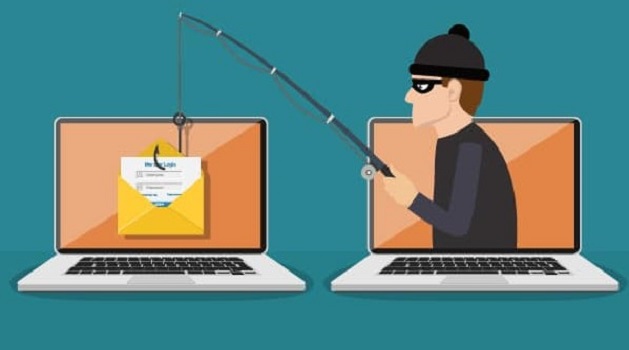
Kaspersky has reported a spike in phishing emails containing malicious QR codes. Detections for these jumped from 46,969 in August 2025 to 249,723 in November 2025 – a more than fivefold growth – as cybercriminals increasingly exploit QR codes, a trend that will likely continue in 2026.

Attackers use QR codes in emails more frequently because they provide a simple and cost-effective way to conceal malicious URLs, evading detection by many protective solutions.
These QR codes are often embedded directly in email bodies or, even more commonly, within PDF attachments – an evolution that both masks phishing links and encourages users to scan them on mobile phones, which may have weaker security than work PCs.
Malicious QR codes commonly appear in mass phishing campaigns as well as targeted ones. Links embedded within them may lead to:
- Phishing forms impersonating login pages for services like Microsoft accounts or internal corporate portals, designed to steal usernames, passwords, and other credentials.
- Fake HR notifications urging employees to review or sign documents, such as vacation schedules, or even view lists of terminated staff, ultimately directing to credential-stealing sites.
- Fraudulent invoices or purchase confirmations in PDF attachments, often combined with vishing (voice phishing) tactics that prompt victims to call provided phone numbers to “cancel” or clarify the transaction, enabling further social engineering attacks.
These tactics exploit trust in routine business communications, leading to credential theft, account takeovers, data breaches, and financial fraud.
“Malicious QR codes have evolved into one of the most effective phishing tools, particularly when hidden in PDF attachments or disguised as legitimate business communications like HR updates.
“The explosive growth in November 2025 highlights how attackers are capitalising on this low-cost evasion technique to target employees on mobile devices, where protection is often minimal.
“Without advanced image analysis at the email gateway and safe scanning practices, organisations are left vulnerable to credential compromise and downstream breaches,” comments Roman Dedenok, Anti-Spam Expert at Kaspersky.
To defend against this escalating threat, Kaspersky recommends educating employees on cybersecurity and deploying a mail server security solution such as Kaspersky Security for Mail Server that provides trusted and secure corporate email exchange, countering spam, email-borne infections, all forms of phishing, business email compromise (BEC), QR code attacks, and other threats.

NITDA, NBC Explore Strategic Collaboration on Digital Transformation, Media Regulation

Gold Hits Record $5,110/Ounce Amid Trump Tariff Threats, Geopolitical Fears

TikTok, Instagram Blamed in US Youth Suicide Lawsuit

Meta Tests Paid Subscriptions Across Instagram, Facebook, WhatsApp
PayPal Goes Live in Nigeria Through Paga

19 Nigerian Banks Meet CBN Recapitalization Targets Ahead of March Deadline

Jumia CEO says Black Friday Signals Nigeria’s E-Commerce Maturity

Galaxy Backbone Celebrates the Federal Government’s Paperless Civil Service Milestone

DStv Offers Instant Package Upgrade for Customers from January to February

Banks to Impose N50 Stamp Duty on Transfers of N10,000 and Above from January 1




 News2 days ago
LIRS to Invoke NTAA to Recover Unpaid Taxes from Bank Accounts, Others

 News2 days ago
Anambra Cuts Monday Pay to Kill Sit-at-Home

 E-Financial2 days ago
First Asset Management Receives Upgraded Ratings from Agusto &Co and DataPro

 General News2 days ago
Nigeria Treats Religious Violence as Attack on State – NSA Ribadu

 E-Financial2 days ago
NIBSS, Others Flag 13,417 Nigerian Fraudsters on Person of Interest Portal

 E-Financial2 days ago
CBN Prepares Fresh Debit Card Rules to Improve ATM Services

 News1 day ago
Tech Executives Double Down on AI, Talent and Adaptive Strategies to Lead in the Intelligence Age

 E-Financial1 day ago
CBN Upgrades Licences of Opay, Moniepoint, Kuda, Palmpay, Paga to National Status