

E-Business
KPMG Offers Internship to 10 Data Science Nigeria Bootcamp Hackathon Participants

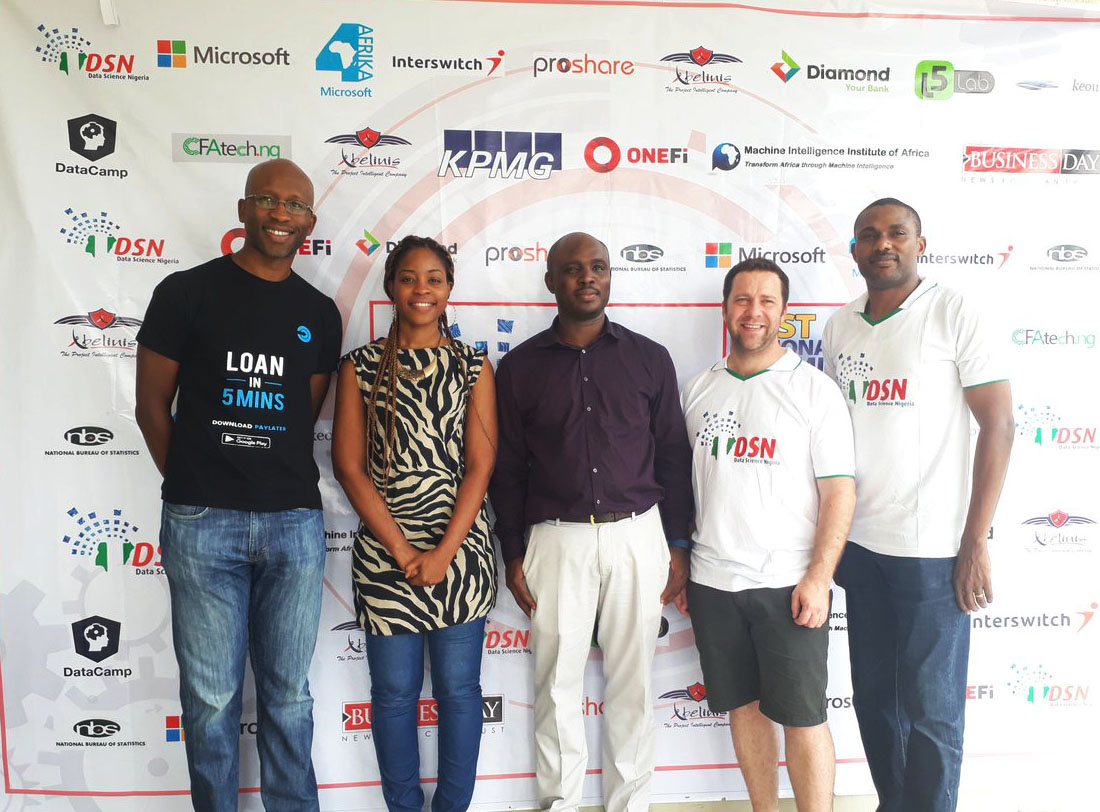
KPMG, leading advisory services provider has offered internship to the top ten participants of the recently concluded Data Science Nigeria (DSN) Bootcamp hackathon. Some of the qualified participants will also be provided full employment opportunities, subject to other recruitment considerations.
The top 10 participants include Blessing Oladeji, Abidoye Victor Temitope, Adebayo Aderibigbe, Azeez Olamide Busari, Farouk Oluwatosin, Zainab Ishaq Musa, Adetutu Samson, Emmanuel Ojuba, Yomi Adelowotan and Oguejiofor Chibueze.
The beneficiaries are the participants adjudged to be the top 10 performers in the “Data Science Nigeria Customer Segmentation Hackathon” which was supported and graded by KPMG Nigeria. The bootcamp hosted about 150 participants, who qualified for the bootcamp following pre-qualification exams on Microsoft/Edx Data Science MOOC series and DataCamp followed by a public Kaggle competition. Kaggle is a platform for predictive modelling and analytics competitions in which data scientists compete to produce the best models for predicting and describing the datasets uploaded by companies and users.
According to Yomi Akinyemi, Senior Manager, Data and Analytics, KPMG Nigeria, “It has indeed been a pleasure partnering with Data Science Nigeria. KPMG is committed to local talent development as one of the ways of improving communities. This is what compelled the Firm to partner with Data Science Nigeria on this initiative. The Firm was quite impressed with the performance of the candidates and to encourage them to hone the skills they possess, we will be providing them with internships with the possibility of full-time employment at the Firm. This will afford these individuals the opportunity to employ Data & Analytics to solve a variety of real life business-focused problems; and to further develop their skills as they work side by side with KPMG D&A experts”.
“KPMG is committed to local talent development as a leading global powerhouse in evidence-based Analytics and will like to offer internship and possibly employment to the top 10 performers, subject to their availability. It has indeed been a pleasure partnering with Data Science Nigeria”, he said.

In the KPMG feedback report, the Top 10 participants displayed a superior ability to conceptualize the data provided and were able to tie it to the problems. It also showed that the participants were able to show the thought process behind the solutions proffered, making use of layman terms to explain complicated steps.
Giving an overall assessment of the top ten participants, the KPMG feedback report notes thus “We believe they demonstrated good enough appreciation of the business problem and were able to leverage their technical knowledge to address the specific challenges.”
On his part, the convener of Data Science Nigeria, Bayo Adekanmbi expressed his gratitude to KPMG for their support of the hackathon and for providing the feedback. He noted that the effort will further strengthen the drive to raise a new generation of world-class data scientists and knowledge entrepreneurs who will set up data science-based businesses and attract foreign exchange to Nigeria.
He noted that this is one of the many indications that the project will attain its desired end. “Right from the event venue, we have seen indicators of great prospects for the participants and the future of Big Data analytics in Nigeria. Recall that the overall winner, Adeola Balogun got 3 job offers on the spot while the 1st runner-up, Chibueze Oguejiofor was offered employment by one of the event sponsors, OneFi. We are hopeful that this is just a starting point for us and an indication that much more needs to be done”, he explained.
This indeed is a commendable feedback for a project that is in its early phase. This also is a pointer to the fact that a huge potential exists within the Nigerian space that could be of global relevance if it can be properly harnessed.
Recall that the Data Science Nigeria (DSN) Bootcamp hackathon which was held in October aimed at exposing participants to skills that will enable them to use Data Science to solve real-world problems. It featured mentoring sessions with renowned industry experts across the globe, hands-on training sessions, physical tutoring sessions and other e-learning options.
Data Science Nigeria is a non-profit initiative with a vision to accelerate Nigeria’s development through a solution-oriented application of machine learning in solving social/business problems and to galvanize data science knowledge revolution, which can position Nigeria to become the outsourcing hub for international Data Science/Advanced Analytics/Big Data projects, with opportunity to access at least 1% share of the global big data and analytics market, valued at $150b in 2017 ($203b in 2020).


E-Business
Cyber Resilience a Critical Priority for Manufacturing Amid Rapid Digitalization – Report Shows

As 60% of manufacturers race toward full digitalisation, cyber risk is increasingly manifesting as a business risk, according to a new global report by Kaspersky and VDC Strategy.

This means cybersecurity is not merely a compliance function, it is a cornerstone of production assurance, safeguarding uptime, quality, and operational continuity.
Manufacturers are modernising to deliver safer, more consistent and more cost-effective production and digitalization is moving fast: just 9% of organisations describe themselves as fully digital today, but 60% expect to get there within two years, according to the joint report by Kaspersky and VDC, titled ‘Cyber Resilience, Built for Manufacturing’.
That shift links shop-floor equipment, production lines and site operations to platforms such as Manufacturing execution systems (MES), Supervisory control and data acquisition (SCADA) and historians, turning many plants into cyber-physical systems (CPS), where a digital disruption doesn’t stay digital. It can slow production lines, quarantine work in progress, invalidate traceability records, or halt production outright.
What’s driving manufacturing digitalization?
Manufacturers are digitising for measurable operational gains, not novelty. Survey respondents identified the primary drivers of their digital transformation strategy as:
- Improving production output or efficiency (24%)
- Reducing operational or production expenses (15%)
- Enabling new strategic opportunities (14%)
- Improving cyber resilience (13%)
The same connected systems that unlock these gains, including MES, IIoT sensors, automated material handling, remote engineering access, also become the systems that determine whether production can be trusted to keep running.
Cyber risk is now a business risk
Cyber risk has evolved from a mere IT concern to a direct threat to revenue generation, as environments transform into cyber-physical systems. In these integrated settings, digital disruptions like malware no longer just affect data, they can cause unsafe operations, scrapped batches, and halted production on the plant floor. This shift highlights the urgent need to treat cybersecurity as a key part of operational resilience.
According to the report, nearly 60% of manufacturing organisations estimate that cyber incidents cause damages exceeding $1 million per event, with an average disruption of 15.3 hours. The most significant losses often result from production halts, missed delivery commitments, and penalties, rather than just forensic costs.
In this context, downtime links cybersecurity risks to overall business performance. Cyber incidents can reduce Overall Equipment Effectiveness (OEE), strain staffing, and disrupt supply chains. Recovery involves more than system restore, it requires re-establishing confidence in process parameters, quality records, and traceability before resuming operations.
Mature cybersecurity programs now incorporate OT security into governance, focusing on metrics valued by production leaders such as time to restore, backup confidence, legacy asset coverage, and safe degraded operation. This alignment ensures cybersecurity supports continuous production and resilience, not just IT compliance.
However, challenges remain due to split ownership. While 59% of organisations’ IT departments manage security policies, these often overlook plant realities. Managing many security tools (44%) and OT patching issues (38%) show that cybersecurity must be embedded into daily routines of production, engineering, and quality teams. Only through such integration can cybersecurity effectively enhance operational reliability and defend against evolving threats.
“As manufacturing environments become increasingly interconnected, cybersecurity shifts focus from merely adding protective layers to ensuring the availability, resilience, and integrity of production processes. The goal is to minimise operational impact and speed up recovery, rather than solely preventing intrusions.
“Kaspersky offers a unified ecosystem that integrates IT, OT, and IIoT security, empowering manufacturers to pursue digital transformation securely. This strategy helps maintain operational continuity and reduces long-term cybersecurity costs,” comments Andrey Strelkov, Head of Industrial Cybersecurity Product Line at Kaspersky.
To implement this strategy, manufacturing companies can leverage solutions from the Kaspersky OT Cybersecurity Ecosystem, centered around Kaspersky Industrial CyberSecurity (KICS), a native Extended Detection and Response platform designed for critical infrastructure protection. KICS enables centralised detection and response to complex attacks across the entire industrial network, ensuring comprehensive visibility and security.


Nigeria Data Protection Commission (NDPC) has commenced a forensic investigation into the University of Lagos (UNILAG), Lotus Bank and Hackerbella Ltd over alleged violations of data protection laws involving students’ personal information.

The investigation follows public complaints alleging that students’ personal data were used to open bank accounts without a lawful basis.
Dr Vincent Olatunji, national commissioner and chief executive officer of the NDPC, directed the investigation team to conduct a comprehensive assessment of the circumstances surrounding the collection, processing, use and disclosure of the affected students’ personal data.
The investigation will also determine the respective roles and responsibilities of UNILAG, Lotus Bank and Hackerbella in the alleged processing of the data.
According to the Commission, the investigation will assess the data protection compliance obligations of the parties under the Nigeria Data Protection Act, 2023 (NDP Act), as well as potential risks posed to the rights and freedoms of the affected data subjects.
The NDPC said the probe would cover several areas, including Data Protection Impact Assessments (DPIAs), the lawfulness and transparency of credit scoring or profiling activities, and the use of automated decision-making systems.
It will also examine the adequacy of privacy notices, data-sharing arrangements, lawful bases for processing, data minimisation and purpose limitation.
Other areas include data retention policies and the adequacy of technical and organisational measures put in place to safeguard the rights and personal data of affected students.
The Commission reiterated that institutions entrusted with the personal data of students, staff and other members of their communities have a heightened responsibility to ensure that such information is processed lawfully, fairly, transparently and securely.
The NDPC therefore warned educational institutions that are yet to comply with its existing data protection compliance directives to take immediate steps to achieve compliance.
The Commission said it would continue to exercise its regulatory mandate to protect the privacy rights of Nigerians and ensure that organisations processing personal data comply with the provisions of the Nigeria Data Protection Act, 2023.

Microsoft is planning to unveil its new Maia 300 AI chip this fall, potentially as soon as next month, The Information reported on Monday, citing people with direct knowledge of the plans.

The company introduced its Maia AI chip in November 2023 but has lagged rivals such as Alphabet and Amazon in scaling up its in-house chip efforts as it seeks to reduce its reliance on Nvidia’s costly processors.
Google began recognizing revenue from direct sales of its custom AI chips, called Tensor Processing Units, in the quarter ended June, while Amazon has also seen growing adoption of its processors, including its Trainium chips.
Microsoft has been in talks with chipmaker TSMC to secure manufacturing capacity for more than 300,000 units of the chip for delivery in 2027, according to the report. It is also looking to significantly ramp up production and persuade major cloud customers such as Anthropic to adopt the chip.
Microsoft ultimately aims to secure capacity for more than 1 million Maia 300 chips, though component supplies and ongoing capacity negotiations with TSMC could constrain its plans, according to the report.
It unveiled its second-generation Maia 200 in January, built by TSMC using 3-nanometer technology.
Microsoft packed the chip with a significant amount of SRAM, a type of memory that can provide speed advantages for AI systems handling large numbers of user requests.

Nigeria Not Making Progress in Fiscal Transparency –US

NCAA to Introduce RFID Technology to Tackle Missing Luggages

SEC Directs Operators to Subscribe to NigSac Alerts, Freeze Terrorists-Linked Funds

Davido Bets $1m in Hit-for-Hit Battle with Colleagues

GSMA Industry Services Unveils Circularity Services to Help Operators Reduce E-Waste and Unlock Value

EFCC Busts NIS Visa Overstay Racket, Uncovers N700m in an Account

Fact-Check: Elon Musk’s “Tesla Pi Phone” is Internet Rumor

NBC Tasks Broadcasting Stations over 2028 DSO Global Deadline

NBC Scraps Annual Digital Access Fee on DSO

Glo Sponsored African Voices to Feature Netflix’s “The Polygamist” Stars




 Telecom2 days ago
ipNX Joins Calls for Innovation-Friendly Ecosystem and Stronger Local Opportunities at Regenesys AI Summit

 E-Business2 days ago
NDPC Probes UNILAG, Lotus Bank, Hackerbella over Alleged Students’ Data Misuse

 News2 days ago
PalmPay Reinforces Commitment to Youth Empowerment on International Youth Day

 Telecom2 days ago
NCC Reports over 5,000 Fibre Cuts in 6 Months

 E-Financial2 days ago
KudiWave Asks for Clarification over N750m Transfer from PalmPay Account

 Telecom2 days ago
Google Selects Six Nigerian News Creators for Emerging Voices Growth Lab

 E-Financial2 days ago
Nigerians Borrow More to Buy Homes as Mortgage Demand Climbs – CBN

 General News2 days ago
NUPRC Warns of Counterfeit, AI-Generated Appointment Letters