

News
Labour Ready for War, to Shut Nigeria over Sale of National Assets

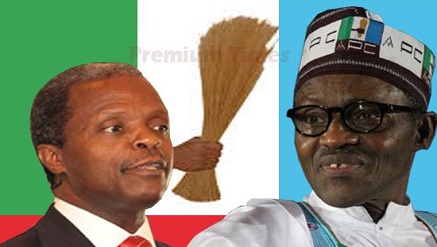
Nigeria Labour Congress (NLC); Trade Union Congress of Nigeria (TUC); the Nigeria Union of Petroleum and Natural Gas Workers (NUPENG); and Petroleum and Natural Gas Senior Staff Association of Nigeria (PENGASSAN), so-called organised labour, said that they will shut down Nigeria if the federal government go ahead to sell national assets.
According to them, the revolt and civil unrest will be worse than the anti-SAP riots of 1989.
But, Mr. Femi Adesina, spokesman to the President in a reply to the text message sent to him by the Vanguard, said “no comment.”
NUPENG and PENGASSAN have however threatened to shut Nigeria over the planned sale, which they argued, would not profit the nation but a few privileged Nigerians.
According to PENGASSAN, the planned sale of national assets is a self-destructive move that would further impoverish Nigerians.
The union said the plan, meant to solve short term financial obligations, was targeted at handing over Nigerians’ collective commonwealth to a few individuals and further impoverish the rest of the people.
According to the Vanguard, PENGASSAN, advised that instead of selling assets, government should look for other ways of increasing the revenue base of the country, while plugging loopholes and leakages in public finances.
PENGASSAN noted that governments at all levels should reflate the economy through execution of capital projects and payment of workers’ salaries.
It stated: “Any attempt to sell these national assets will be met with stiff resistance from the Association, as PENGASSAN will galvanize every support, including that of our sister union and labour centres, to shut down this country by ensuring that every activity in the oil and gas sector is brought to a complete halt.
“Some opportunists in the cloak of businessmen and short-sighted politicians had earlier advocated the sale of public assets such as the NLNG, four state-owned refineries, Nigeria’s stakes in Africa Finance Corporation, AFC, the nation’s airports and reduction of government’s shares in upstream oil joint venture operations and this was approved by the National Economic Council, NEC.”
Comrade Emmanuel Ojugbana, PENGASSAN national public relations officer, said such sales would further compound the economic and security problems in Nigeria.
He expressed surprise as to why anybody would plan to sell the assets, such as the NLNG and shares in the upstream oil and gas JV operations, which had been generating revenue for the country to date.
But Udoma Udo Udoma, minister of budget and planning, said in a statement on Saturday that the Federal Government would not sell critical national assets to shore up its foreign reserves as well as have funds to retool the economy against the current downward plunge.
According to him, government plans to source immediate funds to reflate the economy and implement capital projects in the 2016 budget.
Elsewhere, NUPENG, said: “We will resist the sale with all our might. It is not in the best interest of Nigerians. It will only compound the unemployment in the country. It will also compound the restiveness and agitation in the Niger Delta. There is no way we are going to accept it. If the President is really a patriot as claimed, he should not yield to the pressure because enemies of the country are at work.
Mr. Joseph Ogbebor, general secretary, NUPENG said that “However, our organs will meet either as NUPENG or jointly with PENGASSAN to deal with it. Certainly, it is unacceptable, unpatriotic, anti-Nigeria and must be rejected and resisted by all. We call on Mr. President to declare a state of emergency on the economy and summon an all-encompassing stakeholders meeting to brainstorm on how the present economic challenges can be quickly addressed. “NUPENG is of the view that Nigeria is a big market and certain measures should be put in place to reflate the economy so that it will be an investors’ destination.”
NUPENG also said it was disturbed and worried about the drop in oil production, occasioned by the bombing of oil and power installations in the Niger Delta.
On its part, NLC through, Joe Ajaero, factional president, said the battle would be to save President Buhari from economic hawks, who were out to bring the government down, noting the President meant well for the nation.
He said: “The nation’s assets do not belong to the National Economic Council. Some of them were not born when these assets were set up. For members to approve the sale is just being prodigal. I cannot remember any of the assets in question that was set up by them.
“They cannot tell us, Nigerian people, whose taxes were used to set up these assets, that whatever they say, we must obey them. They did not consult and they seem not to realise how it is pinching us. The question you should ask them is of all the national assets sold, how much did they make from them?
”How much did government make from the sale of PHCN? How much did government make from the sale of NITEL? How much was the proceed from Nigerian Airways? What impact did sale of those assets have on Nigerians?
“If they have their security report, they should know this is not the time to toy with things like these because Nigerians are angry and they are prepared to vent their anger on the oppressors.
“I will advise these people to play back what happened during the anti-SAP riots. The way we are going to resist this one will be worse than the anti-SAP crisis.
The problem is that these people are not connected with the people.” We’ll resist it — TUC Also declaring its opposition,
TUC, through Simeso Amachree, acting secretary general, said: “We are not going to accept it and we will resist appropriately. As it was done before, it is an attempt to take over the national assets. “Like we stated earlier, the idea should be dropped or they will incur the wrath of workers. “It is our thinking that if those clamouring for the sales pay their appropriate taxes, there would be enough money to bring the country out of the woods without sacrificing our national assets.
“Truly, we appreciate the concern of some sincere people in government, especially President Muhammadu Buhari, who is working tirelessly to fix the economy. But we get worried when people suggest we sell investments like NLNG which provided the money for the bailout of states when they could not pay salaries or concession our airports. On what grounds?
“The Congress will mobilise and resist any further sale or concession of our national assets under whatever guise.”



A new study by Bayero University, Kano, has found that 38 per cent of women in Northern Nigeria do not have access to financial services.

The study, carried out by the Aminu Kano Centre for Democratic Studies of the university, was supported by the Gates Foundation. It examined how social norms and behavioural factors influence financial inclusion across the 19 Northern states.
The report, titled “Understanding Influence and Behaviour in Northern Nigeria” and unveiled in Abuja on Wednesday, stated that while 52 per cent of women are financially served, only 45 per cent access formal financial services through deposit money banks, merchant banks, interest-free banks and microfinance institutions.
It stated that “38 per cent of women across the region lack access to financial services. “52 per cent of women are financially served, while 45 per cent access formal financial services through Deposit Money Banks, merchant banks, interest-free banks and microfinance institutions. An additional seven per cent utilise other formal non-bank financial products, including insurance services. ”
Speaking at the unveiling, the Director of Academic Planning at Bayero University, Prof. Yusuf Garba, who represented the Vice Chancellor, Prof. Haurna Musa said the research was designed to uncover why the region lags in financial access.
“This study, which started in 2024, aims to examine how social norms influence attitudes and behaviour of various groups across Northern Nigeria, particularly to find out why states in the region fall behind in access and use of financial services,” he said.
Garba explained that the research, conducted over 18 months, produced two volumes detailing how influence structures, trust hierarchies, gender norms, and religious considerations shape decisions around finance, health and education.
He added, “The report is structured into volumes to provide a unified explanation of how social norms, authority structure, and trust shape financial behaviour across Northern Nigeria.”
On the findings, the Principal Investigator, Prof. Ismael Zango, said the data aligns with figures from the National Bureau of Statistics, particularly on poverty and unemployment.
According to him, “unemployment in the region stands at about 37 per cent,” while “poverty levels average about 80 per cent across Northern Nigeria, with Sokoto State recording the highest rate at over 80 per cent.”
Zango stressed that addressing financial exclusion requires more than temporary interventions.
“Economic empowerment must go beyond token financial support,” he said, adding that “sustainable development requires equipping women and youths with relevant, market-driven skills.”
He cited women-led initiatives such as groundnut processing groups in Kebbi State and the Women in Agriculture programme in Kano State as practical models.
“These initiatives should be scaled up to bring more people into productive economic activities and reduce poverty,” he said.
In her remarks, the Chief Executive Officer of Enhancing Financial Inclusion and Advancement, Mrs. Foyinsolami Akinjayeju, described financial inclusion as both an ethical and economic imperative.
Akinjayeju called for stronger collaboration among stakeholders, including government, financial institutions and development partners, as well as policy reforms to address existing gaps.
“Everyone has a role to play, but commitment must come from the top,” she said.
The findings come amid growing concerns over low financial inclusion rates in Northern Nigeria, driven by poverty, unemployment, and entrenched social norms that limit women’s economic participation.


Citizens Initiative for Safety Awareness (CISA), advocacy group focused on security, data protection, and counter-terrorism, has urged the Nigeria Data Protection Commission (NDPC) to provide an update on a petition alleging a cybersecurity breach and unlawful access to private communications involving officials of the National Institute for Policy and Strategic Studies (NIPSS).

Mr Chidi Omeje, national coordinator, in a letter dated April 10, 2026, observed no response from the commission so far.
Filed on July 1, 2025, by Mr Yushau A. Shuaib, the petition claims unauthorised access, interception, and use of private digital correspondence belonging to him and PRNigeria, his company.
The complaint named Barrister Nima Salman Mann, Rear Admiral Abubakar Abdullahi Mustapha, and Professor Elias Wahab concerning the alleged breach. Such incidents are outlined in the Nigeria Data Protection Act (NDPA) 2023, regarding data privacy, cybersecurity safeguards, and the protection of sensitive information.
CISA said if confirmed, the alleged actions contravene Nigeria’s data protection framework, with implications for data governance, safety of confidential media sources, and public trust in institutions.
It requests the NDPC to clarify the status of the probe, disclose any interim findings, and cite measures to prevent similar breaches.
The organisation believes the matter has evolved beyond an individual complaint, describing it as a test of the government’s commitment to enforcing its data protection laws, especially within ministries, departments, and agencies.
CISA also appealed to Tunji Disu, inspector general of Police, to order an investigation into the alleged cybercrime.
In a statement, Omeje criticised the “prolonged delay” by the Force Criminal Investigation Department (FCID) in acting on a petition submitted since June 2025.
The group said, despite “credible evidence,” the police had yet to invite or question the individuals mentioned. Pointing out that two of the officials share membership in the National Institute (mni) with the former DIG at the FCID, CISA raised concerns about a possible conflict of interest.
Omeje clarified that the petition was different from the civil suit at the Federal High Court over Mr Shuaib’s withdrawal from the NIPSS programme.
“An elementary legal principle holds that a civil suit cannot be a bar to criminal investigation or prosecution,” he noted.
CISA called on the police to act in accordance with due process, advising the authorities to uphold the rule of law and restore public confidence.
It contends that failure to act decisively could erode trust in law enforcement and reinforce perceptions of a two-tier justice system.

A recent Kaspersky survey highlights a considerable gap between consumers’ confidence in identifying online scams and their actual exposure to cyber threats.

According to the findings, more than one-third of respondents (36%) in the Middle East, Turkiye and Africa (META) region reported encountering an online scam or attempted scam within the past 12 months, underscoring the persistent and evolving nature of digital risks.
Worryingly, these threats are far from hypothetical: 37% of surveyed users in the META region have fallen victim to online scams resulting in data compromise or financial loss.
Among those affected, nearly half (49%) experienced scams via social media platforms, while 48% reported investment or financial fraud attempts, 41% – scam associated with fake delivery or postal messages.
Phishing emails remain a significant threat as well, impacting 43% of respondents. These figures point to the increasingly diverse tactics used by cybercriminals to target individuals across multiple channels.
Despite this, confidence levels remain strikingly high: 80% of respondents in META believe they can recognise a scam, with 34% expressing strong certainty in their ability to avoid falling victim. This overconfidence may contribute to risky online behaviour and reduced vigilance.
When it comes to protective measures, respondents demonstrate mixed habits. While 57% report using strong and unique passwords, only 36% consistently check URLs before clicking, and 34% avoid public Wi-Fi for sensitive activities.
Notably, fewer than half (40%) use a dedicated security solution, which means a significant amount of people can face negative effects from cyberthreats. Alarmingly, 6% admit they do not use any specific security measures at all.
Regular maintenance of digital security tools also appears inconsistent. Just 35% of respondents in the META region update passwords and review security settings on a regular basis – at least once a month or more often. Meanwhile, 41% do so only occasionally, 19% rarely, and 5% never take such actions.
“The survey findings highlight a critical need for increased awareness and stronger adoption of comprehensive cybersecurity practices. While individual habits such as password hygiene and cautious browsing are essential, they should be complemented by reliable security solutions and regular security updates to effectively mitigate modern cyber threats,” comments Seifallah Jedidi, Head of Consumer Channel in the Middle East, Turkiye and Africa at Kaspersky.

CBN Proposes 30-Member Mediation Panel for Loan Disputes

CAC Urges Users to Secure Accounts after Cyberattack Scare

NCDC Predicts Cholera Outbreak in 10 States as Heavy Rains Loom

NDIC Seeks Court Nods to Liquidate 89 Failed Banks

IMF Downgrades Nigeria’s GDP Outlook, Warns of Rising Risks

Kuda MFB Increases Kuda for Her Business Grants to ₦10 Million

Canal+ to Cut Jobs as Part Sweeping Restructuring

Nigeria tops global rankings for USDT, USDC ownership

NBC Boss Urges Content Ceators to Participate in DSO

NITDA Takes Over National Digital Architecture System




 E-Financial2 days ago
Fidelity Surges Ahead in Recapitalisation Drive with ₦564bn Capital

 General News1 day ago
Guinness Nigeria Surpasses ₦1Trillion Market Capitalisation, Signalling Strong Investor Confidence and Sustained Value Creation

 Telecom2 days ago
Qualcomm Unveils Startup Selection for Qualcomm Make in Africa 2026

 Telecom2 days ago
AfDB Grants Project BRIDGE $200m Facility for Nationwide Internet Access

 E-Financial2 days ago
Digital “Pickpockets” Compromise Over a Million Banking Accounts – Kaspersky

 Telecom2 days ago
Nigeria Seeks Stronger Digital Sovereignty, National Software Infrastructure

 E-Financial2 days ago
EFCC Warns Banks against Loans without Credible Collateral

 General News2 days ago
Air Traffic Controllers Raise Safety Concerns over Failing Systems, Worsening Welfare