

General News
Lagos Airport Reviews Ebola Emergency Response, Tightens Passenger Monitoring


Lagos State Government has intensified surveillance and emergency preparedness measures at the Murtala Muhammed International Airport (MMIA), Lagos, even as it moved to prevent the importation of Ebola Virus Disease (EVD), into Nigeria following renewed outbreaks in parts of East and Central Africa.

At MMIA, Lagos, Lagos State government health officials and Port Health Services undertook a joint inspection of the airport’s preparedness facilities to assess its capacity to detect, monitor and respond to any potential Ebola threat.
Leading a high-powered preparedness inspection and facility assessment at the country”s busiest international gateway, Prof. Akin Abayomi, Lagos State commissioner for Health, warned that MMIA remains Nigeria’s most vulnerable entry point for imported infectious diseases because it handles about 70 per cent of international passenger traffic into the country.
Abayomi said Lagos was strengthening systems for early detection, rapid isolation and emergency evacuation of suspected Ebola cases, while also improving digital surveillance and passenger monitoring for travellers arriving from countries classified as high-risk.
His words: “The primary purpose of our visit is to understand how we can support your efforts, identify existing gaps and jointly develop practical solutions. Our objective is to create a bottleneck for the virus, not for passengers.”

Recalling Nigeria’s successful containment of Ebola in 2014 after the virus was imported into Lagos from Liberia, Abayomi said the outbreak remains one of the most important public health lessons in the nation’s history.
“Almost eleven years ago, we experienced the importation of Ebola into Lagos from Liberia during the largest Ebola outbreak in recorded history. We were able to contain what became a relatively small outbreak in Lagos, thanks to the sacrifices of dedicated healthcare workers, including the late Dr. Ameyo Adadevoh,” he said.
According to him, the painful memories of the 2014 outbreak continue to remind health authorities that preparedness must remain constant in an era of increasing global travel and interconnectedness.
He added that lessons learnt during the COVID-19 pandemic further reinforced the need for close collaboration between Lagos State and federal agencies operating at the airport, noting that the partnership helped establish one of the country’s strongest passenger surveillance systems.
Abayomi disclosed that authorities were also considering measures to reduce interaction between passengers arriving from designated high-risk countries and other travellers without disrupting airport operations.
The inspection tour brought together officials from the Lagos State Ministry of Health, the Lagos State Public Health Emergency Operations Centre, Port Health Services, the Federal Airports Authority of Nigeria, FAAN, and the Nigeria Civil Aviation Authority, NCAA.
Also speaking during the visit, Dr. Kemi Ogunyemi, special adviser to Governor Babajide Sanwo-Olu on Health, described airport personnel as Nigeria’s frontline defence against imported infectious diseases.
“The frontline actually begins here at our ports of entry. As passengers arrive, you are among the very first people to interact with them, making your role critical in our disease surveillance and response efforts,” Ogunyemi said.
She stressed that health security must be treated with the same seriousness as every other national security concern and assured airport workers of the state government’s continued support.
Dr. Dayo Lajide, permanent secretary, Lagos State Ministry of Health, commended the collaboration between airport authorities, Port Health Services and state officials, describing it as critical to strengthening preparedness against diseases of international concern such as Ebola.
Lajide urged frontline workers to remain vigilant and adhere strictly to infection prevention and control protocols while carrying out surveillance duties.
“As frontline responders, your safety is paramount. Continue to follow all IPC measures diligently because while you are protecting Nigeria from potential health threats, you must also ensure that you are protected from exposure and risk,” she said.
Earlier, Olatokunbo Arewa, the Airport Manager and Regional General Manager, South-West MMIA, disclosed that additional preparedness infrastructure, including touchless hand-sanitiser systems and temperature-detection equipment, had already been deployed across the airport.
Arewa also revealed that discussions were ongoing regarding the establishment of dedicated arrival processing channels for passengers arriving from high-risk countries as part of efforts to strengthen surveillance and screening operations.
“Ebola is a highly dangerous disease and any suspected case must be isolated quickly and professionally to prevent transmission,” he warned.
Providing updates on airport preparedness, Dr. Lawal Abdullahi, head of Port Health Services at MMIA, disclosed that the airport reviewed and updated its Public Health Emergency Contingency Plan on March 18, 2026, ahead of the latest Ebola developments in East Africa.
According to him, the Airport Public Health Emergency Management Team had already been activated, while a comprehensive risk assessment was conducted to identify countries of concern and guide surveillance activities at the airport.
Abdullahi added that passenger screening mechanisms were deployed before the activation of the national health declaration platform and that traveller information was routinely shared with Lagos State epidemiology teams to strengthen follow-up and response activities.
Also, Dr. Bilkis Ibrahim, general manager, Aviation Medical Services, FAAN, disclosed that additional personal protective equipment, multilingual health advisories and staff training programmes were being deployed to strengthen preparedness among airport workers.
Dr. Abayomi Asunbo, Aeromedical assessor of the NCAA, also revealed that the regulatory authority had directed all airlines operating designated international routes to comply fully with public health protocols before passengers are cleared into Nigeria.
The Lagos State officials, airport authorities and federal agencies reaffirmed their commitment to coordinated surveillance, rapid response and information sharing aimed at protecting Lagos and Nigeria from Ebola and other infectious disease threats.
The high point of the visit was the inspection of major screening points and emergency response facilities at MMIA.


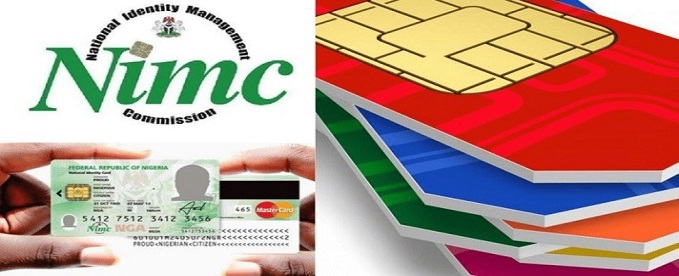
National Identity Management Commission (NIMC), has explained why kidnappers and terrorists are not always traceable despite the country’s expanding digital identity infrastructure.

NIMC explanation pointed to a simple but significant gap in the system.
Abisoye Coker-Odusote, director-general of the agency said that: “A lot of the time, you find out the kidnappers use the phones of the people they have abducted, which means how do you trace them because they are not using their own phones?” she said.
Coker-Odusote spoke during an appearance on Channels Television, where she was asked to explain why criminals remain difficult to trace despite the mandatory NIN-SIM linkage policy.
She said criminals frequently frustrate investigations by using mobile phones belonging to their victims, instead of their own registered lines.
“We already know the NIN is the foundational identity for the security architecture, but a lot of the time, you find out the kidnappers use the phones of the people they have abducted. Which means, how do you trace them because they are not using their own phones?” she said.
She also suggested that some criminal elements involved in kidnapping operations may not even be captured in Nigeria’s identity database.
“There is a theory that it may be possible that these kidnappers are not Nigerians and are brought into the country 48 or 72 hours before a kidnapping takes place specifically for that purpose. I’m not insinuating anything, but if that were the case, they naturally would not be captured in our database,” she added.
The comments have revived questions about whether expectations placed on the NIN-SIM linkage have exceeded what the system was designed to deliver.
The NIN-SIM linkage exercise was introduced by the Nigerian Communications Commission (NCC) in collaboration with NIMC to strengthen identity management, eliminate anonymous SIM ownership and support national security.
Over the years, the exercise resulted in millions of subscribers linking their SIM cards with their National Identification Numbers, while telecom operators also deactivated millions of lines that failed to comply with regulatory directives.
Earlier, the NCC maintained that the policy was aimed at improving the integrity of Nigeria’s SIM registration database, strengthening identity verification and supporting security agencies in criminal investigations.
The regulator also described the exercise as an important component of the country’s digital economy and national security framework.
Telecommunications operators have consistently maintained that while they play a critical role in implementing the NIN-SIM linkage policy, they are not responsible for tracking criminals.


Quest Merchant Bank recently hosted the second edition of the Great Place to Work® Nigeria Study Mission, reaffirming its commitment to fostering a high-performance workplace culture and advancing people-centric leadership practices.

The Study Mission serves as a collaborative learning platform that brings together Great Place to Work® Certified organizations to exchange insights, share best practices, and strengthen workplace cultures.
The event welcomed Human Resources leaders and representatives from FITC, Princeps Credit Systems, Tonic Technologies and Esentry Limited for an engaging and insightful session focused on building thriving workplace cultures, promoting continuous learning, and advancing employee-centric practices that drive organizational success.
Speaking at the event, Tolulope Dayo-Peters, Head of People Management, emphasized the importance of continuous learning and collaboration in building sustainable workplace cultures.
“We are delighted to host the second edition of the Great Place to Work® Nigeria Study Mission. At Quest Merchant Bank, we believe building a great workplace is an ongoing journey rooted in trust, purposeful leadership, and a genuine commitment to our people.
“We are pleased to share the practices that have shaped our culture and look forward to more opportunities to learn and collaborate with like-minded organizations.”
Also speaking at the event, Afolabi Olorode, Acting Managing Director/CEO, Quest Merchant Bank Limited, highlighted the critical role workplace culture plays in driving long-term business success.
“We recognize that a strong workplace culture is fundamental to sustainable business success. Creating an environment where our people are empowered to grow, innovate, and perform at their best enables us to consistently deliver value to our clients and stakeholders. We are proud to support initiatives like the Great Place to Work® Nigeria Study Mission that encourage organizations to learn from one another and collectively raise the standard of workplace excellence in Nigeria.”
The Study Mission reinforced the importance of collaboration among organizations committed to creating exceptional employee experiences.
By providing a platform for open dialogue, peer learning, and the exchange of practical ideas, the initiative enabled participants to explore innovative approaches to employee engagement, organizational culture, leadership development, and talent management while strengthening a growing community of employers dedicated to workplace excellence.
Hosting the Great Place to Work® Nigeria Study Mission further strengthens Quest Merchant Bank’s position as a thought leader in workplace culture and talent management.
It also enhances the Bank’s employer brand and demonstrates its unwavering commitment to creating an environment where employees can grow, innovate, and achieve their full potential.
Quest Merchant Bank remains committed to championing initiatives that promote learning, innovation, and people-centric leadership. Through strategic partnerships and knowledge-sharing platforms such as the Great Place to Work® Nigeria Study Mission, the Bank continues to contribute to the advancement of exceptional workplace cultures and the future of work across Nigeria’s corporate landscape.

Nigeria Hydrological Service Agency (NIHSA) has warned of possible floods in parts of Adamawa, Bauchi, Edo, Imo, Enugu, Akwa Ibom, Cross River, Kaduna, Plateau, Niger, Benue, and Borno states within the next seven days.

According to information posted on NIHSA X handle, the Agency announced medium flood advisory in force for the next 7 days across Adamawa, Bauchi, and 11 other States.
“Localised inundation is forecast along the main channel; named communities below sit on the projected footprint. Stations: Saminara on the Karam river, Waya Dam Site on the Waya river, Amber on the Amber river.
“Adamawa; Lemsa, Lamurde, Numan Exposure: 147 comm. 49 schis 40 hith 6 mkts17 relig. Bauchi-Bauchi, Ningi, Shira. Exposure: 4 comm. Kaduna; Chikun, Giwa, Igabi, Jaba, Jema’a, Kachia, Kaura, Kauru, +6 more. Exposure: 1 comm.
“Borno-Gubio, Mobbar. Exposure: 680 comm. 8 schls 6 hith 5 mkts 21 relig. Edo-Akoko-Ed, EtsakoEa, EtsakoWe, Ikpoba-Okha, Orhionmw, OviaNort, OviaSo.. Exposure: 3 comm.
“Imo-Aboh-Mba, Oguta, Ohaji/Eg, Okigwe, Owerri North, Owerri West. Exposure: 3 comm. 7 more states affected and severity LGAs”.
NIHSA advised people in the affected areas to “do NOT cross flooded roads, bridges, or fast-moving water on foot or by vehicle.
“Clear drainage channels and river-mouth blockages; avoid building or living in the floodplain and move people, livestock and valuables from the floodplain to pre-identified higher ground,” NIHSA stated.

NBC Scraps Annual Digital Access Fee on DSO

Surge in Fibre Cuts Hobbles Service Provisioning

Why Bandits, Kidnappers are Hard to Trace despite NIN-SIM Linkage – FG

First Securities Brokers Empowers Nigerians to Trade in the Stock Market with the Launch of FirstInvest App

Quest Merchant Bank Hosts Great Place to Work® Nigeria Study Mission

NRC, Ponzi Scheme Collapses Resulting Loss of Billions of Naira
Nigeria Launches FreeTV Nationwide

NASENI Moves to Digitize CCB’s 5m Assets Declaration and Operations

Lebara Nigeria Launches Lebara Play, Africa’s First Telecom-Owned Micro-Drama Platform

CANAL+ Partners Samsung to Pre-Load DStv Stream on New Samsung TVs In Nigeria, Other African Countries




 Telecom3 days ago
MTN Nigeria Slashes Cost of Broadband Internet Router, Unwraps New Data Bundles for Low-Budget Users

 E-Financial3 days ago
Nigerians Accumulate $59Bn in Cryptocurrency Assets —FDC

 E-Financial3 days ago
Flutterwave Partners Xoom on Transfers into Nigeria

 General News3 days ago
Nearpays, Nigerian Fintech Becomes First African Startup to Win UN’s AI for Good Innovation Factory

 News3 days ago
DataPro Upgrades Dangote Cement’s Credit Rating to AA+

 Telecom3 days ago
Nokia’s 14 Years of Mobile-Phone Supremacy Ended in an Afternoon

 E-Business3 days ago
Tinubu Orders NIMC to Enrol Every Nigerian by End of this Year – DG

 General News3 days ago
Fintech Brands Should Communicate Right in a VUCA Economy