

General News
Lagos Inaugurates First Govt ISO-certified Lab in Nigeria

Lagos State Government has flagged-off the first ever ultra- modern International Standard Organisation, ISO, certified government-owned laboratory in Nigeria. The laboratory was facilitated by the Lagos State Environmental Protection Agency, LASEPA.

Lagos State Governor, Babajide Sanwo-Olu, speaking on Friday, during the official commissioning of the ultra-modern Laboratory, located in the premises of LASEPA, Alausa Ikeja, said that the upgraded and re-equipped laboratory will further improve the quality of life for residents.
Sanwo-Olu, who was represented by the Commissioner for the Environment and Water Resources, Tunji Bello, said the State Government has recorded another first in its environmental protection drive and in setting pace for good governance and the general well being of residents of the state, with the establishment of the lab.
According to him, the upgrading of LASEPA Laboratory became necessary as a result of the growing population of the state and the need to enhance the capacity of the agency to effectively deliver on its core mandate of monitoring the environment for safety and sustainability.
The governor, expressed satisfaction that the Laboratory earned the accreditation of the International Organization of Standardization for Quality Management System (ISO/IEC 9001) and Laboratory Management System (ISO/IEC 17025) which now makes LASEPA the first Government-owned environmental laboratory in Nigeria.

“This accreditation has given Lagos State a global recognition and acceptance as results generated from this laboratory are consistent and accurate through industry-standard protocols; and in line with best practices obtainable worldwide,” the Governor stated.
Sanwo-Olu, therefore, urged the management and staff of LASEPA, particularly those that would be charged with the responsibility of operating the Laboratory to do so with utmost professional care and high sense of responsibility.
“The Management must also, always keep in mind that to whom much is given, much is expected in return. Our administration will continue to invest in projects that are consistent with our goal of ensuring a healthy, safe and Sustainable environment.
“As we strive to bring about a more resilient and environmentally sustainable State, we look forward to a more purpose driven partnership with local and international bodies, academic institutions, researchers and non-governmental organizations,” Sanwo-Olu stated.
Earlier, Chairman, House of Assembly Committee on Environment, Rotimi Abiru, said that ‘the rate of human activities in all parts of the state and the huge population of residents of the State with different industries makes it compelling for government to be deliberate about paying attention to the environment.”
While noting that the initiative led credence to LASEPA’s resolve to ensure that all residents of the State have access to quality air to breath, Abiru appreciated the General Manager of the Agency and other environment-friendly stakeholders for championing the protection of the Lagos environment.
Giving an overview of the upgraded Laboratory, the General Manager LASEPA, Dr. Dolapo Fasawe, explained that the Laboratory formerly known as Laboratory Department, serving the then Ministry of Environment and Physical Planning was upgraded by Governor Sanwo-Olu.
According to her, the initiative of the ISO-certified laboratory, was in line with the present administration’s THEMES agenda which prioritizes Health and Environment, saying “the project resonates with LASEPA’s mandate of safeguarding the environmental quality of the state’s land, air and water resources.”
She described the ISO-certified laboratory as “a boost for the agency’s mandate in the area of monitoring the activities of industrial, commercial and government entities in the state to ensure compliance to the environmental management laws of the state while also achieving sustainable development.
Fasawe revealed that she identified the need for an upgrade and standardization of the agency’s laboratory processes following her deployment to the agency as the General Manager and upon realization that the mandate of LASEPA borders around effective laboratory services.
She explained; “The laboratory complex was constructed 32 years ago as a pollution control laboratory under the Governace of Raji Rasaki, a retired Brigadier-General in the Nigerian Army who was the then military governor of the state.
“However, during Governor Bola Tinubu regime, it metamorphosed into a full-fledged Environmental Protection Agency (EPA) laboratory with a strategic footprint, sectioned into seven different laboratory services.”
Fasawe added that the agency would not have been able to achieve the upgrading and re-equipping of the laboratory without Sanwo-Olu, who supported the initiative from incubation to completion, alongside the Commissioner for the Environment, some key members of the state Executive Council as well as some principal government officials.
The laboratory which was upgraded, through a carefully designed-work, now has a State-of-the-art environmental laboratory equipment and engineering processes according to ISO standards and best practices.


General News
Nearpays, Nigerian Fintech Becomes First African Startup to Win UN’s AI for Good Innovation Factory

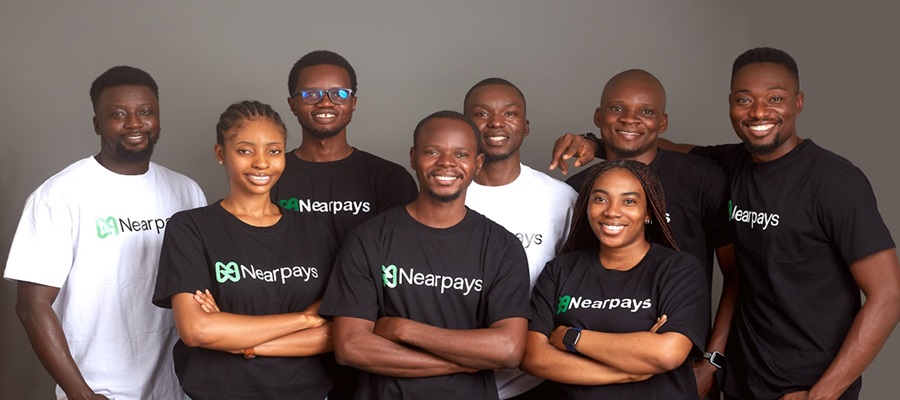
Nearpays, Nigerian fintech, has won the AI for Good Innovation Factory grand finale — the first African startup ever to take the global title in the competition, which runs as part of the United Nations’ AI for Good Global Summit.

The competition drew more than 500 startups worldwide, each pitching AI solutions aimed at social and economic challenges.
The summit itself is organised by the UN through the International Telecommunication Union (ITU) in partnership with several UN agencies, convening governments, researchers, startups, and technology companies around AI’s role in development.
Nearpays’ route to the title ran through Johannesburg, where it won the African regional competition, before advancing to the global finals in Geneva.
There, the company progressed through the semi-finals and claimed the grand finale — a first for the continent.
The company describes the win as bigger than a corporate milestone, calling it a victory for African innovation and proof that technology built to solve local problems can compete, and win, on the world stage.
Nearpays was founded to close a stubborn gap in African payments: small and medium-sized businesses that can’t afford or access traditional point-of-sale terminals.
Cost, availability, and deployment hurdles have kept many merchants — particularly in rural and underserved communities — locked out of digital payments.
Its answer is SoftPOS: an AI-powered platform that turns compatible Android smartphones into payment acceptance devices, letting merchants take contactless card payments with nothing more than their phones. AI is embedded across the platform, supporting payment processing, compliance, fraud detection, and business operations.
Crucially, the platform was built for African infrastructure realities — it works both online and offline, so merchants can keep accepting payments even without internet connectivity.
The company credited its team’s years of product development and customer engagement for the result, and thanked the UN, the ITU, and the AI for Good initiative for building a platform where innovators can apply AI to real-world problems.
It also said it hopes the win encourages more African founders to build technology that answers local needs while competing internationally.
For Nearpays, the title closes one chapter and opens another, as the company pushes on with expanding digital financial infrastructure across Afric

The Lagos State Government has signed four major concession agreements across healthcare, transportation, digital governance and outdoor advertising sectors, paving the way for private sector participation into areas central to the State’s infrastructure and service delivery agenda.

The agreements were signed at a ceremony coordinated by the Office of Public-Private Partnerships, in collaboration with the Ministries of Health, Transportation, Justice, Environment and Water Resources, as well as the Motor Vehicle Administration Agency (MVAA), Lagos State Blood Transfusion Committee (LSBTC) and the Lagos State Signage and Advertisement Agency (LASAA), in Lagos.
One of the key projects is the development of MyLagosApp, a unified digital platform designed to make government services more accessible to residents and visitors.
Under a 10-year concession agreement, LA Crème Nigeria Limited, with technical support from MTN Nigeria, will design, finance, build, operate, maintain and transfer the platform. Once operational, it will provide users with seamless access to a wide range of government services, including payments, traffic updates, emergency support, business information and tourism resources through a mobile application.
The State also signed a 20-year concession agreement with Anchor Advisory Partners for the full automation of the Lagos State Motor Vehicle Administration Agency (MVAA).
Reflecting on the significance of the agreements, the Special Adviser on Public-Private Partnerships, Mrs. Bukola Odoe, said the projects demonstrate how strategic partnerships can translate government policy into tangible improvements in the lives of Lagosians.
She added, “Government is at its best when it is practical – when policy leaves the boardroom and shows up in the hospital ward, at the licensing office, on the commuter’s phone and along the streets of our city. That is what today is about.”
In his response, Mr. Oluwaseun Osiyemi, Commissioner for Transportation, commended all stakeholders who contributed to the successful execution of the agreements.
He also noted that the signing reflects the State’s determination to continually improve public service delivery, adding that residents would begin to experience the benefits as implementation progresses across the various sectors.

By John Kokome
In today’s business environment, success is no longer determined solely by the quality of a product or the sophistication of technology. Increasingly, it is shaped by how effectively an organisation communicates, especially in periods of uncertainty. For fintech companies operating in Nigeria and across Africa, communication has become as critical as innovation itself.

The world has become what strategists describe as a VUCA environment, volatile, uncertain, complex and ambiguous. Economic shocks, fluctuating exchange rates, changing regulations, cybersecurity threats, misinformation, and evolving customer expectations have made the financial services landscape more unpredictable than ever. In such an environment, silence creates suspicion, while poor communication erodes trust. For fintech brands whose business model depends almost entirely on trust, getting communication right is no longer optional; it is existential.
Unlike traditional banks that have spent decades building institutional credibility, many fintech companies are relatively young. They rely on digital interactions rather than physical branches. Customers often never meet anyone representing the company. Every notification, social media post, customer service response, email, and public statement, therefore, becomes an opportunity either to strengthen or weaken confidence.
The collapse of several global crypto platforms, periodic payment service disruptions, and increasing incidents of digital fraud have made consumers more cautious than ever. Users now ask difficult questions before trusting any financial technology platform. Is my money safe? Is my data protected? Can I rely on this platform during periods of market uncertainty? The answers are communicated not only through actions but through consistent, transparent and timely messaging.
Communication during crises often separates resilient brands from those that struggle to recover. Too many organisations still believe that crisis communication begins when a system fails or when negative stories trend online. In reality, crisis communication starts long before a crisis emerges. It begins with building credibility over time.
When service interruptions occur, as they inevitably will in any technology-driven business, customers rarely expect perfection. What they expect is honesty. They want prompt acknowledgement, clear explanations, regular updates, and realistic timelines for resolution. Delayed responses or corporate jargon often inflict more reputational damage than the technical failure itself.
The same principle applies to regulatory communication. Nigeria’s fintech ecosystem continues to evolve under the guidance of regulators seeking to balance innovation with consumer protection. Policy adjustments, licensing requirements, compliance directives, and foreign exchange reforms frequently affect operations. Fintech companies must resist the temptation to hide behind legal language. Instead, they should translate regulatory developments into simple, customer-friendly information that explains what is changing, why it matters, and what customers need to do.
Equally important is internal communication. Employees are often the first ambassadors of any organisation. During uncertain economic conditions, staff members also seek reassurance about business direction, leadership decisions, and organisational stability. When employees receive little information, rumours fill the vacuum. Companies that communicate openly with their teams are more likely to maintain morale, improve customer experience, and protect their reputation.
Another defining feature of the VUCA economy is the speed at which misinformation spreads. A single misleading social media post can trigger panic withdrawals, damage investor confidence, or create unnecessary anxiety among customers. Fintech brands therefore require active reputation management, digital listening, and rapid response mechanisms. Waiting for mainstream media to pick up a story before responding is increasingly a costly mistake.
Beyond crisis management, communication should also educate. Financial literacy remains relatively low across many parts of Africa. Many customers still struggle to understand digital payments, cross-border transactions, digital assets, savings products, or cybersecurity risks. Fintech brands that invest in continuous customer education position themselves not merely as service providers but as trusted financial partners. Educational communication creates confidence, drives adoption, and builds long-term loyalty.
Leadership visibility also matters. In uncertain times, people trust people more than logos. Founders, chief executives, and senior executives should communicate regularly, not merely during product launches or fundraising announcements. Thought leadership, media engagements, stakeholder dialogues, and community participation help humanise brands and reinforce credibility.
Perhaps the greatest communication challenge for fintech companies is balancing optimism with realism. Marketing campaigns naturally celebrate innovation and growth. Yet credibility demands acknowledging challenges while demonstrating preparedness. Customers are increasingly sophisticated; they recognise exaggerated promises and quickly lose confidence when expectations are not met.
As competition intensifies across Africa’s digital financial services industry, product differentiation alone will become increasingly difficult. Features can be copied. Pricing can be matched. Technology can be replicated. Trust, however, remains a durable competitive advantage, and trust is built through consistent communication.
The fintech brands that will thrive in this VUCA economy will not necessarily be those with the most sophisticated applications or the largest funding rounds. They will be those who communicate with clarity, consistency, empathy, and transparency. In an era where confidence is currency, effective communication is no longer a support function; it is a strategic asset that can determine whether a fintech brand merely survives uncertainty or leads through it.
John Kokome is the Corporate Communications Manager at FlashChange, a fintech platform redefining secure digital asset exchange. With experience across fintech, cryptocurrency, telecoms, and development communications in Africa. He currently leads strategic storytelling, reputation management, and stakeholder engagement initiatives at the company, focusing on building trust, transparency, and financial literacy in the digital assets space.

Tinubu Orders NIMC to Enrol Every Nigerian by End of this Year – DG

Nigerians Accumulate $59Bn in Cryptocurrency Assets —FDC

Nearpays, Nigerian Fintech Becomes First African Startup to Win UN’s AI for Good Innovation Factory

Nokia’s 14 Years of Mobile-Phone Supremacy Ended in an Afternoon

MTN Nigeria Slashes Cost of Broadband Internet Router, Unwraps New Data Bundles for Low-Budget Users

NRC, Ponzi Scheme Collapses Resulting Loss of Billions of Naira

Nigeria Launches FreeTV Nationwide

NASENI Moves to Digitize CCB’s 5m Assets Declaration and Operations

Lebara Nigeria Launches Lebara Play, Africa’s First Telecom-Owned Micro-Drama Platform

CANAL+ Partners Samsung to Pre-Load DStv Stream on New Samsung TVs In Nigeria, Other African Countries




 News1 day ago
Xora Finance, Fintech Firm Refuses to Hire Nigerians over Alleged Dishonesty

 General News1 day ago
FG Secures Fresh $208.3m World Bank Loan for Cash Transfer

 Telecom1 day ago
NCC to Keynote Telecom Sector Sustainability Forum 7.0

 Telecom1 day ago
NCC Advances Dig Once Policy, Engages Stakeholders on Cost-Based Framework for Duct Sharing
 News1 day ago
How Ponzi Scheme Victims can Seek Legal Remedies — Lawyers

 General News1 day ago
SERAP Sues INEC over Alleged N800Bn 2027 Tinubu Campaign Fund

 News1 day ago
PalmPay Nigeria Appoints Samuel Oluyemi as Chief Operating Officer

 E-Business1 day ago
Kaigama,Catholic Archbishop of Abuja Warns against Misuse of AI