

News
Lagos Ranks 40 in Ericsson Networked Society City Index 2016

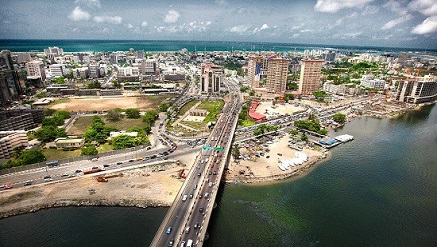
Lagos is ranked 40th in the Ericsson’s Networked Society City (NSC) Index 2016. Similarly, the report rates Nigeria’s infrastructure deficit as a major constraint facing businesses in the country.
Internet access in the city is expensive compared with GDP per capita, and the penetration rate for smartphones and computers is low.
On the other hand, internet usage and electronic payments score reasonably well considering the weak ICT infrastructure.
The 2016 edition of the Networked Society City Index has been developed by Ericsson in collaboration with Sweco, a leading consultancy firm specializing in sustainable development. In this edition of the Networked Society City Index, “we seek to capture how cities perform in relation to sustainable operating limits and not just in relation to each other. In so doing, we have introduced the city boundaries concept”.
Stockholm ranks highest in the Networked Society City Index, followed by London, Singapore, Paris, and Copenhagen.
The top five cities are the same as in 2014, but Singapore has reclaimed the third position from Paris. Irrespective of the cities’ current status, in all cases the index shows strong links between ICT maturity and sustainable urban development.
In the report, Lagos population was estimated at 21,580,000 with 13,700/km2 density; annual population growth rate of 3.5%; GDP per capita at 9,900 PPP$; GDP per capita PPP$ growth of 3.4% and ICT maturity improvement 2014-2016 as very high.
There is a relatively high use of electronic payments and low CO2 emissions in the State, but scored low in ICT infrastructure availability and affordability.
38th on TBL SOCIAL
Lagos has a low ranking in the social dimension of the index as it is rated 38th.
The biggest challenge, according to Ericsson, lies in health factors, as the city has the highest infant mortality rate and the lowest life expectancy out of all index cities.
The literacy rate is also very low, as is the rate of education attainment.
38th on TBL ECONOMY
Despite its fast-growing economy, Lagos performs poorly in the economic dimension.
GDP per capita is very low, and the city faces several challenges to strengthen its economic competitiveness.
The share of employment in knowledge-intensive sectors remains low, and few citizens have attained tertiary education.
The number of new enterprises per capita is somewhat better, although still below the index average, according to the report.
33rd on TBL ENVIRONMENT
The city’s largest challenge lies in pollution, where it ranks lowest of all index cities. Air quality is well below average.
NO2 and SO2 emissions are among the highest out of all ICT cities. Lagos’ relative strengths are its low CO2 emissions, low energy consumption, and low consumption of fossil fuels.
41st on ICT INFRASTRUCTURE
Lagos faces several challenges related to ICT infrastructure. Few people have access to the internet through either broadband or Wi-Fi hotspots, andthe quality of both fixed and mobile broadband is very low.
41st on ICT AFFORDABILITY
Price levels in relation to income in Lagos are the highest out of all index cities. Tariffs for both fixed broadband and mobile cellular traffic are very expensive compared with GDP per capita. IP transit prices for international traffic are also higher than the index average.
39th On ICT USAGE
Although Lagos presents a low score in ICT usage, the results could be worse given the city’s poor performance in the infrastructure and affordability dimensions.
Lagos’ biggest challenge lies in its low penetration rate for computers, smartphones, and tablets coupled with few mobilephone subscriptions.
The results for internet usage and electronic payments are better, but still remain well below the index average.
In an executive summary of the report, Ericsson remarked, “The world is entering a new era, where the economic and political importance of cities is growing rapidly.
“Today, the majority of the world’s population lives in cities, and urban concentration is accelerating. Therefore, cities are vital for solving major social, environmental, and economic challenges.
“The General Assembly of the United Nations recently adopted the 2030 Agenda for Sustainable Development. This is a plan of action for people, planet, and prosperity, and it includes 17 Sustainable Development Goals. Cities play a significant role in fulfilling the 11th goal of making cities and human settlements inclusive, safe, resilient, and sustainable – and also several of the other goals. Cities will be critical for the advancement of social conditions, poverty reduction, better health and education, and improved inclusion. Equally, cities will heavily impact the progress in encouraging economic inclusion and development toward more sustainable consumption and addressing climate change.
“Forthcoming joint research by Ericsson and Columbia University highlights how information and Information and Communication Technology (ICT) can accelerate the achievement of the Sustainable Development Goals.
“Cities therefore need to take the lead in working toward the Networked Society, notably in terms of their social and environmental benefits and resource efficiency in a multidimensional perspective. Cities should be governed in a dynamic way in order to be resilient and be adaptive to future challenges. As such, strong and visionary leadership is necessary for cities to develop and reform institutions and systems that enable new ICT solutions to be fully implemented.
“Our aim is to relate a city’s environmental performance to globally recognized limits. We foresee that this tool can be further developed in future versions of the index as more data becomes available and this is NS City index approach is a basis for constructive discussion with cities on ICT and Triple Bottom Line improvements,” the Company said.
The Networked Society City Index ranks cities based on ICT maturity and their performance in sustainable urban development.
In this edition, Ericsson added added Riyadh in Saudi Arabia to the index, taking it to 41 cities in total.
“None of the cities in the Networked Society City Index is sustainable from an environmental perspective, not even any of the top performers.
“Less affluent cities may have low climate impact and low resource use, but conversely they have problems with high pollution levels and consequently lower health levels. All cities face great challenges to become more sustainable. However, ICT is proven as an enabler of change and has significant potential to further promote sustainable urban growth.
“In our vision of the Networked Society, cities embrace the possibilities provided by ICT. The Networked Society is built on integrated systems and services, such as flexible and efficient energy and transport systems that can easily be adapted to consumer and societal needs.
“Individuals, organizations, and businesses share spaces, belongings, and services in an extensive way. Innovative ways to communicate and share information create new collaborations and organizations that are adapted to a more connected and individualized society”, Ericsson said.



National Reading Culture (NRC), an online investment platform targeting Nigerians has collapsed, resulting in the loss of billions of Naira for investors.

The website unexpectedly shut down, blocking users from withdrawing their funds and locking in their investments.
Just like all other investment scams, victims were lured with promises of doubling their money in few weeks.
When National Reading Culture eventually crashed, the operators vanished with users’ funds, leaving investors devastated.
How the Platform WorkedTask-Based Earning:
According findings, National Reading Culture lured users with promises of making money by completing simple daily tasks like reading articles, clicking links, or inviting friends.
They also offered investment tiers to earn higher daily profits, where users had to deposit their own money into the platform.
Evidence showed the website previously operated as a Chinese job search platform before rebranding into an “earning” scheme.


The Nigeria Social Insurance Trust Fund (NSITF) has signed a memorandum of understanding (MoU) with Rand Mutual Assurance (RMA) to collaborate on digital transformation aimed at strengthening worker protection systems and support economic growth.

According to RMA, the agreement was concluded during a visit by its delegation to Abuja.
The partnership will focus on institutional capability development, modernising operating models, improving service delivery and sharing knowledge between the two organisations.
Through the partnership, RMA and NSITF will collaborate to strengthen institutional capability, modernise operating models, accelerate digital transformation and improve services for workers and employers.
The organisations will also explore opportunities for knowledge exchange and the adoption of best practices in social security administration.
RMA said the agreement forms part of its broader engagement with governments, regulators and social security institutions across Africa to support improvements in governance, operational resilience and service delivery.
“Our partnership with NSITF reflects much more than the signing of an agreement,” said Mandla Shezi, group chief executive officer of RMA. “This partnership is not simply about sharing knowledge. It is about co-creating the next generation of African social security systems.”
He added: “By combining our respective strengths, we can help build institutions that are more resilient, more responsive and better equipped to protect workers while supporting national development.”
Shezi said the future of social security depends on integrated systems where prevention, insurance, healthcare, rehabilitation, technology, investment management and institutional capability work together.
Microsoft has announced plans to cut about 4,800 jobs, representing roughly 2.1 percent of its global workforce, with Xbox, its gaming division, expected to bear the largest share of the layoffs.

The company said more than 1,600 positions at Xbox would be eliminated immediately, while another 1,600 jobs would be phased out over the next year as part of a major restructuring of the gaming business.
In a memo to employees, Amy Coleman, executive vice president, Microsoft, said the company was streamlining its operations to focus on areas that deliver greater value to customers in a rapidly changing technology industry.
Asha Sharma, chief executive officer, Xbox, described the move as “the most significant restructure in Xbox history,” saying the changes are intended to position the gaming business for long-term growth rather than downsizing.

Court Declares ARCON’s N60Bn Fine against Facebook Nigeria Illegal

NIN Enrollment Hits over 136m as New ID Law Takes Effect

NRC, Ponzi Scheme Collapses Resulting Loss of Billions of Naira

Plateau PCC Collects Nigerians’ Data without Privacy Policy – FIJ

FG Suspends New Internet Regulations to Prevent Overlapping Rules

Mobile Internet Gender Gap Widest in Africa – GSMA

NASENI Moves to Digitize CCB’s 5m Assets Declaration and Operations

Nigeria Launches FreeTV Nationwide

CANAL+ Partners Samsung to Pre-Load DStv Stream on New Samsung TVs In Nigeria, Other African Countries

UK, Nigeria Launch £15m Growth Programme to Accelerate Economic Transformation




 E-Financial2 days ago
Tokenization, Blockchain Technology will Transform Financial Institutions – IMF

 General News2 days ago
NIS Deploys Advanced Surveillance Masts, other Critical Infrastructure to Boost Border Security

 Broadcasting2 days ago
Obi, NDC Presidential Candidate Faces N50Bn Defamation Claim over Alleged Podcast Remark

 E-Business2 days ago
Weebly Websites to Shut Down for Nigeria, 66 Other Countries from September

 E-Financial2 days ago
FG Denies N8 Trillion ‘Shadow Budget’, Says IMF Quoted out of Context

 Telecom2 days ago
No Plans for Fresh Tariff Hike – MTN

 General News1 day ago
IHS Nigeria, FCT-HSES Concludes Clean Cooking Energy Campaign “Project Breathe Clean Air” in Abuja

 News2 days ago
World Bank Sounds Alarm: Low Revenue, Not Debt, Is Nigeria’s Biggest Fiscal Threat