

General News
LASG is Pursuing Seamless IM System- Uthman


Rafiu Bolaji Uthman , director general, Lagos State Records and Archives Bureau (LASRAB) is a distinguished information officer, career journalist and Civil Servant par excellence.
Uthman was part of the State Information and Economic Teams researching, documenting and preserving enduring records of the processes and impacts of plans, policies and programmes on the State development and cultural patrimony.
He also served as member of various Government Committees and engaged with development partners bringing to bear his experience and vast knowledge cum understanding of the State development milestone and heritage mosaic to achieve a brighter rewarding future for Lagos State.
Uthman spoke to peter ugwu on what the significances of proper records and information management in governance.
An Overview of LASRAB
LASRAB formally came into legal existence as a Lagos State Government agency pursuant to Law 22 of 2007; the Bureau is under the supervision of the Ministry of Information and Strategy. Administratively, LASRAB took-off on 1st August, 2008 but effective operation began on 1st December, 2008.
It is a public Institution or Agency established by law and mandated to regulate, preserve and disseminate accurate records of enduring value on Lagos state in a professional manner, employing best practices in information and knowledge management.
Our functions extend to regulating, controlling and management of records and archives of Institutions and Establishments operating within Lagos State.
We also concerned with the role of collecting and preservation of historical identities of Lagos State.
LASRAB shoulders the strategic maintenance of modern and credible information warehouse (records and archives institution) that captures full and accurate records on Lagos State that meet the needs and interests of clients.
We also secure global innovative solutions and best practices for continuing management of records/archives; enriching and using records and archives as valuable assets for preserving Lagos State heritage and provide a database for planning and access to information for good governance and research in Lagos State.
LASRAB has also provided the schedule for records management in Lagos State civil service.
We have successfully carried out our statutory responsibilities as aforementioned including undertaking research and disseminate knowledge on the preservation and management of public, private, and historical records and established and implemented procedures for the transfer of public records of enduring value, for preservation and management in the State Archives or such archival repository.
Today, LASRAB is a model on records and information management in Nigeria.
Records Management in Pre-LASRAB Era
Prior to LASRAB establishment, records were managed in a haphazard manner.
There was actually no institution, unit or office so designated as archives within the State and even with Institutions.
In other words, there was no regulatory body to streamline how things should be organized in that sector.
There were evidences of certain valuable documents dumped in cartoons, containers and sometimes in saves that were exposed to rain.
In fact, records were stocked in toilets and staircases. Things were in a disorganized manner.
Proper Records Management and Economic Planning
Of course, the nexus between the two is same with information and proper management.
Information and data are critical resources for planning and management, particularly for allocating or scheduling of resources; for protecting and claiming rights, obligations and for value sharing and cultural collation.
Before now, people did not know much about history of Lagos State. Many said it is a no man’s land; everybody owns Lagos and there are no indigenous Lagosians.
But LASRAB coming into be, harnessing of the facts and making them available, the public are now better informed. Apart from that, Lagos State Government so much relies on data and information to pursue numerous projects we see in places.
The sector is very paramount in development of Lagos State.
One thing we proud ourselves in the State is about proper documentation.
Our documentation process is inclusive-governance-process, where stakeholders’ opinions are sort and conclusions of such engagement are contained in a report which forms part of inputs into budget and programmes.
LASRAB is the stakes custodian of these very important documentations.
They assist government to know what the situation was yesterday and updated version are basically on issues of the moment.
And with the benefits of doubts you can make clear projects about the future.
Nigeria in the Comity of Archive Nations
Well, archives and archives management is endangered and in precarious situation in Nigeria, particularly at the national level.
You find that in Nigeria we have a very low culture as far as preservation of documents is concerned.
Nigerians read very poorly; they read mainly to pass examinations, after that, they throw away the books.
People also read newspapers just to catch time.
\
People don’t actually read in-depth or in-between the lines.
In other countries, people read, especially those who occupy the policy making realms to ask themselves, what was the policy like in the past?
That is why archives provide a filling, framework to judge opinions and to drink from the experiences-the perfections and imperfections in the past.
Archive is a societal memory; a warehouse of accumulated experience for the civilization of the people.
Although archives in Nigeria is in a precarious situation, but then Lagos State Government is charting a new course to see that archives is a critical element in governance and development through this formalized structure; the first of it kind, with its grandeur and opulence.
Today, LASRAB functions not just as media resource, but as a historical site. In a accordance with our vision, LASRAB in the shortest time will be a first class global information repository and data bank on Lagos State.
Employment Generation
There are so many ways we can grow the sector for employment generation.
Through voluntarism people can get to know more about the sector and professionals putting their thoughts on records and information management can lift the industry to an enviable height.
And our undergraduates and graduates alike should develop research skills.
A hallmark of an archive is its ability to create and warehouse as many records as possible.
The current level of students and graduates alike, particularly those in the Social Humanities discipline should take it upon themselves to conduct research on subjects of significant interest to the society.
For instance, today the country is in a very serious security risk. It is affecting the social fabrics and cohesion of the society. So, we need to find out who we are, the things that unite us.
Place of ICT in Archives and Records Management
ICT is a platform for provision of archival services.
It is an instrument for achieving a global information repository. ICT is a critical resort; we are in the world of information.
Such information must be available to the people in the way and manner that are desirable at a reasonable cost effective and efficient manner.
These can be enhanced through the deployment of ICT. For example in Lagos State Government under His Excellence, Mr. Babatunde Fashola is apt in the deployment of ICT for e-governance. At the point of its commissioning, we were provided with a Server that enables us to stand on our own.
Ad progressively we are going to develop our electronic management system. The server has enabled us to do internet service; that is the automation of our work processes.
Government has also procured State-of-the-Art equipment that enables us produce documents in a digital format and convert hard copy records into microfilms called e-archives write-ups.
All strategic sections in the Bureau have ICT elements. These allow for knowledge exchanges.
These are because we function as a knowledge management agency; we try to share knowledge contained in the archives with the public.
In lieu of that, students from Universities, Polytechnics and Collages of Education do come here to reinforce their knowledge on civics studies.
Synergy with Public and Private Institutions
We have been enjoying goodwill from other older archiving institutions, particularly the National Archives of Nigeria (NAN), Ibadan.
They provided us with necessary leverage for us to come into the scene. Meanwhile, we have been able to also influence the National Archives in terms of modernity and transformation.
Organizations like Records and Information Awareness (RIMA) Foundation has been our partner since our take off.
The foundation is a critical stakeholder to us, even as an NGO. For instance with the synergy we were able to host the very first archives day in the annals of Nigeria. And arising out of our modest reforms and innovative sector, other emerging archives have been coming around.
The Nigerian Ports Authority (NPA) team recently visited asking for our assistant for them to get their footings. And we are very ready to share knowledge and expertise with whoever cares. University of Ilorin also visited us in view of their quest to establish an archive centre.
Other states are also paying us visit to borrow a leaf; Lagos remains the first in information management in Nigeria; there is no archives that can compete with us presently in terms of facilities.
Our repository is outstanding. It can compete with any archive in any emerging economy.
Legislation on Retention Period
Talking about legislation, especially the retention period as widely craved for among some practitioners is not such that demands legislation. I think it is a mere legislation that should flow from enabling environment.
Under the law that established LASRAB, we are empowered to make legislation regulating records management in the state and sequel to that we have made concerted effort in that aspect.
Ours in Lagos is working; however, we expect them at the national level to see to the national retention period legislation.
In our public service whenever they have any change, they invite us to do records appraisal, which is the best practice; to determine what to do with disposition or otherwise.
I must also said that there is a need for the national to quickly review the law establishing the national archives to let it be in-tune with modern realities. It has seemed to have become a national archive of old order.
I think that is why they have been trying to add records management to their own too. That will make it a ‘living organism’ and not a backyard of wasted records.


General News
Moniepoint Commences DreamDevs Bootcamp to Transform 20 Top Engineering Talents into Industry-Ready Professionals

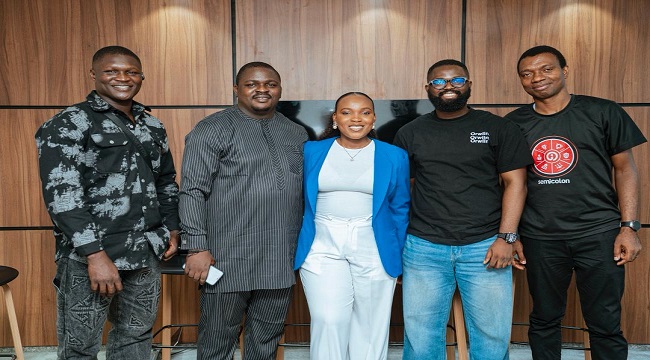
Following a call for applications in January 2026 and a rigorous selection process that drew over 9,000 applications from across the country, Moniepoint Inc., Africa’s leading digital financial services provider, has officially commenced the bootcamp for the second cohort of its flagship DreamDevs initiative aimed at bridging the tech talent gap in Africa by equipping recent graduates with industry-ready skills and real-world experience.

The initiative brings together 20 high-potential engineering graduates for an intensive nine-week programme designed to accelerate their development into industry-ready engineers. It will be recalled that candidates, who are recent university graduates from technology, computer science, and engineering fields were invited to showcase their foundational knowledge in HTML, CSS, and JavaScript.
The journey to the final 20 was marked by a multi-stage screening process designed to identify technical aptitude and learning potential. After the initial application review, candidates underwent an online HackerRank technical assessment. From this pool, 50 shortlisted applicants were invited to a physical code challenge, which determined the final participants selected to join the bootcamp.
“At Moniepoint, we believe that Africa’s tech talent can compete on any global stage if given the right environment. DreamDevs is our way of providing that bridge. We’ve seen the success of our first cohort, and this year we’re doubling down to not just to train, but to create a definitive pathway into full-time roles for those ready to engineer financial happiness across the continent.
DreamDevs is about building engineers who can think, solve problems, and contribute meaningfully to systems at scale. This bootcamp is where that journey begins,” said Felix Ike, Co-founder and CTO of Moniepoint Inc.
Delivered in partnership with Semicolon Africa, the bootcamp focuses on strengthening core engineering competencies through structured learning and real-world problem-solving. The curriculum is designed to move participants from foundational principles to production-grade software development, covering Java OOP foundations, data structures and algorithms, Spring Boot API development, and cloud infrastructure.
Participants will gain direct exposure to Moniepoint’s engineering environment, engaging with internal teams to understand how large-scale financial systems are built and maintained. Standout performers at the end of the nine weeks will secure six-month internship placements, with the strongest candidates eligible for full-time employment.
Wisdom Iyamu, one of the selected participants for the DreamDevs bootcamp expressed shock and appreciation.
“I was honestly shocked when I received the acceptance for the first stage. I have many friends who are equally talented and didn’t make it in, so I feel incredibly grateful and excited to be here. I actually applied because a close friend of mine, who is a huge fan of Moniepoint, convinced me to go for it. My expectation for this bootcamp is to learn exactly how to build products that scale. Whether it’s working at Moniepoint or being part of a team building the next billion-dollar idea, I want to be where high-impact engineering happens”, Iyamu noted.
DreamDevs aligns with Moniepoint’s broader vision of using technology to power the dreams of millions and engineer financial happiness across Africa. It complements the company’s existing talent development programs, including HatchDev – a collaboration with NITHub Unilag and the popular Moniepoint Women-in-Tech initiative, now in its sixth year.
The programme also sits in tandem with the federal government’s 3 Million Technical Talent (3MTT) initiative, for which Moniepoint serves as a key sponsor. By providing a specialised pathway from foundational training to employment, Moniepoint continues to invest in the people who will drive Africa’s digital economy forward while serving as the backbone of Nigeria’s small businesses and enterprises to catalyze economic prosperity.


Federal government has directed all Ministries, Departments and Agencies (MDAs) to suspend the introduction and rollout of new policies, regulations, or major regulatory changes until full compliance with the Regulatory Impact Analysis (RIA) Framework is achieved.

The directive, issued by Princess Zahrah Mustapha Audu, director general of the Presidential Enabling Business Environment Council (PEBEC), is part of efforts to strengthen regulatory quality, ensure policy coherence, and improve the ease of doing business in Nigeria
According to the statement, the RIA Framework, which was formally implemented in January 2025, requires that all new policies or amendments introduced after the date must undergo review and approval in line with its provisions.
She noted the framework has already been circulated to MDAs by the Office of the Secretary to the Government of the Federation and is also accessible on the PEBEC website.
MDAs are therefore expected to familiarise themselves with the framework and align their policy development processes accordingly.
Audu emphasised that while the government remains committed to working collaboratively with regulatory institutions, no new reform or policy would be allowed to proceed without being backed by clear and verifiable evidence.
She explained the directive aims to prevent policy shocks that could negatively affect businesses, investors and citizens, eliminate inconsistencies and frequent policy reversals, and institutionalise evidence-based policymaking across government.
The directive also seeks to enhance transparency, improve predictability, and boost stakeholder confidence in public policies, while ensuring adequate engagement to minimise resistance prior to implementation.
Consequently, all MDAs have been instructed to suspend any planned policy rollouts that have not yet been implemented, ensure that new policy proposals are supported by comprehensive RIA and necessary approvals, and integrate the RIA process into their internal policy formulation procedures.
They are also required to undertake structured and inclusive stakeholder engagement as part of policy development to improve acceptance and implementation outcomes.
The PEBEC boss added that MDAs can access the RIA Framework through its website or seek technical support from the council’s secretariat.
She, however, noted that exceptions would only be granted in cases of urgent national interest, subject to appropriate approval.
Audu stressed that cooperation from all MDAs is crucial to building a stable, consistent and business-friendly regulatory environment capable of driving sustainable economic growth and boosting investor confidence.

The Federal Government has unveiled a new digital platform, NITOUREY, aimed at showcasing Nigeria’s rich cultural heritage and tourism destinations to global audiences.

The initiative, introduced at a press conference organised by the Nigerian Tourism Development Authority, was described as a public-private partnership designed to project Nigeria’s diverse cultural assets.
Speaking at the event on Tuesday, the Minister of Arts, Culture, Tourism and the Creative Economy, Hannatu Musawa, said the platform marked another step in repositioning Nigeria as a leading global destination for tourism, culture and creative excellence.
She explained that the digital project would harness the power of the creative economy and technology to amplify Nigeria’s cultural narratives while creating opportunities for young Nigerians, filmmakers, content creators and tourism operators.
Musawa said, “Today marks yet another significant step in our collective journey to reposition Nigeria as a leading global destination for tourism, culture and creative excellence.
“The initiative aligned with the administration’s economic diversification drive, noting that tourism had the potential to contribute significantly to national growth.
“President Bola Tinubu has a vision to use tourism as part of economic diversification and expansion, and NTDA can play a vital role in achieving that goal”.
She emphasised that NITOUREY would not only showcase destinations across the country but also create economic opportunities within the creative industry.
“Through this initiative, we are not only showcasing destinations across Nigeria but also creating opportunities for the creative industries, including filmmakers, content creators, tourism operators and young Nigerians within the creative economy,” she added.
The minister also stressed the importance of collaboration between government agencies, state governments and the private sector, noting that the platform was a PPP initiative designed to unlock the full potential of Nigeria’s tourism and creative sectors.
“This is a commendable PPP initiative that demonstrates the collaboration required to unlock the full potential of Nigeria’s tourism and creative industry,” she said.
She further assured stakeholders that the Ministry of Art, Culture, Tourism and the Creative Economy would continue to support initiatives that enhance Nigeria’s visibility, attract investment and create jobs.
In his remarks, the Director General of NTDA, Ola Awakan, described NITOUREY as a transformative platform that will redefine how Nigeria is presented to the world.
He emphasised that tourism thrives on perception, visibility, and storytelling, noting that the platform will collaborate with key institutions, including the Nigerian Film Corporation, National Film and Video Censors Board, and the National Information Technology Development Agency, to deliver high-quality content.
Awakan added that the initiative is powered by a strong public-private partnership involving TOURCLIQ Creatives Limited and JM MiSA International Limited, underscoring the importance of collaboration in unlocking the full potential of Nigeria’s tourism and creative industries.
He further revealed that NITOUREY will spotlight iconic destinations across Nigeria’s six geopolitical zones, including Zuma Rock, Yankari Resort and Safari, the Argungu Fishing Festival, Ngwo Pine Forest and Cave, Obudu Mountain Resort, and Olumo Rock, projecting them to a global audience.
The platform is expected to serve as Nigeria’s premier tourism streaming platform, projecting the country’s culture, creativity and destinations to both domestic and international audiences.

See Key Changes in BVN Rule from May 1 by CBN

INEC Warns Broadcasters against Misinformation ahead of 2027 Polls

Paga Group Rejigs Leadership as Oviosu, Founder Becomes Group CEO

Reputation: The Real Currency Powering Fintechs

Jumia Expands Nationwide Footprint, Deepens Reach Across Underserved Nigerian Cities

Spotify’s Loud & Clear Report Reveals Over ₦60Bn Revenue for Nigerian Artists in 2025

China Threatens to Shut Nigeria’s Satellite Over $11.44m Unpaid Debt

Why JustMarkets Is a Strong Choice for Gold Trading

Kuda MFB Increases Kuda for Her Business Grants to ₦10 Million

Canal+ to Cut Jobs as Part Sweeping Restructuring




 E-Business3 days ago
Nigeria Cyberattacks: Stronger Collaboration as a Panacea

 Telecom3 days ago
Airtel Becomes World’s Second Largest Telco as Global Customer Base Surpasses 650 Million

 General News3 days ago
NIBSS Says 28 Percent of Nigerians have Registered for BVN

 Telecom2 days ago
From Import Dependency to Local Capacity: Nigeria’s Tech Manufacturing Journey

 E-Business3 days ago
CBN Slams Custodian Investment with N419m Fines over Rule Breaches

 General News3 days ago
NITDA DG Urges Stronger Collaboration to Drive Nigeria’s Digital Economy

 General News3 days ago
Ogun Set for Direct London Flights as Gateway Airport Gains Momentum

 News3 days ago
Lagos Govt Drags Top Firms to Court Over Billion-Naira Tax Debts