

News
Leo-Stan Ekeh Miracle: Celebrating Digital Icon@63

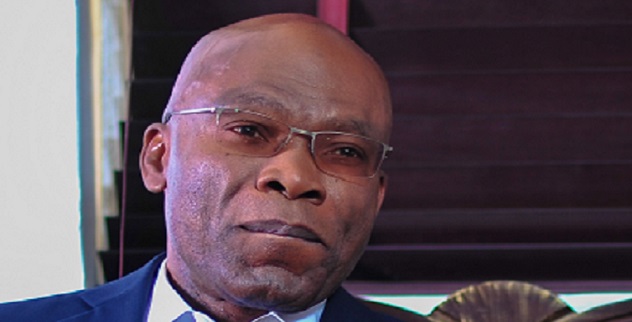
Then I heard the voice of the Lord saying, “Whom shall I send? And who will go for us?” And I said, “Here am I. Send me!”
Do miracles exist?
The jury is still out on that.
Nevertheless, the life and times of one man, more than ever before, represents a higher level of refinement, an embodiment of that once-in-a-lifetime feeling that bubbles to the surface when we witness a phenomenon that is so rare and uncommon that we find no other explanations for it other than reach for the sublime, the supernatural, a miracle…

Phillip Brooks, renowned author, motivational speaker, clergyman and particularly remembered as lyricist of the Christmas hymn, O Little Town of Bethlehem probably had this eclectic man in mind when he famously stated: “Do not pray for easy lives. Pray to be stronger men. Do not pray for tasks equal to your powers. Pray for powers equal to your tasks. Then the doing of your work shall be no miracle, but you shall be the miracle.”
Perhaps, no statement is more fitting in describing the genius that is Leo Stan Ekeh, Chairman of the Zinox Group and arguably Africa’s biggest digital entrepreneur than the assertion of Nicholas James Vujicic, foremost Australian evangelist and motivational speaker who quipped that: “If you don’t get a miracle, become one.”
Born with tetra-amelia syndrome, a rare disorder characterized by the absence of arms and legs and only one of seven known individuals who are diagnosed with the syndrome, Vujicic certainly knew what he was talking about.
Ekeh started out in life and business seeking a miracle but in the absence of one, he became a miracle.
Born on February 22, 1956 in Ubomiri, Mbaitoli Local Government, Imo State to a modest but very disciplined Christian family, Leostan, as he is popularly known, is a devout Catholic, former mass servant and chorister who – through sheer dint of hard work, uncommon vision, Spartan discipline and a restless spirit which he impressively channeled into a disruptive approach to business – has succeeded in re-writing the history of entrepreneurship in the Third World.
A stickler for success, Ekeh has not only built the biggest Information and Communication Technology (ICT) Group in Africa with advanced competencies in virtually every sphere of the ecosystem, but is also spearheading an e-Commerce revolution on the continent through the landmark strides and huge value being delivered through Konga, an e-Commerce giant that is currently the beautiful bride of potential investors ahead of a much-anticipated listing of its shares on the New York Stock Exchange.
Incidentally, Ekeh pioneered e-Commerce in Africa with the launch of BuyRight Africa over 12 years ago.
An Economics graduate of the University of Punjab, Ekeh’s stay in the Northern Indian city of Chandigarh for his Bachelor’s degree programme was an eye-opener. In addition to the environmental influence on entrepreneurship, the ultra-modern city of Chandigarh exposed him to extreme creative hard work and it was from here that the seeds of Ekeh’s serial entrepreneurship was first planted.
From India on to Cork City University, Ireland in 1983 where he sought a postgraduate degree in Computer Science with a bent for User Interface, Ekeh took his dreams along with him.
The dream?
“Technology is the only profession that can make the son of a poor man the richest man in the world. It is also the only profession in the world that can help the son of a rich man consolidate the wealth of his parents,” disclosed Ekeh in a recent talk delivered to thousands of eager participants at the 2019 Economic Summit of the Redeemed Christian Church of God (RCCG), one of the many interventions and mentorship sessions he regularly delivers to an army of disparate youths: students, entrepreneurs, women interest groups and youths from all walks of life.
He had always nursed a vision that technology would rule the world in future and despite the prevailing narrative at the time of his scholarship in Europe of Africa being unripe for technology, Ekeh soldiered on with an ambition to put the African continent on the global technology world-map.
Despite seeing his ambition to seek scholarship in technology at Cork City terminated after three months, Ekeh opted for postgraduate studies in Risk Management, effectively settling for a shared course at Nottingham University and City University, London. An inquisitive mind, his foray into pursuing a Master’s degree in Business Law at what is today known as Guildhall University, London in order to understand the laws guiding international business, was also cut short when the lure of returning to his country of birth to begin the process of making a difference, became too strong to ignore.
What followed next is the stuff of which legends and folklores are made…
On the occasion of Nigeria’s Independence Anniversary on October 1st 2001, Ekeh was singled out for honour by the then-President, Chief Olusegun Obasanjo as an Icon of Hope for his sustained pioneering efforts in the area of Information Technology and also as a pride to modern Nigeria.
The award, one among a long list of over 85 local and international awards including the national honour of OFR – Order of the Federal Republic of Nigeria – for his incisive digital entrepreneurship, perhaps do little to unmask the genius and uncommon brilliance of a man whose massive strides, landmark achievements and personal philosophy will find grand placement in the pantheon of the world’s greatest entrepreneurs.
Every encounter with this iconoclast only serves to reinforce the greatness that exudes from every pore of his body, every speech, gesture, pronouncement and business move. No other entrepreneur on this side of the Atlantic can rival the level of consistent success Ekeh has achieved with every venture he sets his mind and heart on. His is akin to a man with the magic wand!
His legacies are not only numerous and alive, but are certain to out-live him. Such is the enduring quality of the man – Leo Stan Ekeh: mentor to many, leader, business aficionado, serial digital entrepreneur and philanthropist.
Today, Ekeh – a teetotaler who neither drinks nor smokes – can be said to be 99 per cent close to achieving his ambition of building Africa’s most integrated ICT Group.
In addition to pioneering desktop publishing and computer graphics in Nigeria through a 32-year-old Task Systems Ltd., his first company; Ekeh is also responsible for a series of outstanding firsts including pioneering the use of digital dispensing fuel pumps in Nigeria, the launch of the first ICT support company in Nigeria – ITEC Solutions Ltd; pioneer of ICT distribution in West Africa with the launch of Technology Distributions Ltd. which has remained the biggest distributors in the West African sub-region; manufacture of the first internationally certified computer brand in Sub-Saharan Africa: Zinox Computers; deployment of the largest single e-library and wireless cloud roll out in Africa and biometric digital revolution through the sterling work done through Zinox in partnership with the Independent National Electoral Commission (INEC) in creating a credible database of voters for Nigeria, among other firsts.
Ekeh’s love for e-Commerce, which he famously pioneered in Africa – has also seen the mega transformation of Konga into an e-Commerce power-house, with bold, ambitious designs which has seen the company’s value appreciate multiple folds since its acquisition from previous majority investors, Naspers and AB Kinnevik and subsequent merger with Yudala.
A global advisor to Microsoft, Ekeh has consistently proven that Africa and Africans have the brain-power, capacity and vision to hold their own on the world stage. It is with this determination that led to Mr. Ekeh visioning, designing and building what is rated as the best digital house in Europe which has become a Mecca of sorts to billionaires, eager to experience the technological, architectural and design marvel.
And through his deep sense of charity and benevolence, many lives have been touched miraculously, even as he continues to live a life of model simplicity and humility.
As the Lord asked, “Whom shall I send? And who will go for us?” Ekeh, by his life and times, has boldly answered: “Here am I. Send me!”
Happy Birthday to a digital icon @ 63!
Contributed by an ex-employee of Mr. Ekeh’s.


The Chartered Institute of Bankers (CIBN) and the Association of Corporate Communication and Marketing Professionals in Banks (ACAMB) have enjoined banks to further deepen and prioritize financial inclusion, women’s empowerment and sustained growth through strategic mandates and frameworks, aimed at closing the financial gap and empowering more small, and medium enterprise (MSME) owners.

Both organisations made this call during a courtesy visit to the newly invested 24th President and Chairman of Council of the Chartered Institute of Bankers of Nigeria (CIBN), Dr. Dele Alabi, Ph.D, FCIB, as part of plans to congratulate him on his investiture as well as seek a stronger alliance between both bodies.
The visit followed Alabi’s investiture where he unveiled his “IMPACT” Vision, themed “Consolidating Our Local Impact, Enhancing Our Global Relevance.”
The vision rests on six pillars: Inclusion across geographic, gender, and generational lines; Membership growth and quality; Professionalism and ethics; Accountability; Competencies and skills development; Technology, automation, and innovation. Other areas of shared interest, include women empowerment, financial inclusion and literacy, as well as MSME clinics, all of which are top on his agenda.
Alabi explained that under him, the institute will be prioritising financial inclusion and women empowerment, because of its realisation that women are often the primary financial managers and caregivers in families. Access to savings, micro-credit, and insurance acts as a safety net during crisis and allows them to significantly improve living conditions.
He added that CIBN would be happy to drive joint knowledge sharing and exchange sessions with CBN and ACAMB across various platforms. “Educating the public through public awareness programmes, with ACAMB as the rallying point, is central to what we do,” he noted.
ACAMB President, Jide Sipe, who led the delegation, spoke in unison with the CIBN president, as he noted that, closing the inbalances in financial access help economies grow faster, reduces inequality, and encourages greater civic participation by all.

Lagos State has become the first sub-national government in Nigeria to establish a comprehensive Greenhouse Gas Registry, a move aimed at strengthening climate governance, improving emissions accountability and accelerating the state’s transition to a low-carbon economy.

The Lagos State Greenhouse Gas Registry (LGHGR) was unveiled at the Central Business District, Alausa, Ikeja, at a ceremony attended by Prof. Akin Abayomi, commissioner for Health, members of the State Executive Council, representatives of the Federal Ministry of Environment, development partners, TPHG Technologies, the diplomatic and business communities, academics, civil society organisations and the media.
Describing the initiative as a landmark achievement in the state’s environmental sustainability drive, Dr. Babatunde Ajayi, general manager of the Lagos State Environmental Protection Agency (LASEPA), said the Registry marks a defining moment in Lagos’ climate action journey and reflects Governor Babajide Sanwo-Olu’s commitment to building a resilient, climate-smart and environmentally sustainable economy.
According to Ajayi, the digital platform will enable the state to accurately measure, monitor, report and verify greenhouse gas emissions across key sectors, providing credible data to guide environmental policies and climate interventions.
He said the Registry would strengthen evidence-based decision-making, improve transparency and accountability, support national and international climate reporting obligations, unlock carbon market opportunities and boost investor confidence in Lagos’ environmental initiatives.
Ajayi also commended TPHG Technologies for providing the technical expertise that made the pioneering project possible.
Delivering the keynote address, Prof. Abayomi described the Registry as a major milestone that positions Lagos at the forefront of climate governance and emissions accountability in both Nigeria and Africa.
He noted that climate change has evolved into a significant public health and governance challenge, stressing that access to reliable emissions data would enable the state to formulate evidence-based policies, attract climate financing, strengthen resilience and accelerate its transition to a low-carbon economy.
Providing insights into the technical framework of the project, Dr. Mofoluso Fagbeja, lead consultant and chief executive officer, TPHG Technologies, explained that the Registry was developed from the greenhouse gas inventory jointly undertaken by LASEPA and TPHG Technologies in 2022, using 2019 as the baseline year for emissions assessment.
He said the platform is designed to close critical emissions data gaps, particularly within the industrial sector, while supporting effective climate policy implementation, emissions management and sustainable development.
Fagbeja also disclosed that the greenhouse gas inventory estimated that poor air quality contributes to about 35,000 premature deaths annually in Lagos, underscoring the urgent need for stronger emissions control measures and cleaner environmental practices.
In a goodwill message, Balarabe Abbas Lawal, minister of Environment, represented by Mrs. Adenaike Olunimpe Oludunni, federal controller of Environment in Lagos, commended Lagos State for pioneering the initiative, describing it as a significant contribution to Nigeria’s climate commitments.
He said the Registry aligns with the country’s Nationally Determined Contributions (NDCs) under the Paris Agreement and supports the Federal Government’s Energy Transition Plan, while reaffirming the ministry’s commitment to deeper collaboration with Lagos State on climate governance and environmental sustainability.

A recently released Henley Passport Index 2026, showed that Nigerian citizens can travel to at least 20 destinations outside the African continent where entry is allowed either visa-free, with a visa on arrival (VOA) at no extra cost, or via an e-visa.

This expanded access opens doors for Nigerian travellers to experience countries in the Caribbean, Asia, and beyond with greater ease.
Below is a comprehensive guide to countries outside Africa which Nigerian passport holders can visit without a traditional visa.
Visa-Free Countries outside Africa for Nigerian Passport Holders:
Barbados
Cambodia – Visa on arrival
Comoros Islands – Visa on arrival
Cook Islands
Dominica
Fiji
Haiti
Iran – Visa on arrival
Kiribati
Lebanon
Maldives – Visa on arrival
Micronesia
Montserrat
Niue – Visa on arrival
Palau Islands – Visa on arrival
Samoa – Visa on arrival
St. Kitts and Nevis
Timor-Leste – Visa on arrival
Tuvalu
Vanuatuul

Fact-Check: Elon Musk’s “Tesla Pi Phone” is Internet Rumor

Dangote Plans to Donate One-Third of Wealth to Charity as Legacy

NDPC Directs DCPMIs to Register with Agency or Face Legal Consequences

Malpass, Ex World Bank Chief Raises Alarm over Nigeria’s Secretive Debt Structures

How and Why Apps Deplete Data – ALTON

NRC, Ponzi Scheme Collapses Resulting Loss of Billions of Naira

EFCC Busts NIS Visa Overstay Racket, Uncovers N700m in an Account

Tokenization, Blockchain Technology will Transform Financial Institutions – IMF

From Scarcity to Scale: What Africa Can Learn from India’s Agricultural Transformation

BON Establishes Six Ad Hoc Committees to Modernize Broadcasting




 News2 days ago
See Verified 20 Countries Nigerian Passport Holders Can Travel Visa-Free

 E-Business3 days ago
Report Says Cybercriminals Deploy Malware to Hijack Crypto Wallets, Monitor Browsers Telegram

 Telecom3 days ago
NCC, REA Partner to Cut Telecom Costs with Renewable Energy

 Telecom3 days ago
Subscribers, Telcos Warn FCCPC over Airtime Lending Enforcement

 E-Business2 days ago
NPC Opens 131 Births, Deaths Registration Centres in Anambra

 General News3 days ago
AfDB, Nigeria Urge African Control of Mineral Resources

 News2 days ago
History as Lagos Becomes First Nigerian State to Launch Greenhouse Gas Registry

 General News2 days ago
Lagos Chamber Opposes 21 Percent Pension Contribution, Warns of Job Losses