

E-Business
LG Electronics Offers Smart HVAC Solution for African Market

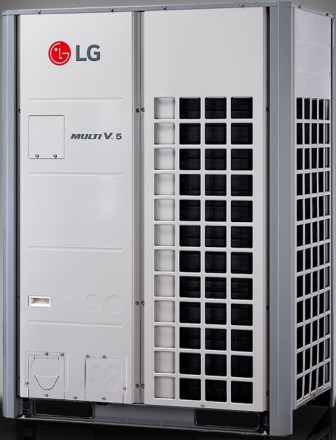
Companies that provide heating, ventilation and air conditioning (HVAC) solutions know it’s crucial to offer products that meet the climate control needs of the respective audiences.
LG Electronics has its Multi V system available in the African markets and representatives say it’s ideal for the region, especially considering that some areas get temperatures upwards of 120 degrees Fahrenheit.

LG design its Multi V unit to address the needs of commercial clients, such as apartment building managers or people who oversee office complexes.
Customizable Coolness for Each Room
The Multi V is a variable refrigerant flow (VRF) system, which means it uses refrigerant for both heating and cooling purposes. A VRF system has an outdoor condenser unit, then an indoor unit in each room requiring climate control.
Manipulating the flow of refrigerant solution through the evaporator coils of the indoor units keeps each room at the desired temperature while using less energy than traditional systems that circulate chilled air or water through ducts in a building.
VRF systems still rely on air or water for cooling, but the changeable flow of the refrigerant results in energy-saving benefits. More specifically, they are 20-30% more efficient than conventional HVAC systems.
Standout Qualities of the System
Besides Multi V being a VRF system offering the benefits above, LG engineered specific perks that make these HVAC systems superior to others available to buy.
The LG Multi V family of products includes numerous units, and the brand calls attention to the high-tech inverters. They provide maximum efficiency at both full and partial loads.
Additionally, LG discusses the Multi V as a “total HVAC solution.” Many of the notable qualities of the system relate to its sensor technology.
For example, there is a dual sensing control that detects both the temperature and humidity in the environment and adjusts accordingly.
And, the data from the temperature and humidity sensors relates to a smart load control feature that manages the cooling load for increased energy efficiency based on the conditions.
There is also a Comfort Cooling setting. Once an operator activates it, the system transitions into a “mild cooling” mode without stopping to switch to the lower setting.
Suitable for the Smart Energy Trend
As mentioned earlier, some of the countries within the African and Middle Eastern markets set energy efficiency targets to meet within approximately the next decade. LG believes its Multi V technology will be instrumental in helping those nations reach their goals, particularly because it uses smart technology.
Smart HVAC systems collectively represent one of the top trends in the HVAC industry at large. Residential and corporate customers alike appreciate them since the intelligent aspects of such a setup offer benefits such as repair notifications that let users know when it’s time to make service calls.
Some units even schedule those appointments automatically. Also, sensors, like the ones LG incorporates into its units, enable self-regulation of HVAC units. They trigger the equipment regarding when and where to operate in a building.
Compatible With a Smart Energy Interface
Customers using a Multi V HVAC system can take advantage of a complimentary intelligent system called Building Energy Control, or BECON. There are reportedly several sites in the Middle Eastern and African regions using BECON for smart energy management. BECON is a cloud-based, Internet of Things (IoT) platform.
Its energy scan feature takes data from all the respective sensors and gives detailed energy usage statuses related to a building’s zones, floors or other parameters. It can also provide a future operation guide that instructs users on how to save energy while continuing to consider the comfort of the occupants.
BECON has diagnostic capabilities too. It looks at past and present data to spot abnormal patterns within it. The technology can also use that information to solve problems associated with equipment in a facility.
When BECON users want to see the impacts of various changes they could make to an HVAC system’s settings, BECON offers simulations that take things such as weather information, past usage and customer preferences about comfort versus efficiency into account.
Comfort and Conservation Combined
LG seems committed to offering its customers solutions that keep them comfortable in extreme temperatures without wasting energy. The Multi V is an excellent example of a system that incorporates several smart features that align with modern energy needs.
This system and others similar to it will likely continue to gain momentum, especially with a renewed focus on climate change mitigation and energy efficiency in many parts of the world.
Inside VRF HVAC Systems
At the heart of any building is its HVAC system—that essential collection of compressors, coils, fans, and controls that has such a hand to play in energy costs, air quality, and occupant comfort.
LG Air Conditioning Technologies understands this, and when it comes to perfecting all three, it’s hard to beat their LG MULTI VTM VRF series.
VRF—or Variable Refrigerant Flow—systems differ from traditional HVAC solutions in a few key ways. Most importantly, their fans and compressors run on inverter motors attached to computerized control systems, meaning their speed can be precisely controlled.
In essence, rather than merely flipping on and off like a typical AC unit, the inverter technology enables VRF systems to respond in real-time to changing conditions in a space and adapt accordingly.
“Imagine a time when you reached for your thermostat to shut off a blast of frigid air only to find the room too warm five minutes later.”
VRFs can even use heat recovered from one room to warm another, an ability that makes for particularly energy-efficient operations in hospitality settings and multi-family housing.
A VRF system is up to the task when it comes to pricing, VRF systems may initially appear more expensive, but when life-cycle energy savings and total building expenditures are taken into account, they quickly prove themselves to be the more affordable option.
Take, for example, the construction costs incurred by a chilled water system, which requires heavy structural steel and concrete in order to support, or the ductwork utilized by a simple rooftop system, which can take up two to three feet of space between each floor of a building.
By contrast, a typical refrigerant line used by a VRF is a mere two to three inches in diameter, allowing for significantly greater architectural flexibility.
With the superior performance, comfort, and energy savings VRFs offer, General Manager of the Air Solution Division, LG Electronics West African Operation, Mr. Jung June Yoon says they’re a bit like the Ferraris of the HVAC world—streamlined, powerful, and flawlessly engineered.


E-Business
Kaspersky Discovers New Phishing Campaign Exploiting Google Tasks Notifications to Steal Corporate Credentials

Kaspersky has uncovered a new phishing scheme that abuses legitimate Google Tasks notifications to trick corporate users into revealing corporate login credentials.

By leveraging Google’s trusted @google.com email domain and notification system, attackers bypass traditional email security filters and exploit users’ trust in familiar services.
In this campaign, victims receive an authentic-looking notification from Google Tasks with the subject line “You have a new task.” The message creates the illusion that the recipient’s company has adopted Google’s task management tool, pressuring them to act quickly. The notification often includes elements of urgency, such as a high-priority flag and a tight deadline, to prompt the victim’s immediate response.
Upon clicking the embedded link, users are directed to a fraudulent form disguised as an “employee verification” page, where they are asked to enter their corporate credentials under the pretense of confirming their status. These stolen credentials can then be used for unauthorised access to company systems, data theft, or further attacks.
“Google’s vast ecosystem of services gets exploited by scammers. The scheme with Google Tasks is part of a broader trend observed before and continuing into 2026, where cybercriminals misuse legitimate platforms to distribute scams and phishing.
Notifications originating from legitimate domains naturally evade many spam and phishing filters, while the social engineering aspect – making it seem like an internal company process – lowers the victim’s guard,” comments Roman Dedenok, Anti-Spam Expert at Kaspersky.
E-Business
esentry 2025 Report Shows Healthcare, Financial Services and Telecoms as Staging Grounds for Increased Cyberattacks in Africa
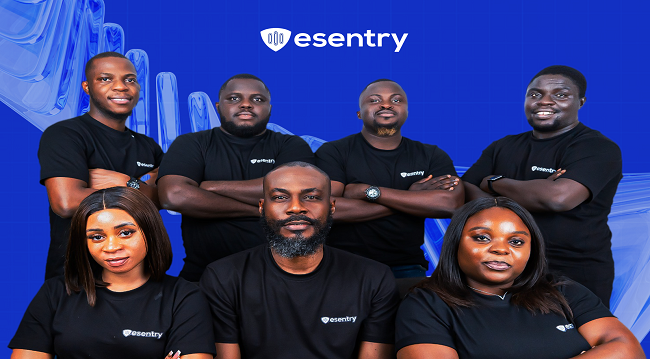
Cyber adversaries targeting African organisations are increasingly shifting away from opportunistic attacks toward deliberate, sector-specific campaigns aimed at the continent’s most critical digital infrastructures, according to the esentry 2025 Annual Report released by esentry, Lagos-based Africa’s leading indigenous Managed Security Service Provider (MSSP).

The report identifies healthcare, financial services, and telecommunications as the primary staging grounds for high-velocity cyberattacks, reflecting a growing focus on sectors that underpin economic stability, public welfare, and digital connectivity across Africa.
The findings are drawn from one of the largest cybersecurity datasets analysed in the region. Over the course of 2025, esentry processed more than 31 billion security events, generating 3.5 million alerts and successfully blocking over 15,000 malicious attempts. This monitoring scale shows that, while traditional financial institutions remain a core target, the threat landscape has expanded to include digital lending platforms, healthcare systems that store sensitive personal data, and telecom operators responsible for national and regional connectivity.
Within the healthcare sector, the report highlights ransomware as the most acute risk, with attackers frequently exploiting exposed Remote Desktop Protocol (RDP) services to compromise patient data and disrupt essential medical operations. In financial services, organisations are facing a surge in credential abuse, insider-related threats, and info-stealer malware designed to enable fraud and unauthorised access. Telecommunications providers are increasingly targeted by highly tailored phishing campaigns and attacks on exposed web services, which aim to harvest credentials and compromise customer data.
Commenting on the findings, Gbolabo Awelewa, Chief Business Officer at esentry, said the nature of cyber threats across Africa has evolved significantly. “The threats we are seeing today are deliberate, informed, and carefully tailored to local enterprises. Attackers are exploiting trusted access and moving quietly within networks, which makes early detection critical. Our coordinated cybersecurity model, spanning Defence, Intelligence, Offence, and Security Engineering, allows us to combine scale, speed, and deep contextual insight to detect and neutralise threats before they escalate,” Awelewa said.
A defining trend identified in the report is the shift from overt system exploitation to the abuse of legitimate access. By leveraging compromised credentials and ‘living-off-the-land’ techniques, attackers can blend into routine enterprise operations and significantly delay detection. This approach has compressed the attack lifecycle, enabling adversaries to move from initial access to full operational impact in fewer than 15 days.
To counter this acceleration, the report emphasises the importance of early detection and automated response. esentry says it currently contains low-complexity incidents in under 90 seconds, using a combination of structured threat hunting and centralised telemetry to anticipate and absorb attacker pressure rather than reacting after damage has occurred.
As African organisations continue to digitise, the esentry 2025 Annual Report positions itself as a critical reference point for understanding the continent’s evolving cyber threat environment. The report concludes that protecting Africa’s digital trust will require a shift away from fragmented security tools toward disciplined, coordinated defence frameworks, what esentry describes as a unified Phalanx formation.

The African Development Bank Group (AfDB) and the United Nations Development Programme (UNDP) have launched an ambitious $10 billion project to support the adoption of Artificial Intelligence (AI) across the continent.

The 10 Billion Initiative intends to accelerate ethical AI adoption and inclusive digital economic growth in Africa.
The initiative follows the Nairobi AI Forum, which took place earlier this month in Kenya and brought together governments, private sector leaders, development partners, and tech innovators to define pathways for impactful AI adoption.
According to the organisations, the strategy is a co-designed collaboration between the Bank Group, UNDP, and commercial partners that aims to raise up to $10 billion by 2035.
The resources will be used to create up to 40 million new jobs across the continent by 2035, through targeted investments that provide the groundwork for AI and accelerate widespread adoption in everything from entrepreneurship and regional data infrastructure to policy frameworks and skill development.
Nicholas Williams, AfDB Group ICT operations division manager, commented: “As a leading multilateral development institution, the bank is leveraging its comparative advantage to ensure Africa is not left behind in the AI era.
“The AI 10 Billion Initiative paves the way for expanded partnerships and sustained investments that will accelerate AI entrepreneurship, strengthen data and infrastructure ecosystems, and support inclusive growth across the continent.”

Galaxy Backbone Confirms Over 150,000 Active Official Government Email Accounts, Clarifies Status of GOVMAIL

More 14m Farmers to Benefit from AfDB-backed Initiative

Dimension Data Nigeria Secures ₦20Billion Funding to Strengthen Digital Infrastructure

Newmark Webinar Explores How AI Could Transform Healthcare in Africa

Alerzo Liquidates Delivery Fleet as N4.38bn Moniepoint Loan Row Deepens

Kaspersky Launches OT Calculator to Align Cybersecurity Investments with Business Goals

Accidental Billionaire Opts for Jail Instead of Returning Money Credited Him by Mistake

Why the Future of PR Depends on Healthier Client–Agency Partnerships

New Horizons Nigeria Breaks Ground: First to Fuse Mandarin into ICT Curriculum

Kaspersky Brings more Transparency to Threat Detection with New Hunt Hub




 General News3 days ago
KPMG Strengthens Africa Leadership to Support Long‑term Growth Across the Continent

 News2 days ago
NITDA Equips Federal Character Commission with Data Tools to Drive Public Sector Reform

 E-Business3 days ago
esentry 2025 Report Shows Healthcare, Financial Services and Telecoms as Staging Grounds for Increased Cyberattacks in Africa

 E-Financial2 days ago
History is Watching: Tinubu’s Moment to Rescue Nigeria’s Stolen Future

 Telecom2 days ago
Telecom Giant MTN Injects N1.0 Trillion CAPEX into Network Expansion

 E-Financial3 days ago
Flutterwave Rises from Lagos Startup to Africa’s Fintech Powerhouse

 News3 days ago
Nigeria, EU Ink Research, Innovation Deal Worth €100Bn

 E-Business2 days ago
Kaspersky Discovers New Phishing Campaign Exploiting Google Tasks Notifications to Steal Corporate Credentials