

E-Financial
Loan Dodgers Owe Banks N138Bn

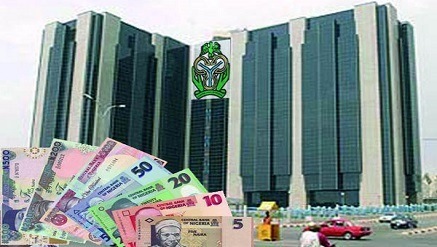
Loan default by customers made 13 Deposit Money Banks to lose a combined sum of N138 billion in the 2014 financial year, according to calculations by the Punch Newspaper.
Data obtained from the 2014 annual reports of the banks showed that the various losses were incurred under their respective interest expenses, which were charged against the profits they made in the financial year.
According to the annual reports, five Tier-1 banks, Access Bank Plc, First Bank of Nigeria Limited, Guaranty Trust Bank Plc, United Bank for Africa Plc and Zenith Bank Plc, incurred total loan impairment charges (provision for credit losses) of N64.4bn.
The provisions made for credit losses were Access Bank, N11.7bn; First Bank of Nigeria, N25.9bn; GTB, N7.1bn; UBA, N6.6bn; and Zenith Bank, N13.1bn.
The annual reports also showed that eight Tier-2 banks namely: Diamond Bank Plc, First City Monument Bank Limited, Fidelity Bank Plc, Stanbic IBTC Bank, Sterling Bank Plc, Union Bank of Nigeria Plc, Unity Bank Plc and Wema Bank Plc, incurred N73.6bn as total provision for credit losses.

Diamond Bank made provision for N26.4bn credit loss; FCMB, N10.6bn; Fidelity Bank, N4.3bn; Stanbic IBTC Bank, N3.2bn; Sterling Bank, N7.4bn; Union Bank, N6.6bn; Unity Bank, N15bn; and Wema Bank, N0.1bn.
The Punch reported that banks are required to make provisions for loans whose recovery has come under certain degree of probability. The provision is usually charged against the income or profit made for a given period.
It is termed loan impairment charges or provision for credit losses in their financial statements.
According to wikinvest.com, the International Financial Reporting Standards require a discounted cash flow methodology for estimating impairment on pools of homogeneous customer loans, which requires the incorporation of the time value of money relating to recovery estimates.
Also under the IFRS, future recoveries on charged-off loans are accrued for on a discounted basis and a recovery asset is recorded.
Financial and economic analysts said the amount for loan default lost by the banks was relatively high compared to the total profit the banks made in the financial year under review.
They estimated that N138bn loss by the 13 banks was equivalent to over N10bn loss for each bank, noting that this was high for any bank.
The Managing Director, Cowry Asset Management Limited, Mr. Johnson Chukwu, said, “I think the provisions have actually increased because of specific industry challenges. The Nigerian banks are heavily exposed to the oil and gas sector as well as the power industry.
“Banks financed oil well and other activities in the upstream sector; with the decline in oil prices, the banks will have to make some provisions. In addition, the devaluation of the naira has made players in the downstream oil sector to find themselves in very difficult situations. The banks will need to make provisions in these areas too.”
Chukwu said the banks financed the power sector privatisation and with the gas supply challenges facing the power firms, most of the loans had started having issues.
According to him, there is a need to check the trend in order to mitigate the rising amount of non-performing loans in the banking sector.
The Head, Research and Investment Advisory, Sterling Capital, Mr. Sewa Wusu, said, “Default rate is high because users of funds are getting loans at very high rates from the banks, with some customers getting loans at between 28 and 30 per cent.
“The manufacturing companies are operating under a very difficult condition, including high cost of transport and other inputs. They may not be able to generate enough earnings to meet up with their obligations. The government needs to improve the business environment.”
Corroborating Wusu’s view, the Head, Investment and Research, BGL Plc, Mr. Femi Ademola, said the banks ended up with huge provisions for loan defaults due to high interest rates and other business risk factors.
He listed these risks to include falling oil prices and unstable exchange rate.


Mastercard and TeamApt Ltd., a subsidiary of Moniepoint Inc. and a provider of financial infrastructure and payment solutions, have entered a strategic collaboration to strengthen digital payment capabilities for businesses and financial institutions across Africa.

As part of this collaboration, TeamApt will operate directly on Mastercard’s global payments network as a non-bank acquirer, enhancing its ability to onboard credible and licensed entities to deliver seamless payment acceptance, transaction processing and acquiring services. This will further expand its card acceptance infrastructure, allowing more merchants to accept Mastercard payments across in-store, online and mobile channels.
The collaboration integrates TeamApt’s switching infrastructure with Mastercard’s network to facilitate secure, high-volume transactions across online and in-store channels. With Nigeria being home to more than 40 million micro, small, and medium-sized enterprises (MSMEs), and small businesses identifying digital solutions as vital to scaling, according to Mastercard’s 2026 SME Confidence Index, expanding payment acceptance remains an important opportunity for growth.
By combining TeamApt’s deep local market expertise with Mastercard’s global scale, businesses and individuals will benefit from more reliable transactions, stronger security and faster, safer and more accessible digital payment experiences.
“Expanding digital payment acceptance is one of the fastest ways to support small businesses across Africa to compete, grow, and reach more customers. By working with TeamApt, we are equipping MSMEs and informal sector businesses in Nigeria with robust, secure infrastructure to seamlessly process transactions across multiple channels. This collaboration brings more businesses into the digital economy, unlocking vital new opportunities for growth, credit access, and cross-border trade,” said Folasade Femi-Lawal, country manager, West Africa at Mastercard
“This collaboration with Mastercard represents an important step forward in our commitment to removing barriers within the payments ecosystem. For years, TeamApt has focused on building infrastructure that helps financial institutions and businesses grow with confidence. By working closely with Mastercard, we are extending those capabilities, enabling businesses to accept payments more seamlessly and giving users the freedom to transact securely both locally and internationally,” said Dennis Ajalie, Chief Executive Officer of TeamApt.
The collaboration also delivers international value, enabling Mastercard cards supported by TeamApt’s infrastructure to be used across millions of merchant locations worldwide. Customers gain the convenience of secure global payments, while merchants can more easily serve both local and international customers.
A Central Bank of Nigeria (CBN)-licensed switching and processing company, TeamApt has, for over a decade, built and operated critical financial infrastructure that powers banks, fintechs and other institutions. The company’s technology supports secure and reliable transaction processing across multiple payment channels, enabling businesses and consumers to participate more easily in the digital economy.
This collaboration further underscores the strength of Moniepoint’s ecosystem. With operations and agent coverage across all 774 local government areas in Nigeria, Moniepoint has established one of the nation’s most extensive financial services networks, positioning the group to drive meaningful scale and adoption of digital payment solutions.

Securities and Exchange Commission (SEC) has directed capital market operators to immediately freeze the assets of six individuals and three entities designated as terrorism financiers by the Nigeria Sanctions Committee.

The directive was contained in a circular signed by the SEC management on June 26, 2026, and published on the commission’s website on Wednesday.
The SEC said the Nigeria Sanctions Committee designated the individuals and entities under the Terrorism Prevention and Prohibition Act (TPPA), 2022, and subsequently added them to the Nigeria Sanctions List.
The designated individuals are Babangida Muhammed Adamu Hammajam, Abdullahi Umar Usman, Ibrahim Abubakar, Adamu Chiroma, Muktar Muhammad Adamu and Yakubu Ogirima Ibrahim.
The three entities are Nine to Nine BDC Ltd, Generation Currency BDC Ltd and Abbal Bako & Sons Bureau de Change.
The commission directed all capital market-regulated entities to immediately identify and freeze, without prior notice, all funds, assets and other economic resources belonging to the designated individuals and entities.
“Immediately, identify and freeze, without prior notice, all funds, assets, and any other economic resources in their possession, belonging to the designated individuals and entities and report same to the Secretariat of the Nigeria Sanctions Committee,” the commission said.
The SEC also directed operators to report all frozen assets and other actions taken in compliance with the sanctions, including attempted transactions involving the designated individuals and entities.
The commission further instructed capital market operators to file suspicious transaction reports with the Nigerian Financial Intelligence Unit (NFIU) for analysis.
Operators were specifically directed to report “all cases of name matching in financial transactions prior to or after receipt of this Sanctions List” as suspicious transaction reports to the NFIU.
The commission prohibited capital market operators from dealing with the designated individuals and entities and ordered them to maintain continuous monitoring of transactions involving them.
“Take Note that at all times, any unusual or suspicious transactions MUST be promptly reported to the Nigerian Financial Intelligence Unit (NFIU),” the SEC said.
The directive takes immediate effect.
The commission warned that failure to comply with the directive would constitute a violation of the Investments and Securities Act, 2025, as well as its Anti-Money Laundering and Countering the Financing of Terrorism Rules and Regulations.
“Such violation would attract appropriate regulatory sanctions, including fines, suspension of operations, or revocation of registration,” the SEC said.
The commission said Hammajam was listed on June 18 for alleged involvement in terrorism financing and support for the Islamic State West Africa Province (ISWAP).
It said Usman was designated for allegedly providing material support to a designated terrorist organisation through repeated financial transactions, while Ibrahim was listed over alleged involvement in terrorism financing and membership of ISWAP.
According to the SEC, Chiroma was allegedly involved in terrorism financing through the use of bureau de change and related corporate entities to facilitate the movement of funds linked to terrorist activities.
The commission said Adamu was listed on June 15 for allegedly providing financial support and facilitating transactions linked to the financing network of the ISWAP Okene cell.
Ogirima Ibrahim, according to the SEC, was listed on June 18 for allegedly providing material and financial support to the ISWAP Kogi cell.
The three bureau de change companies were also listed on June 15 over their alleged involvement in facilitating or channelling funds connected to the ISWAP Okene financing network.
The SEC said the directive formed part of broader measures by Nigerian and international authorities to disrupt suspected terrorism-financing networks.
On June 23, the United States announced sanctions against three individuals and six entities allegedly linked to Islamic State financing, including three bureau de change operators.
Two days later, the Central Bank of Nigeria also directed banks to freeze accounts belonging to customers linked to terrorism financing.
The latest SEC directive reinforces the regulatory focus on preventing Nigeria’s capital market and financial system from being exploited to finance terrorism and other illicit activities.


Securities and Exchange Commission (SEC) has issued an urgent directive requiring all capital market-regulated entities (CMREs) to immediately subscribe to Nigeria’s Sanctions (NigSac) Alerts system.

Effective immediately, failure to comply with this, or other AML/CFT regulations, may result in severe fines, suspension of operations, or revocation of registration.
This follows fresh designations by both local and international authorities of individuals and Bureau de Change operators for alleged direct involvement in terrorism financing and material support to the Islamic State West Africa Province (ISWAP).
The directive, according to three circulars issued by the apex capital market regulator, requires a mandatory compliance measure with threats of fines, operational suspension, or outright registration revocation for non-compliance.
The directive, pursuant to the implementation of Financial Action Task Force (FATF) statements on high-risk jurisdictions, signals an escalation in Nigeria’s anti-money laundering and counter-terrorism financing regime.
The SEC’s broader circular implementing FATF high-risk jurisdiction statements reflects Nigeria’s heightened exposure to international scrutiny. SEC, in line with directives from Central Bank of Nigeria (CBN), now requires CMREs to terminate all correspondent banking relationships with listed high-risk jurisdictions, business entities and individuals.
“In line with the provisions of the Terrorism Prevention and Prohibition Act (TPPA), 2022, the Nigeria Sanctions Committee (NSC) has designated six (6) Individuals and three (3) Entities as terrorist financiers and subsequently added them to the Nigeria Sanctions List,” SEC stated in circular to all market operators.
The circular mandated all capital market regulated entities and individuals to do the following:
“Immediately, identify and freeze, without prior notice, all funds, assets, and any other economic resources belonging to the designated persons and entities in their possession and report same to the Secretariat of the Nigeria Sanctions Committee;
“Report to the Secretariat of the Nigeria Sanctions Committee any assets frozen or actions taken in compliance with the designation, including attempted transactions;
“Immediately file a suspicious transactions report to the Nigerian Financial Intelligence Unit (NFIU) for further analysis on the financial activities;
“Report as a suspicious transactions report to the NFIU, all cases of name matching in financial transactions prior to or after receipt of this Sanctions List;
“Subsequently prohibit dealings with the designated persons and entities; and continue to check for transactions relating to the designated persons and entities and report findings to the Nigeria Sanctions Committee through [email protected]”, SEC stated.
“Take Note that at all times, any unusual or suspicious transactions shall be promptly reported to the NFIU,” SEC warned.
According to the capital market apex regulator, the circular takes immediate effect and failure to comply with the directives constitutes a violation of the Investments and Securities Act, 2025, and the SEC AML/CFT Rules and Regulations and such failure would attract appropriate regulatory sanctions, including fines, suspension of operations, or revocation of registration.
The directive implies that capital market operators should immediately audit their AML/CFT technology stacks to ensure NigSac Alerts subscription and automated flagging capability.
CMREs are required to file suspicious transactions reports with the Nigerian Financial Intelligence Unit (NFIU) for any name matching with designated individuals and entities, whether such matches occur pre- or post-transaction.
The obligation extends to reporting all funds frozen and actions taken in compliance with designations to the NSC Secretariat via [email protected].
The designations also create secondary compliance obligations: CMREs must now maintain watchlists that incorporate designations from both the NSC and US Treasury, as regulatory expectations implicitly track international sanctions coordination.
For institutional investors and fund managers, this translates to enhanced due diligence on counterparty relationships, particularly where transactions flow through informal financial infrastructure or jurisdictions flagged under FATF increased monitoring status.

Airtel Nigeria Adds Over 1,000Cell Sites in Nationwide Expansion to Surpasses 17,000

MacOS Users Report More Cyber Threats than Windows Users – Survey Reveals

Mastercard, TeamApt Collaborate to Expand Digital Payments Across Africa

Access Holdings Sets New Benchmark in Nigeria’s Finance Talent Pipeline

ESUT Workers Get N82,000 Minimum Wage as Enugu Approves Fresh Salary Increase

EFCC Busts NIS Visa Overstay Racket, Uncovers N700m in an Account

Fact-Check: Elon Musk’s “Tesla Pi Phone” is Internet Rumor

NBC Tasks Broadcasting Stations over 2028 DSO Global Deadline

NBC Scraps Annual Digital Access Fee on DSO

Glo Sponsored African Voices to Feature Netflix’s “The Polygamist” Stars




 Telecom2 days ago
ipNX Joins Calls for Innovation-Friendly Ecosystem and Stronger Local Opportunities at Regenesys AI Summit

 E-Business2 days ago
NDPC Probes UNILAG, Lotus Bank, Hackerbella over Alleged Students’ Data Misuse

 E-Financial2 days ago
KudiWave Asks for Clarification over N750m Transfer from PalmPay Account

 News2 days ago
PalmPay Reinforces Commitment to Youth Empowerment on International Youth Day

 Telecom2 days ago
NCC Reports over 5,000 Fibre Cuts in 6 Months

 Telecom2 days ago
Google Selects Six Nigerian News Creators for Emerging Voices Growth Lab

 E-Financial2 days ago
Nigerians Borrow More to Buy Homes as Mortgage Demand Climbs – CBN

 General News2 days ago
NUPRC Warns of Counterfeit, AI-Generated Appointment Letters