

General News
Local Content Plan will Boost Domestic OEMs – Onawola


Bolarinwa Onawola, is chief operating officer, Brian Integrated Systems Limited, a 100% owned Nigerian company with a factory for the assemblage of high quality and reliable its branded desktops, laptops, netbooks and classmate computers.
It recently launched a Windows Tablet in partnership with Intel & Microsoft.
Onawola spoke to peter ugwu on Brian’s plan for mobile devices market, among other industry issues.
OEMs in Nigeria
The main thing is that Nigerians are still after foreign brands, not minding that there are competitive brands developed locally by Nigerians.
That has been an undoing to the original equipment manufacturers. We should consider the fact that before those brands enter our markets; they usually look at their own market.
But we are not deterred by that. We are rolling out and it is our believe that the local content drive of the Ministry of Communication Technology, the policies, programmes and deliberate actions been taken will help push locally made IT equipment into the market.
OEMs and Low Standard Products
Nigerians should know that gone are the days any company would want to gamble with its fortunes. Recently, I was in a conference organized by the Standard Organization of Nigeria (SON), we were discussing issues relating to standards and how the gap can be bridged.
With what SON said, I think they are working towards ridding the market of fake standards. As a company you wouldn’t want to be caught napping; meeting the standard is a must, if you want to sustain your business in the contemporary business world.
SON was at our lab few days ago, to assess our products and processes and we got top rating for it. No doubt, there are still some sub-standard good in Nigeria, but the level such good penetration in the market is being checkmate.
Local Manufacturing
Presently, we assemble computer products. However, we are working towards building a world class factory in a short period, where we can manufacture the computer components in Nigeria.
It will take the market by surprise; although there are others who could boost of that already, but we are looking at a plant that will drive employment generation in the country, and add value to the country’s economy too.
There are challenges why companies actually delay in setting up plants in the country. The issue of power is still there, multiple taxations, but what we are thinking is that partnership is a good idea for businesses to grow, however, for the countries that produce these products, how did they get started.
They started from somewhere; basically from research and development. We need to put more resources and drives towards research and development.
A wealthy country is not the one that consumes, rather the one that produces. In the case of Brian, that is what we intend to achieve. We want to produce locally, for us and others. Our drive is to start in Nigeria and take such Nigerian brand to other parts of Africa. For us to do that, we need to invest heavily in research. We have mentors we need to follow for guidance.
R&D in Nigeria
Let me start by reminding us that oil and gas market is pass through a phase that it might not rise to compete with IT on the global market.
How do I mean, IT now provides the currency for any nation to measure in the global competitive market. To diversify our economy means infusing IT into the facets of the economy. Unfortunately, we are not doing enough as regards R&D.
We are not there yet. Until we realize that no country succeeds consuming, we will not get there. It might be capital intensive, but we need to put in the capital now. Today is the right time to invest on developing the R &D for the sake of the future generation.
Software Industry
India today has not drip of oil, but the Software market is worth over $70 billion per annum. We need to wake up to the fact that the IT industry is a big industry. I see it as becoming bigger than the oil and gas, both in the global and local scenes.
While oil is dwindling, IT is just increasing. Of course, in the early 20th Century, you didn’t get to hear about students in the Universities studying building applications, but now they do. It is a step in the right direction, but all we need to do is that, not just the government, rather collective measures to encourage the youths.
We need specialized courses tailored into developing apps. Recently, I was in a commercial bus and besides me was a lady. Before she boarded, as the bus was approaching the bus stop she was penning something down. When she joined us, she continued. That got me thinking; I was able to understand that she was putting pen on paper regarding an application the team was working on; the processes to develop the apps. That tells you the resilience of an average Nigerian youth.
People are beginning to tap into that area of ICT sector. All we need to do as a nation is to encourage them. We have the human resources to achieve whatever we want to achieve in the sector.
We need to start experimenting theories we have heard all these years. It is unacceptable that a Computer Science graduate he might not know the rudiments of Computer Science. I think our school curriculum should be reviewed to the school curriculum to catch the youths at their prime age and tailor their minds to the happenings in the ecosystem.
Why Brian Tablet?
We wanted a device that is portable and everybody can recognize and go along with; a device that will give user comfort even while in office, because it suites their work.
Through that, it makes increases the productivity level of the users. It also enables people to play due to the fact it has a combination of work and pleasure. These happen even on the go.
Differentiating Brian Tab from Others
Apart from the fact that it supports users to be productive, there are salient features in it. The RAM is 2GB, the memory size is 32GB and expandable to 64GBs.
It comes with Bluetooth, keyboard, that makes the operating very easy. You might want to detach it or use it together with the magnetic keyboard and it stands.
With the HDMI, you do not need to move about with your projector. The tab is built that you can have a seamless presentation with it. All you need to do is connect the HDMI cord to an enabled HDMI television or device and it comes live.
Another salient feature we considered will building the tablet, we thought people will have the need to print any document developed or downloaded into the device, without necessarily transferring it to anywhere such as flash drive.
We were able to achieve that, you can be able to print from any printer through the device. We made provision for a port and the connecting cable; anything that has USB port will work perfectly with it.
Market Penetration Drives
Since Nigeria is our home, for now, we need to start from here. But I can tell you that we are looking beyond the shores of the country.
We are studying the African markets and will penetrate those markets as the needs rise. By then, we have seen the good news and how it works.
At the moment, we are not relenting in making sure it becomes a well known brand and device. And I can confirm to you that there is no part of the country we are not gaining ground. We are moving from both in the corporate, industry; penetrating educational institutions too.
Partnership with Intel & Microsoft
What we wanted is a sector that is IT driven. We are moving into schools to register our strong presence, because the educational institutions are working towards IT compatibility.
To achieve that, we need giants in the industry to work with. Intel and Microsoft are global brands that are relevant to what we are doing based on their operational principles.
So, we do not want the teachers be left out, because this is a generation where students are getting smarter due to the obvious reasons of availability of smart devices that are internet enabled.
E-Learning Pack
That is one of the peculiarities we are pursuing, e-learning. We have a locally tailored application called C-fox that can be used by teachers and students alike. It has recommended courses which makes it easier for users to teach or learn.
Brian Initiatives in The Market
We started from the desktops to laptops and then now to Windows tablet. The name Brian is a known brand, because we started from the days of old with our branded laptops, desktops and we are following the dynamics of the market.
Now, everybody is going micro; they want something small they can go along with, not necessarily to large that they need to drop it somewhere to operate. That has impacted our current line of products. And we are looking at the peculiarities of this environment. For instance, the Windows Tablet, the battery life is eight hours.
Power is still an issue in our environment, and here is a device that you can be able to use when you want to use it. So, we have positioned the battery lifespan to last longer; you can work, go on break, and resume, with the device being there for you.



Senate on Tuesday approved the fresh $6 billion loan request forwarded to the lawmakers by President Bola Tinubu.

Lawmakers approved the fresh loan on the same date the request letter was read by Godswill Akpabio, senate president.
The Senate approved the loans following the presentation and consideration of the report by Senator Aliyu Wamakko, chairman, Senate Committee on Local and Foreign Debts.
President Tinubu had written to the Senate seeking approval to borrow a total of $6 billion to finance key government projects and address budgetary gaps.
The requests were contained in two separate letters addressed to Godswill Akpabio, president of the Senate, and read during Tuesday’s plenary.
In the first letter, the President requested approval to obtain a $5 billion loan from Abu Dhabi Bank.
According to the President, the facility will be used to cover the nation’s budget deficit and support debt financing, among other fiscal obligations.
The request forms part of the Federal Government’s efforts to stabilise public finances and sustain ongoing government programmes.
In a separate communication, Tinubu also sought approval to secure a $1 billion UK Export Finance loan facility from London Citi Bank.
The loan is intended for the rehabilitation of key port infrastructure, including the Lagos Port Complex and Tin Can Island Port.
The President said the project aims to address critical infrastructure deficiencies in the country’s maritime sector
According to him, the rehabilitation will help improve efficiency, enhance safety standards, and support Nigeria’s efforts to diversify its economy beyond oil.
He added that the initiative would also strengthen Nigeria’s position as a regional trade hub.
Both requests have now been considered and approved by the Upper Legislative Chamber.
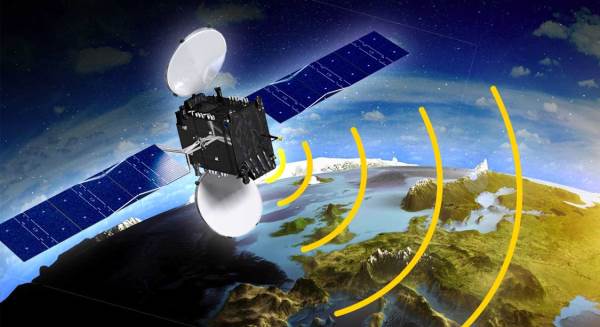
Federal government has fixed 2028 and 2029 for the launch of two communication satellites, NIGCOMSAT-2A and NIGCOMSAT-2B, as part of efforts to strengthen security and expand digital connectivity.

The government will be committing over $22 billion on the ambitious space-led growth agenda focused on new satellite launches, increased industry revenue and expanded broadband access in underserved communities.
At the opening of the 2026 Nigerian Satellite Week in Abuja, Dr Bosun Tijani, minister of Communications, Innovation and Digital Economy, confirmed the government’s approval for the acquisition of two new satellites—NigComSat 2A and 2B, describing the move as a “defining commitment” to national development, digital sovereignty and economic competitiveness.
Also, Mrs Jane Nkechi Egerton-Idehen, managing director of Nigerian Communications Satellite Limited (NigComSat), noted that the projects have moved beyond procurement to the execution stage.
She said the satellites are designed to enhance intelligence gathering, surveillance, and connectivity across Nigeria and neighbouring countries, particularly in support of security operations.
“For 2A and 2B, we have started the process. We have closed the tender and are now back into the financing and implementation stage. 2A is built to come up in 2028, and 2B for 2029.
“When they are up and running, they are expected to provide security within the borders and neighbouring countries. They will support the security agencies because data collection and intelligence in real time is important. Satellites like communication satellites allow that, irrespective of where they are,” she said.
On his part, Tijani, said the satellite programme forms part of a broader government strategy to deepen digital infrastructure nationwide.
According to him, the initiative complements ongoing investments in fibre-optic expansion and telecommunications infrastructure, while extending connectivity beyond Nigeria’s borders.
“The President’s approval of NIGCOMSAT-2A and 2B demonstrates a clear commitment to building the future. These satellites will enhance security, connect remote communities, and extend our fibre-optic network into neighbouring countries.
“Some of these neighbouring countries pay up to ten times more for internet capacity than Lagos. Extending our fibre network will not only improve connectivity but also enhance border security and regional collaboration.
“Satellite technology affects everything, from how a child in a rural community accesses the internet to how farmers make critical decisions and how businesses operate across distance,” he said.
Federal government has announced the launch of CLHEEAN, an artificial intelligence-powered mobile application designed to improve interactions between citizens and public institutions.

It is also a civic education and community engagement app.
Developed under the National Orientation Agency (NOA), the platform functions as a virtual assistant accessible via mobile devices.
It allows users to access information on public policies, ask questions, and interact directly with government services.
The app includes features such as instant messaging, voice recognition, and multilingual support, including several local languages, to reach a wider audience.
With CLHEEAN, users can also submit feedback, report concerns, and take part in discussions on public policies. The approach is intended to strengthen citizen participation and improve communication between the government and the public.
Lanre Issa-Onilu, director general of the NOA, said the initiative addresses a long-standing gap between citizens seeking to be heard and systems that do not always respond effectively, adding that the platform marks a step toward closing that gap.
The launch comes as Nigeria continues to face challenges in citizen engagement and the dissemination of public information.
By leveraging artificial intelligence, authorities aim to make public services more accessible while improving transparency and responsiveness.
The initiative also reflects a broader trend across Africa, where governments are increasingly exploring the use of AI to modernize public services and strengthen ties with citizens.

How Recycled SIM Card Linked to N50m Kidnapping Nearly Landed me in Jail – Businesswoman

Senate Gives Tinubu Nod to Borrow Fresh $6Bn

FG Earmarks $2Bn to Launch 2 Satellites in 2028, 2029

CBN Directs Banks, Fintechs to Complete Cybersecurity Audit Tool

FG Launches CLHEEAN to Streamline Access to Government Services

Spotify’s Loud & Clear Report Reveals Over ₦60Bn Revenue for Nigerian Artists in 2025

Madonna University Taps Tech Guru Adote for Strategic Board Role

China Threatens to Shut Nigeria’s Satellite Over $11.44m Unpaid Debt

Jumia Tech Week 2026 Begins with Tech Deals on Smartphones, Electronics, and Everyday Technology

FCCPC Bans Lagos ‘No Refund’ Policy, Vows Fines and Shutdowns for Traders




 E-Financial2 days ago
CBN bars large‑ticket loan defaulters from banking services in tough new crackdown

 General News2 days ago
ARN Rejects Medical Bill over Attempt to ‘Scrap’ Profession

 Telecom2 days ago
NIGCOMSAT Supports Startups Growth with the Launch of Accelerator 3.0

 News2 days ago
Meningitis Kills a Quarter Million People a Year -Study

 Telecom2 days ago
FG Unveils Digital Economy Research Fund Scheme

 News2 days ago
Stakeholder says AI is Crucial to Nigerian Data Centres Amid Persistent Grid Collapse
- General News2 days ago
Nigeria Advances Digital Governance as NITDA takes over NGEA Portal

 General News2 days ago
Zarttech Reflects on Its Role in Changing Global Perceptions of Africa