

General News
Local Software Not Good Enough for Aviation Sector – Adekitan

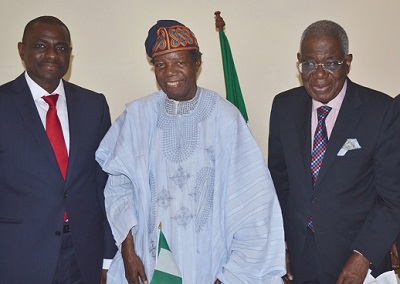
Adejare Adekitan, head, Information and Communications Technology (ICT) at Skyway Aviation Handling Company Limited (SAHCOL) notes that Africa’s aviation sector lags in IT application.
He is a Computer Engineering graduate of the Federal University of Technology, Akure. Adekitan stressed the need for a comprehensive ICT package in aviation handling business in Nigeria.
He spoke to peter ugwu.
Assessment of ICT in Nigeria Aviation Industry
Although we can boast of fantastic developments in the industry in Nigeria lately, I would stress that African countries are lagging behind in the comity of aviation nations.
And Nigeria is no different.
But relatively, we are moving on compared to the way we were in the last 10 years.
The emphasis for sometime now is how we can safeguard passengers that are traveling by air.
If we must achieve this, two things we must not overlook are human capacity development and deployment of modern ICT equipment.
We have seen cases where these hi-tech equipment are installed and abuse becomes inevitable because the people meant to man them are incompetent.
Even IATA has stressed that airlines can use opportunities in ICT to grow their finances.
There is so much ICT software application we could use to manage the aviation sector; unfortunately, we don’t seem ready to apply the right remedy to our situation.
Overview of SAHCOL ICT
The major focus is to enhance, sustain or maintain the technical functions of the company.
And also to contribute towards elevating the company even beyond international ICT benchmarks in cargo and aviation handling viz-a-viz delivering service that are profitable to both parties comprising the company and her numerous public.
All areas of our operations are computerized.
Warehouse ICT installations
We have installed some ICT equipment like security base gadgets – the CCTV that covers the warehouse surroundings.
The installations were informed by the fact that our warehouse can not be out area surveillance tools, essentially to prevent or detect abnormalities.
Beside that most operations that take place within the warehouse are automated. Our operation starts the moment goods arrive at our tarmac.
So, ICT presence is critical in this aspect of business.
For instance, if you have a cargo, it needs to be captured and once that is done, it makes the rest of the process very convenient for the parties involved.
We could recall that when Sifax Group took over SAHCOL in December, 2009, one of the immediate promises made by the chairman, Dr. Taiwo Afolabi to customers and the public is the re-fleeting of the company.
In January 2010, we placed order for some units of ground handling equipment from various manufacturers in Europe and America.
And since March, 2010 we have installed equipment like Commander 15i, Commander 30i, Smart steps, Push back, Tractors, Mobile Belt Loaders, Airstarter Units, Baggage Tractors, Ground Power Units, amongst others.
This is to buttress management’s resolve to improve on services rendered to the public as it affects safety.
Cargo Tracking Gadgets
Currently, we are pursuing a process that can aide anyone track movement of his cargo in any part of the world through our tracking equipment.
We have also acquired internationally recommended software that can aide us in spotting cargo; in essence we can interact with counterparts in other countries in checkmating movements of cargo, so that any cargo company can send signal to and from us through the deployed infrastructure.
Other areas like passenger service are also computerized.
There is what we call the common user terminal equipment (CUTE), deployed for terminal operations.
With this device, as we are checking a passenger here in Lagos or in any airport that we carry out this duty in Nigeria, data records are transmitted to the passenger’s destination even before their arrival.
Although there are few areas that are still handled manually, especially in documentation, we can say to a very large extent at SAHCOL that our ICT compliance level has improved tremendously.
In addition to that, ICT is dynamic; as changes occur we would continue to harness the opportunities inherent ICT and automation processes as we are determined to contribute our quota towards Federal Government’s airport transformation agenda.
Successes
The automation has helped a lot.
It has enhanced cargo clearing; gone are the days cargo clearing are delayed due to inept practices or human interference.
It has even helped in reducing cases of losing cargo on transit.
Without mincing words, it is a global phenomenon that aviation industry can only grow its financial earnings through ICT compliance.
In other words, SAHCOL today can say it has benefited from computerizing its operations.
SAHCOL Aviation Security (SAS)
Yes, SAS is a specialized platform through which we provide services for airlines in the areas of control and supervision of access to check-in zones; passport control and detection of fake international passports/travel documents; security questioning/profiling and protection and control of luggage chain from check-in to aircraft.
Other aspects of the initiative include reconciliation between boarding pass and passenger identification; X-ray control for hand luggage and magnetic detection for passengers; supervision of aircraft zones and loading/offloading of aircraft and reconciliation of passengers and luggage in transit.
These are part of efforts to ensure maximum and passenger safety are maintained within our nation’s airports.
Data Security
We have made concerted efforts in securing our data, especially from external (cyber) attacks.
That does not mean that the internal arrangements are porous, because we know that some attack from external bodies are orchestrated from within, therefore, we have made efforts to secure our data.
Apart from the software we installed, we do carry out frequent back up and maintenances. The make sure our data are secured within and offshore.
Locally Developed Software
We have tried using some of them, but we discovered that the capacities are not enough to drive our programme.
This industry is very sensitive and not everything can fit into what we are doing, especially for security purposes.
Some of them are yet to meet international standards, which is the reason for foreign software used in most companies in the country.
There is a need for government to encourage our local productions to meet world standards, by putting enabling infrastructure in place.
By the time the standards are heightened government can show example by mandating its ministries, departments and agencies to patronize the local developers.
The truth is that we have youths who have interest in that aspect of national development.
But at present we don’t even have an incubating centre; many of our tertiary institutions offering ICT related courses are either ill-equipped or the equipment are archaic.
It may be a shocker to you that only about ten per cent of local software developers have shown interest in aviation.
If they have done that, perhaps we could have seen a way to help out. Therefore, 90 per cent of software used in the sector is imported.
Power challenges
I want to believe that since the Sosoliso crash few years back, the airport managers (Federal Airport Authority of Nigeria – FAAN), has done a lot of thing to plug incessant power outages. Although it was only recently we learnt the air crash was as result of power outage.
Especially in Lagos, a lot of things are been done. I had opportunity to be at the Control Tower, of which they recently installed new gadgets to back up their systems in times of power failure.
Of course, the Control Tower has to be powered 24 hours of the day. My assessment of the situation is that there are improvements in critical areas.
Human development
Permit me to emphasis that it amount to wrong approach for us to believe that our challenges are over, once equipment are in place, without individuals with the technical knowledge to handle them.
The two are married together. However, we cannot do without human error in an industry like this.
But for us to minimize such errors constant training and awareness campaign must not be ruled out.
There are certain areas that human capacity development can be compromised without it showing much in the operations of such industry, but in a technical field like aviation, we can not trade it for anything.
For instance, when the Dana air crash happened, the first eyebrow raised was human error.
To set example, as we are in the period of expansion, every staff of SAHCOL is expected to master ICT equipment usage.
Cargo handling Industry
Well, cargo handling is not different from Nigerian aviation industry.
Before now, the Nigerian Aviation industry was a passenger-driven sector. The focus was largely on proceeds from passenger air travels.
But today, the business model has the ability to satisfy the yawning of travelers who are not far from those engaged in global supply chain.
The sector contributes immensely to the economic development of the world and Nigeria in particular.
So, we are working towards increasing our cargo base, constructing a new warehouse. Nowadays, e-ticking or booking is the order, we are working towards perfecting that aspect of our operation.



Federal government has signed a concession agreement for the deployment of a contactless biometric passenger verification system across Nigeria’s domestic airports.

The initiative, known as VPASS, is designed to strengthen aviation security, improve data integrity and boost revenue generation.
Festus Keyamo, minister of Aviation and Aerospace Development, said the agreement followed the concurrence of the Infrastructure Concession Regulatory Commission, the Attorney-General of the Federation and approval by the Federal Executive Council.
Keyamo said the system will eliminate discrepancies in passenger records, curb unauthorized boarding and ensure all domestic air travellers are properly identified, closing existing gaps in standard identification procedures.

Association of Licensed Set-Top Box Manufacturers of Nigeria (STBMAN) has waxed worriedly over the National Broadcasting Commission’s (NBC) repeated violations of due process in managing the country’s Digital Switch Over (DSO) project.

In a statement released in Abuja, Sir Godfrey Ohuabunwa, chairman, STBMAN, stated that the NBC’s actions are slowing down Nigeria’s transition from analogue to digital broadcasting and discouraging local investors who have committed resources to the project.
Ohuabunwa noted that Nigeria began serious discussions on DSO in 2008, yet 17 years later, the country has made little progress, while nations that once sought Nigeria’s assistance have completed their own transitions.
“STBMAN has repeatedly called for the protection of local manufacturers, strict compliance with the federal government’s White Paper on DSO, and full respect for the rule of law, but these calls have been ignored,” Ohuabunwa said.
The NBC’s alleged plan to import hybrid set-top boxes from China has been criticized by STBMAN, which says this move disregards the heavy investments already made by licensed Nigerian manufacturers and contradicts the President’s directive to prioritize locally made products.
“The manufacturers have invested in equipment, technology upgrades, and workforce training, expecting government support and policy stability,”he added.


PowerLabs aims to expand its platform into Nigeria’s most energy-intensive sectors with the new funding. Providing hospitals and industrial hubs with the intelligent, automated control required to ensure continuous power and operational resilience.

PowerLabs, a Nigerian energy and climate-tech startup, announced the successful close of its pre-seed funding round led by Breega, with participation from Catalyst Fund, Mercy Corps Ventures, and Kaleo Ventures.
This strategic investment will accelerate the rollout of Pai Enterprise, the company’s flagship AI-enabled energy orchestration platform across commercial and industrial enterprises in Nigeria and lay the foundation for expansion into key West African markets
For decades, Nigerian energy management has centered on basic monitoring and tracking of energy consumption. Yet for the millions of businesses dealing with unreliable power grids, diesel generators, rooftop solar, inverters, and battery banks working together to keep operations running, visibility alone delivers no real value unless it leads to resilience and continuity.
The manufacturing sector alone spent ₦1.11 trillion on alternative energy sources in 2024, which is a 42% increase from the year before. A small factory changes its work hours based on when it can get generator fuel. To keep critical care going, a hospital coordinates backup systems.
Every day, the facility team of a commercial building has to make dozens of decisions about reactive energy. Monitoring tools already in use tell you what went wrong, but they do not provide solutions or preventive measures to address the issues identified.
Pai Enterprise changes that equation. Unlike conventional dashboards, Pai Enterprise does not simply observe; it senses, communicates, and actuates across multiple distributed energy sources in real time. By continuously modelling supply, demand, and operational constraints, the platform enables organizations to run their own intelligent microgrid. As a result, the platform transforms energy from a reactive problem into a proactive, strategic resource.
This vision of a self-optimizing energy ecosystem was recently highlighted in a feature that explored how PowerLabs wants to make Nigeria’s grid think by shifting the paradigm from passive consumption to active, intelligent orchestration.
The measurable impact spans Nigeria’s most critical sectors:
- Hospitals: With intelligent monitoring across critical circuits, teams are instantly notified when there are fluctuations in supply, voltage drops, or automatic transitions to backup systems. This real-time visibility ensures that departments like intensive care, laboratories, and operating theatres remain protected, enabling faster response, reduced risk of disruption, and continued patient care.
- Data Centres: By providing continuous insight into the performance of energy assets such as solar systems and generators, operators can track efficiency, optimize usage, and reduce emissions without compromising uptime. The result is a more sustainable infrastructure that still meets the uncompromising reliability standards required for digital operations.
- Factories: Factories require more than just stable power, they need actionable intelligence to drive performance and profitability. Through detailed energy analytics, operators can identify inefficiencies, understand consumption patterns across production lines, and make informed decisions that reduce costs while maintaining output. This transforms energy from a fixed expense into a controllable lever for operational efficiency.
- Retail outlets: By analyzing consumption trends and usage behavior, retail outlets can right-size their energy assets, avoiding overinvestment while ensuring sufficient supply during peak periods. This leads to lower operating costs and improved energy efficiency across single or multi-site retail operations.
- Critical facilities: For critical facilities such as telecom towers, banks, schools etc, uninterrupted operations depend on anticipating issues before they occur. Continuous real-time monitoring enables early detection of anomalies and supports predictive maintenance strategies, reducing downtime and extending asset lifespan.
Tobe, CEO & Co-Founder, PowerLabs said: “Distributed energy resources are often seen as fragmented and chaotic, a clutter of devices that don’t speak the same language. At PowerLabs, we believe decentralization doesn’t have to mean disorder. We’re building the intelligence layer that will prove that distributed energy resources can operate as a unified source while leveraging its disaggregation to offer flexibility, cost efficiency, carbon neutrality and redundancy … more than a centralised energy system ever could. “
PowerLabs will strategically deploy the raised capital to accelerate the rollout of its flagship Pai Enterprise platform, improve its cutting-edge predictive load-management algorithms, and broaden seamless integration with distributed energy assets ranging from rooftop solar and battery storage systems to traditional grid infrastructure.
This funding round brings together a mix of global and Africa-focused investment partners with deep commitment to climate-tech and a proven track record of scaling innovation in emerging markets, all aligned on PowerLabs’ mission to solve energy resilience.
Breega is an international fund investing in digital, climatech, and deeptech companies across Europe and Africa. Mercy Corps Ventures backs market-systems solutions in fragile and frontier markets; Catalyst Fund, a leading climate-tech investor backing solutions for climate adaptation and resilience in Africa. Kaleo Ventures specializes in early-stage technology companies across high-growth African markets. With their support, PowerLabs is now positioned to scale its intelligent energy solutions, expand Pai Enterprise across sectors and geographies, and demonstrate that the era of traditional energy management is over. Personalized, decentralized, resilient, and intelligent systems are the future, and for millions of people and organizations, that future is already here.
Tosin Faniro-Dada, Partner, Breega, stated that: “We backed PowerLabs at the pre-seed stage because we believe intelligent orchestration will be essential to solving Africa’s energy reliability challenge. The team is building the software and hardware layer that enables businesses to coordinate multiple distributed energy sources in real time. We’re excited to support them as they prove the impact of this model across critical sectors over the next 12–18 months.
The closing of this investment round is therefore more than a financial milestone: it is a signal that investors, businesses recognize the need for energy systems that do not merely report, but act; that do not assume stability, but adapt in real time; and that view energy not as a static commodity, but as a platform for growth, resilience, and human potential.
“Globally, more and more businesses and critical services like data centers operate in complex energy environments where a mix of energy sources must work together. The energy users typically have to toggle between cost, quality of supply and carbon footprint. PowerLabs is starting in Africa to build the intelligence to orchestrate these systems seamlessly without sacrificing any of these critical factors.” Olúwátóyìn Emmanuel-Olúbákè, Chief Investment Officer, Catalyst Fund
Energy management alone is not enough, and for millions of users who have long struggled with outages, unreliable grids, and fragmented infrastructure, the promise of intelligent energy is not merely convenience; it is the key to unlocking their full potential and powering a new era of human progress.

FG to Gift Nigerians over 100 Free TV Channels from May 15

FG New Approves Biometric Passenger Verification System for Airports Security

STBMAN, NBC Bicker over Alleged Due Process Breaches

CBN Dismisses Polaris Bank Liquidation Claim

AfDB Okays $200m for Nigeria’s Digital Backbone, Others

Spotify’s Loud & Clear Report Reveals Over ₦60Bn Revenue for Nigerian Artists in 2025

Kuda MFB Increases Kuda for Her Business Grants to ₦10 Million

Why JustMarkets Is a Strong Choice for Gold Trading

Canal+ to Cut Jobs as Part Sweeping Restructuring

Nigeria tops global rankings for USDT, USDC ownership




 E-Financial2 days ago
How Sterling Bank Is Empowering 1m Women with ₦500Bn

 E-Financial2 days ago
See Key Changes in BVN Rule from May 1 by CBN

 E-Financial2 days ago
Paga Group Rejigs Leadership as Oviosu, Founder Becomes Group CEO

 Broadcasting2 days ago
INEC Warns Broadcasters against Misinformation ahead of 2027 Polls

 E-Financial2 days ago
Reputation: The Real Currency Powering Fintechs

 E-Business2 days ago
Jumia Expands Nationwide Footprint, Deepens Reach Across Underserved Nigerian Cities

 News2 days ago
Google, UpSkill Universe Relaunch Hustle Academy to Bring Free AI Skills to Africans

 Telecom2 days ago
Truecaller Targets Global Market with Powerful New Business Chat Push