

General News
Marcelle Ruth Cancer Centre & Specialist Hospital (MRCC) Opens in Lagos


In support of the Marcelle Ruth Cancer Centre & Specialist Hospital, the country’s first fully-equipped private oncology centre, GE Healthcare has completed the delivery and installation of advanced radiology and radio pharmacy equipment in Nigeria which will accelerate diagnostic care for cancer.

Founded by renowned physician Dr. Modupe Elebute-Odunsi and her financier husband, Bolaji Odunsi, MRCC combines the highest standard of care with the latest treatments and technology in comfortable surroundings designed to promote healing. The clinically trained members of the founding team all qualified from medical colleges in Nigeria and completed postgraduate training specialized in oncology and haematology overseas.
The exceptional team of highly skilled personnel include consultant medical and radiation oncologists, surgeons, family physicians, radiation therapists, nurses, pharmacists, imaging technicians, laboratory scientists, nutritionists, counsellors, and healthcare administrations, working together to treat and care for patients.
Supporting the planning, development, building and equipping of the oncology diagnostic and treatment facility at MRCC, GE Healthcare is providing the comprehensive suite of solutions such as the award-winning Senographe Pristina 3D, the first patient-assisted compression device in mammography; the advanced LOGIQ F8 ultrasound, the comprehensive radiation therapy solution Discovery RT; and the BRIVO XR575 X-Ray and OEC 785-C Arm, two easy-to-use systems that deliver superior image quality. All of MRCC’s medical professionals have completed advanced training on the machines.
Commenting on the Facility, Dr. Modupe-Odunsi said: “We built the Marcelle Ruth Cancer Centre & Specialist Hospital to help address the gap in the treatment and diagnosis of cancer in Nigeria. Patients who previously would have had to travel abroad to receive world-class treatment are now able to get the critical care they need here at home. Early detection is vital to the diagnosis and treatment of this disease.”

The Marcelle Ruth Cancer Centre & Specialist hospital has finalized partnerships with the leading healthcare insurance providers in Nigeria including BUPA, Allianz, AXA Mansard, AETNA, CIGNA and UnitedHealth Group.
Bolaji Odunsi, Co-Founder, commented: “We are delighted to see our vision of the MRCC finally come to life. Our mission was simple: bring together an exceptional team of Nigerian medical professionals with international training and experience to deliver the highest quality care to patients here in Nigeria. This expertise supported by new technology now makes world-class treatment here in Nigeria possible and affordable.”
Eyong Ebai, General Manager of GE Healthcare in Sub-Saharan Africa, said: “We are proud to continue supporting the development of Nigeria’s healthcare infrastructure. Our partnership with the Marcelle Ruth Cancer Centre & Specialist Hospital is a true landmark as it underlines the role that the private sector can play in delivering world-class healthcare delivery in the country.
“These new solutions are designed to expand capacity and improve quality for diagnosis and treatment at MRCC and help meet the needs of community within the country and region.”
According to a study by the World Health Organization it is possible to prevent a third of cancer cases and treat many other cases with early diagnosis and treatment. The latest statistics reveal that cancer accounts for 18.2% of premature deaths attributable to non-communicable diseases (NCDs), and in 2018, of the 115,950 cancer cases reported, 70,327 patients did not survive.
GE Healthcare is a long-term partner in building Nigeria’s healthcare infrastructure, and continues to provide external expertise in hospital design, hospital planning and training. More than 5,800 GE Healthcare technologies are deployed in hospitals and clinics across the country.



Nigeria Atomic Energy Commission (NAEC), has said that there are plans for Nigeria to begin to generate electricity from nuclear sources.

Mr Anthony Godwin Ekedegwa, chief executive, NAEC stated this when he recently visited Mr Umar Yusuf Girei, acting managing director, National Inland Waterways Authority (NIWA),in Abuja.
He was at NIWA’s office to solicit the support of NIWA in achieving the numerous advantages of using nuclear energy technology in the country.
According to him, the partnership of critical stakeholders in Nigeria will position the country well in developing and maintaining its nuclear power plant.
The NAEC chief said Nigeria intends to begin the generation of electricity from nuclear sources instead of fossil-based power plants and hydro-based power plants, stressing that for Nigeria to develop, there is a need for the country to diversify its energy needs.
In his remarks, Mr Girei assured NAEC of his agency’s readiness to collaborate on the advancement of a nuclear power plant in Nigeria.
He promised the full support of NAEC for the success of a nuclear power plant in the country, saying that as the organisation saddled with the responsibility of regulating and developing Nigeria Inland Waterways, his entity is strategically positioned to play a critical role in the federal government’s quest for sustainable energy through the new technology.

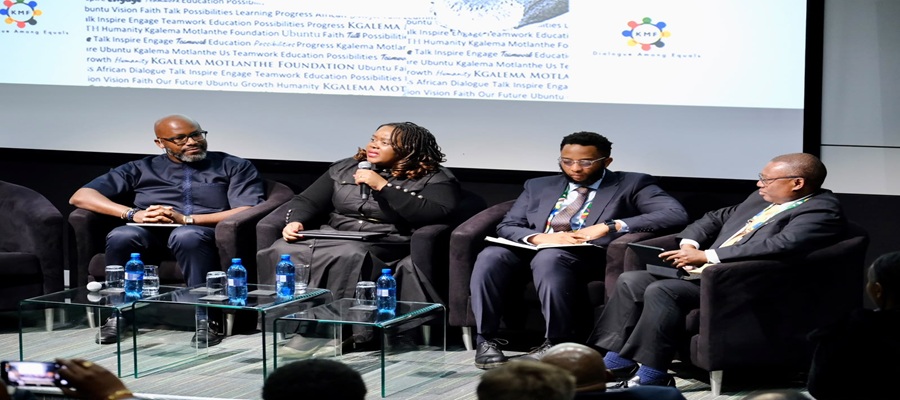
In a powerful call for continental solidarity, Ralph Mupita, Group CEO of MTN, has asserted that the future of the African continent depends on the dismantling of xenophobic barriers.

Speaking at the Kgalema Motlanthe Foundation (KMF) Winter Seminar, Mupita framed migration as a fundamental characteristic of the African identity, urging South Africa and other nations to embrace integration over exclusion.
He emphasised that the survival of African enterprises depends on a borderless approach to trade and talent. “The digital economy we’re fast moving to knows no borders.” Mupita declared, noting that the mindset of exclusion is an outdated relic that hinders the continent’s ability to compete globally.
He argued that for Africa to leverage the African Continental Free Trade Area (AfCFTA), the psychological barriers of xenophobia must be eradicated.
Providing a stark financial justification for this stance, Mupita highlighted MTN’s own operational reality as a blueprint for Pan-African success. “We earn about 80 to 82% of our earnings from outside South Africa,” he revealed, illustrating that the prosperity of South African-born entities is inextricably linked to their success across the rest of the continent. This figure underscores the interdependence of African economies and the danger of isolationist policies.
Mupita’s stance was strong advocating for unity: “The future of Africa will not be determined by the borders that separate us, but by the economic opportunities that connect us. Governments must set predictable policy and regulations.
Businesses will follow and allocate resources and capital. Together, we can build a continent where opportunity is more evenly shared and prosperity is more widely created.”
Analysts observing the seminar noted that Mupita’s remarks come at a critical juncture where economic volatility often fuels nationalist rhetoric. By tying the fight against xenophobia to the balance sheet, MTN is positioning Pan-Africanism beyond the moral imperative to its function as a business necessity. The CEO stressed that “Migration is part of who we are,” suggesting that the movement of people is the primary engine for the movement of capital and innovation.

Lagos Chamber of Commerce and Industry (LCCI) has urged the Federal Government and the National Pension Commission (PenCom) to suspend the proposed increase in Nigeria’s mandatory pension contribution from 18 per cent to 21 per cent, warning that the policy would raise the cost of doing business, threaten jobs and undermine enterprise sustainability at a time of mounting economic pressures.

Dr. Chinyere Almona, director general of the LCCI, said while strengthening retirement security remains an important policy objective, increasing mandatory pension contributions by three percentage points would impose additional financial burdens on businesses already grappling with high borrowing costs, persistent inflation, foreign exchange volatility, rising energy prices and multiple taxes.
According to the chamber, the proposed increase comes at a period when many businesses, particularly micro, small and medium-sized enterprises (MSMEs), are struggling to remain profitable amid Nigeria’s challenging operating environment.
The LCCI noted that Nigeria’s existing mandatory pension contribution rate of 18 per cent comprising 10 per cent by employers and 8 per cent by employees is already broadly aligned with the Organisation for Economic Co-operation and Development (OECD) average of 18.8 per cent.
It argued that raising the contribution to approximately 21 per cent would place Nigeria above several comparable economies, including the United Kingdom, where mandatory contributions stand at 8 per cent; the United States at 12.4 per cent; Kenya at 12 per cent, subject to earnings caps; and South Africa, where there is no equivalent mandatory private-sector pension contribution.
The chamber warned that implementing the proposed increase would significantly raise employment costs for employers, discourage new recruitment, constrain wage growth and place disproportionate pressure on MSMEs, which account for a substantial share of employment in Nigeria.
According to the LCCI, the higher payroll obligations could also reduce Nigeria’s competitiveness as an investment destination, encourage non-compliance with pension regulations and push more businesses into the informal sector.
“A stronger pension system cannot be built on weaker businesses,” the chamber stated, stressing that economic sustainability and business growth remain critical to expanding pension coverage over the long term.
The LCCI therefore called on the Federal Government to defer the proposal until a comprehensive Nigeria-specific actuarial and economic impact assessment is conducted to determine its implications for businesses, workers and the broader economy.
It also urged policymakers to engage in extensive consultations with organised private sector groups, labour unions and other key stakeholders before implementing any changes to the country’s pension contribution framework.
According to the chamber, the government’s immediate priority should be restoring business confidence, preserving existing jobs, encouraging investment and expanding the formal economy, which it described as the most sustainable pathway to improving retirement savings.
As an alternative to increasing contribution rates, the LCCI advised PenCom to focus on developing more innovative investment instruments capable of generating stronger returns on pension assets.
The chamber said improving investment performance would enhance contributors’ retirement savings without imposing additional financial obligations on employers and employees already facing difficult economic conditions.

History as Lagos Becomes First Nigerian State to Launch Greenhouse Gas Registry

AMCON Puts ntel Up for Sale, Seeks Investors

Nigeria Atomic Energy Commission Seeks Collaboration on Power Plants

AI Investment Gap Threatens Africa’s Future Growth

UNN to Partner Firm on AI, Smart Mobility Innovation Centre

NRC, Ponzi Scheme Collapses Resulting Loss of Billions of Naira

EFCC Busts NIS Visa Overstay Racket, Uncovers N700m in an Account

Tokenization, Blockchain Technology will Transform Financial Institutions – IMF

From Scarcity to Scale: What Africa Can Learn from India’s Agricultural Transformation

BON Establishes Six Ad Hoc Committees to Modernize Broadcasting




 E-Business2 days ago
Report Says Cybercriminals Deploy Malware to Hijack Crypto Wallets, Monitor Browsers Telegram

 News2 days ago
See Verified 20 Countries Nigerian Passport Holders Can Travel Visa-Free

 Telecom2 days ago
Subscribers, Telcos Warn FCCPC over Airtime Lending Enforcement

 Telecom2 days ago
NCC, REA Partner to Cut Telecom Costs with Renewable Energy

 E-Business2 days ago
NPC Opens 131 Births, Deaths Registration Centres in Anambra

 General News2 days ago
AfDB, Nigeria Urge African Control of Mineral Resources

 General News2 days ago
Lagos Chamber Opposes 21 Percent Pension Contribution, Warns of Job Losses

 Telecom2 days ago
Nigeria Pushes for United African Front Ahead of Global Telecoms Elections