

/home/kenneth/web/nigeriacommunicationsweek.com.ng/public_html/wp-content/themes/zox-news/parts/post-single.php on line 153
">
Warning: Undefined array key 0 in /home/kenneth/web/nigeriacommunicationsweek.com.ng/public_html/wp-content/themes/zox-news/parts/post-single.php on line 153
Warning: Attempt to read property "cat_name" on null in /home/kenneth/web/nigeriacommunicationsweek.com.ng/public_html/wp-content/themes/zox-news/parts/post-single.php on line 153
Market Expansion Drives Courier Masters – Okwashi

Columba Okwashi, chief operating officer Courier Masters has said that his organization is an assemblage of people that really know the art of courier and all it takes to run the business.
He said gathering people with outstanding track record in the courier business has helped to position the eight-year old company as a reliable and dependable company in terms of service delivery and as a company that ranks the first 10 amongst the courier companies in Nigeria.
Okwashi said that having looked at the Nigerian market, the management of the courier outfit under Mrs. Uche Obi as managing director /chief executive officer, discovered that courier companies on ground had not been able to meet the challenges of the market and they felt they could come and carve a niche in the market place by addressing those areas that had not been met.
He said the courier industry is passing through different times where a lot of services are now involved in courier apart from document delivery, light and big parcels which they carry from one place to the other and the delivery of AGM documents, IPOs and dividend warrants.
Okwashi informed that what is happening in the banking sector where the banks are opening a lot of branches across the country has stimulated that they now go into removals providing support to banks in the movement of stationeries, furniture, safe and other logistics for banks to various parts of the country even as he also hinted that Courier Masters is also being driven by the expansion to think of going beyond locating their branches in the 36 states of the federation to other nooks and crannies to make their services available to their various bank clients .In doing this, he said it may not be cost effective for the company but they are looking into the future.

Okwashi disclosed his displeasure over the activities of quacks in the industry and said the practice has given his registered colleagues a bad name in the industry. He said the Nigerian market is a very large one and that if anybody wants to operate courier, the person should get registered and play by the rules of the profession instead of cutting corners and rubbishing the name of the courier industry. He commended the Courier Regulatory Department (CRD) for their effort to sanitize the sector through their several raids on fake courier operators.
Okwashi who said his company has one of the best networks urged the courier association bodies, Association of Nigerian Courier Operators (Anco) and Nigeria International Courier Association (Niaca) to work closely with CRD to improve the business even as he saw a great hope and projected that things will get better for the industry before the fall of the decade.
Okwashi informed that to remain in business and face the challenge of time the company is looking towards improving their service delivery because as he said, the courier business is all about speed and safety delivery of consignments.
In this regard he said "We have put on grounds schemes on service controls. By this, we look at our transit time which is very important because if you must continue to receive patronage from your clients, you must continue to service them well and give them quality service. You have to make sure their shipments are delivered in good time and in tact’’


Warning: Undefined array key 0 in /home/kenneth/web/nigeriacommunicationsweek.com.ng/public_html/wp-content/themes/zox-news/parts/post-single.php on line 493
Warning: Attempt to read property "cat_ID" on null in /home/kenneth/web/nigeriacommunicationsweek.com.ng/public_html/wp-content/themes/zox-news/parts/post-single.php on line 493


Lagos State has become the first sub-national government in Nigeria to establish a comprehensive Greenhouse Gas Registry, a move aimed at strengthening climate governance, improving emissions accountability and accelerating the state’s transition to a low-carbon economy.

The Lagos State Greenhouse Gas Registry (LGHGR) was unveiled at the Central Business District, Alausa, Ikeja, at a ceremony attended by Prof. Akin Abayomi, commissioner for Health, members of the State Executive Council, representatives of the Federal Ministry of Environment, development partners, TPHG Technologies, the diplomatic and business communities, academics, civil society organisations and the media.
Describing the initiative as a landmark achievement in the state’s environmental sustainability drive, Dr. Babatunde Ajayi, general manager of the Lagos State Environmental Protection Agency (LASEPA), said the Registry marks a defining moment in Lagos’ climate action journey and reflects Governor Babajide Sanwo-Olu’s commitment to building a resilient, climate-smart and environmentally sustainable economy.
According to Ajayi, the digital platform will enable the state to accurately measure, monitor, report and verify greenhouse gas emissions across key sectors, providing credible data to guide environmental policies and climate interventions.
He said the Registry would strengthen evidence-based decision-making, improve transparency and accountability, support national and international climate reporting obligations, unlock carbon market opportunities and boost investor confidence in Lagos’ environmental initiatives.
Ajayi also commended TPHG Technologies for providing the technical expertise that made the pioneering project possible.
Delivering the keynote address, Prof. Abayomi described the Registry as a major milestone that positions Lagos at the forefront of climate governance and emissions accountability in both Nigeria and Africa.
He noted that climate change has evolved into a significant public health and governance challenge, stressing that access to reliable emissions data would enable the state to formulate evidence-based policies, attract climate financing, strengthen resilience and accelerate its transition to a low-carbon economy.
Providing insights into the technical framework of the project, Dr. Mofoluso Fagbeja, lead consultant and chief executive officer, TPHG Technologies, explained that the Registry was developed from the greenhouse gas inventory jointly undertaken by LASEPA and TPHG Technologies in 2022, using 2019 as the baseline year for emissions assessment.
He said the platform is designed to close critical emissions data gaps, particularly within the industrial sector, while supporting effective climate policy implementation, emissions management and sustainable development.
Fagbeja also disclosed that the greenhouse gas inventory estimated that poor air quality contributes to about 35,000 premature deaths annually in Lagos, underscoring the urgent need for stronger emissions control measures and cleaner environmental practices.
In a goodwill message, Balarabe Abbas Lawal, minister of Environment, represented by Mrs. Adenaike Olunimpe Oludunni, federal controller of Environment in Lagos, commended Lagos State for pioneering the initiative, describing it as a significant contribution to Nigeria’s climate commitments.
He said the Registry aligns with the country’s Nationally Determined Contributions (NDCs) under the Paris Agreement and supports the Federal Government’s Energy Transition Plan, while reaffirming the ministry’s commitment to deeper collaboration with Lagos State on climate governance and environmental sustainability.

Asset Management Corporation of Nigeria (AMCON) has commenced the process of divesting its interest in NTEL/NATCOM, saying the telecommunications company has undergone a major transformation that positions it as one of its most promising asset recovery success stories.

NatCom Development and Investment Limited, trading as ntel, is a Nigerian telecommunications company that acquired the core legacy assets of the defunct Nigerian Telecommunications Limited (NITEL) and its mobile arm (MTel) in 2015.
Mr. Gbenga Alade, managing director and chief executive officer, AMCON, disclosed this during an interactive session with senior media executives in Lagos at the weekend, where he also revealed that the Corporation recovered about N165 billion in the first half of 2026, representing a 64 per cent increase over the N107 billion recovered during the corresponding period of 2025.
Alade said the planned sale of NTEL follows the successful divestment of the Ibadan Electricity Distribution Company (IBEDC) and forms part of AMCON’s strategy to unlock value from distressed assets while attracting credible investors into key sectors of the economy.
According to him, the divestment programme is being conducted through a transparent and structured process designed to attract strategic investors capable of repositioning the telecoms company for sustainable growth.
He explained that NTEL, the successor to the defunct Nigerian Telecommunications Limited (NITEL), has embarked on a comprehensive three-pronged transformation strategy aimed at restoring its competitiveness and enhancing its investment appeal.
“The repositioning effort is designed to maximise value, strengthen operational competitiveness and prepare the business for long-term sustainability under new investment,” Alade said.
He described the transformation of NTEL as a significant milestone in the revitalisation of Nigeria’s legacy telecommunications assets, noting that the company remains an important part of the country’s telecom infrastructure and history.
Alade expressed confidence in the Board and Management of NTEL/NATCOM, saying their leadership has laid a solid foundation for the company’s next phase of growth.
“The remarkable transformation of NTEL is poised to become one of AMCON’s most notable success stories in the telecommunications sector. We have full confidence in the Board and Management of NTEL/NATCOM as they continue to demonstrate experience, innovation, diligence and commitment towards positioning this Nigerian-owned company to compete favourably with its peers both locally and internationally,” he stated.
He assured stakeholders that further updates on the divestment exercise would be communicated as major milestones are achieved, stressing AMCON’s commitment to transparency throughout the process.
Alade said the telecommunications divestment aligns with AMCON’s statutory mandate of maximising value from distressed assets, supporting economic growth and strengthening confidence in Nigeria’s financial system.
Beyond the planned sale of NTEL, the AMCON boss highlighted the Corporation’s improved operational performance, revealing that recoveries rose sharply in the first six months of the year.
According to him, the Corporation recovered approximately N165 billion between January and June 2026, compared to N107 billion recorded in the same period last year, while maintaining a cost-to-recovery ratio of just 2.3 per cent, reflecting greater operational efficiency.
Alade also announced what he described as a landmark Supreme Court judgment that strengthens AMCON’s debt recovery powers and clarifies key provisions of its enabling law.
He said the apex court affirmed that the AMCON Act constitutes a special legal regime that must be interpreted purposively because the Corporation was established to address the financial crisis triggered by the systemic banking challenges of 2008.
According to him, the Supreme Court further ruled that AMCON is exempt from paying stamp duties and confirmed that regardless of the size of an obligor’s indebtedness, the Corporation has the statutory authority to dispose of collateral assets in enforcing its rights and recovering outstanding debts.
“While we celebrate this landmark judgment and several other legal successes, we are not resting on our oars. We remain mindful of the various tactics employed by recalcitrant obligors to frustrate the Corporation’s operations,” Alade stated.
Responding to calls for the winding down of AMCON, the Managing Director alleged that many of those advocating the Corporation’s closure are debtors seeking to frustrate its recovery efforts.
He stressed that any decision on AMCON’s sunset remains the exclusive responsibility of its Board and the Central Bank of Nigeria (CBN), adding that the Corporation remains focused on recovering debts owed on behalf of the Nigerian people.
Alade also said AMCON has intensified collaboration with debt recovery partners, solicitors and receiver managers to improve the effectiveness of its recovery strategies.
“We regularly engage and sensitise our debt recovery partners, solicitors and receiver managers on the unique provisions of the AMCON Act. This ensures that when they appear in court on matters concerning the Corporation, they are fully conversant with both the facts and the applicable legal framework.
“In recognition of their commitment, and in response to prevailing economic realities, the Corporation has reviewed the commission structure for debt recovery agents and partners across the board. Together, we remain confident that we will continue to achieve significant success in our recovery efforts,” he said.
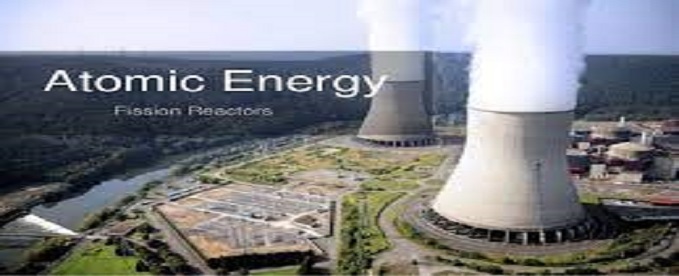
Nigeria Atomic Energy Commission (NAEC), has said that there are plans for Nigeria to begin to generate electricity from nuclear sources.

Mr Anthony Godwin Ekedegwa, chief executive, NAEC stated this when he recently visited Mr Umar Yusuf Girei, acting managing director, National Inland Waterways Authority (NIWA),in Abuja.
He was at NIWA’s office to solicit the support of NIWA in achieving the numerous advantages of using nuclear energy technology in the country.
According to him, the partnership of critical stakeholders in Nigeria will position the country well in developing and maintaining its nuclear power plant.
The NAEC chief said Nigeria intends to begin the generation of electricity from nuclear sources instead of fossil-based power plants and hydro-based power plants, stressing that for Nigeria to develop, there is a need for the country to diversify its energy needs.
In his remarks, Mr Girei assured NAEC of his agency’s readiness to collaborate on the advancement of a nuclear power plant in Nigeria.
He promised the full support of NAEC for the success of a nuclear power plant in the country, saying that as the organisation saddled with the responsibility of regulating and developing Nigeria Inland Waterways, his entity is strategically positioned to play a critical role in the federal government’s quest for sustainable energy through the new technology.

History as Lagos Becomes First Nigerian State to Launch Greenhouse Gas Registry

AMCON Puts ntel Up for Sale, Seeks Investors

Nigeria Atomic Energy Commission Seeks Collaboration on Power Plants

AI Investment Gap Threatens Africa’s Future Growth

UNN to Partner Firm on AI, Smart Mobility Innovation Centre

NRC, Ponzi Scheme Collapses Resulting Loss of Billions of Naira

EFCC Busts NIS Visa Overstay Racket, Uncovers N700m in an Account

Tokenization, Blockchain Technology will Transform Financial Institutions – IMF

From Scarcity to Scale: What Africa Can Learn from India’s Agricultural Transformation

BON Establishes Six Ad Hoc Committees to Modernize Broadcasting




 E-Business2 days ago
Report Says Cybercriminals Deploy Malware to Hijack Crypto Wallets, Monitor Browsers Telegram

 News2 days ago
See Verified 20 Countries Nigerian Passport Holders Can Travel Visa-Free

 Telecom2 days ago
Subscribers, Telcos Warn FCCPC over Airtime Lending Enforcement

 Telecom2 days ago
NCC, REA Partner to Cut Telecom Costs with Renewable Energy

 E-Business2 days ago
NPC Opens 131 Births, Deaths Registration Centres in Anambra

 General News2 days ago
AfDB, Nigeria Urge African Control of Mineral Resources

 General News2 days ago
Lagos Chamber Opposes 21 Percent Pension Contribution, Warns of Job Losses

 Telecom2 days ago
Nigeria Pushes for United African Front Ahead of Global Telecoms Elections