

General News
Mastercard harps on gender diversity and female entrepreneurship at the World Economic Forum in Africa


As part of its commitment to supporting the advancement of gender diversity and inclusion in Africa, Mastercard hosted the second edition of its ‘Together We Lead’ event, bringing together celebrated women leaders to discuss the critical role of female entrepreneurs in Africa.
Amanda Dambuza – entrepreneur and author, Lee Ann Lancaster – Chief Growth Officer of Mama Money, and Dr. Adriana Marais – physicist, technologist, astronaut candidate with the Mars One Project and founder of #ProudlyHuman, joined a panel discussion hosted by Shamina Singh, executive vice president, sustainability & president, Mastercard Center for Inclusive Growth, to discuss the challenges faced by aspiring businesswomen across Africa.
From making education, technology, and capital more accessible to encouraging cultural dialogue and overcoming gender stereotypes, the discussion at the event focused on ways in which women’s potential could be used to unlock stronger, more sustainable economies at a time when the failure to integrate women into national economies costs Sub-Saharan Africa $95 billion in lost productivity every year.
“Today, #Womenpreneuership is one of the largest opportunities for African women. Despite being the only region in the world where more women than men choose to be entrepreneurs, women are still constrained by a shortage of support and resources, training and social acceptance.
“At Mastercard, we’re committed to closing the gender gap – whether it’s progressing women to senior leadership roles, building diverse teams, ensuring equal pay, or investing in specialist programs and partnerships”, said Suzanne Morel, country manager – South Africa, Mastercard.

Top: Salah Goss, Head of Lab for Financial Inclusion, Mastercard. Lee Ann Lancaster; Chief Growth Officer; Mama Money.
Shamina Singh, Executive Vice President, Sustainability & President, Mastercard Center for Inclusive Growth,
Bottom: Amanda Dambuza, Entrepreneur, Businesswoman and Author of
“Baked in Pain. Dr. Adriana Marais, founder of #ProudlyHuman, Astronaut candidate with the Mars One Project
Suzanne Morel, Country Manager – South Africa, Mastercard.
The discussion also touched upon the positive impact that the digitization of cash can achieve by bringing more people into the formal economy, alleviating poverty, and reducing income inequality, which is especially beneficial for women who are disproportionately affected by financial exclusion.
By helping populations connect to networks that help them save, expand their business and become financially secure, governments and corporate partners contribute positively not only to individuals’ growth, but also to that of local economies.
“Through our Lab of Financial Inclusion, we have been able to help millions of women through the products we’ve launched to support sectors like education, agriculture and SMEs.
“Kupaa, our digital payments tool to make paying school fees easier, is currently available in over 350 schools in Africa with over 160,000 students and 110,000 parents using the solution.
“Only by taking a partnership approach are we able to generate ideas and address local challenges relevant to underserved and unbanked populations across industries”, said Salah Goss, head, Lab for Financial Inclusion, Mastercard.


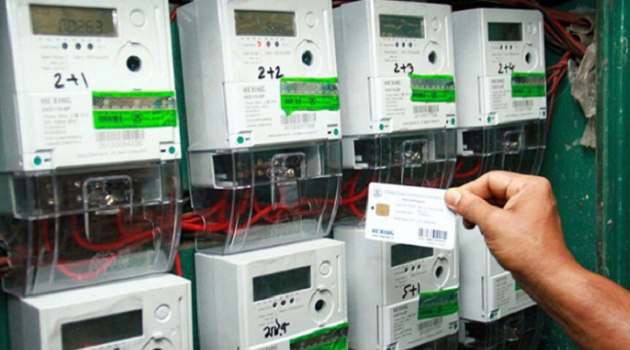
Nigerian Electricity Regulatory Commission (NERC) has ruled in favor of electricity consumers, directing distribution companies (DisCos) to refund ₦20.33 billion in outstanding costs for meters bought under the Meter Asset Provider (MAP) framework.

NERC
Signed on February 27, 2026, by NERC Chairman Musiliu Oseni and Commissioner Dafe Akpeneye, Order No. NERC/2026/025 amends a 2023 directive.
It requires DisCos to disburse the funds via energy credits over 12 months starting March 1, 2026, addressing years of slow refunds.
As of December 31, 2025, DisCos owed this amount due to delays in reimbursing prepaid customers who funded their own meters.
DisCos must automate credits for the full MAP meter cost upon activation, disbursed monthly over 120 months based on the customer’s tariff—credits cannot offset legacy debts.
Prepaid customers will receive a monthly token by the 4th day equivalent to the reimbursement value; for arrears, they’ll get two tokens per month.
Postpaid customers will see a distinct credit line on bills subtracted from totals, with two line items monthly for arrears.
NERC mandates monthly reports on reimbursement values using an approved template, plus dedicated email channels for complaints with resolution status included.
The order aims to end delays, improve notifications, and boost sector trust. DisCos must accelerate arrears recovery over 12 months without further excuses.
This follows NERC’s February 2026 compliance review, amid ongoing power sector challenges highlighted by Power Minister Adebayo Adelabu.


Nigeria Centre for Disease Control and Prevention (NCDC) has raised alarm over ravage of Lassa fever cases across 18 states and 67 Local Government Areas (LGAs) of the country.

Dr Jide Idris, director-general of NCDC, in statement yesterday, said that Bauchi, Ondo, Taraba, Edo and Benue accounted for more than 80 per cent of confirmed cases recorded during the 2026 peak transmission season.
Idris, described as particularly worrisome the growing infections among healthcare workers, with 28 confirmed cases and three deaths reported so far this season.
NCDC attributed the sustained transmission and rising fatalities to operational gaps at the state level, urging urgent action to strengthen outbreak response and control measures.
According to Idris, field investigations showed most transmissions were occurring in known endemic areas, but weak implementation of established response frameworks had contributed to the continued spread and higher case fatality rate.
He said that gaps identified include infections in general outpatient and maternity settings, poor adherence to Infection Prevention and Control (IPC) protocols, and inadequate pre-positioning of Personal Protective Equipment (PPE).
He added that delayed patient presentation due to financial barriers, inconsistent activation of State Incident Management Systems, weak contact tracing, persistent stigma and poor isolation centre standards were also driving transmission.
Idris emphasised that outbreak response implementation and health service delivery fell primarily under state governments within Nigeria’s federal structure, urging them to strengthen accountability and resource allocation.
He called on affected and high-risk states to urgently activate and closely monitor their Incident Management Systems, ensuring timely coordination and efficient outbreak response at all levels of healthcare delivery.
He also urged the immediate release of response funds, strict enforcement of Infection Prevention and Control (IPC) compliance in public and private health facilities, and continuous availability of PPE and other critical supplies.
The NCDC boss also advocated accelerated financial protection mechanisms to reduce late presentation and high fatality rates, alongside institutionalised rodent control and environmental sanitation measures under a One Health approach.
He advised healthcare workers to maintain a high index of suspicion and adhere strictly to IPC guidelines.
He also urged the public to keep environments clean, prevent rodent entry into homes, store food safely and seek early medical care when symptoms appeared.
Idris noted that Lassa fever was treatable, with improved outcomes when detected early, adding that Nigeria was also responding to other epidemic-prone diseases including Cerebrospinal Meningitis, Diphtheria, Mpox and Cholera.
He reiterated NCDC’s toll-free emergency line, 6232, for reporting suspected cases and obtaining further information

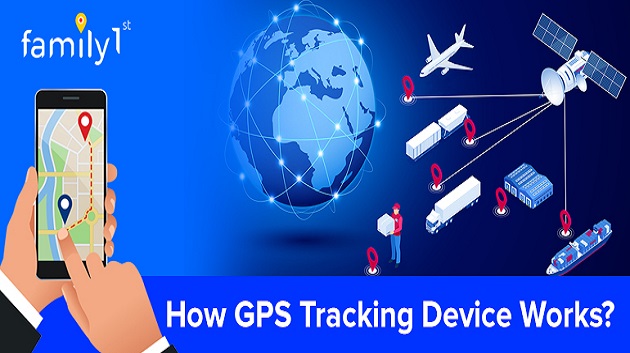
The Lagos State Traffic Management Authority (LASTMA) has deployed a number of real-time digital solutions, including surveillance drones, GPS-enabled patrol vehicles, and automatic incident detection software.

The agency has also established a central command and control centre to reduce emergency response times and improve traffic safety throughout Lagos.
According to the agency, the digital transition will replace manual reporting and fragmented coordination with an integrated, data-driven platform capable of instantaneously detecting, verifying, and dispatching responders to crashes and breakdowns.
According to general manager Olalekan Bakare-Oki, LASTMA, body cameras, mobile data terminals, and toll-free hotlines now feed into a unified operations hub that gives real-time visibility of traffic situations across the state.
Incidents detected by digital surveillance are validated in real time and dispatched to the nearest patrol team using GPS tracking, while officers are instructed via modern communication devices.
According to the agency, the system has eliminated delays caused by poor event reporting and logistical constraints, enabling faster diversions, quicker clearance of accident scenes, and better coordination with medical and security agencies.
Field commanders and rescue teams now operate on synchronised data networks, allowing immediate decisions that reduce secondary crashes and prolonged congestion.
According to LASTMA’s 2025 operational summary, the agency rescued 1,075 people from crash scenes, and impounded 17,169 vehicles for various traffic violations across Lagos through its toll-free hotline.
These figures reflect how timely reporting and coordinated response have already reduced secondary accidents and eased congestion, according to the agency.
It went on to it achieved this with the toll-free reporting system, body cameras, and field coordination networks but with the newly deployed suite of smart technologies, the agency’s impact is poised to multiply.
Bakare-Oki said the upgrade aligns with the state’s smart-city agenda, positioning LASTMA as a technology-enabled public safety agency and laying the groundwork for faster, more reliable mobility management on Lagos roads.

NAICOM Signs MoU with BPP to Deepen Insurance Compliance in Public Procurement

FG Approves GIS-enabled Digital Postcode to Tackle Logistics Gaps, Boost E-commerce

Firm Enhances its Security Awareness Platform with SCORM and PDF Support

GSMA, African Operators, Others to Launch Low-cost 4G Devices

Binance Cuts Illicit Activity Exposure by 96%, Leads Global Crypto Compliance Push

Dr. Cairo Ojougboh Foundation Bolsters Nigeria’s Education Drive with ₦2.7m Student Support
Kaspersky Brings more Transparency to Threat Detection with New Hunt Hub

NDPC Commits to Balancing Data Privacy, Protection Information

OADC Lagos Reinforces Commitment to Local Data Hosting and Digital Transformation @ NDPC’s National Privacy Week Summit

PwC Reveals AI Scaling Gap Slows Africa’s Digital Transformation




 Telecom2 days ago
Sunil Bharti Mittal Conferred GSMA Lifetime Achievement Award for Transforming Global Telecommunications

 Telecom2 days ago
Why Digital Trust Matters: Secure, Responsible AI for African SMEs?

 General News2 days ago
Krishnan Exits Africa Data Centre to Embark on Professional Chapter

 E-Business2 days ago
Jumia Tech Week 2026 Begins with Tech Deals on Smartphones, Electronics, and Everyday Technology

 General News3 days ago
Leo Stan Ekeh at 70; thanks Tinubu, Obasanjo, Nigerians, Global Tech Community

 Broadcasting2 days ago
NCAA Orders Overland Airways to Refund VAT Charged on 2025 Tickets

 E-Financial1 day ago
NRS Targets N40trillion in Tax, Royalty Revenue in 2026

 Telecom2 days ago
House Probes Fintech Regulation via Public Hearing on New Commission Bill