

E-Business
Minister for ScienceTech, DfiD Boss Lead Discussions on Sustainable Development

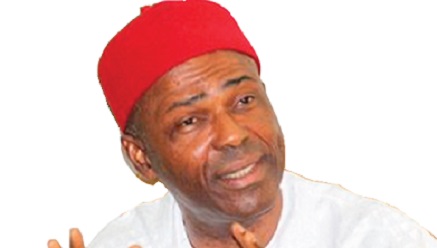
Dr. Ogbonnaya Onu, minister for Science and Technology, and Mr. Ben Mellor, head of Nigerian Office, Department for International Development Nigeria (DFiD), are set to lead discussions on sustainable development when the seventh edition of the thought leadership series, Sustainable Conversations, gets under way at the Transcorp Hilton Hotel in Abuja on Thursday, January 28.
Dr. Onu will be joined by other discussants among who are Ochapa Ogenyi of the Office of the Senior Special Assistant to the President on MDGs; Dayo George, Corporate Director, Unilever Nigeria; Mr. Yusuf Kazaure, MD and CEO, Galaxy Backbone, and Dr. Hussaini Abdu, Country Director, PLAN International.
Sustainable Conversations is a thought leadership breakfast series that focuses on the development of key sectors in the country. This edition, with the theme: “Fast-tracking targets through Technology and Education.” is put together by Nigeria’s most innovative and fastest growing telecommunications company, Etisalat, and renowned Management Consultancy firm, Thistle Praxis Consulting.
Commenting on Etisalat’s support for the thought leadership series, Ibrahim Dikko, Vice President, Regulatory and Corporate Affairs, Etisalat Nigeria said “Etisalat is delighted to be at the forefront of initiatives that can contribute to national development at all times. It is a further commitment of our company to being a very critical player in sustainable developments in Nigeria.”
He added that critical sectors in Nigeria such as the education and ICT sectors, like in all developing countries, are too important to be left to the government alone, and noted that they would require strategic interventions from all, including private individuals and corporate organisations.
Dikko also restated the company’s commitment to Nigeria just as he identified education as a major CSR major pillar alongside health and environment. “At Etisalat, we take education very seriously, so much so that presently we have five key interventions all aimed at raising educational excellence in the country.

Ini Onuk, Lead Consultant/CEO of ThistlePraxis Consulting Limited said the development of the education and technology sector would be the first step towards achieving United Nations’ Sustainable Development Goals.
According to her, education and technological development are two important sectors that can transform the entire continent by 2030 through the attainment of the global goals if well harnessed.
“Education is crucial to the development of any economy while the development of science and technology has been identified as a move towards the development of infrastructure which all African countries need the most. For Africa to achieve the SDGs, sound education policies that will wipe out mass illiteracy and give room for the utilization of the educated for the implementation of the goals, are urgently needed,” she said.
It is expected that the discussions will culminate in a white paper that would be forwarded to relevant organs of government and other stakeholders, while participants would reflect a select list of CEOs, captains of industry, sector professionals and experts, non-profit Institutions as well as the academia.



Human Rights Writers Association of Nigeria (HURIWA) has opposed a bill seeking to compel major global social media companies to establish physical offices in Nigeria.

The rights advocacy group urged the National Assembly to discard the proposed legislation, warning that it could become a tool for censorship and undermine citizens’ constitutional right to freedom of expression, despite being presented as a measure to strengthen Nigeria’s digital economy and improve corporate accountability.
The position was contained in a presentation submitted yesterday by Emmanuel Onwubiko, national coordinator, HURIWA, to the chairman of the Senate Committee on ICT and Cyber Security.
The bill, sponsored by Senator Ned Munir Nwoko, has already passed second reading in the Senate and is before the committee for further legislative consideration.
HURIWA said it carefully reviewed the proposed legislation and concluded that compelling global technology companies to establish offices in Nigeria was unnecessary and potentially counterproductive.
The organisation argued that while the firms generate substantial revenue from Nigeria’s vast digital market, they already engage Nigerians through existing structures, including paying eligible content creators, working with local technology professionals and participating in legal proceedings whenever required.
According to the group, appointing local representatives where necessary would adequately address concerns about engagement with regulators and users without forcing the companies to maintain physical offices.
It also dismissed claims that mandatory country offices would significantly improve consumer complaint resolution, technology transfer or employment generation.
HURIWA maintained that the platforms already have effective feedback mechanisms for resolving users’ complaints and routinely appear before Nigerian courts through their representatives whenever litigation arises.
The group, however, said its greatest concern was the potential for the proposed law to be used as an instrument for restricting freedom of expression.
It argued that establishing local offices could expose global social media companies to pressure from government authorities to remove online content considered critical of those in power.
According to the rights group, the presence of social media companies in Nigeria could become an avenue for authorities to pressure them into abandoning internationally recognised digital rights standards in favour of politically motivated content moderation.
It recalled previous attempts to regulate social media in Nigeria that generated widespread concerns over possible restrictions on free speech, stressing that any legislation affecting the digital space must contain clear safeguards against abuse.
The organisation warned that the proposed law should never become “a backdoor mechanism for government surveillance, arbitrary content removal or political censorship.

Nigeria has emerged as one of Africa’s most regulated online gambling markets, even as illegal operators continue to dominate the continent, according to a new report by Gaming Compliance International (GCI).

The report, the first comprehensive assessment of online gambling across all 54 African countries, showed that Africa’s online gambling Gross Gaming Revenue (GGR) reached $23 billion in 2025.
However, only $5.2 billion (23 per cent) was generated by licensed operators, while $17.8 billion (77 per cent) remained in the unregulated market.
In West Africa, total online gambling revenue rose to $4.8 billion in 2025 from $4.3 billion in 2024. Of the 2025 figure, regulated operators accounted for $1.5 billion (31 per cent), while $3.3 billion (69 per cent) flowed to unlicensed platforms, highlighting the region’s persistent enforcement challenges.
Nigeria stood out as the region’s strongest performer, recording the lowest unregulated market share at 56 per cent, compared with the West African average of 69 per cent and the African average of 77 per cent.
The study also found that online gambling participation across Africa increased from 198 million people (13 per cent of the population) in 2024 to 215 million (14 per cent) in 2025.
Despite this growth, GCI estimated that illegal operators deprived African governments of about $3.55 billion in tax revenue in 2025. The number of unlicensed gambling platforms targeting African consumers also rose to 4,129, up from 3,644 in 2024.
Commenting on the findings, Matt Holt, chief executive officer, GCI, said the report provides regulators with the first continent-wide benchmark for strengthening oversight and consumer protection.
Ismail Vali, president, GCI, urged governments to develop competitive and well-regulated markets that encourage consumers to patronise licensed operators, boost public revenue and attract greater investment.
Online gambling in Nigeria is regulated by the Nation Lottery Regulatory Commission.


At the height of the Northern Hemisphere tourist season, demand for communications and mobile Internet services rises sharply. Kaspersky’s security experts have uncovered scams that target anyone purchasing mobile connections or SIM cards worldwide.

Fraudsters create counterfeit websites that look like the portals of major regional and international telecom providers to trick users into revealing their phone numbers, personal details or banking information.
Kaspersky is sharing several examples of these fake login pages that mimic legitimate telecom operator sites and giving recommendations on how not to be deceived.
In the first case, scammers exploit the brand name of an international telecommunications company operating services in Asia, Africa and Europe. Fake authentication pages encourage users to put in their phone number and credentials.
While the first example shows the different design, the second scam site closely mimics the original log in page, making it hard for users to tell the difference and spot a fake. Entering authentication or payment data on fraudulent web sites may result in money or data loss and become a reason for more frequent spam and fraudulent calls.
Another example is a scam page which poses as another international communications company, working in North Africa, the Middle East and Southeast Asia. In this scheme scammers encourage users to top up their mobile data/Internet plans by entering their personal information and bank cards details.
Kaspersky experts have also identified a scam when cyber criminals suggest users enter their personal data to check and pay a bill inquiry. Such scam schemes are usually aimed at gaining victims’ personal data for further fraud or account hacking and stealing money.
“Because of the active use of AI, scammers can now create fake pages with ever increasing accuracy and speed, targeting the most popular user interest areas. We constantly see scams revolving around sports events, music concerts, seasonal sales and holidays. Unfortunately, the telecoms industry is no exception.
To keep your data and money safe, be vigilant when purchasing mobile or Internet plans online. Using an eSIM – purchased through an official app – is one way to avoid fake telecom sites, as it eliminates the need to enter personal details on questionable web pages.
If you’re unsure about a site’s legitimacy, search for the brand name directly in a search engine and enable a security solution that blocks phishing links for you,” comments Tatyana Kulikova, cybersecurity expert at Kaspersky.

HURIWA, CLO Protests Bill Asking Social Media Firms’ to Open Shops Nigeria

Anambra Govt Bans Graduation Ceremonies in Anambra Schools

Airtel Secures Another 10-year Spectrum Renewal in Nigeria

Moniepoint as a Key Driver in Expanding Financial Access for Businesses in Nigeria

Nigeria, Israel Strengthen Research, Technology Collaboration

NRC, Ponzi Scheme Collapses Resulting Loss of Billions of Naira

NASENI Moves to Digitize CCB’s 5m Assets Declaration and Operations

Tokenization, Blockchain Technology will Transform Financial Institutions – IMF

EFCC Busts NIS Visa Overstay Racket, Uncovers N700m in an Account

From Scarcity to Scale: What Africa Can Learn from India’s Agricultural Transformation




 E-Financial2 days ago
FG Says Rumours, Fear, Can Crash Banks

 Telecom2 days ago
Court Dismisses Pan African Towers’ Bid to Halt Ex-CEO’s Suit, Awards ₦500,000 Costs

 E-Business2 days ago
Kaspersky Warns of a Phishing Campaign Abusing Microsoft Authentication Mechanism

 Telecom2 days ago
Telcos Seek Clear Regulatory Framework on Airtime Credit Services

 Telecom2 days ago
MTN Nigeria Announces 2026 mPulse Spelling Bee, Opens Entries for Students Nationwide

 Telecom2 days ago
MTN Warns Customers against Fake Promo

 News2 days ago
IMF Sees 4% AI Growth Boost for Africa

 E-Financial2 days ago
EU Debunks Fake Compensation Scheme Targeting West African Bank Customers