

News
Minister Hails Presidential Advisory Committee against Corruption

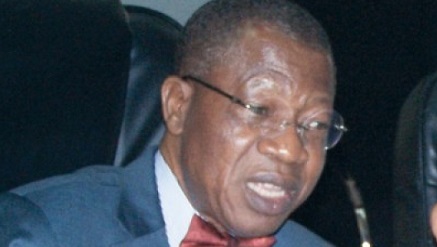
Alhaji Lai Mohammed, minister of Information and Culture, has hailed the role being played by the Presidential Advisory Committee against Corruption, led by renowned Professor of Law and civil rights Activist Itse Sagay, in the country’s anti-corruption battle.
”Bodies like yours, the Presidential Advisory Committee against Corruption, are critical to the success of the fight,” the minister said while receiving members of the Committee at his office in Abuja on Tuesday. ”We have no doubt that you will continue to advise the administration on the prosecution of the war against corruption and the implementation of required reforms in Nigeria’s criminal justice system.”
Alhaji Mohammed said the visit by members of the Committee could not have come at a better time, ”considering that we are presently running a National Sensitization Campaign against Corruption”.
He acknowledged the huge support that the ministry had received – and has continued to receive – from the committee since the launch of the campaign, saying it had gone a long way in contributing to the modest achievement we have made since the launch.
”I can say, without equivocating, that since the launch of the sensitization campaign against corruption, we have succeeded in getting more and more Nigerians talking about corruption. Not everyone has joined the campaign, but we see the increased national debate on corruption as a positive development, because the more people are aware of the evils of corruption, the more the likelihood for them to support the government’s battle against corruption,” the minister said

He said a recent poll by the Governance Accountability Initiative for Nigeria (GAIN) has shown that the support among Nigerians for the anti-corruption war is very high, with 76% of respondents expressing support for the initiative, while also showing that in terms of areas of concern among Nigerians, the anti-corruption fight is next only to insecurity.
”These results tally with what we have found out in our various engagements since we launched the National Sensitization Campaign,” Alhaji Mohammed said, while commending the media for the major role they have played in disseminating necessary information about the campaign to the people, and also for providing feedback to the government.
He said while some of those who have picked issues with the strategy adopted by the government to sensitize Nigerians may have done so genuinely, perhaps because they have not taken the time to understand the strategy, others are only criticising the anti-graft campaign just to shoot it down.
”A key strategy we have adopted in our campaign is to strip corruption of its previous abstract status by putting a face to it. In other words, we are emphasizing and highlighting the cost of corruption to the lives of Nigerians.
”When we revealed that 55 people allegedly stole a total of 1.34 trillion Naira between 2006 and 2013 – a figure that has been independently confirmed by a Civil Society Organization, Media Rights Agenda (even though with an extended timeline), our intention was not to villify anyone but to show to Nigerians how funds that could have been used to provide infrastructure and upgrade educational and health facilities, for example, have been looted,” the Minister explained.
He assured that the government would continue to vigorously pursue the anti-corruption fight in accordance with the rule of law, adding: ”We will not relent, not now that the fight has gained momentum among Nigerians and attracted global support.”
Earlier, Prof. Sagay said the visit was to give the Committee the opportunity to dialogue with the Minister, whom he described as proactive, courageous, intelligent and knowledgeable, and his team, especially because the parastatals under the Ministry of Information and Culture have a vital role to play in the fight against corruption.
”Parastatals like the NTA, FRCN, NOA and VON are critical in educating the public and increasing the level of consciousness (about the evils of corruption),” he said.
The Committee head urged Nigerians to buy into the anti-corruption struggle, saying by doing so, they are laying the groundwork for their children to live in an atmosphere of stability and to have the opportunity to achieve their God-given potentials.



Ogba Ogbaga, an Abuja-based lawyer, has said that he has been instructed to institute legal proceedings against MTN Nigeria, Airtel Nigeria, Globacom, 9mobile and MultiChoice Nigeria, operators of DStv, over what he described as unfair consumer practices relating to expiring data bundles and television subscriptions.

In a statement posted on Facebook, Ogbaga said his law firm, GIMBG Legals, received instructions from its client, KAA, also known as KaaTruths, to challenge the companies’ subscription policies in court.
According to him, the proposed suit will question whether telecom operators and DStv’s subscription models comply with provisions of the Federal Competition and Consumer Protection Act (FCCPA) 2018 and other applicable laws.
Ogbaga alleged that telecom providers operate internet data services that are unfair to consumers, claiming subscribers sometimes do not receive the services they paid for but still lose their subscriptions once the validity period expires.
He also criticised DStv’s subscription model, arguing that consumers lose paid viewing time due to factors such as power outages, adverse weather conditions and service interruptions, while subscriptions continue to count down regardless.
“Our clients have complained that MTN data services are unduly one-sided,” Ogbaga said, adding that the legal action would also extend to other telecommunications providers and DStv.
He said the court action would seek judicial determination on whether the companies’ subscription practices comply with consumer protection laws.
The lawyer also invited interested legal practitioners to collaborate on the case, saying his firm would provide updates as the matter progresses.
In a separate Facebook post on Wednesday, Ogbaga said previous policy discussions, town hall meetings and debates at the National Assembly had failed to address the concerns raised by consumers.
He argued that telecom operators regularly carry out maintenance and network upgrades that temporarily disrupt services without extending customers’ subscription periods, while DStv subscribers also lose viewing time because of electricity outages and weather-related disruptions.

The National Insurance Commission (NAICOM) has commenced the issuance of new licence certificates to insurance companies that successfully met the industry’s new minimum capital requirements, marking the formal beginning of a new regulatory era aimed at strengthening the financial capacity, governance and global competitiveness of Nigeria’s insurance sector.

At a ceremony held at the Commission’s headquarters in Abuja, the Commissioner for Insurance, Olusegun Ayo Omosehin, presented the new licence certificates to compliant operators, describing the exercise as a major milestone in the industry’s recapitalisation programme.
According to the Commission, a total of 43 insurance companies declared compliant with the new capital requirements are expected to receive the new licence certificates in phases.
Omosehin congratulated the successful companies, saying the issuance of the new licences signals the beginning of a stronger regulatory framework anchored on improved capitalisation, sound corporate governance, innovation and sustainable growth.
He urged operators to leverage their enhanced capital base to develop innovative insurance products, improve operational efficiency and deepen insurance penetration across the country.
The Commissioner said the Commission expects the recapitalised companies to deliver stronger financial performance while maintaining high standards of professionalism and customer service.
He also announced that NAICOM’s next major regulatory initiative would be the implementation of the Risk-Based Capital (RBC) framework, under which insurers’ capital levels would be aligned with the risks inherent in their respective business portfolios.
According to him, the new framework will further strengthen the industry’s resilience by ensuring that insurers maintain capital commensurate with the risks they underwrite, thereby enhancing policyholder protection and boosting market confidence.
Omosehin reaffirmed the Commission’s commitment to removing regulatory impediments where necessary while maintaining effective oversight to safeguard policyholders and strengthen confidence in the insurance market.
The issuance of the new licence certificates marks the commencement of a phased transition to higher capital standards aimed at improving the financial capacity, solvency and claims-paying ability of insurance companies operating in Nigeria.


Management of Nigeria CommunicationsWeek Media has withdrawn its publication titled “Adefolarin Ogunsanya and the Allegations of Shareholder Interference and Self-Dealing at Pan African Towers,” which was published on its platform.

The decision to retract the story follows an editorial review to ensure that the platform maintains the highest standards of accuracy, fairness and responsible journalism in reporting matters that are the subject of ongoing judicial proceedings.
Nigeria CommunicationsWeek acknowledges that the issues raised in the publication remain before the courts and have not been finally determined.
Accordingly, the organisation has decided to remove the article from its platforms pending the conclusion of the legal processes or the availability of additional verified information.
The publication regrets any inconvenience or misunderstanding the report may have caused to readers or any individuals or organisations mentioned in the story.
Nigeria CommunicationsWeek remains committed to the principles of balanced, factual and ethical journalism and will continue to uphold professional standards in its coverage of judicial and corporate governance matters.

ITUC-Africa Faults FG’s Plans to Remove Electricity Subsidy

SEC Begins Full e-Registration for Capital Market Services

NAICOM Revokes Nigeria Reinsurance’s Licence over Failure to Meet MCR

Many Nigerian Airlines May Collapse within 30 Days – Onyema

Ogbaga, Abuja Lawyer to Sue Telcos, DStv over Alleged Unfair Practices

NRC, Ponzi Scheme Collapses Resulting Loss of Billions of Naira

From Scarcity to Scale: What Africa Can Learn from India’s Agricultural Transformation

EFCC Busts NIS Visa Overstay Racket, Uncovers N700m in an Account

BON Establishes Six Ad Hoc Committees to Modernize Broadcasting

How EFCC Turned Recovered Loot Into School Supplies for Thousands of Nigerian Students




 E-Business2 days ago
Kaspersky Identifies Cyberespionage as a Growing Threat Across Africa, Others

 Broadcasting2 days ago
NBC Files Fresh Appeal against Judgment Barring it from Imposing Fines on Broadcast Stations

 News2 days ago
INTERPOL Report Shows AI Powers 55% of Cybercrimes in Africa Amid $484m Losses

 E-Financial2 days ago
Nigerians Lost N25.85Bn to Digital Payment Fraud in 2025 –CBN

 Telecom2 days ago
Why Strong Institutions Remain Africa’s True Growth Engine

 News2 days ago
Nigeria Expands Deep-tech Skills Pipeline

 General News2 days ago
ASUS and Konga Unveil West Africa’s First Flagship Experience Store in Lagos

 E-Financial2 days ago
NRS Announces 30 Percent Tax on Corporate Crypto Income