

Telecom
MTN Foundation Leads Successful Anti-Substance Abuse Advocacy Walk in Lagos

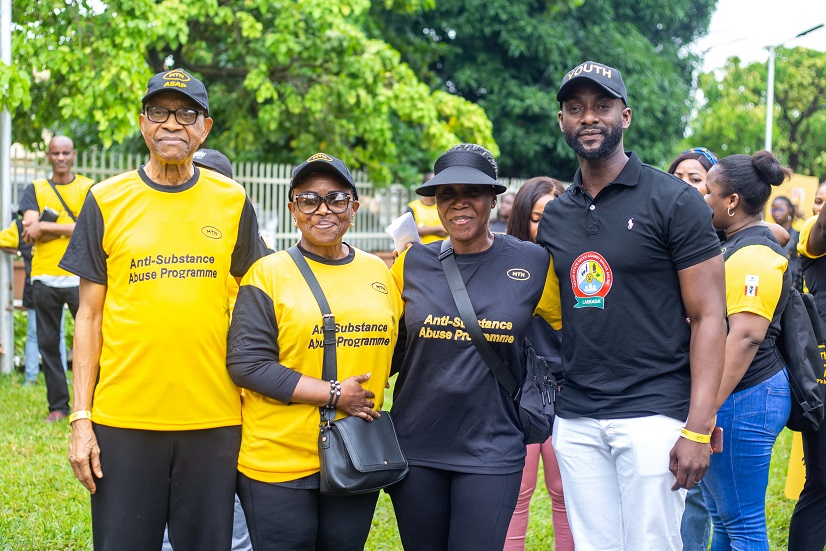
The MTN Foundation, through its Anti-Substance Abuse Programme (ASAP), recently held an advocacy walk in Lagos aimed at raising awareness and combating drug abuse.

The walk started at the NDLEA Office in Gbagada and ended at the Ikeja Military Cantonment on Mobolaji Bank Anthony Way, Maryland, covering a distance of 10.2 km.
This event saw the active participation of the Lagos State Commissioner for Youth and Sports, Mr. Mobolaji Ogundele; Assistant Commander General, Narcotics, National Drug Law Enforcement Agency (NDLEA), Dr. Segun Oke; Executive Director, MTN Foundation, Odunayo Sanya; among other key stakeholders.
The Lagos advocacy walk is part of a broader campaign by the MTN Foundation to discourage first-time use and casual substance abuse nationwide. The campaign has already seen a successful walk held in Port Harcourt and Abuja, with upcoming events planned for Kano.
Community-based approaches to advocacy walks are crucial as they engage local populations directly, cultivating a sense of ownership and collective responsibility in addressing substance abuse. Such grassroots initiatives can effectively tailor messages and interventions to meet the specific needs of the community, ensuring a more impactful and sustainable outcome.
The Lagos advocacy walk, by involving diverse stakeholders and sectors, exemplifies this approach, promoting widespread awareness and encouraging proactive measures against drug abuse.
Commenting on the success of the advocacy walk, the Executive Director of the MTN Foundation, Odunayo Sanya, stated, “The Lagos advocacy walk was a resounding success, showcasing the power of collective action in addressing the critical issue of substance abuse.
“The strong turnout and enthusiastic participation reflect our community’s deep commitment to building a drug-free society.
“At the MTN Foundation, we believe that through continued education, empowerment, and collaboration with key stakeholders, we can create a safer and healthier environment for our youth.
The advocacy walk not only served as a platform to raise awareness but also as a call to action for all members of the community to join hands in the fight against drug abuse.
As the MTN Foundation continues to expand its Anti-Substance Abuse Programme across Nigeria, it remains steadfast in its mission to promote preventive measures, engage communities, and implement evidence-based strategies.
Through these sustained efforts, the Foundation aims to build a resilient and drug-free generation, contributing to the long-term socio-economic stability and well-being of the nation.


Kenya’s High Court has ruled that mobile phone numbers are not disposable assets, but constitutionally protected digital identifiers, striking at the core of a long-standing industry practice of arbitrarily reassigning inactive SIM cards without the owners’ consent.

In a landmark decision that could reshape telecom regulation and digital identity frameworks across Africa, sitting at Milimani Law Courts in Nairobi, Justice Lawrence Mugambi declared that reassigning a phone number without the original owner’s consent violates the right to privacy.
The ruling effectively elevates a SIM card into the same legal category as personal data tied to an individual’s private life.
At the heart of the ruling is Article 31 of the Constitution, which safeguards citizens from unnecessary disclosure of private information and interference with communications.
The court found that in today’s digital economy, a registered mobile number functions as a critical gateway to sensitive personal data, linking users to mobile money platforms like M-PESA, banking systems, email accounts, and social media profiles.
“When mobile digital identity is lost through reallocation or recycling without interrogating the reasons behind inactivity, it creates an avenue for unauthorised disclosure of delicate information,” the judgment stated.
The case, brought by Erastus Ngura Odhiambo, petitioner and former prisoner, challenged the routine telecoms practice of deactivating SIM cards after prolonged inactivity and reassigning them to new users.
Odhiambo lost access to his mobile phone number due to inactivity while serving his lengthy sentence.
He argued that the practice exposes individuals to serious risks, including misdirected financial transactions, intercepted one-time passwords, and unintended access to private communications.
The court agreed, highlighting how recycled numbers can result in strangers receiving confidential messages, authentication codes, and even being added to private messaging groups, effectively inheriting fragments of another person’s digital life.
Justice Mugambi also criticised the rigidity of SIM deactivation policies, calling them “arbitrary” for failing to consider legitimate reasons for inactivity such as incarceration, studying in restricted environments, or living abroad.
“Incarceration does not strip an individual of their constitutional rights to privacy and identity,” he noted.
For telecom operators, including Safaricom, the ruling introduces a significant compliance burden. The court outlined three strict conditions before any number can be reassigned.
Telcos must obtain informed and verifiable consent from the original owner, issue a public notice and conduct traceability efforts over a reasonable period.
More importantly, the court further directed that telecoms firms must implement technical safeguards to prevent data exposure to the new user.
The Office of the Attorney General has been given six months to translate these directives into enforceable regulations.

Binance Earn offers cryptocurrency users an accessible way to generate rewards on idle digital assets without active trading or constant market monitoring.

Binance Earn
As the crypto market matures, more holders seek productive uses for their assets rather than leaving them dormant in wallets. Binance addresses this through Binance Earn, where users allocate supported cryptocurrencies to various reward products for automatic yield generation.
The platform emphasises simplicity with a “set-and-forget” model: users select assets, pick a product, and rewards accrue passively in the background. This appeals especially to long-term holders aiming to enhance portfolio value over time without day-to-day involvement.
Binance Earn provides flexible options for instant liquidity access alongside fixed-term products for defined commitments, catering to diverse strategies and risk appetites.
“We’re seeing growing interest across Africa in ways to make crypto holdings more productive without active trading,” said Larry Cooke, Africa Head of Legal at Binance. “Simple, ‘set-and-forget’ solutions are becoming increasingly relevant as more users take a longer-term approach to digital assets.”
The feature reflects shifting user behaviour towards holding and gradual growth amid volatile markets, where reward rates fluctuate based on conditions, liquidity, and structures.
Users must assess risks and alignment with personal goals, as crypto remains volatile. Binance Earn positions itself as a key tool in Africa’s rising digital asset adoption, enabling hands-off participation in the ecosystem.

Cybersecurity researchers at Malwarebytes Labs have exposed a sophisticated new Gmail scam where fraudsters send fake Google security alerts via phishing emails, texts, and pop-ups, tricking users into a deceptive four-step verification process that harvests login credentials, GPS locations, contacts, and other sensitive data for account takeovers.

Gmail
Disguised as routine checkups, these alerts mimic Google’s official pages to create urgency, prompting victims to install malicious “security tools” that grant hackers real-time access to Gmail and linked services—Corey Donovan, president of Alta Technologies, warns legitimate checks never come unsolicited or demand downloads, urging users to close suspicious prompts immediately and verify via official Google account pages instead.
The scam’s rise amplifies risks during travel, where public Wi-Fi hotspots—especially “evil twin” fakes like slight misspellings of “Airport_Free_WiFi”—enable interception of banking details, emails, and malware installs; Donovan advises disabling auto-connect, using VPNs for HTTPS sites only, avoiding logins altogether, and crafting strong passwords with mixed characters plus two-factor authentication.
Shoulder surfing on public transport and outdated devices compound threats, as fraudsters glimpse screens or exploit unpatched vulnerabilities—keeping phones updated with post-update privacy reviews limits app access to location or commutes, while skipping work emails in view maintains confidentiality on the go.
Nigeria’s heavy reliance on digital banking and crypto heightens vulnerability, as scammers exploit rushed travellers; Donovan stresses: “Cybercriminals target busy airports and stations knowing guards drop—stay cautious, update devices, lock privacy, and never rush links to protect against these advanced breaches.”

Court Bans Kenyan Telcos from Recycling SIM Cards

Providus Bank Fully Meets CBN Capital Requirement, Sets Record Straight

African Tech Start-ups to Receive $46m of Speedinvest Africa Fund

Binance Earn: Simple Way to Earn Rewards on Idle Crypto Holdings

UBA UK, BII Sign Letter of Intent to Slash Africa’s $80Bn Trade Finance Gap

Kaspersky Discovers New Phishing Campaign Exploiting Google Tasks Notifications to Steal Corporate Credentials

esentry 2025 Report Shows Healthcare, Financial Services and Telecoms as Staging Grounds for Increased Cyberattacks in Africa

AfDB, UNDP Launch $10Bn AI Initiative for Africa

Mutual Benefits Assurance Settles ₦5.9bn Claims in January 2026

MultiChoice Suspends Yearly DStv Price Hike as Canal+ Pushes Growth




 E-Financial2 days ago
Kuda MFB Increases Kuda for Her Business Grants to ₦10 Million

 Telecom2 days ago
Vitel Wireless Lures Subscribers with “Data that Never Expires” Campaign

 E-Financial3 days ago
SEC Shuts Over 400 Fraudulent Investment Schemes, Arrests Operators

 News2 days ago
BoI, MTN Foundation Launch N1Bn Fund for Women Entrepreneurs

 News2 days ago
NSIA Sign MoU with UK’s Asset Green Ltd to Develop $496M Integrated Dairy Livestock Production Platform in Nigeria

 General News2 days ago
One SA Bank Equals Nigeria’s Entire Banking Sector – Why Recapitalisation Is Critical for Global Competitiveness

 Broadcasting2 days ago
Nigeria tops global rankings for USDT, USDC ownership

 General News2 days ago
Luno Launches First Crypto Prediction Market in Nigeria