

E-Business
MTN, Gtbank, Others Win Webjurist Best Websites


MTN, GT Bank, Kakawa Discount House and Consolidated Hallmark Insurance have been adjudged ‘Best Websites’ in the 2012 by Webjurist independent website assessment, a survey conducted annually by Phillips Consulting Limited
WebJurist rating, now in its 10th year, is an initiative of the technology division of Phillips Consulting Limited to measure the effectiveness of websites in the private sector to ensure continuous enhancement of e-business activities and encourage best web communications practice.
The results which were announced at an event in Lagos, had in attendance Mrs. Omobola Johnson, Minister of Communications Technology, and key decision makers in the financial services industry, as well as stakeholders in the information and communications technology (ICT) sector.
The Webjurist rating results showed that Etisalat and Starcomms came second and third in the overall best websites while MTN emerged best website for technical structure and security.
Visafone emerged the best content website and Starcomms best customer aesthetics website.
In the banking sector, Zenith Bank and Access Bank emerged second and third in the overall best website while Zenith Bank, Access Bank and GTBank won awards in the best customer experience, best web transaction and best technical structure and security categories respectively.
In the insurance sector, Zenith Assurance and Consolidated Hallmark emerged second and third respectively for best overall websites while Consolidated Hallmark Insurance, Royal Exchange Insurance and Allied & General Insurance emerged best customer experience, best web transaction and best technical structure and security categories respectively.
For the discount houses, the results showed that Associated Discount House and First Security Discount emerged second and third respectively for the overall best sites.
Associated Discount House won the best customer aesthetics website, while Kakawa Discount and Kakawa Discount House were adjudged best customer experience and best technical structure and security categories awards respectively.
Mr. Seun Ngonnase, head, Technology Division, Phillips Consulting Limited, noted that during the rating, 18 banks, 25 insurance companies, seven telecoms companies and two discount houses had their website online while two banks had their websites shutdown.
He said Webjurist evaluation tool used intelligent algorithms and processes, involving a detailed step-by-step web analysis to evaluate the effectiveness and performance of websites based on aesthetics, technical aspects, site content, web transaction processing, customer experience and performance.
In her speech, the minister said: “What Phillips Consulting Limited is doing is to tell Nigerian companies to basically put their businesses online.”
She said that an assessment of about 800 websites of federal government ministries, departments and agencies (MDAs) conducted by her ministry in February indicated that half of the websites were not effective. She therefore, urged Phillips Consulting to extend its rating to the public sector.


Nigerian banks are increasingly embracing artificial intelligence (AI) to improve customer service, strengthen fraud detection, and streamline operations.

Pic credit….gdprlocal.com
However, the same technology driving innovation could also expose the country’s financial system to unprecedented cyber risks, according to a recent warning from the International Monetary Fund (IMF).
The IMF has cautioned that advanced AI tools are rapidly enhancing the capabilities of cybercriminals, making it easier and faster to identify and exploit vulnerabilities in banking systems, payment infrastructure, and digital platforms.
For Nigeria, where digital banking transactions have surged in recent years and financial institutions are becoming more interconnected, the implications could be significant.
The warning comes at a time when Nigerian banks are investing heavily in digital transformation.
From AI-powered customer support systems to automated fraud monitoring tools and digital lending platforms, financial institutions are relying more than ever on technology to drive growth and improve efficiency.
Yet experts warn that this digital expansion is also widening the attack surface for cybercriminals.
The IMF noted that advanced AI models can dramatically reduce the time and expertise required to discover software vulnerabilities.
This means attackers can launch more sophisticated and coordinated cyberattacks against multiple institutions simultaneously.
For Nigeria’s banking sector, which depends on common payment rails, cloud infrastructure, telecommunications networks, and shared service providers, a major cyber incident could quickly spread across the financial ecosystem.
Nigeria’s financial sector has undergone a remarkable digital revolution over the past decade.
Data from the Central Bank of Nigeria (CBN) show that electronic payments now account for trillions of naira in monthly transactions, driven by mobile banking, instant payments, fintech innovation, and the growing adoption of digital channels.
The success of platforms such as the Nigeria Inter-Bank Settlement System (NIBSS) Instant Payments network has made banking more accessible and efficient.
However, it has also increased dependence on interconnected digital infrastructure.
According to the IMF, this interconnectedness creates systemic vulnerabilities.
A cyberattack targeting a critical service provider, cloud platform, telecommunications network, or payment gateway could disrupt services across multiple banks at the same time.
Unlike traditional bank robberies or isolated cyber incidents, AI-enabled attacks have the potential to trigger widespread operational disruptions, affecting payment processing, customer access to funds, and confidence in the banking system.
The IMF warns that extreme cyber incidents could evolve from operational challenges into broader financial stability concerns.
If multiple banks are simultaneously affected by a cyberattack, customers may experience service outages, delayed transactions, or restricted access to deposits.
Such disruptions could undermine public confidence and create liquidity pressures, especially if panic withdrawals or transaction bottlenecks occur.
The concern is not merely theoretical.
Over the past few years, Nigerian financial institutions have experienced increasing levels of cyber fraud, phishing attacks, identity theft, and ransomware threats.
Although regulators and banks have improved cybersecurity frameworks, AI-driven attacks could significantly raise the sophistication and scale of these threats.
The IMF believes that the growing concentration of technology services could further amplify the risks.
Many Nigerian banks rely on a relatively small number of software vendors, cloud providers, telecommunications operators, and payment infrastructure providers. A successful attack on one critical provider could have cascading effects across the entire banking system.
This concentration risk is becoming more pronounced as financial institutions increasingly adopt AI solutions from a limited number of global technology companies.
Despite the risks, AI is also emerging as one of the most powerful tools available to banks in defending against cyber threats.

A coalition of civil society organisations has warned that Nigerians’ personal information remains vulnerable to abuse despite existing data protection laws.

In a statement titled “Protected From the State, Not By It: Nigeria’s Data Protection Crisis Is a Crisis of Implementation,” the group said Nigeria developed one of Africa’s largest digital identity databases but failed to adequately protect the information it collects.
The coalition, comprising Media Rights Agenda (MRA), Paradigm Initiative (PIN), Digital Rights Lawyers Initiative (DRLI), Accountability Lab Nigeria, PROMAD Foundation, DigiCivic Initiative and others, noted that the National Identity Management Commission (NIMC) had enrolled more than 121 million Nigerians as of June 2025, while the country also operates under the Nigeria Data Protection Act (NDPA) 2023 and a dedicated Nigeria Data Protection Commission (NDPC).
However, the organisations argued that these safeguards failed to translate into meaningful protection for citizens.
According to the group, recent incidents involving alleged unauthorised access to sensitive government databases have exposed weaknesses in oversight and accountability mechanisms.
They cited reports surrounding the disclosure of voter registration information from the Independent National Electoral Commission (INEC) database and investigations that uncovered the online sale of sensitive identity records, including National Identification Numbers (NINs), for as little as ₦100.
“When the regulator’s own data is not safe, no citizen’s data is. A government that cannot protect its citizens’ data should, at minimum, be cautious about how aggressively it collects and deploys it. Nigeria has done the opposite. Under the NDPA, data controllers are required to undergo compliance audits filed with the NDPC, an obligation enforced against private entities even as public institutions, the largest holders of citizens’ data, face no comparable scrutiny,” the coalition stated.
The organisations also expressed concern about the expansion of state surveillance programmes, arguing that Nigeria lacked a comprehensive legal framework governing public surveillance systems.
They said existing laws did not clearly define the limits of surveillance, provide independent oversight, or require human rights impact assessments before such systems are deployed.
The coalition further criticised the continued use of provisions of the Cybercrimes Act against journalists, bloggers and social media users, despite a 2022 judgment by the ECOWAS Court of Justice declaring aspects of Section 24 of the law arbitrary and repressive.
According to the group, Nigeria’s data governance system currently places citizens in a vulnerable position where personal information is aggressively collected but inadequately protected.
“This is the asymmetry at the heart of the crisis: citizens are under-protected from data abuse and over-exposed to state monitoring and punishment,” the CSOs said.
They called on the Federal Government to strengthen enforcement of the Nigeria Data Protection Act, ensure public institutions are subjected to the same compliance requirements as private organisations, and publish the findings of investigations into alleged breaches involving government databases.
The coalition also urged authorities to establish an independent oversight framework for surveillance systems, amend Section 24 of the Cybercrimes Act, in line with the ECOWAS Court ruling, and strengthen accountability mechanisms across public institutions handling citizens’ data.
It warned that public trust in digital governance would continue to erode unless citizens are assured that their personal data is protected from misuse, unauthorised access and unlawful surveillance.
E-Business
Firm Discovered a New Corporate Phishing Technique using a Popular AI Web Development Platform

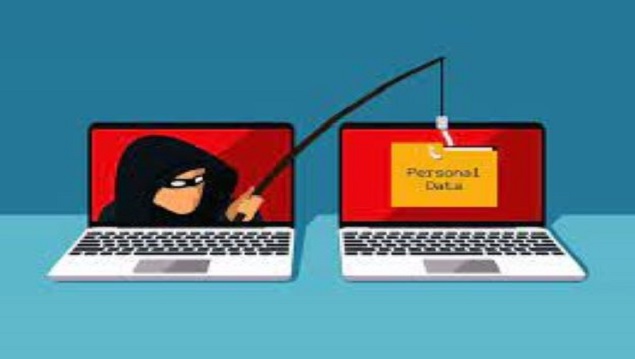
Kaspersky has discovered that attackers have begun exploiting another legitimate service for malicious purposes – this time it is Tencent EdgeOne Pages, a platform for creating and hosting web applications.

Attackers are misusing its capabilities to generate phishing emails targeting corporate users. Previously Kaspersky has described similar attacks leveraging Google services and web applications generated by Bubble, an AI-powered app builder, to hunt for corporate credentials.
Employees across multiple industries including the industrial sector, sales, and government are among the targets. The goal of the attack is to steal login credentials for corporate resources. Over the past 30 days, the company’s experts have detected more than 8,000 phishing emails using this tactic, including messages in English, Korean, and Russian.
The Tencent EdgeOne Pages service is positioned as a platform for quickly creating and deploying web applications using AI. Scammers misuse it to generate and publish phishing pages in minutes with virtually no web development skills.
Attackers host phishing pages on EdgeOne’s legitimate cloud infrastructure and use trusted domains. As a result, such sites appear to be established and secure to many protective solutions, complicating the detection of such attacks.
How the attack begins
The user receives an email from the alleged “corporate email support team”. The message states that the account login credentials will expire in 48 hours, and that failure to update them may result in problems receiving or sending emails.
To avoid restrictions, the user is prompted to click a link and enter relevant information. Phishing emails are not limited to this narrative, and could deliver any corporate message, such as a message from the HR department or a notification of a received document that should be downloaded.
Clicking the link in the email opens a page with a form for entering the victim’s name, email address, and password. It is a simple design, with virtually no additional elements.
After the user enters their login and password, the data is transferred to a server controlled by the attackers.
“We are seeing a continuation of the trend in which attackers use AI and no-code platforms as part of their phishing infrastructure. We’ve previously observed a similar scheme using the Bubble platform, and here we have yet another example.
“While the communication used in these phishing attacks is typical and has been used before multiple times, the attack technique itself significantly lowers the barrier to entry for attackers and accelerates the creation of phishing resources.
“Previously this required at least basic web development skills, but now an infrastructure for fraudulent emails can be created in minutes,” comments Roman Dedenok, Anti-Spam Expert at Kaspersky.

AI-Powered Cyber Threats Put Nigerian Banks on Alert

Guinea-Bissau Taps United Nigeria Airlines to Establish AIR BISSAU, National Carrier

IMF Urges FG to Introduce Fuel, Telecom Taxes

CBN to Expand eNaira for Salaries, Pensions and Welfare Payments

CSOs Raise Alarm over Nigeria’s Data Protection Crisis

CBN Extends PoS Geo-Fencing Enforcement Deadline to August 2026

NCC Drafts New Rules for Virtual Mobile Operators

TD Africa, HPE Drive Conversations on the Future of Intelligent Networking

Easybuy Partners WAWUAfrica to Upskill 10 Million Youths and Women, Boosting Nigeria’s Economic and Financial Inclusion

London Strengthens Global Investment Ties with Africa @ First Ever London-Africa Business Summit




 News3 days ago
UK, Nigeria Launch £15m Growth Programme to Accelerate Economic Transformation

 General News3 days ago
Haleon Introduces New Corporate Identity in Nigeria

 General News3 days ago
Elon Musk Makes History as the World’s First Trillionaire

 Telecom3 days ago
NITDA Unveils Ambitious Strategy to Turn Southwest into Nigeria’s Next Innovation Powerhouse

 General News19 hours ago
₦5m up for Grabs as 10 Startups Clash at the Gathering on 100 Pitchathon Aba
 E-Business19 hours ago
CSOs Raise Alarm over Nigeria’s Data Protection Crisis
 E-Financial19 hours ago
CBN to Expand eNaira for Salaries, Pensions and Welfare Payments

 E-Financial19 hours ago
CBN to Bar HoldCos from Influencing Banks’ Lending Decisions