

Telecom
MTN Hits 10,000 Base Station Milestone

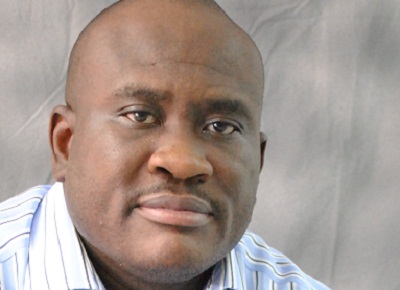
MTN, Nigeria’s ICT Company, has rolled out a record 10,000 base stations across the country, reinforcing its position as the largest telecom network in Africa.
The additional base stations will contribute to significant improvements to quality of service. They are a major component of the company’s infrastructure and they have direct impact on network capacity and the experience of customers.
Michael Ikpoki, chief executive officer, MTN Nigeria, said the company is focused on three major areas, one of them being significant improvement of customer experience.
He said that MTN would be building on a track record of aggressive investment in the network to ramp up capacity and ultimately improve service quality.
According to him, MTN has led the industry in terms of rapid network rollout, adding that the company’s aggressive drive to significantly improve customer experience on the network in the last few months has led to record deployment of base stations across the country.
“In the last few months, we have ramped up our rollout. Last month we had a record rollout figure and we are currently rolling out up to 300 sites a month to make sure that we have enough capacity. We are getting more head-room, more dormant capacity in the network. That way, we can carry more traffic and give our customers a decent quality of service on a consistent basis. Indeed, there has been noticeable improvement and this will continue,” Ikpoki said.
According to the first indigenous CEO of MTN Nigeria, apart from crossing the 10,000 base station deployment mark, the company has also installed additional switching centres, aside from its world-class network management centre, and approximately 20,000 kilometres of fibre-optic cable cross country and around metropolitan hubs.
“If you look at our investment portfolio from inception till now, MTN has invested more than a trillion naira. From whichever angle you look at it, by normal indices in terms of investment ratio, in most emerging markets, any ratio above 15-17 percent of revenue is a decent ratio in terms of investment. We are doing far in excess of that at MTN Nigeria. This year, we are going to be doing about 42 percent of revenue as capital investment. Last year we did 34 percent of revenue as capital investment,” he said.
Ikpoki said following the unrelenting investment, service quality has actually improved, but there is still room for improvement, pointing out that operational challenges relating to the environment sometimes robbed the network of the gains it has made in capacity expansion.
“Challenges with quality of service are related to operational issues and I know a lot has been said about these challenges. However, we acknowledge that we have a responsibility to ensure we deliver a good customer experience. That is something we take very seriously. That said, there are quite a number of operational issues which we cannot wish away. Sixty to seventy percent of the challenges we have are mainly power-related,” he said.
He said that other impediments relate to multiple taxation and over-regulation resulting in interference with MTN infrastructure by various state and local Governments.
“Right now, we need to have a harmonized tax regime in all the states and local governments or else, we will continue to have a situation where roll out is impeded. So it is a very complex logistical matter to effectively manage a network of this size in an environment where taxes and levies are often diverse and completely arbitrary. But we are doing the very best we can and we are receiving a great deal of support from the NCC, the Ministry of Communication Technology and other Government stakeholders. It is in every one’s interest for us to deliver excellent service and this is our goal,” he said.


Nigerian Communications Commission (NCC) has said that compensation of subscribers for poor service quality, such as persistent network outages or failed calls is automatic.

This initiative aims to ensure fairness by mandating that operators provide automatic compensation, such as airtime credits, for failing to meet regulatory Quality of Service Key Performance Indicators (KPIs).
According to the NCC, operators are required and mandated to identify affected subscribers and provide compensation directly.
In a framework for compensation of consumers published on its website, NCC said that it has directed Mobile Network Operators (MNOs) to compensate subscribers affected by prolonged or repeated poor quality of service experience within specific Local Government Areas where operators fail to meet regulatory Quality of Service Key Performance Indicators (KPIs).
The NCC also stated that the directive does not replace existing consumer protection mechanisms.
The NCC, said the directive adds a direct compensation mechanism for affected subscribers and aligns with measures set in existing legislations such as the Consumer Code of Practice Regulations 2024 and the Quality of Service Regulations 2024.
This directive applies to only Mobile Network Operators licensed and operating in Nigeria that have failed to meet their Key Performance Indicators on Quality of Service. For Internet Service Providers (ISPs) operating in Nigeria, a compensation framework is already in place.
To be eligible to receive compensation
. You experienced poor network service in an affected Local Government Area; and
- You made at least one outgoing revenue generating event (billed call, SMS, or data session) during the relevant period.
The compensation covers service failures affecting voice, data, or SMS services.
Operators are required and mandated by existing regulations to monitor their network performance across locations and service disruptions against Quality of Service KPIs.
This enables them to identify affected subscribers without the need for individual complaints.
Only service failures that fall below the defined thresholds set by the Quality of Service Regulations issued by the NCC will qualify for compensation.
Short, isolated interruptions and immediately remedied interruptions may not qualify
Compensation will be provided in the form of airtime credits.
This airtime credit will not have utilisation restrictions, and subscribers will be able to use it for voice calls, USSD sessions, data subscriptions, etc on the operators’ network.

Federal Government has announced plans to deepen collaboration with private sector players and other stakeholders in a bid to strengthen Nigeria’s cybersecurity architecture and response systems.

NDPC
Minister of Communications, Innovation and Digital Economy, Bosun Tijani, disclosed this in a recent press statement, noting that the government is considering the establishment of a Cybersecurity Coordination Council.
According to the minister, the proposed council is aimed at enhancing national cyber resilience and ensuring a more coordinated response to emerging cyber threats across public and private institutions.
Tijani emphasised that cybersecurity must be treated as a collective responsibility involving government, industry, and civil society.
“Cybersecurity is a shared national responsibility. Protecting Nigeria’s digital economy requires strong partnerships, trusted collaboration, and collective vigilance across government, industry, and civil society,” he said.
He added that through sustained collaboration, Nigeria would strengthen its capacity to detect cyber threats early, respond effectively, and build a resilient and trusted digital ecosystem.
The minister also called for increased stakeholder participation in shaping a sustainable, partnership-driven cybersecurity framework capable of deterring cybercriminal activities and safeguarding citizens, businesses, and critical digital infrastructure.
Meanwhile, the Nigeria Data Protection Commission (NDPC) has commenced an investigation into an alleged data breach involving Remita Payment Services Ltd., Sterling Bank, and other entities.
In a statement signed by its Head of Legal, Enforcement and Regulations, Babatunde Bamigboye, the commission said notices of investigation were issued to relevant parties on April 1, 2026.
The NDPC noted that affected organisations and individuals are currently providing information to aid its inquiry into the incident.
“The aim of the investigation is to ensure that data subjects are protected with appropriate technical and organisational measures,” the statement read.
It added that the probe would examine the types of personal data involved, the scope and nature of the alleged breach, potential risks to data subjects, and mitigation steps taken where breaches are confirmed.
The commission further disclosed that its National Commissioner and Chief Executive Officer, Vincent Olatunji, has directed a broader review of organisations operating digital payment systems.
According to the NDPC, entities found to be non-compliant with provisions of the Nigeria Data Protection Act, 2023, particularly regarding technical and organisational safeguards, would be scrutinised as part of efforts to maintain the integrity of the nation’s data protection ecosystem.

Sunil Mittal led Bharti Airtel has crossed the 650-million customer mark globally, fortifying its position as the world’s second-largest telecom operator by mobile subscriber base, as per a regulatory filing by the telecom operator.

“According to GSMA Intelligence, Bharti Airtel is ranked second globally by mobile customer base, with operations spread across India and Africa,” the filing said.
Commenting on this milestone, Gopal Vittal, executive vice chairman, Bharti Airtel, said: “Achieving the milestone of 650 million customers to be the second largest operator globally is a great responsibility for us to serve our customers better every day,”
He added that the telco strives to raise the bar on innovation, reliability, and experience so that every customer interaction is an opportunity to earn trust and deliver value connection.
Currently, Airtel India serves around 368 million mobile customers, meanwhile over 179 million users have been plugged into its subsidiary Airtel Africa spread across 14 countries.
Its mobile money platform, Airtel Money reached more than 52 million customers.
Additionally, the telco serves around 13 million homes with high-speed internet services and over 15 million through its Digital TV offering.
With operations spanning 15 countries and network coverage reaching over two billion people, analysts say that the latest milestone is a testimony to the natural curve of evolving from a telecom operator into a broader digital services provider.

Offset Communications Slams N50m Suit against Qore Technologies for Alleged Copyright Infringement

Compensation for Poor Service Quality is Automatic- NCC

SERAP Sues CCB over Electoral Act, New Tax law

Tinubu Approves N3.3 Trillion Payment Plan to Boost Power Supply

NDPC Investigates Remita, Others over Alleged Data Breaches

Spotify’s Loud & Clear Report Reveals Over ₦60Bn Revenue for Nigerian Artists in 2025

Madonna University Taps Tech Guru Adote for Strategic Board Role

China Threatens to Shut Nigeria’s Satellite Over $11.44m Unpaid Debt

Healthcare Under Attack: Why Cybersecurity is Now Critical Care

Why JustMarkets Is a Strong Choice for Gold Trading




 General News2 days ago
FG, Others Say Nigeria Wastes 38m Tonnes of Food Annually

 E-Financial2 days ago
CBN, Banks, Fintechs Launch PSPC to Boost Nigeria’s Payment System

 News2 days ago
NITDA Strengthens Collaboration with NIPSS to Drive Digital Innovation, Orange Economy Growth

 E-Financial2 days ago
CycleFlow, IFC Launch Supply Chain Finance Platform in Nigeria

 E-Financial2 days ago
Anchor Gets Nigerian, Canadian Licences as Transactions Crosses $2.5Bn

 E-Financial2 days ago
Ecobank Assures of Seamless Easter Banking Services

 News2 days ago
NRS Takes Over Mineral Royalties Collection Under New Tax Laws

 E-Financial2 days ago
N4.65 Trillion in the Vault, but is the Real Economy Locked Out?