

News
#MTNF@10: Fashola Advocates Flexible Regulations for CSR

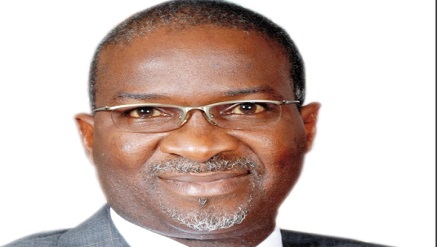
Mr. Babatunde Fashola, immediate past Governor of Lagos State, has described Corporate Social Responsibility (CSR) in its purest sense as business and entrepreneurship with a conscience hence there should not be coercive regulations.
Fashola, who spoke in Lagos at the 10th Anniversary of MTN Foundation, said for corporate social responsibility (CSR) activities to retain its concept as a voluntary contribution to better society, it must be allowed to flow from the conscience and conviction of such corporate organizations.
According to Fashola, seen from this perspective, no attempt by any government in the country should be made to compel by law acts of corporate social responsibility because such compulsion would erase the line of distinction between Governmental responsibility for social services and the voluntary intervention of companies who act as a matter of conscience and conviction for the common good.
The former Governor, who spoke on the topic, “The Role of CSR in Nigeria’s Sustainable Development”, however, advocated some form of regulation and standards, but which, according to him, “should be a matter for the corporate community, using platforms like the established Chambers of Commerce or Associations of Manufactures who can draw up a charter of ethics”.
Such regulations, the former State Chief Executive said, “must be competitive and scored for public consumption and information so that companies are ranked, evaluated and penalized according to their compliance but there must be no discrimination or penalty for the companies that do not do CSR because it is voluntary.”

Arguing against the use of CSR to cover up wrongdoings or unethical practices in a host community, Fashola, who insisted that “corporations must be just before they can be generous”, declared, “If your operations pollute the environment, harms citizens, dis-empowers your employees or their families, no amount of profit devoted to CSR from such unjust, unethical or harmful operations can assuage the deep ethical questions raised by such non-salutary conduct”.
He warned, “The CEO, management and owners (shareholders) of every corporation that seeks to undertake CSR must pay as much attention to their CSR motives and activities as they do to their balance sheets”, adding that they must answer such questions as whether, for example, they are running a financial institution that abuse the dignity of womenfolk by using them to mobilize deposits and setting unreasonable targets for them.
“Are they operating a telecoms company whose network is still carrying unregistered subscribers who remain anonymous and threaten our national security? Are they employers who do not give enough paid leave to nursing mothers and therefore undermine our National exclusive breastfeeding policy? Will our nation be better served by the profits saved from such practices or by breeding a healthier generation of Nigerians who are breast fed by nursing mothers who get 6 months paid leave?”,he asked.
Other questions which corporate organizations should answer while engaging in CSR, Fashola said, include whether or not they are employers who deduct PAYE from their employees but fail to remit it, oil sector operators whose activities pollute the waters and destroy the ecological life of the community they operate in or managers of airlines which never keep to schedule or operate substandard aircraft.
Urging shareholders of corporate organizations to raise such questions at AGMs and set compliance levels periodically, the former Governor, who said there are many more such questions that relate to other sectors, added, “It seems to me that such practices in themselves undermine national development and no amount of CSR can replace it”.
“Therefore, the operational actions of corporations must first contribute to development before CSR can help to sustain it”, he said adding, “There is a deep moral issue embedded in CSR. Every CEO must seek to find it, redefine it, improve on it and set even higher standards”.
According to the former Lagos State helmsman, “Corporate Social Responsibility is more than charity. In its purest form, it is business and entrepreneurship with a conscience. In this way, Corporate Social Responsibility will greatly assist in Nigeria’s quest for sustainable development”.
Quoting copiously from his past speeches on the same subject, Fashola noted that CSR entailed an organization considering the interests of society by taking responsibility for the impact of its activities on customers, suppliers, employees, shareholders, communities and other stakeholders, as well as the environment.
Fashola maintained that to be considered effective, corporate social responsibility “must be an integrated part of day-to-day business, engaging all stakeholders and including strategies to support individual managers to make socially responsible decisions, conform to ethical behaviour and obey the law.”
The former Governor, who noted that CSR meant different things to different people, however, urged organizations to key into the concept and spirit of the practice adding, “Society as a whole will fully appreciate it and this will greatly improve our environment for all our benefit. Furthermore, this will encourage all of us to participate in the much needed improvement of our nation”.
He argued that good CSR policy should compel businesses to comply with the letter and spirit of the law, to adopt fair trading practices, and generally to maintain high ethical standards in their relationships with shareholders and the general public in accordance with accepted norms.
“For every corporate organisation, CSR should be an in-built mechanism that moderates business practices and shuts out the notion of profits at all costs”, Fashola said adding, “Indeed, I believe that any Chief Executive of a business who intends to prosper must pay the same if not a higher level of attention to its CSR compliance as he does to the company’s balance”.
The former Governor had drawn from the various CSR initiatives of MTN in Lagos State under his stewardship to buttress the place of ethics in corporate support.
“Let me start by asking whether anybody thinks that MTN’s operational activity as a phone company has adversely affected the vocational and technical skills and development of our youth in Lagos.
“I ask this question because I know that the MTN Foundation singlehandedly equipped a laboratory with vocational and technical equipment for the training of our young children in our technical college in Ikorodu and I know that Nigerite also set up a training school in the same college to train young people in modern roofing techniques,” he said.
Continuing, Fashola cited several other CSR initiatives of MTN Foundation. “Let me again ask if anybody can fairly allege or demonstrate that MTN’s operational activity is linked to increasing cases of Kidney diseases because I know that MTN Foundation intervened in collaboration with us to provide 2 Haemodialysis machines in our General Hospital in Igando, Alimosho, although we have since completed the Gbagada Cardiac and Kidney centre that now has 24 dialysis machines.
“Of course I will also ask if anybody can assert that MTN’s operational activity was responsible for the past neglect of public school infrastructure, because over 7 years, I know that MTN foundation was a major partner and donor to our ‘Adopt a School’ policy by which we got many individuals and corporates to partner with us to revamp the quality of our public schools.”
According to the former Lagos State helmsman MTN’s operational activity could also not be responsible for the absence of emergency telephone lines on our highways because, “I know that MTN foundation worked with our Government to install free emergency phones on the 3rd Mainland Bridge which was eventually unsuccessful because the phones were vandalized.”
Fashola urged the company to continue in its path of CSR in accordance with its mission to be the best, which, according to him are the “underpinning philosophies of MTN as a Telecommunications company”, adding, “Dr. Dozie provides clarity of vision and purpose behind the MTN foundation, which is the CSR platform of the MTN business”.



Southeast Asia cybercrime networks are expanding operations into Africa as crackdowns intensify in the subregion, according to a recent report from the United Nations Office on Drugs and Crime (UNODC).

The massive, unintended geographic shift triggered by intense pressure from international task forces in Myanmar and Cambodia,have seen highly sophisticated criminal networks now establishing footholds in major tech hubs across Kenya and Nigeria, transforming local technical talent into accomplices for industrial-scale digital theft as reported by https://streamlinefeed.co.ke/
This strategic migration represents a critical evolution in the $17 billion crypto scam economy.
Transnational scam syndicates are organized criminal networks that run industrial-scale online fraud using trapped or trafficked labor.
The UNODC has documented this diversification, noting that African nations are increasingly targeted as operational bases due to robust internet infrastructure and a surplus of unemployed tech workers.
In response, local authorities are engaged in a frantic game of catch-up against well-funded foreign cartels.
Recall that in 2025, UNODC, described the shift as part of a broader trend in which crime “spreads like a cancer,” into regions with weaker enforcement and limited digital safeguards.
The report pointed to the rapid proliferation of online fraud operations, including cryptocurrency scams and phishing schemes, moving from countries like Myanmar and Cambodia into new footholds in Africa—particularly Nigeria.
A recent case publicized June 12, 2025 by the WeChat public account West Africa Chinese Voice illustrates the trend: Nigeria’s Economic and Financial Crimes Commission (EFCC) arrested 177 Chinese nationals in Lagos and Abuja between December 2024 and January 2025.
The suspects were allegedly running scam centers under the guise of corporate offices, where local Nigerians were trained to carry out online investment frauds—many following the “pig-butchering” model, which builds trust with victims before luring them into fraudulent crypto investments.
Authorities seized hundreds of SIM cards, high-performance computers, and prewritten scam scripts during the raids

Ugochukwu Eze, a 47 year-old man, was on Thursday arraigned before a Federal High Court in Lagos for allegedly hacking into the server of SunTrust Bank to steal a total of N800m.

Ugochukwu also known as Amazon, was arraigned before the court by the operatives of the Department of State Security (DSS).
DSS accused Ugochukwu of fraudulently hacking into the server of SunTrust Bank to remove and divert the sum of N800 million into several accounts in other financial institutions.
M. Bajela,prosecuting counsel, DSS, in the charges filed before the court alleged that the defendant and others now at large, between 2023 and 2026, conspired among themselves and unlawfully and seriously hindered the function of Suntrust Bank Plc’s computer system server and in the process fraudulently diverted over N800 million belonging to the bank.
Ugochukwu was also accused of concealing and transferring various sums of money traced to the unlawful cyber-attacks to some account in some financial institutions.
The offences alleged to have been committed by the defendant according to the prosecutor contravened sections 5; 6(1) and 8 of Cybercrimes (Prohibition, Prevention etc) Act, 2024. And Sections 10, 20 and 18(2)(D) of the Money Laundering (Prevention and Prohibition) Act, 2022.
The defendant pleaded not guilty to the allegations.
Based on his plea of not guilty, the prosecutor asked the court for a trial date, and prayed the court to remand the defendant in the facility of the correctional services pending the time trial will commence.
However, E. Afrogha, defendant’s lawyer, told the court that she has filed her client’s bail application. adding that her client has been in the DSS custody for over a month.
But the prosecution counsel told the court that he has not been served with the bail application, not withstanding that his witnesses are available.
Based on the counsels’ submissions, Justice Friday Ogazi, presiding judge, adjourned the matter to August 24,2026 for hearing of the bail application.
The judge also ordered that the defendant be remanded in the custody of the Nigerian Correctional Services (NCS) pending the hearing of the bail application.
One of the counts against the defendant reads: “That you UGOCHUKWU EZE (AKA AMAZON) (M) (47 YEARS) sometime between 2023 and 2026 in Lagos, and other places within the jurisdiction of this honourable court, unlawfully seriously hindered the function of SunTrust Bank Plc’s computer system, and in the process fraudulently diverted over N800, 000,000.00 (Eight Hundred Million Naira) belonging to the said SunTrust Bank thereby committed an offence contrary to and punishable under Section 8 of the cybercrime (prohibition, prevention etc.) Act, 2024.”


Liquid Intelligent Technologies is using light-beam technology developed by Google spinout Taara to supply data centres and large enterprise networks in Lagos, addressing the high costs and delays of laying underground fibre in dense urban corridors.

The deployment includes nearly 12 live optical links serving banks, hotels, and utilities across commercial districts, proving optical technology can supplement traditional physical infrastructure where trenching cables is impractical.
High-capacity bandwidth is being distributed directly from points of presence at Africa Data Centres and other Lagos facilities to enterprises beyond the reach of fibre cables.
This reduces network downtime in areas where physical cable cuts take days to repair. The rollout follows a two-year deployment by Liquid to strengthen network resilience for local internet service providers.
Nigeria remains one of the largest economies on the continent, with Lagos acting as its primary commercial hub. Expanding network infrastructure across dense urban environments requires operators to blend multiple technologies.
Using focused beams of light transmitted through the air, the technology allows operators to establish links within days rather than weeks, complementing existing physical networks.
Liquid is now assessing expansion into Abuja, Ibadan, and Kano.
“For Liquid, deployment speed has been one of the most significant advantages,” said Eugene Uka, acting chief executive officer of Liquid Intelligent Technologies Nigeria.
He added: “Traditional fibre deployments are not always a possibility, especially across difficult terrains. Taara links can often be installed and activated within hours, allowing Liquid to fulfil its mission to create a digitally connected future that leaves no African behind.”
Bhavesh Mistry, regional lead for Taara in Africa, commented: “As demand for connectivity continues to grow, operators need more flexibility in how they expand and reinforce their networks.
“Fibre remains an essential part of modern communications infrastructure, and will for some time, but there are many situations where deploying fibre quickly or cost-effectively can be difficult. Wireless optical communication gives operators another tool to extend capacity, reach customers faster, and build more resilient networks without compromising performance.”
The Taara Lightbridge system delivers up to 20 gigabits per second of capacity across distances up to 20 kilometres using invisible light beams.
The platform avoids trenching, spectrum licensing, or extensive civil engineering work. Taara claims its system is active in more than 20 countries with telecommunications operators, including T-Mobile, Airtel, Digicel, Liquid, and SoftBank.

Fleeing Southeast Asia Scam Syndicates Find New Homes in Nigeria, Kenya- Report

DSS Arraigns Eze for Allegedly Hacking, Stealing N800m from SunTrust Bank

SEC Unveils Probate/Unclaimed Monies Clinic to Help Families Recover Inherited Investments

We have Multiple Layers of Protection for 281m Accounts in Nigeria – NDIC

NCC Asks Telcos to Make Budgetary Provisions for Cybersecurity

From Scarcity to Scale: What Africa Can Learn from India’s Agricultural Transformation

EFCC Busts NIS Visa Overstay Racket, Uncovers N700m in an Account

BON Establishes Six Ad Hoc Committees to Modernize Broadcasting

How EFCC Turned Recovered Loot Into School Supplies for Thousands of Nigerian Students

BVN Enrollments Hit 69.55m- NIBSS




 E-Business2 days ago
Kaspersky Reveals a New Malicious Framework Targeting Cryptocurrency Users with the Use of OkoSpyware

 E-Business2 days ago
CMS T&M Launches TMO Rides to Enable a Faster & Cashless Transport Experience for CMS – Ajah Passengers

 E-Business2 days ago
Firm to recruit over 100 professionals to boost NRS e-Invoicing compliance

 E-Business2 days ago
Nigeria Tightens Data Privacy Compliance as FG Issues Directive to MDAs

 Telecom2 days ago
FG Commences 90,000km Fibre Optic Rollout within Weeks

 Telecom2 days ago
Dimension Data to Channel Funds to Support Nigerian Fibre Expansion

 Telecom2 days ago
Treepz Partners with CMS T&M to Digitize Public Transportation for Millions of Lagos Commuters

 E-Financial1 day ago
Access Holdings Deepens Sustainable Finance Impact, Expanding Green Assets to ₦92.14 Billion