

General News
N8Bn Fraud: How Bankers Splashed Money on Property, Exotic Cars

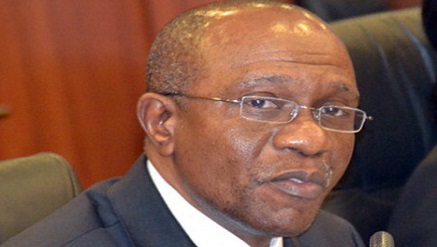
A Federal High Court sitting in Ibadan was yesterday told how three staff of the Central Bank of Nigeria (CBN), and five staff of a commercial bank acquired assets worth several billions of naira through fraudulent means.
This was disclosed in the course of the N8 billion fraud allegation against some staff of the CBN – now dismissed – and some deposit money banks’ staff.
The assets said to have been acquired by the accused bank workers both within Nigeria and in Pretoria, South Africa, were allegedly got by inducing the CBN and stealing N1.25bn supposed mutilated currencies meant to be destroyed and taken out of circulation.
According to the prosecution counsel, Mr. Rotimi Jacobs, the accused persons had instead of carrying out the statutory instruction to destroy the defaced currency notes as their duty demands, substituted them with newspapers neatly cut to naira sizes and proceeded to put the mutilated and defaced currency back into the economy.
The eight accused persons brought to the court by the Economic and Financial Crimes Commission (EFCC), were Kolawole Babalola, Olaniran Muniru Adeola, Toogun Kayode Phillip, Ayodeji Aleshe, Isiaq Akao, Ajiwe Sunday Adegoke, Oyebamiji Akeem and Ayodeji Festus Adeyemi.
The accused are all facing a total of 28-count charge, ranging from conspiracy, abuse of office and stealing to false declaration of actual amount, concealing of property and fraudulently acquiring assets in excess of their legitimate and provable income.
The offence, as contained in a charge sheet read out to the accused persons, is punishable under section 7(2) of the Bank Employees etc (Declaration of Assets) Act, CAP. B1, Laws of the Federal Republic, Nigeria 2004.
All the accused pleaded not guilty to the charge.
A mild drama however occurred during the court sitting, when one of the accused persons, Ayodeji Aleshe, a cashier in one of the commercial banks, said he was an illiterate and that he could not understand the English language used in reading out the charge sheet to him.
The trial judge, Justice Adeyinka Faaj, who described the suspect’s claim as false, said he had earlier communicated with him in English and that he was very fluent in the use of English language.
The accused, for about 15 minutes, however remained adamant, trying to make the court believe that he is illiterate.
There was confusion until the judge ordered that an interpreter be sought to interpret the charge to him in Yoruba language in view of its importance.
Counsel to the accused persons urged the court to admit them on bail, but the judge however impressed on him the need to make a formal application in view of the weighty evidence against them.
Counsel to the fourth accused, Mr. Nathaniel Oke, SAN, had earlier reminded the court of his pending application for bail, but agreed with the submission of the judge on the bail application.
Counsel to the fifth and eighth accused persons, Mr. Michael Lana, in his own submission, drew the attention of the court to two applications served on the prosecution on Tuesday, challenging the jurisdiction of the court to entertain the matter.
Other defence counsels, Otunba Olayinka Bolanle, Olalekan Ojo, O. Uwawah and Oliver Okeke, also put up strong arguments to secure bail for their clients, but the trial judge objected, citing technical flaws in the procedure for the bail.
Justice Faaj, while vehemently objecting to oral application from the defence counsel, later adjourned the matter to June 8, 2015 to hear the bail applications.
He said: “I will suggest to all the counsels that you endeavor to file your written application for bail today (Wednesday), while the prosecution counsel should respond to them by Friday, June 5, 2015 and on Monday, June 8, 2015, when the hearing will be on the bail application.”
The judge also ordered the eight accused persons to be remanded in Agodi Prisons until the adjourned date, when bail application would be heard.
At the opening of the second case involving six commercial bank staff yesterday, counsel to the accused also laboured in vain to make the judge accept oral application for their bail.
The accused persons are, Oni Ademola Dolapo, Afolabi Esther Olunike, Ademola Ebenezer Adewale, Kolawole Muniru Adeola, Toogun Kayode Phillip and Omotoso Abimbola (now at large).
Mr. Jacobs, who is also the lead prosecution counsel, informed the court that his team had filed a charge dated May 19 and urged the court to accept it and permit it to be read to the accused.
The six accused persons were all facing a total of 15-count charge, ranging from conspiracy, abuse of office, stealing to false declaration of actual amount, concealing of property and fraudulently acquiring assets in excess of their legitimate and provable income.
They all pleaded not guilty to the charge.
After the plea was taken, the judge ordered that they be remanded in Agodi Prisons and adjourned the case to June 8, 2015 for hearing of bail application.
In the third case, five of the accused persons were involved, including a nursing mother of nine-month-old baby.
The accused persons were Kolawole Babalola, Olaniran Muniru Adeola, Toogun Kayode Phillip, Olukunle Sijuade, and Kehinde Fadokun, the nursing mother.
The charge sheet against the accused was read out to them and they pleaded not guilty to the 15-count charge, ranging from stealing, fraud, conspiracy and acquiring for themselves supposed mutilated currencies and recycling same. Counsel to the nursing mother, Mr. Musibau Adetunbi, drew the attention of the court to the circumstances surrounding the accused person and requested the trial judge to grant an application before the court for bail for her but the judge declined.
The counsel further pleaded with the court to allow the accused to be remanded at the state CID in view of her peculiar circumstances.
The judge then granted the oral application made by the defence counsel, and ordered that the accused be remanded at the state CID, Iyaganku, Ibadan to afford her access to her baby.
Justice Faaj then adjourned the matter to June 12, 2015 for the hearing of the bail application.


General News
Union Bank Looted: How Former Directors Gambled with Billions and Nearly Destroyed a National Bank


The former directors and owners of Union Bank did not just fail, they engineered a financial disaster. They manipulated reports, hid massive losses, diverted foreign loans and treated depositors’ money like a private wallet.

Union Bank
Investigators uncovered billions of dollars in misconduct. These directors buried over ₦250 billion in losses, piled a $300 million foreign loan onto the bank without protection and then forced Union Bank to carry the burden. They even used the bank’s own funds to buy its shares, an outrageous betrayal of trust.
It didn’t stop there. Over $100 million was pulled out improperly, leaving the bank exposed and struggling. Loans meant for customers were secretly diverted into shady transactions. False reports were sent to lenders. The system was deliberately deceived.
This was not incompetence. It was exploitation.
By 2025, their actions had created nearly ₦400 billion in losses and over ₦147 billion in unpaid charges. The bank was on the edge.
The Central Bank of Nigeria (CBN) stepped in just in time. Without that intervention, Union Bank could have collapsed, dragging others down with it.
Now, the bank is stabilising. But let’s be clear: this recovery is happening in spite of those former directors, not because of them.
They didn’t build value. They destroyed it.
And Nigerians deserve to never forget who was responsible.


Federal government, The European Union (EU), and the United Nations Industrial Development Organisation (UNIDO) have called for urgent and coordinated action to curb food waste and promote sustainable consumption and production practices.

They warned that when food is wasted, the water, energy, and labour invested in its production are also lost, accelerating climate change and undermining global efforts to build a zero-waste, circular economy.
Speaking in Abuja at the commemoration of this year’s International Zero Waste Day, themed “Food Waste Reduction: Minimisation and Valorisation,” Zissimos Vergos, deputy Ambassador of the EU Delegation to Nigeria and ECOWAS, disclosed that Nigeria wastes approximately 38 million tonnes of food annually, more than any other country in Africa.
He further noted that globally, in 2022 alone, nearly one billion tonnes of food—almost one-fifth of all food available to consumers—was wasted.
“This is not just a loss of food; it is a squandering of precious resources, a missed opportunity to combat hunger, and a direct threat to our planet’s health,” he said.
Vergos stressed that food loss and waste are major drivers of environmental degradation, contributing up to 10 per cent of global greenhouse gas emissions—nearly five times the emissions of the entire aviation sector—and accounting for as much as 40 per cent of global methane emissions.
Highlighting Nigeria’s ongoing efforts, he said: “The Nigeria Circular Economy Roadmap, the establishment of the Interministerial Circular Economy Committee, the push to develop a National Plastic Waste Management Regulation, these are not small gestures. These are structural shifts.
“They signal that Nigeria is not waiting for someone else to solve its problem; it is building the system to solve it from within. Now, today’s theme: food waste reduction, minimisation and valorisation, is the right conversation at the right moment.”
Vergos also shared three key lessons from the EU’s experience to support Nigeria’s efforts. First, he urged investment in rural infrastructure, including roads, storage, and cold chains, to address post-harvest losses beyond the farm gate. Second, he emphasised the need to promote agro-processing by converting fresh produce into value-added products such as tomato paste and cassava flour, while linking smallholder farmers to processors and markets.
Third, he called for embedding zero-waste principles, recycling, and resource efficiency into school curricula from the primary level to foster a culture of sustainability among future generations.
Reaffirming the EU’s commitment, he stated, “The EU stands ready to be your partner in that work, through funding, through technical cooperation, and through genuine solidarity.”
In his keynote address, Balarabe Abbas Lawal, minister of Environment, reiterated the Federal Government’s commitment to environmental protection and sustainable practices aimed at safeguarding the health and well-being of Nigerians.
“Food waste remains a significant challenge that affects not only our environment but also our economy and society. Every discarded meal represents wasted resources such as water, energy, labour, and capital, while Nigerians continue to face food insecurity.
Addressing food waste is therefore central to sustainable development and ensuring a healthier future for all,” he said.
He added: “The Federal Ministry of Environment, in this year’s national appropriation, has developed projects on food waste elimination in major markets around Nigeria. And this is to show you that the Federal Ministry of Environment is tackling the issues of food waste at its core, especially post-harvest losses.”
Stressing the broader impact, he noted that addressing food waste aligns with the Ministry’s core objectives. “Reducing food waste will not only help to lower pollution and greenhouse gases, but also conserve valuable resources and promote more efficient and responsible consumption patterns across households, businesses, and institutions,” he added.
Also speaking, Amb. Philbert Johnson, Director and Representative of UNIDO’s Sub-Regional Office in Nigeria, emphasised that food must not be wasted, especially in a country grappling with food insecurity and malnutrition.
“Food is far more than a commodity: it is a foundation of wealth, a driver of health, and a pillar of security. It sustains our homes, supports industries, and underpins the stability of our societies.
“When food systems function efficiently, they generate income, enhance resilience, and improve well-being. When food systems fail, when food is lost or wasted, the consequences ripple across our economies, our environment, and our communities.”
He reaffirmed UNIDO’s commitment to supporting Nigeria in building resilient, inclusive, and sustainable agro-industrial systems.

President Bola Ahmed Tinubu has directed the immediate installation of 5,000 CCTV cameras across identified flashpoints in Plateau State as part of urgent measures to address the worsening security situation in the state.

The President gave the directive during an emergency visit to Plateau on Thursday, where he held a brief stakeholders’ meeting at the Yakubu Gowon Airport following the recent killings in Angwan Rukuba, Jos, where at least 28 persons were killed by unidentified gunmen.
Tinubu also approved the formation of a delegation of key stakeholders to engage in further deliberations on lasting solutions to the security challenges in the state.
He condoled with families of the victims and directed that support be provided to cushion their losses.
President Bola Tinubu while expressing deep sympathy to families of victims said the installation of surveillance cameras was part of a deliberate move towards addressing the kind of attacks that befell residence of the recent attack in the State.
In his remarks, Governor Caleb Mutfwang appreciated the President’s visit and show of concern, but expressed worry over the recent wave of attacks in the state, describing the situation as disturbing and requiring urgent attention.
The meeting had in attendance, former Governors, serving and former National and State Assembly members, traditional rulers, government appointees as well as relatives of those killed in the Angwan Rukuba attack.

Union Bank Looted: How Former Directors Gambled with Billions and Nearly Destroyed a National Bank

N4.65 Trillion in the Vault, but is the Real Economy Locked Out?

FG, Others Say Nigeria Wastes 38m Tonnes of Food Annually

Ecobank Assures of Seamless Easter Banking Services

Anchor Gets Nigerian, Canadian Licences as Transactions Crosses $2.5Bn

Spotify’s Loud & Clear Report Reveals Over ₦60Bn Revenue for Nigerian Artists in 2025

Madonna University Taps Tech Guru Adote for Strategic Board Role

China Threatens to Shut Nigeria’s Satellite Over $11.44m Unpaid Debt

Healthcare Under Attack: Why Cybersecurity is Now Critical Care

Police Says Victims Enable Cyber Attacks Out of Ignorance




 E-Financial2 days ago
UBA Beefs Up Mobile App Security to Stop Fraudulent Debits, Withdrawals

 Telecom2 days ago
Bharti Airtel Crosses 650m Users

 General News2 days ago
FG Orders Installation of 5000 CCTV Cameras for Surveillance in Plateau

 E-Financial2 days ago
Ghana Makes History as First African Country to Integrate Payment National Identity Card

 E-Financial2 days ago
CBN Plans New Payment Systems Vision

 E-Financial2 days ago
Flutterwave Secures Nigerian Banking License, Boosts Financial Autonomy

 E-Business2 days ago
Nigeria Mulls National Cybersecurity Council

 Broadcasting2 days ago
Appeal Court Upholds Ban on NBC’s Power to Fine Broadcast Stations