

General News
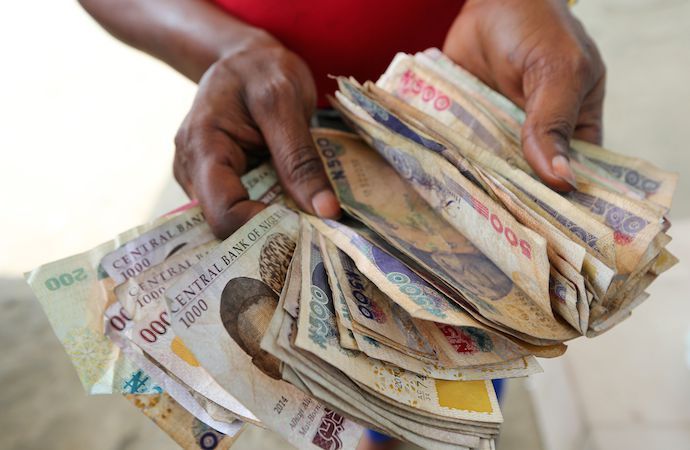
Naira stable after CBN interest rate cut

By Lukman Otunuga, FXTM Research Analyst,
The Naira continues to experience stability despite an unexpected rate cut from the Central Bank of Nigeria earlier this week.
This is highly encouraging and suggests that the currency has scope to appreciate if macroeconomic conditions in Nigeria stabilize further. With the jump in Brent Oil prices boosting government revenues and pushing foreign exchange reserves to $44 billion, the CBN has ammunition to defend the currency. However, external risks in the form of global growth concerns and trade developments could still create headwinds for the Naira further down the road. It must be kept in mind that the Naira is not alone, as many other emerging market currencies are also feeling the pressure.
Brexit stalemate deepens as Parliament rejects all alternatives
The drama, confusion and sheer uncertainty over Brexit intensified on Wednesday evening, after British MPs rejected all eight options aimed at breaking the Brexit deadlock.
With none of the indicative votes gaining a majority, the options in moving forward are becoming increasingly limited, with speculation in the air of a general election down the line. While MPs plan to trim the list of options and vote again on Monday, the clock is ticking with the risk of a no-deal Brexit rising by the day. Although Theresa May has pledged to stand down by May 22 if MPs back her plan, it remains uncertain whether Commons Speaker John Bercow will allow her deal to be brought forward for the third time on Friday. If May’s deal is rejected once again and Parliament is unable to agree on anything, the UK could slip into a no-deal Brexit which will have severe consequences on the British Pound.
Sterling tumbled on Wednesday evening as Brexit uncertainty haunted investor attraction towards the currency. However, looking at Sterling’s overall price action, it does feel like the risk over a no-deal Brexit is underpriced. The year-to-date uptrend for GBPUSD is still intact despite the twist and turns. There have been higher highs and higher lows so far in 2019 with prices trading around 1.3162 as of writing. While the GBPUSD has the potential to challenge the 1.3300 resistance, further gains beyond this point are likely to be limited by Brexit developments.
Dollar running on borrowed time
Even as markets heed the Fed’s dovish tone and have ramped up expectations of a US rate cut as soon as September, the Dollar Index has repeatedly tried to break above the 97.0 handle.
Although the Dollar has been resilient in recent months, it may be time for bulls to throw in the towel as concerns mount over the health of the US economy. With the US Treasury yield curve inverting at the start of the week, warning lights are flashing over the largest economy in the world potentially entering a recession. These lingering fears are likely to dampen appetite for the Dollar as investors park their money elsewhere.
Should there be further confirmation of the largest economy in the world cooling or the Fed remaining firmly dovish, the Dollar may lose its grip on the throne.
Commodity spotlight – Gold
It has not been the best of trading weeks for Gold, with prices trading around $1311 as of writing. Although a stabilizing Dollar during the early parts of the week dragged the metal lower, the medium to longer-term outlook favours bulls. With global growth fears and geopolitical risks weighing on investor confidence and market sentiment, Gold will remain a destination of safety for investors. In regards to the technical picture, bulls remain in control above the psychological $1300 with a breakout above $1313 opening a path towards $1324.


Socio-Economic Rights and Accountability Project (SERAP) has cautioned that existing interception and surveillance regulations in the country could be deployed against civilians and critics of the government if not properly subjected to legislative scrutiny.

SERAP called on President Bola Tinubu to direct Bosun Tijani, minister of Communications, Innovation and Digital Economy, to immediately withdraw the Lawful Interception of Communications Regulations, 2019.
In a statement earlier in the week, SERAP, described the rules as unconstitutional and inconsistent with Nigeria’s international obligations.
Also Kolawole Oluwadare, deputy director of SERAP, during an interview on Arise Television, called for greater transparency and public participation in shaping such regulations.
In its statement, the organization, said that the regulations establish a sweeping mass surveillance regime that violates Nigerians’ constitutionally and internationally guaranteed human rights, including to privacy and freedom of expression.
- “The Regulations grant overly broad and vague powers to intercept communications on grounds such as ‘national security,’ ‘economic wellbeing,’ and ‘public emergency,’ without adequate judicial safeguards, independent oversight, transparency, or effective remedies.
- “Serious interferences with fundamental rights cannot be authorised through subsidiary regulations or exercised in secrecy without strict safeguards.
- “Surveillance measures that lack strict necessity, proportionality and independent judicial oversight can easily be weaponised against political opponents, journalists, civil society actors and election observers,” the organization stated.
And during an interview on Arise Television, Oluwadare, insisted that regulations with such far-reaching implications must undergo a thorough legislative process, including public hearings.
Oluwadare’s comments followed allegations by Nasir El-Rufai, former Kaduna State Governor, who had claimed that he and another individual intercepted a phone conversation involving Nuhu Ribadu, national security adviser.
The former Governor’s claims have since sparked renewed debate over the scope and oversight of surveillance powers granted to security agencies.
With the kind of weight and power this kind of regulation has, it should go through the legislative process and public hearing. These regulations will take away major rights Nigerians have,” Oluwadare said.
He argued that the current framework governing interception may not be necessary in its present form, noting that concerns remain over vague wording, insufficient safeguards for civil liberties, and the potential for abuse.
The SERAP deputy director expressed apprehension over how security agencies exercise interception powers.
“It is unclear how agencies like the DSS or the Office of the National Security Adviser utilise these powers, raising concerns that they might be used against civilians or government critics,” he stated.
According to him, regulations of such magnitude, especially those capable of impacting fundamental human rights, must be subjected to robust legislative scrutiny to ensure they strike a balance between national security and civil liberties.
Oluwadare clarified that his position does not amount to opposing an interception framework entirely, but rather advocating for one that aligns with international best practices.
“This stance does not advocate against an interception framework altogether, but rather suggests it should align with models found in other jurisdictions, incorporating robust safeguards as envisioned in existing legal frameworks,” he explained.
Oluwadare added that public participation would not only strengthen accountability but also enhance the effectiveness of such laws in addressing insecurity without undermining democratic freedoms.


Kaspersky has announced a major update to Kaspersky Anti Targeted Attack 8.0 (KATA 8.0), designed to help organisations improve visibility across their networks and detect sophisticated cyberthreats earlier and with greater accuracy.

As the attack surface continues to expand and traditional network perimeters dissolve, security teams face growing challenges in controlling network traffic security. KATA 8.0 addresses these challenges with new detection technologies, broader network observability and tighter integration with Kaspersky’s security ecosystem and third-party solutions.
Advanced detection technologies for modern threats
KATA 8.0 introduces several new detection capabilities aimed at improving threat detection while reducing alert fatigue.
The new anomaly detection technology identifies suspicious network behaviour by analysing key protocols commonly abused in cyberattacks, such as DNS, HTTP and Kerberos.
Instead of inspecting all network traffic, the technology focuses on protocol-specific deviations while taking into account the organisation’s infrastructure and usage patterns. This approach significantly improves detection accuracy and helps reduce false positives.
With shadow IT detection, KATA 8.0 enables organisations to identify the use of unauthorised public services. The solution supports more than 5,000 external services, including popular cloud storage and collaboration platforms, helping security teams improve network visibility and regain control over corporate data flows.
KATA 8.0 also introduces retrospective scanning of user-uploaded traffic copies. Security teams can now upload PCAP files manually or automatically from other security systems and analyse them using the latest detection rules and updates across Kaspersky’s anti-malware, sandbox, IDS and other engines. This enables deeper investigations and the discovery of threats that may have gone undetected at the time of the incident.
In addition, KATA now can collect all the observables from the network traffic including file names, URLs and hashes – not only malicious objects, but also the safe ones. This allows analysts to identify potentially compromised users and suspicious activity even when objects initially appear clean, providing a broader and more proactive security perspective.
Stronger integrations for faster investigations and response
KATA 8.0 also enhances integration with other Kaspersky solutions and external platforms to streamline investigations and improve response times.
Integration with Kaspersky Security for Mail Server (KSMS) enables dynamic scanning of password-protected email attachments in the KATA Sandbox, while enriched KATA alerts now include full visibility into actions taken by KSMS, such as blocking or deleting suspicious content.
For organisations using Managed Detection and Response (MDR), KATA 8.0 acts as a network sensor supplying telemetry directly to the MDR cloud. MDR analysts can now also request additional context from KATA directly through the MDR interface, without involving the customer, significantly accelerating investigations.
The solution also supports automated file submission from Kaspersky Endpoint Security (KES) to the KATA Sandbox, enabling deeper analysis of suspicious files discovered on endpoints and faster response actions when malicious verdicts are confirmed.
To strengthen active response capabilities, KATA 8.0 introduces new connectors for Check Point NGFW, allowing the solution to automatically generate blocking rules based on detected malicious network activity and enforce them at the firewall level in near real time.
Ilya Markelov, Head of Unified Platform Product Line at Kaspersky, says: “Kaspersky Anti Targeted Attack 8.0 was designed to provide high level of visibility, enabling proactive threat detection, deeper investigations and more confident response decisions through advanced analytics and tight integration with endpoint protection, email security, MDR and other products and services.
“As part of its long-term development strategy, in future releases we plan to move KATA to the Open Single Management Platform (OSMP). This will enable seamless integration with multiple Kaspersky solutions and third-party components through a unified web console, supporting NDR, EDR, SIEM, XDR and more within a single security ecosystem.”
General News
Court Fines Lafarge Africa N2m for Using Ex-Employee’s Name, Details Online after Dismissal


National Industrial Court of Nigeria in Lagos has ordered Lafarge Africa Plc to pay N2 million in damages to a former employee after finding that the company unlawfully retained and continued using his personal data years after his exit.

In a judgment delivered on February 17, 2026, in Suit No. NICN/LA/60/2022, Justice Ikechi Gerald Nweneka ruled that the cement manufacturer breached the claimant’s right to privacy by listing his name and contact details in official purchase orders long after his employment ended.
Mr. Kehinde Adeniyi Johnson, claimant, had approached the court in February 2022, alleging that although he left the company in November 2019, his name, personal email address and phone number remained attached to Lafarge’s.
He sought multiple declarations and N50 million in general and aggravated damages, arguing that the continued use of his identity amounted to unlawful usage, fraudulent misrepresentation and emotional distress.
According to court filings, Johnson told the court that he kept receiving calls, emails and WhatsApp messages from suppliers and logistics agents regarding consignments intended for Lafarge.
He recounted an incident involving a shipment from India: after being contacted by a dispatcher, he accepted delivery but was denied access to company premises upon arrival.
He later alleged that he was attacked by armed robbers in the aftermath, blaming the exposure created by the company’s continued use of his identity.
Lafarge denied liability, attributing the issue to a system malfunction. The company maintained that it deactivated Johnson’s official email and server access upon his departure and notified relevant suppliers of his disengagement.
It also challenged the court’s jurisdiction, arguing that claims relating to tort and emotional distress fell outside the court’s scope.
In addressing preliminary objections, Justice Nweneka dismissed the company’s challenge to the admissibility of emails and WhatsApp messages tendered as evidence, holding that the communications were not hearsay since they involved the claimant and company representatives.
On jurisdiction, the court held that the dispute stemmed directly from the employment relationship and therefore fell within its competence.
It further clarified that the suit was not brought under the Fundamental Rights Enforcement Procedure Rules, making it properly instituted before the court.
After reviewing the evidence, the judge found that Lafarge continued to use Johnson’s name and telephone number in purchase orders well after his exit, thereby violating the Nigeria Data Protection Act and Section 37 of the 1999 Constitution, which guarantees the right to privacy.
he court also upheld the claim for intentional infliction of emotional distress, describing the company’s conduct as reckless, particularly after it had been formally notified by the claimant’s solicitors.
However, several other claims including those relating to human dignity, tortious interference, indemnification and aggravated damages were dismissed for lack of proof or improper framing.
In awarding N2 million in damages, the judge cited statutory limits under the data protection law and the principle of proportionality.
The court further directed Lafarge to permanently erase the claimant’s personal data from its servers, applications and procurement systems, and to deactivate any pre-generated codes bearing his name.

SERAP Says Phone Tapping Law Violates Human Rights, Calls for Withdrawal

MultiChoice Suspends Yearly DStv Price Hike as Canal+ Pushes Growth

Microplastics Found in 90 Percent of Prostate Cancer Samples

Lotus Bank, REA Seal N100Bn Deal to Power Rural Nigeria

DG NITDA Reaffirms FG Commitment to Responsible, Inclusive AI
Nigeria’s 9 Top FinTech Firms Valued at $10.6Bn in January 2026

CBN Upgrades Licences of Opay, Moniepoint, Kuda, Palmpay, Paga to National Status

NITDA, NBC Explore Strategic Collaboration on Digital Transformation, Media Regulation

Kaspersky Launches OT Calculator to Align Cybersecurity Investments with Business Goals

Why the Future of PR Depends on Healthier Client–Agency Partnerships




 General News3 days ago
Zinox Technologies and TD Africa Forge Strategic Partnership to Revolutionize African Tech Ecosystem

 Telecom3 days ago
Uwaje Pays Tribute to Leo Stan Ekeh @70

 Telecom2 days ago
Cyber Immunity Emerges as Shield for Nigerians Amid Rising Scams

 E-Financial2 days ago
$214Bn Missing, Institutions Silent: Is Accountability Dead in Nigeria?

 General News2 days ago
NITDA, Abia Partner on Enterprise Architecture Reform

 E-Business2 days ago
Interswitch Partners Abia to Digitise Public Hospitals

 E-Business2 days ago
WIEG 2026 Summit Shifts to April 22-23 for Maximum Impact

 News1 day ago
NITDA Urges Stronger State Partnerships as Key to Digital Economy Goals @ South-South Stakeholders Forum