

Telecom
NATCOMS Kicks against Introduction of Digital Token for NIN in January


National Association of Telecommunications Subscribers (NATCOMS), the umbrella body of telecommunications consumers’ in Nigeria at the weekend asked the federal to halt the plan to introduce a suite of digital tokens to enhance the verification of the National Identity Number (NIN), effective January next year.

Adeolu Ogunbanjo, president of NATCOMS
According to the Federal Government, the digital token consisting 16 alphabets and numbers will be accepted for third-party verification, instead of the 11-digit NIN.
The development has been greeted with mixed reactions from Nigerians.
Adeolu Ogunbanjo, president of NATCOMS, said the move was currently uncalled for, and shouldn’t be implemented without proper consultation with stakeholders.
He said, “Why can’t the FG engage stakeholders before coming up with this plan? It is a serious policy and they didn’t even engage stakeholders. Why can’t we do that?
“Until they discuss with all relevant stakeholders, and we look at the merits and demerits; they can’t impose this on us.”
Ogunbanjo recalled the development was coming barely a year after the Federal Government mandated citizens to link their SIMs to their NINs within a short period, forcing many Nigerians to besiege registration centres.
He said, “I do not know why the FG is always rushing things on its citizens, remember when they were also going to start the SIM-NIN linkage, it was announced in a hurry too.
“Why is this government rushing its citizens without proper enlightenment? Nobody knows what this V-NIN is all about, they are coming up with it this month and they want to implement it next month. They must start educating the citizenry first.
“We are not sure if the Federal Government doesn’t have an agenda with all these things. This is because we now have about five or six different means of national identification.”


In a bold move to future-proof Nigeria’s telecommunications infrastructure, MTN Nigeria embarked on a massive N1.0 trillion Capital Expenditure (CAPEX) drive, backed by its record-breaking 2025 financial performance.

MTN
The company’s audited results revealed a historic 108.9% increase in EBITDA to N2.7 trillion and a 215.5% rise in free cash flow to N1.2 trillion, providing the exact financial muscle necessary for this aggressive network expansion.
According to the firm’s strategic blueprint, without the ability to generate strong returns, the N1.0 trillion CAPEX required to maintain the network and deploy advanced technologies would simply not exist.
This accelerated network investment is already yielding significant dividends in consumer usage and reliability. The 2025 results showed a massive 74.5% surge in data revenue alongside a 42.1% increase in voice revenue. Furthermore, active data subscribers grew by 11.6% to hit 53.2 million, underscoring the robust commercial momentum and the continuous public demand for high-quality internet services powered by fresh CAPEX.
Speaking on the company’s trajectory, CEO Karl Olutokun Toriola confirmed that the restoration of positive retained earnings and a highly resilient balance sheet directly supported this accelerated network investment.
He said: “2025 marked a significant turning point in our business performance, with a return to profitability, stronger free cash flow, and the restoration of positive retained earnings and shareholders’ funds, enabling the resumption of dividend payments.
“Our balance sheet resilience – underpinned by robust operating performance, disciplined capital allocation, and reduced foreign currency exposure – supported accelerated network investment to enhance quality of service and user experience, positioning us to sustain growth and deliver attractive long term shareholder returns.”
The company continues to position this N1.0 trillion infrastructure spending as a cornerstone of its economic patriotism. As the largest corporate taxpayer, MTN noted that its heavy investments directly support government digital infrastructure ambitions and social welfare whilst stimulating the local tech ecosystem.
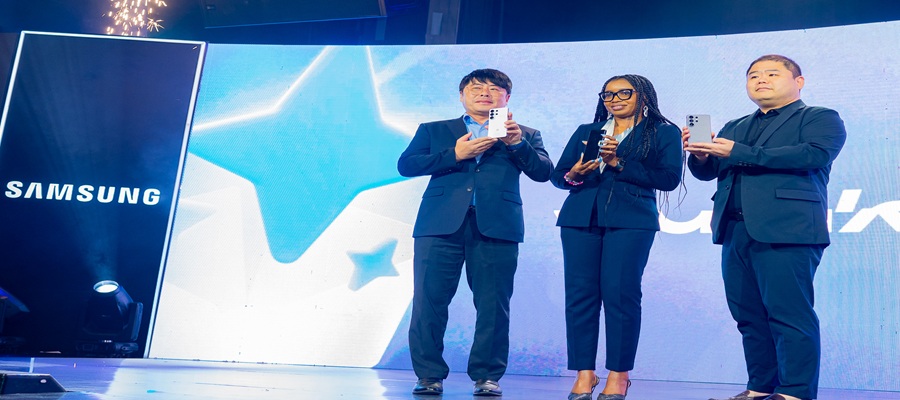
Samsung Electronics Co., Ltd. Wednesday announced the Galaxy S26 series, powered by the most proactive and adaptive Galaxy AI experiences yet and designed to simplify the tasks people do on their phones every day.

Samsung
From managing plans and finding information to capturing and refining content, Galaxy S26 reduces the effort and number of steps required to get things done.
As Samsung’s third-generation AI phones, Galaxy S26, S26+ and S26 Ultra handle complex tasks in the background, allowing users to focus on results rather than how the technology works.
The Galaxy S26 series was engineered with Samsung’s most advanced capabilities working together as one: incredible performance, an intuitive camera system and Galaxy AI.
This provides a strong foundation that gives Galaxy S26 users the confidence to depend on their phone throughout the day without compromising security or privacy.
Building on Samsung’s decades of innovation in display technology, Galaxy S26 Ultra introduces the industry’s first built-in Privacy Display for mobile phones to unlock a new class of display experiences and reinforce Samsung’s commitment to privacy at a pixel level. Galaxy S26 Ultra also delivers a customized chipset and upgraded thermal management that enable faster and more powerful AI, all wrapped up in the slimmest Ultra yet.
Together, these choices allow the Galaxy S26 series to deliver the most powerful Galaxy experience yet.
Engineered for all-day performance, the Galaxy S26 series is built on the most powerful hardware ever on a Galaxy S series, powered by a customized chipset.
Across the line-up, the Galaxy S26 series is engineered for AI performance, power efficiency and thermal management, ensuring demanding tasks run smoothly and consistently, so users can rely on their device when it matters.
On Galaxy S26 Ultra, a customized mobile processor, Snapdragon 8 Elite Gen 5 Mobile Platform for Galaxy, delivers the best performance ever in its class with significant gains across CPU, GPU, and NPU to support faster, smoother experiences that keep up throughout the day.
A CPU performance increase of up to 19% means Galaxy S26 Ultra responds more quickly and handle complex workloads intelligently, even when multiple tasks are running at once.
A 39% improvement in NPU performance powers always-on Galaxy AI features that run seamlessly, allowing users to move between tasks without lag or interruption.
A 24% boost in GPU performance delivers richer visuals and more fluid gameplay. To support all-day use, Galaxy S26 Ultra also brings Super-Fast Charging 3.0, minimizing downtime by reaching up to 75% charge in just 30 minutes.
Taken together, these advancements deliver dependable all-day performance, making every action feel effortless.
Galaxy’s Best Camera System Yet
The Galaxy S26 series brings the same focus on intuitive interaction to creativity and productivity, delivered through the best Galaxy camera system ever. With an approach that integrates content capture, editing and sharing into a single, seamless experience, creativity feels more natural and accessible even without professional tools or technical knowledge.
On Galaxy S26 Ultra, wider camera apertures allow more light to reach the sensor, delivering clearer photos with richer details in low-light conditions, even when zoomed in.
Enhanced Nightography Video keeps footage clearer and more vibrant even in dim scenes, whether capturing concerts indoors or recording moments around a campfire after sunset.
Video capture is further enhanced with upgraded Super Steady capabilities, which add a horizontal lock option for greater stability and to make consistent framing easier to achieve, even with bumpy trails or fast-paced activities.
Galaxy S26 Ultra is the first Galaxy device to support APV, a new professional-grade video codec designed to deliver efficient compression for high-quality production workflows. Optimized for advanced creators, it ensures visually lossless video quality that stays true even after repeated editing.
Improvements to the AI ISP now extend to the selfie camera, capturing more natural skin tones and finer detail in mixed lighting.
Galaxy S26 Ultra is the first Galaxy device to support APV, a new professional video standard and codec designed to deliver efficient compression for high-quality production workflows. For creators who care about quality, this means visually lossless video quality that stays true even after repeated editing.
Editing photos and videos is just as easy and straightforward, with AI-powered tools built into familiar workflows so users can make changes quickly and unlock their creativity without design expertise.
With the upgraded Photo Assist suite, users can simply describe what they want to change in their own words.
Changing the scene from day to night is just a matter of asking. It can also add to images and restore missing parts of objects like a bite taken out of a cake. Personal details, such as a spill on clothing, can also be cleaned up with Galaxy AI’s new ability to change outfits in photos. Edits can now be made continuously, reviewed step by step, and easily adjusted or undone along the way, making the process feel fluid rather than final.
Creative Studio builds on this simplicity by bringing creation and customization into one integrated space, making it easy to act on ideas when inspiration strikes. Starting from a sketch, photo or prompt, users can quickly turn ideas into polished visuals, from stickers and invitations to personalized wallpapers, and refine or share them without switching tools or interrupting creative flow.
The Galaxy S26 series also simplifies frequent visual tasks with AI-powered tools like the Document Scanner, which removes distortions and distractions such as creases or fingers to deliver clean scans instantly. Multiple images can be organized automatically into a single PDF, making it easy to digitize receipts, forms or notes.
Everyday Ease With Proactive And Adaptive Galaxy AI
The Galaxy S26 series is designed to make frequently used experiences feel straightforward and user-friendly, with Galaxy AI reducing the steps between intent and action. It works more proactively and seamlessly on the user’s behalf based on context, surfacing the right support at the right moment and automating tasks with minimal manual input. As the technology fades and handles tasks in the background, users can focus on the results.
The Galaxy S26 series integrates a choice of agents, including Bixby, Gemini and Perplexity. Once set up, tasks can be completed with a single button press or voice prompt.
The series features an upgraded Bixby as a conversational device agent, making it easier than ever to interact with Galaxy devices. Galaxy S26 can also handle multi-step tasks in the background, streamlining the process on the user’s behalf.
For example, with Gemini, booking a taxi is as simple as asking, reviewing the details and tapping confirm.
These assistants support tasks such as searching, coordinating actions across apps, and controlling device settings through natural interaction.
Layers of Protection in the Age of AI
As mobile experiences become more personalized thanks to AI, protecting user privacy becomes even more critical. Samsung builds protection into every layer of Galaxy S26, keeping personal data secure while giving users transparency and control over how their information is used.
Galaxy S26 Ultra introduces privacy at the pixel level with the mobile industry’s first built-in Privacy Display, a breakthrough in display technology that fundamentally changes how privacy can be protected on a phone.
Designed for everyday situations like transit, cafés and shared environments, Privacy Display goes beyond anything previously available on mobile devices, hardware and software working as one to protect privacy without compromising the viewing experience.
By controlling how pixels disperse light, the display keeps content clear, bright and comfortable for the user in everyday use, while limiting what others can see.
Unlike traditional stick-on privacy films, Galaxy’s integrated Privacy Display preserves full viewing quality from all directions when off, and limits visibility for others from side viewing angles when activated, even when switching between portrait and landscape orientation.
Users can customize when it turns on, such as when entering PINs and passwords or opening selected apps, and adjust privacy levels depending on the situation. Partial Screen Privacy intelligently limits visibility for notification pop-ups, while Maximum Privacy Protection further obscures side views for added discretion, all with minimal impact on power or usability.
The Galaxy S26 series also brings smarter software safeguards that work quietly in the background. AI-powered Call Screening identifies unknown callers and summarizes intent, making it easier to safely manage calls. Privacy Alerts use machine learning to proactively notify users in real time when apps with device admin privileges unnecessarily attempt to access sensitive data, such as precise location, call logs or contacts. These alerts help users quickly understand when apps are seeking deeper access, so they can manage permissions with greater clarity and control.
Private Album, built directly into Gallery, lets users easily hide selected photos and videos without creating a separate folder or signing into a Samsung Account. To stay ahead of emerging threats, Galaxy S26 also extends Samsung’s innovation in post-quantum cryptography (PQC) to critical system processes, including software verification and firmware protection, strengthening device integrity for the future.
New updates to Knox Matrix further strengthen protection across connected Galaxy devices, adding PQC-enabled end-to-end encryption for direct transfers like eSIM migrations and clearer visibility into firmware update status across the ecosystem through Security Status of Your Devices.
Galaxy S26’s ease of use continues even when the phone is out of reach. The new Galaxy Buds4 series is a natural companion to Galaxy S26, extending everyday experiences beyond the phone while delivering rich and immersive hi-fi sound.
When Galaxy S26 is paired with Galaxy Buds4, interactions can continue naturally in moments when using hands isn’t practical.
Users can activate AI agents with their voices, manage calls through simple Head Gestures on Buds4 Pro, and stay connected without breaking their flow.
Availability
Galaxy S26 Ultra, S26+ and S26 will be available for pre-order starting from February 25. The Galaxy S26 series features a unified design language across all models, with shared color options including Cobalt Violet, White, Black and Sky Blue alongside the Samsung.com-exclusive Pink Gold and Silver Shadow.
For added peace of mind, Samsung Care+ offers comprehensive coverage optimized to users’ device needs, including fast repairs for accidental damage, extended warranty, and certified expert support available both at home and abroad.
This ensures a seamless mobile lifestyle and provides lasting protection that safeguards the value of Galaxy devices.
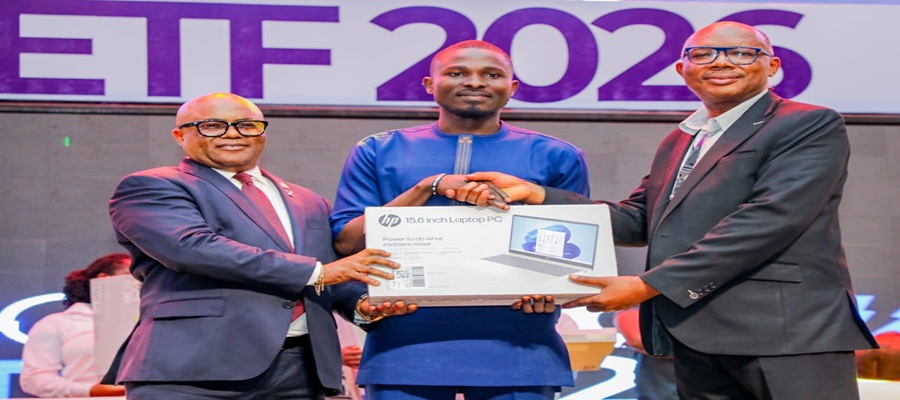
In a significant step toward deepening digital inclusion in Enugu State, the National Information Technology Development Agency (NITDA) has empowered 50 young innovators with digital tools, while commending Governor Peter Mbah for his pivotal support of the Agency’s South-East Zonal Office.

NITDA
Delivering the goodwill message at the event, NITDA Director General Kashifu Inuwa, represented by Dr. Aristotle Onumo, Director of Stakeholders Management and Partnerships, described the Governor’s commitment as instrumental to the successful launch and rapid performance of the Zonal Office, now recognised as one of NITDA’s top-performing offices nationwide.
“Inuwa noted that Enugu, historically known as Nigeria’s coal city, is undergoing a transition from natural-resource reliance to a knowledge-driven economy. ‘Enugu was once an energy capital powering industries from beneath the earth. Today, the energy driving Enugu is the creativity, talent, and determination of its young people,’” the DG’s message read.
Highlighting the role of digital technology in global economic growth, Inuwa cited projections that the digital economy could contribute up to $23 trillion to global GDP in the coming years, stressing that investment in digital skills today will shape national prosperity tomorrow.
As part of the initiative, over 900 youths registered on NITDA’s digital training platform, with 50 outstanding participants receiving digital tools to enhance their skills and foster innovation. Additionally, 250 participants were recognised for their dedication and excellence throughout the training.
“Nigeria must not only consume technology but create it. Innovation must become our currency, and digital skills must become the bridge to opportunity,” Inuwa emphasised, noting NITDA’s goal of achieving 70 percent digital literacy among Nigerians by 2027.
The initiative aligns with the Agency’s broader strategy to shift the nation from a resource-based economy to a knowledge-based economy driven by innovation, entrepreneurship, and technology.
Governor Peter Mbah, in his remarks, described the festival as more than a technology conference, calling it “a reinforcement of intent” and a validation of the state’s ambition to become a credible node in Nigeria’s growing innovation ecosystem.
Drawing a comparison between Enugu’s historic coal industry and its emerging digital future, he observed that while coal once powered industries across Europe and West Africa, the economic benefits largely left the state.
Today, he argued, Enugu’s greatest resource is its people—their creativity, skills, and innovative potential.
By investing in technology, education, and digital infrastructure, Mbah envisions a future where the state harnesses local talent to generate value, turning ideas into globally competitive solutions and establishing Enugu as a hub of knowledge and digital innovation.
Referencing global technology giants such as Apple, Microsoft, Amazon, Meta, and Tesla, he stressed that control over digital infrastructure is the key to economic leverage in the 21st century.
“Find what is broken, understand it deeply, and fix it properly,” he advised, underscoring that innovation is not about glamour but solving real problems.
He highlighted Enugu’s progress in embedding artificial intelligence in security operations, digitising core government functions, and introducing Geographic Information Systems in land administration to enhance efficiency and strengthen land rights.
Earlier, Dr. Prince Lawrence Ezeh, Enugu State Commissioner for Innovation, Science, and Technology, delivered the welcoming address, highlighting the progress made since the inaugural edition of the festival.
He noted that thousands of youths have been trained through digital skills initiatives, strategic partnerships have been launched—including Nigeria’s largest tech hub initiative—and technology clusters in blockchain and gaming have expanded, positioning Enugu as an emerging national tech leader.
Dr. Ezeh outlined the core objectives of ETF 2026: transforming businesses through innovative strategies aligned with the digital economy, and strengthening communities by fostering collaboration and resilience.
He also revealed ongoing reforms to embed technology across governance and public services, including advanced real-time security systems, smart green schools, and modernised public service platforms.
Other dignitaries in attendance included Anna Vesterholm, Ambassador of Sweden to Nigeria; Aminu Maida, Executive Vice Chairman of the Nigerian Communications Commission; alongside captains of industry and leading technology experts.

Kaspersky Discovers New Phishing Campaign Exploiting Google Tasks Notifications to Steal Corporate Credentials

NITDA Equips Federal Character Commission with Data Tools to Drive Public Sector Reform

Telecom Giant MTN Injects N1.0 Trillion CAPEX into Network Expansion

History is Watching: Tinubu’s Moment to Rescue Nigeria’s Stolen Future

Samsung Unveils Galaxy S26 Series, Powered by Smarter, Background AI

Kaspersky Launches OT Calculator to Align Cybersecurity Investments with Business Goals

Accidental Billionaire Opts for Jail Instead of Returning Money Credited Him by Mistake

Why the Future of PR Depends on Healthier Client–Agency Partnerships

New Horizons Nigeria Breaks Ground: First to Fuse Mandarin into ICT Curriculum

Kaspersky Brings more Transparency to Threat Detection with New Hunt Hub




 E-Business3 days ago
AfDB, UNDP Launch $10Bn AI Initiative for Africa

 Telecom3 days ago
Grey Expands Cross-Border Banking with USD Accounts, USDC Support

 General News2 days ago
KPMG Strengthens Africa Leadership to Support Long‑term Growth Across the Continent

 News3 days ago
Obasanjo, Vanguard’s Amuka Lead Prayers for Zinox Chief Leo Stan Ekeh @70

 News3 days ago
DG NITDA Reaffirms FG Commitment to Responsible, Inclusive AI

 News3 days ago
Lotus Bank, REA Seal N100Bn Deal to Power Rural Nigeria

 E-Financial3 days ago
CBN Cuts MPR by 50bps to 26.50% as Inflation Eases for 11th Month

 E-Financial3 days ago
Kuda Bank Teams Up with Lovers & Frnds for Inclusive Valentine’s R&B Bash