

General News
NAVSA: Creating A Viable Smart Agriculture For Nigerian Farmers


By Mubarak Umar
One of the major challenges facing Nigeria’s agricultural practices for long is lack of relevant information. The challenges have contribute to inability of farmers to meet the rising demands in foods locally, produce high quality agricultural products that meet international standards, have access to financial security which in turn result into importation of food and other agricultural products, thereby making the sector contributes significantly less to Gross Domestic Product (GDP).

World population is expected to grow by over a third (or 2.5 billion people) by 2050, according to Food and Agriculture Organization of the United Nations. This is much slower rate of growth than seen in the past four decades during which it grew by 3.3 billion people (or more than 90 percent). Nearly all of this growth is forecast to take place in the developing countries. Among the latter, sub-Saharan Africa’s population would grow the fastest with 114%. Urbanization is foreseen to continue at an accelerating pace to account for 70% percent of world population in 2050 (up from 49 percent at present) with rural population, after peaking sometime in the next decade, actually declining.
Global economic growth of about 2.9 percent annually would lead to significant reduction or even near elimination of absolute poverty in the developing countries (persons living on less than US$1.25/day in 2005 prices). Nevertheless, advanced countries have focused on providing the agricultural industry with the infrastructure to leverage emerging technology – including big data, cloud computing and the internet of things (IoT) – for tracking, monitoring, automating and analyzing operations.
However, the untapped potential of Nigerian farmers is currently being unfolded, as Federal Government of Nigeria, through Ministry of Communications and Digital Economy introduced National Adopted Village for Smart Agriculture (NAVSA), to change the face of agric sector in the country.
National Adopted Village for Smart Agriculture being championed by National Information Technology Development Agency (NITDA), is an ecosystem-driven digital platform envisioned for the transformation of the agriculture sector in Nigeria. It is designed to help farmers and other agricultural ecosystem players navigate their journey across the agriculture value chain. This journey cuts across farm production to management, processing, harvesting, storage, marketing and consumption.
It will be a source for quality and updated information that can be accessed and used by different strata of agriculture stakeholders irrespective of their educational background or language at no cost.
The initiative is aimed at facilitating the integration of digital technologies and innovations to improve productivity and income of farmers and other ecosystem players at every step of their journey across the agriculture value chain. This is in a bid to position agriculture as a business and an enterprise that potentially attracts youths and talents to create new values and innovations that come with diverse opportunities which never existed before in the agriculture value chain.
By design, it will create business models and opportunities that would stimulate huge jobs and wealth creation and eventually, economic diversification through agriculture.
The Ministry kick-started NAVSA initiatives late 2019 where 15 and 130 farmers benefited from programme, in Gombe and Jigawa respectively, and other states were also enlisted on NITDA’s chart. Currently, 270 farmers were empowered in Jigawa State, 140 in Ekiti State and also 155 in Gombe state.
Describing the impact of NAVSA on Nigeria’s economy, minister of Communications and Digital Economy, Dr Isa Ali Ibrahim (Pantami), note that the program is one of the policies given to the agencies under the ministry to implement and other agencies will join in the empowerment soon.
NAVSA activities will immensely contribute to the economic growth and employment of the States/local government areas. Partners and Participating States and LGAs are links between the farmers. They provide enabling environment vis-a-vis the existing structure for agriculture at their disposal. Furthermore, they support NAVSA adopted farmers by providing access to land, information, finances and resources and every other thing required for the success of the programme in their respective states/LGAs.
Telecommunications and mobile services are prerequisites to achieve NAVSA strategies. Access to information and other services require smart and web-enabled technologies and mobility services such as call, ussd, sms, ivr, smart devices, internet etc. These services give the beneficiaries access to 2G, 3G and 4G enabled smart devices to guarantee connectivity.
This is to ensure that farmers have access to the best and standard inputs that give rise to improved quality of farm produce. Based on the request, a certain amount of money from each farmer’s seed fund in the digital wallet is disbursed to the input supplier(s) of his/her choice. The inputs items and the amount limit are determined by the calculation in the economics of production for each agriculture production at different stages. Based on each farmer’s request, he/she will be given clearance to collect inputs from the chosen supplier(s).
To enhance financial inclusion and minimise the risk of defaults and mismanagement of funds, all payments go through digital wallets created for farmers through Government licensed digital wallet service providers. Seeds fund allotted to adopted farmers are being disbursed into their digital wallets. Farmers can make requests for payment of inputs and operational related expenses. Two digital wallets have been created for each farmer on the NAVSA platform. They are restricted and unrestricted digital wallets. Farmers in their accounts on the NAVSA platform can view the information on the restricted wallets but they will not be able to access the funds. Access to the funds will go through a request-approval process on NAVSA and third parties digital wallets service providers’ platforms. The request-approval process is to settle farm inputs obligations. Requests must be approved before funds are disbursed.
NAVSA, data-driven digital platform (accessible on the web and mobile app), is expected to facilitate and ease activities of farmers as well as connect all ecosystem players along the agriculture value chain from production to processing and marketing. This will continually create the synergy that contributes to economic development, job and wealth creation.
It contains agriculture-related data and knowledge that can be used by farmers to improve decision making and productivity in food yield and quality. You can also share your knowledge and let’s digitise it for the benefit of farmers.


Mr. Thompson Sunday, the Managing Director/Chief Executive of the Nigeria Deposit Insurance Corporation (NDIC), has reaffirmed the Corporation’s strict compliance with fiscal and financial regulations, including the provisions of the Fiscal Responsibility Act (FRA) 2007, noting that the NDIC has consistently remitted the required percentage of its earnings to the Federal Government.

Mr. Sunday made this known during a courtesy visit to the Managing Director/Chief Executive of the Ministry of Finance Incorporated (MOFI), Dr. Armstrong Takang, as part of NDIC’s ongoing engagement with key stakeholders following his formal assumption of office in July 2025.
According to him, NDIC takes financial accountability and transparency seriously, stressing that the Corporation complies fully with statutory remittance obligations, including the payment of 20 per cent of gross earnings or 80 per cent of net surplus to the Federal Government, as applicable. He added that NDIC also submits its financial statements ahead of statutory deadlines.
The NDIC MD/CE explained that this culture of compliance aligns with the Corporation’s role as a key institution within Nigeria’s financial safety-net, charged with protecting depositors and promoting confidence in the banking system. He emphasized that adherence to fiscal discipline remains central to NDIC’s credibility and effectiveness.
Mr. Sunday further disclosed that NDIC also complies with the Federal Government’s 50 per cent cost-to-income ratio policy, although he noted that the policy poses operational constraints. He explained that the deductions affect NDIC’s ability to build a strong Deposit Insurance Fund, which is needed to respond effectively to bank failures.
He stressed that international best practices under the Core Principles for Effective Deposit Insurance issued by the International Association of Deposit Insurers (IADI) require deposit insurers to maintain adequate funds to reimburse depositors when banks fail without recourse to government, adding that the NDIC is seeking an exemption to strengthen its capacity in this regard.
Mr. Sunday described MOFI as a critical stakeholder, noting that the Federal Government, through MOFI, holds a 40 per cent equity stake in NDIC. He said sustained collaboration with MOFI is essential to ensuring that NDIC continues to meet its obligations to government while effectively safeguarding depositors’ funds.
In his remarks, Dr. Takang commended the NDIC for its exemplary collaborative spirit and acknowledged the Corporation’s compliance with fiscal regulations. He assured that MOFI would continue to engage the Federal Ministry of Finance on NDIC’s behalf, noting that a strong NDIC is vital to sustaining confidence in Nigeria’s financial system.
Both institutions reaffirmed their commitment to continued cooperation, transparency and accountability, with Mr. Sunday reiterating that NDIC remains focused on balancing regulatory compliance with its overriding mandate of depositor protection and financial system stability.

T2 has reaffirmed its commitment to youth development and excellence through sport as the NCBC basketball team, adopted by the brand, emerged champions of the Bosun Tijani Foundation Youth Basketball Tournament held at the Alake Sports Complex, Ijeja, Abeokuta.

The tournament, organised by the Bosun Tijani Foundation in collaboration with the Ogun State Government and supported by several partners including T2, brought together 12 competitive teams from across Nigeria, positioning basketball as a powerful platform for youth engagement, discipline, and opportunity.
NCBC’s championship run reflected the values T2 seeks to champion, work ethic, intelligence, teamwork, and resilience. The team recorded commanding victories over Team Vision, Warlords, and Elevate before defeating the Ilupjeu Raiders 66–52 in a gripping final.
Commenting on the adoption of the team, Seni Ogunkola, Vice President, Brands and Communication, T2 stated “NCBC embodies the qualities we believe in, exceptional work rate, intelligence on the ball, discipline, and a hunger to excel. By supporting them, T2 is investing in potential, purpose, and the next generation of leaders on and off the court.”
The climax of the event saw His Royal Highness, Oba Adedotun Gbadebo, the Alake of Egbaland, alongside Nigeria’s Minister of Communications and Digital Economy, Bosun Tijani, present the trophy to the victorious team, drawing rapturous applause from spectators. The event was also attended by the Chief of Staff to Ogun State Governor Dapo Abiodun, Mr. Lere Olayinka, and the Ogun State Commissioner for Sports, Honourable Wasiu Isiaka, underscoring strong institutional support for youth-focused initiatives.
Through its participation in the tournament, T2 continues to position itself as a brand that goes beyond sponsorship, championing platforms that unlock talent, inspire ambition, and create lasting social impact for Nigerian youth.
General News
Ecobank Guarantees Seamless Digital Banking Services Throughout the Christmas and Year-End Period
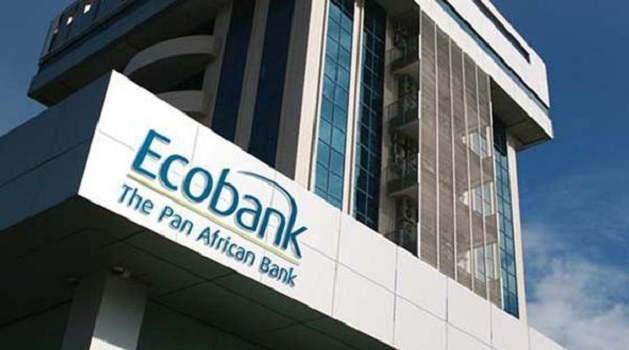
Ecobank Nigeria, a member of Africa’s leading pan-African banking group, has assured customers of uninterrupted access to banking services throughout the year-end holiday period via its secure and robust digital platforms. The Bank also urged customers to remain vigilant against fraud and scams during the festive season.

Ecobank Bank
Speaking on the development, Victor Yalokwu, Head, Products & Analytics, Consumer & Commercial Banking, Ecobank Nigeria, said the Bank’s digital channels – including the Ecobank Mobile App, Ecobank Business App, USSD *326#, Ecobank Online, OmniPlus, Omnilite, EcobankPay, RapidTransfer, Ecobank Cards, ATMs, PoS terminals, and over 35,000 Ecobank Xpress Point (Agent Banking) locations nationwide – will remain fully available to support customers throughout the yuletide and year-end holiday period.
He noted that customers will continue to enjoy a wide range of services during the period, including local and international funds transfers, bill payments and airtime top-ups, merchant payments, balance inquiries and account statements, as well as cardless cash withdrawals via ATMs.
According to Yalokwu, “Ecobank encourages customers to leverage these digital solutions for safe, fast, and efficient banking, especially during the festive season when convenience and reliability are essential.
“While physical branch operations may be subject to adjusted working hours in line with public holidays, customers can be assured that Ecobank’s digital platforms are designed to deliver uninterrupted service and enhanced security at all times.
“Ecobank remains committed to providing innovative financial solutions and exceptional customer service, and we wish all our customers a joyful festive season and a prosperous New Year.”
Yalokwu also cautioned customers to remain vigilant against fraudsters and scammers during the period. “Before you wrap up the year, tighten your security. December brings online sales, travel, and year-end distractions—this is exactly when scammers are most active. From fake festive deals to cloned merchant sites and suspicious messages, staying vigilant helps keep your money safe.”
He advised customers to shop only on trusted websites, never share their PINs, passwords, or one-time passwords (OTPs), avoid banking on public Wi-Fi networks, be cautious of urgent or emotionally charged messages, and regularly review their account activity.

NDIC Reinforces Full Oversight Compliance to Safeguard Depositors

GTCO Secures Regulatory Approvals to Raise N10bn in Private Placement

Jumia CEO says Black Friday Signals Nigeria’s E-Commerce Maturity

MTN Nigeria Crowns Ayo Benzi Winner of Next Afrobeats Star

T2 Faces NCC Probe in Benue Over Major Service Outage in 9 LGAs

Nigeria Records Highest Weekly Cyberattacks in Africa — Report

Cyber Tsunami Hits Nigeria as Breaches Surge 1,047%, esentry Q3 Report Reveals

Financial Sector Faced AI, Blockchain and Organised Crime Threats in 2025 – Report

Minister Claims Bandits Exploit Poor Network, Bounce Calls Off Multiple Towers

Report Reveals Half of 2025’s Compromised Passwords were Already Leaked




 Telecom2 days ago
Google Finally Allows Users to Change Gmail Address, Keeps Data and Services Intact

 News2 days ago
InsomniaQ Spotlights African Creativity in Lagos

 General News2 days ago
T2 Backs Youth Excellence as NCBC Wins Bosun Tijani Foundation Basketball Tournament

 E-Financial1 day ago
Nigeria’s N58.18trn Budget and Rising Cost of Deficit Governance

 Telecom1 day ago
Nnaemeka Ani – The Architect of ‘Code and Courage’

 Telecom1 day ago
MTN Nigeria Appreciates Partners, Customers at Lagos Prestige Experience

 Telecom10 hours ago
NCC Unveils Draft 5-Year Spectrum Roadmap, 60 GHz License-Exempt Guidelines to Boost Broadband, Innovation

 Telecom10 hours ago
NCC Grants 45 Days for Telecoms Firms to Fix Unapproved Shareholding Changes